The Bloom filmthon: what if that was me on screen?
What was discussed
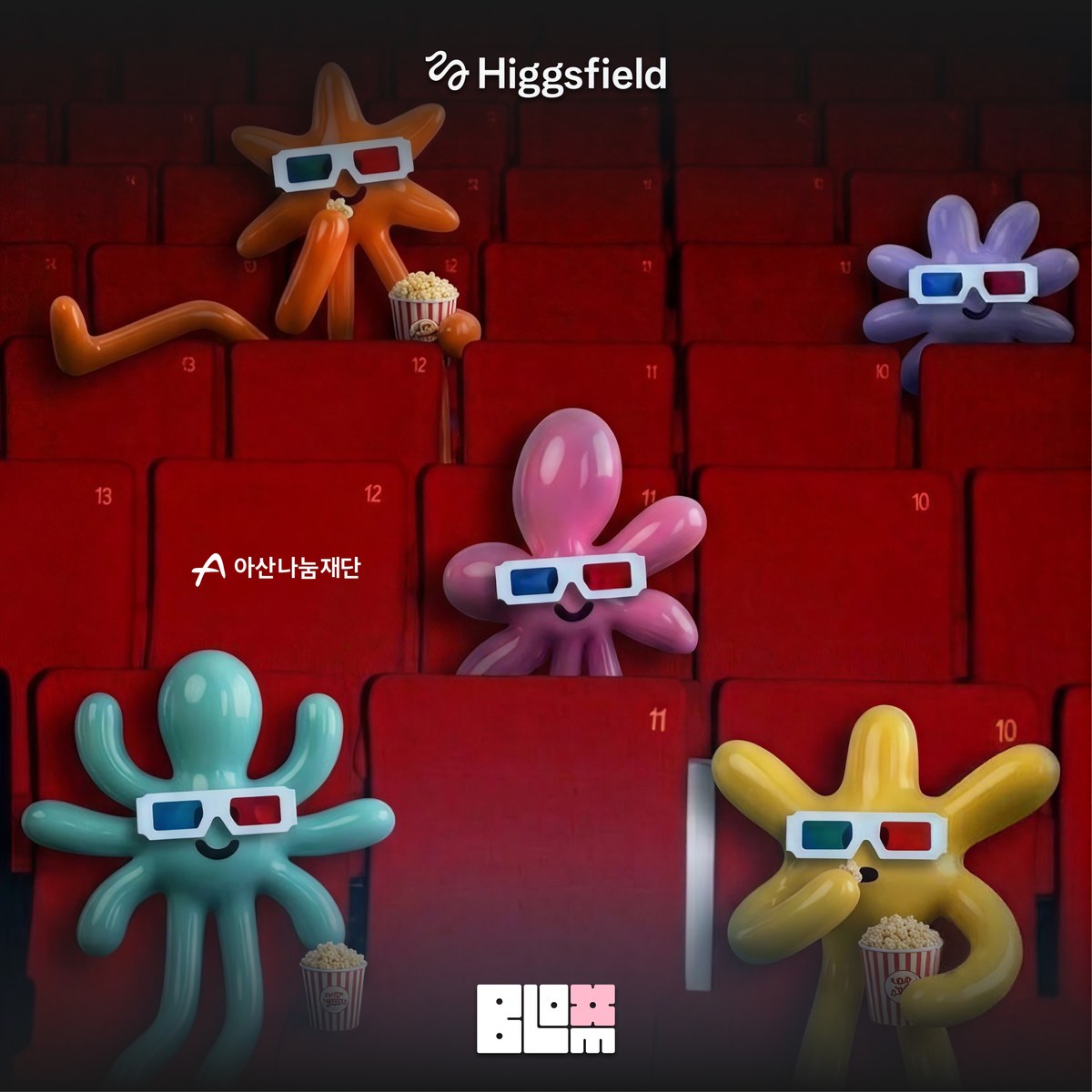
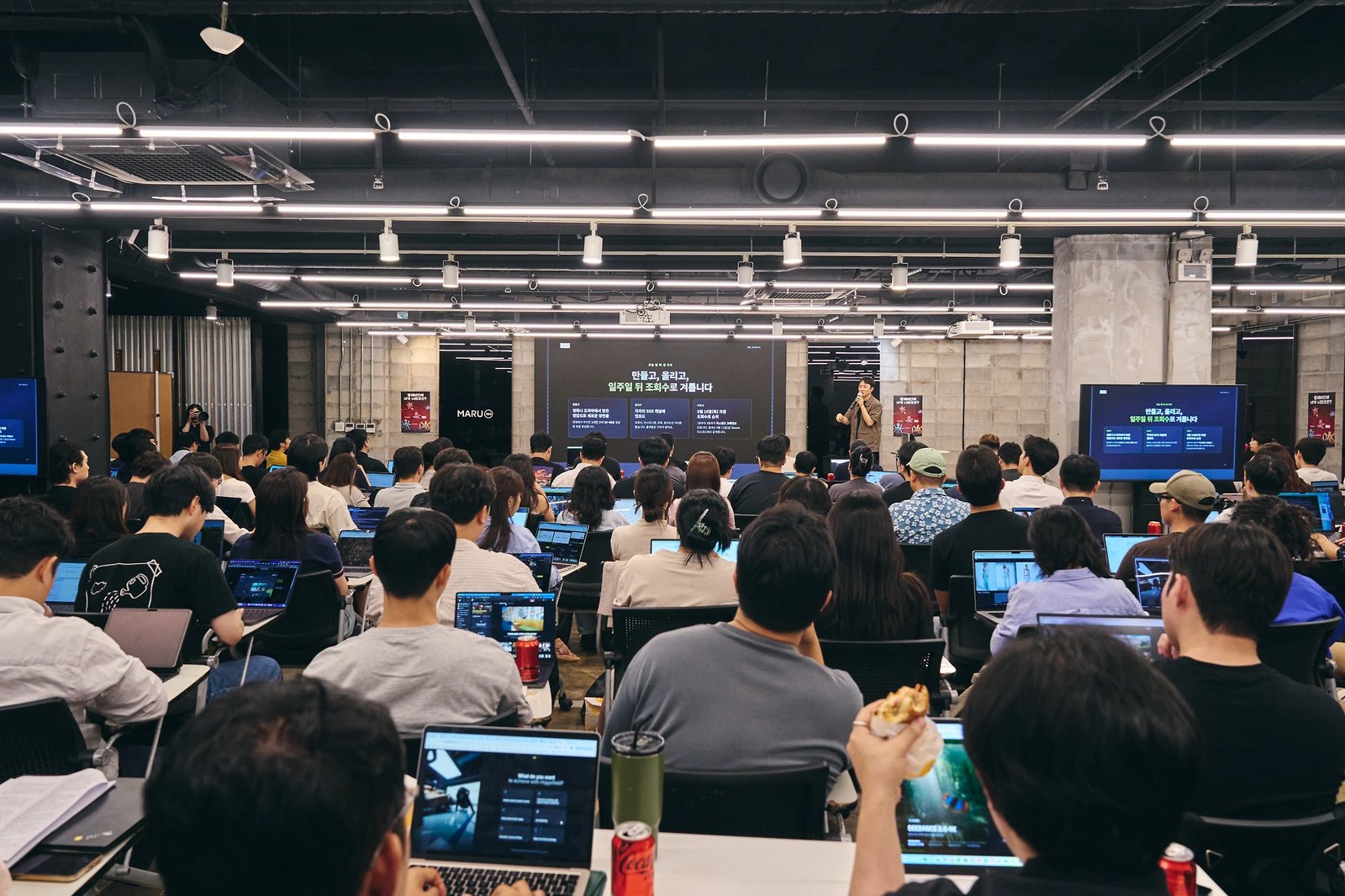
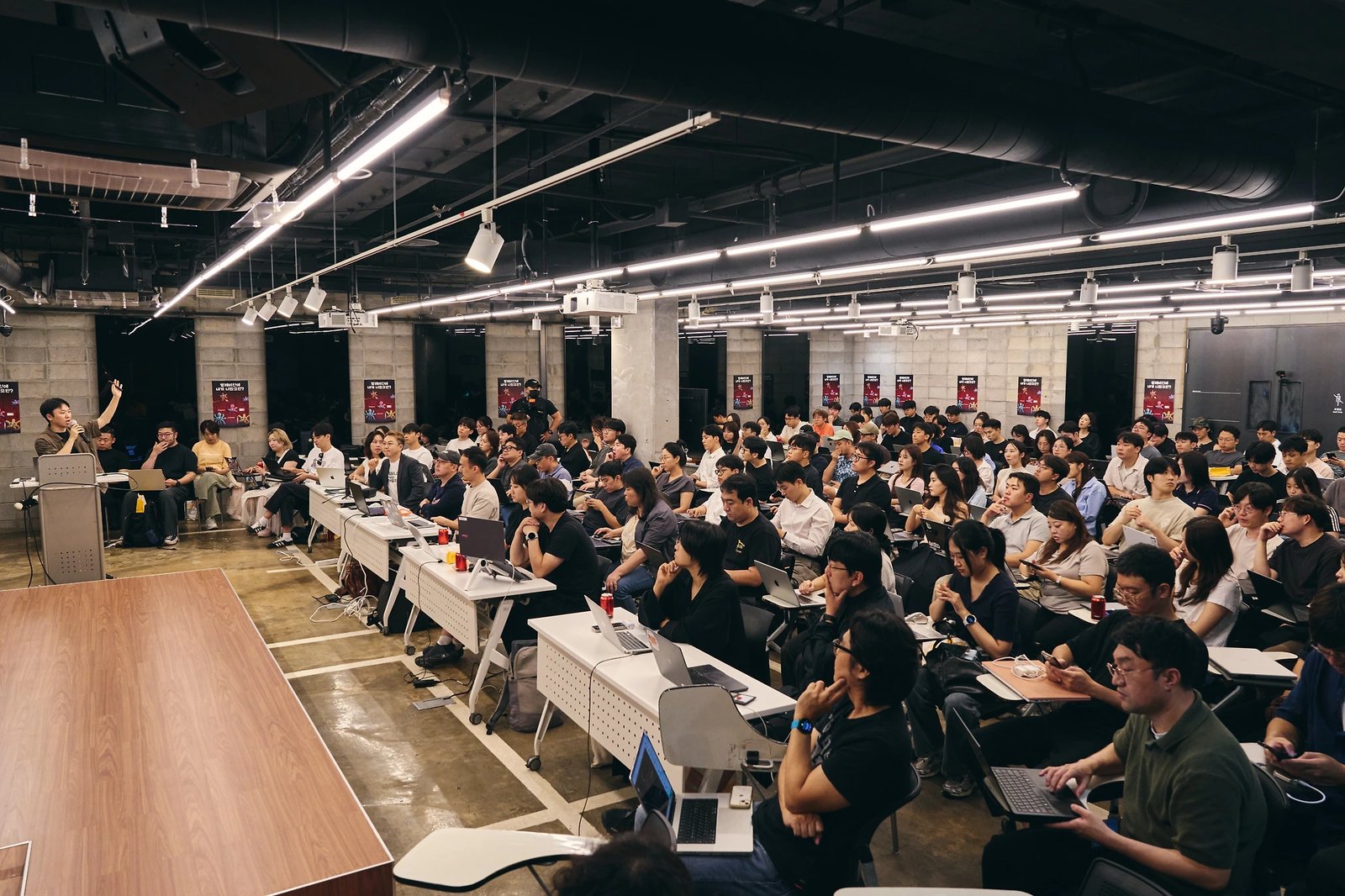
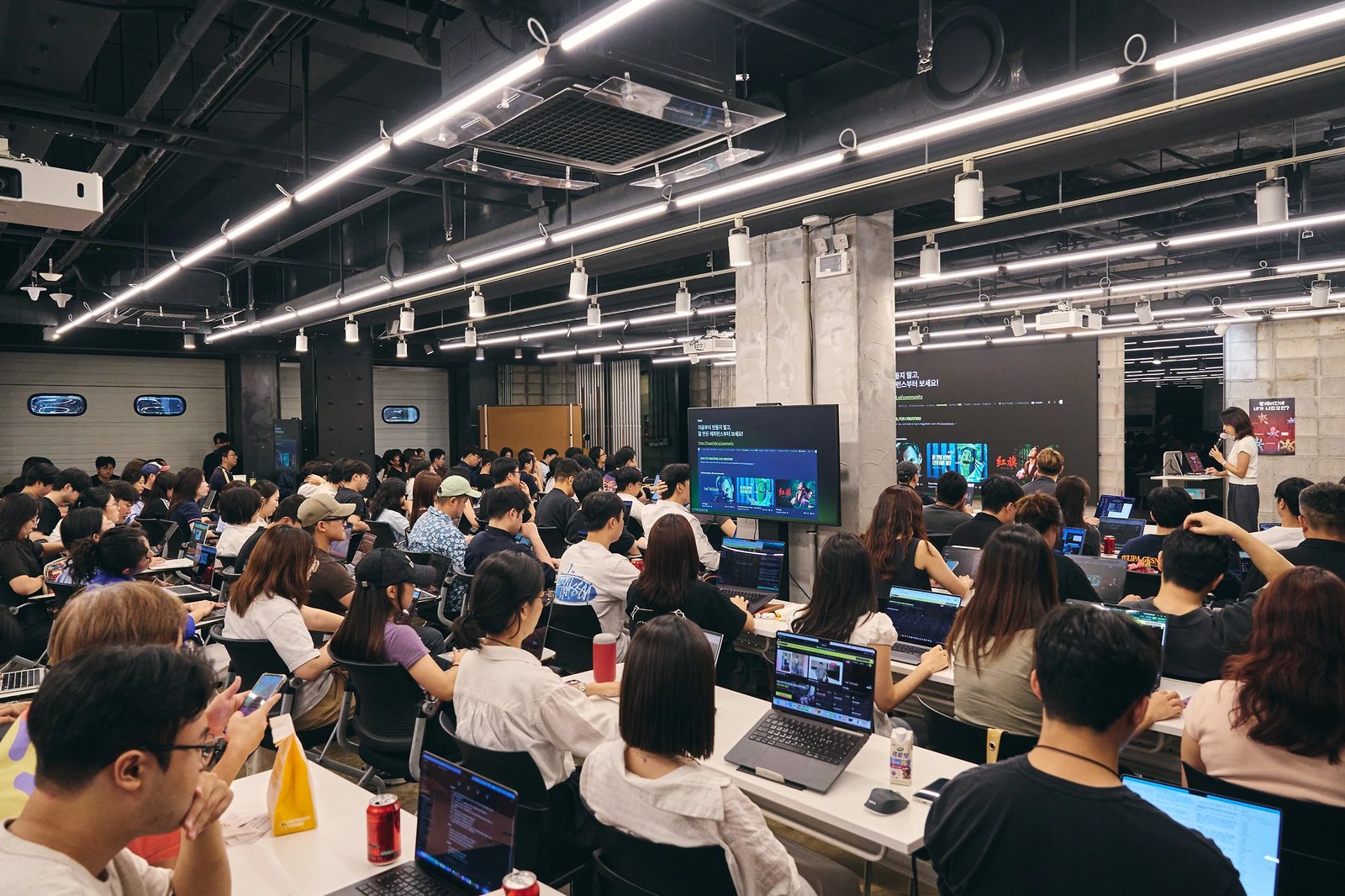
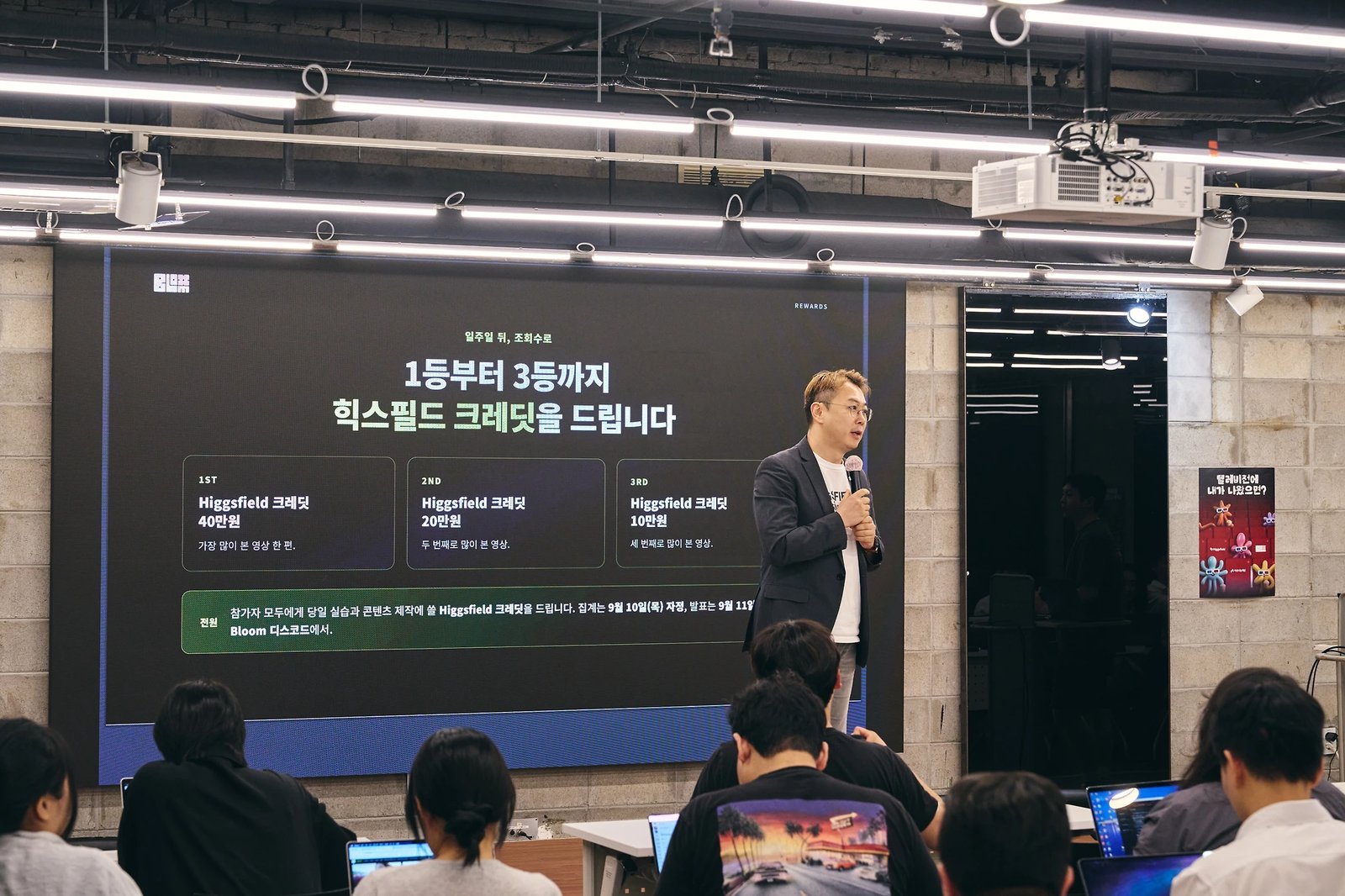
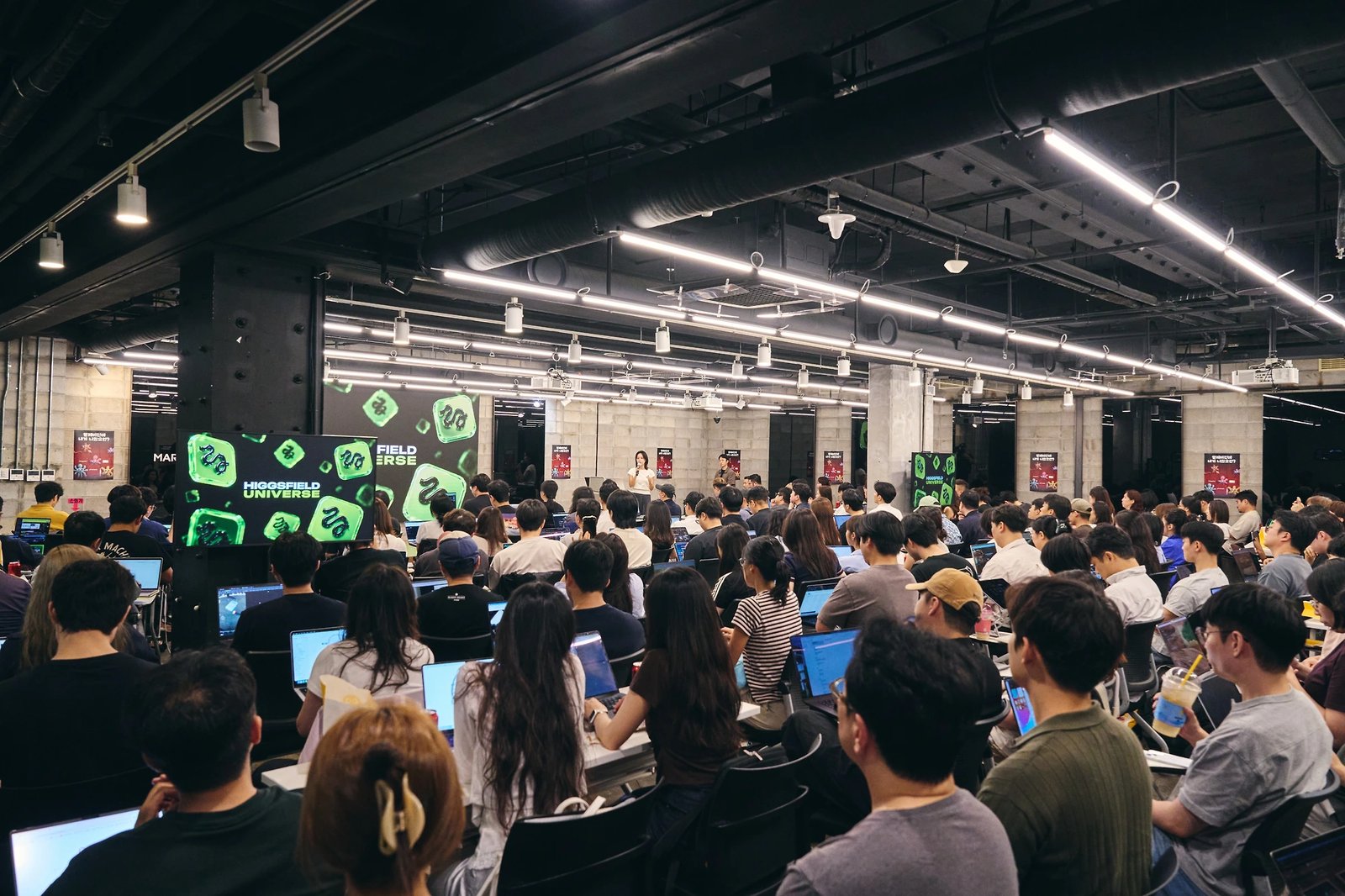
Jun-su Kim, who ran the evening, opened with the brief: take a film ending you never liked and rebuild it in Higgsfield the way you wanted, a drama being just as valid. Making something and stopping there would have been dull, so it came with a contest — post the video you made that night to your own social accounts, and a week later the view counts decide the ranking. Higgsfield put up credits worth 400,000, 200,000 and 100,000 won for the top three. About half the room was at Bloom for the first time, and by the pre-event survey around 60 percent had never used Higgsfield.
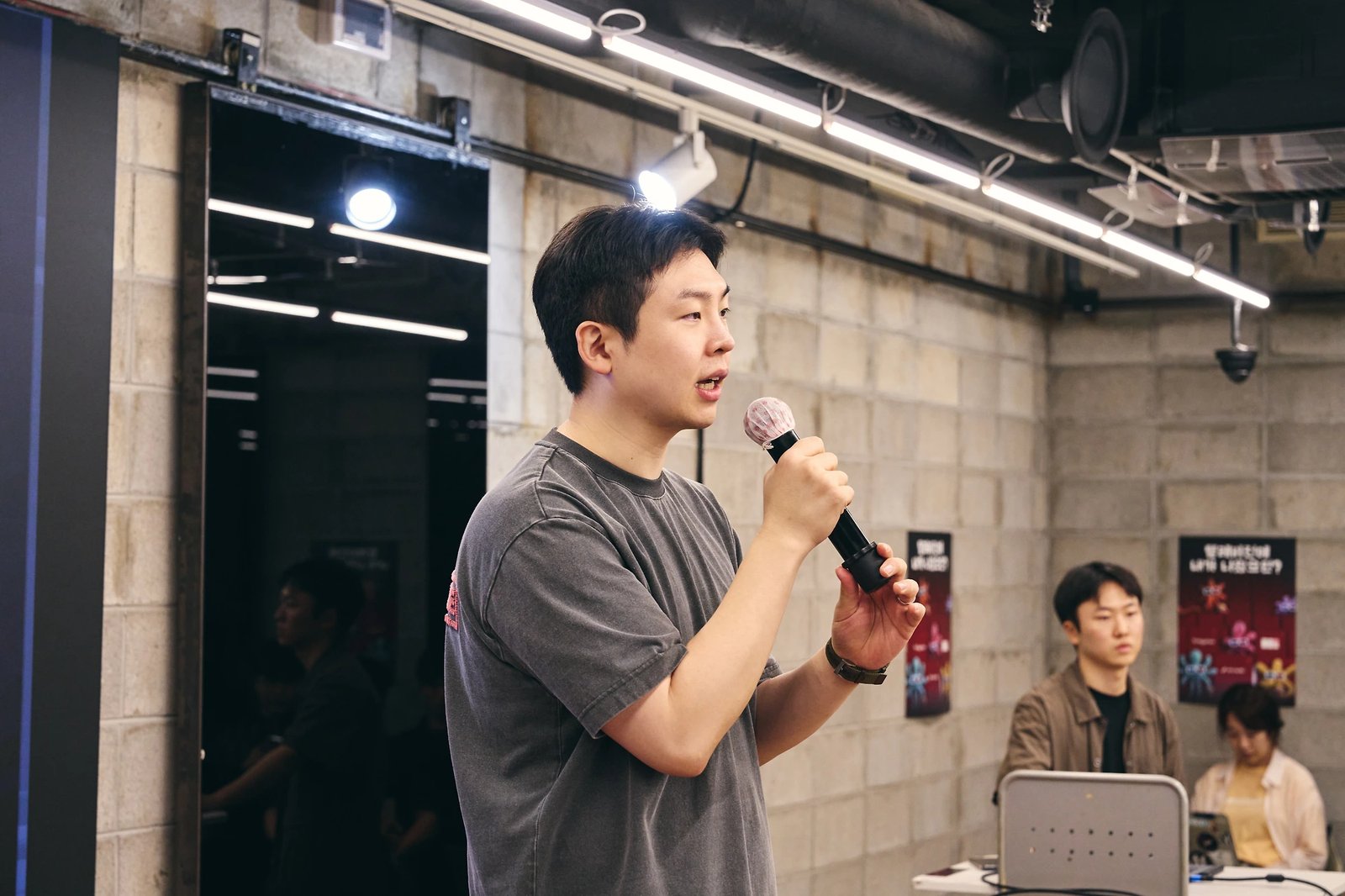
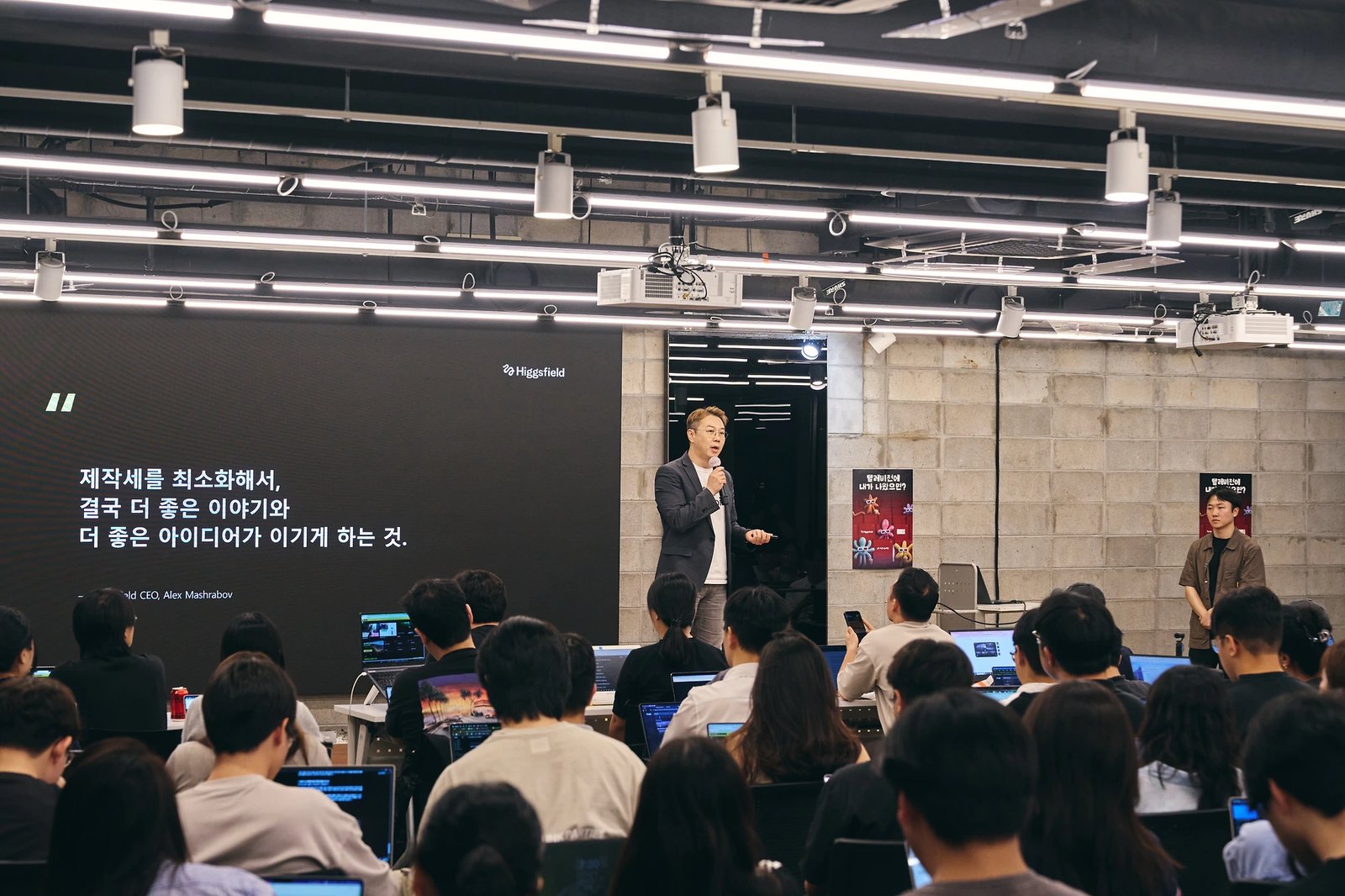
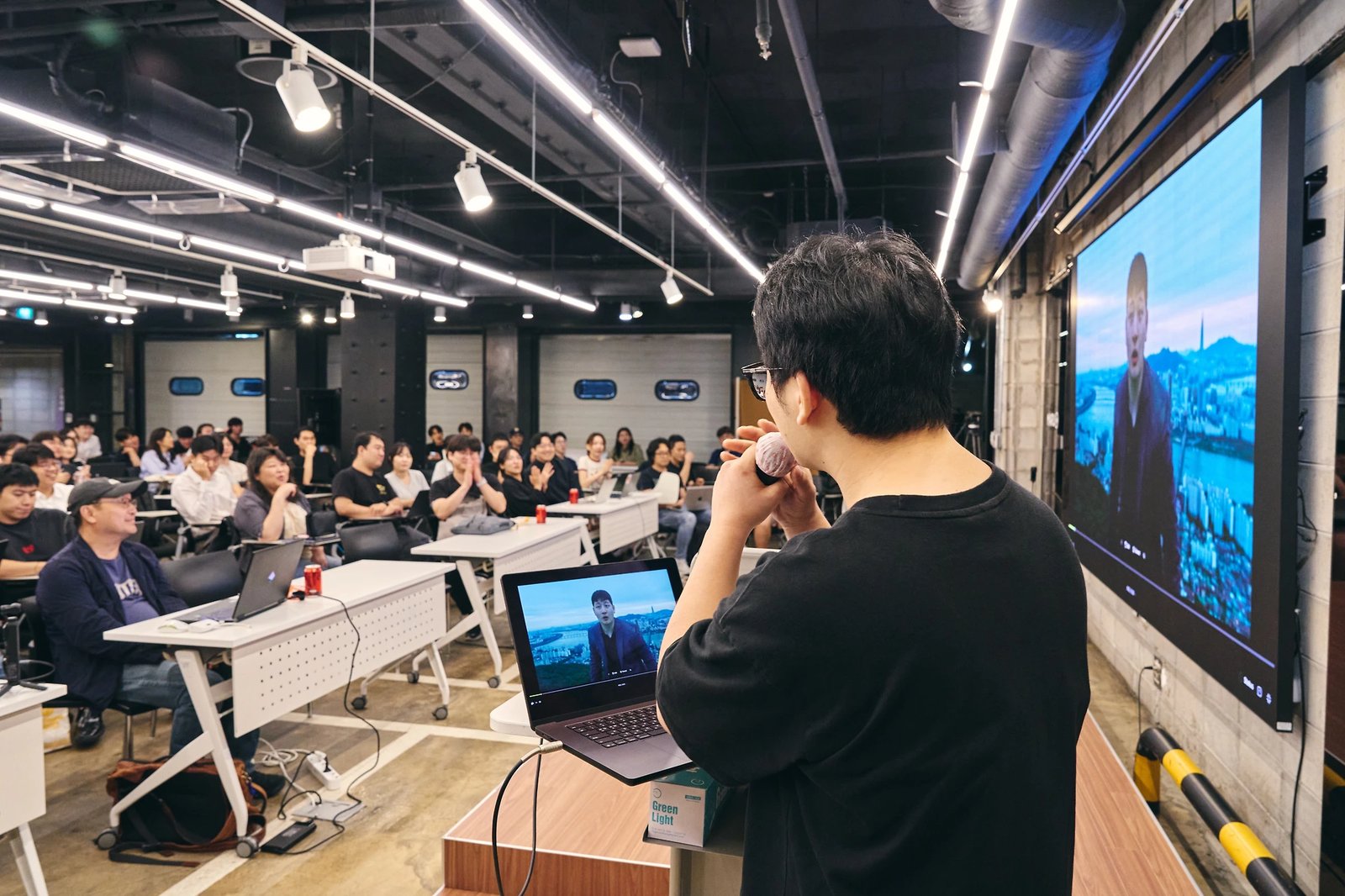
The first session was branch director Min-sung Kim. He opened with the music video for Zephyr, a virtual girl group Higgsfield created: a sci-fi K-pop piece with five characters, made in five days. Putting a real girl group into the world usually takes one to two years, and film is much the same. With that comparison in place, he asked his question: what happens when those unavoidable costs converge on zero?
He put numbers to it. Ninety-one percent of companies use video in marketing, 82 percent of internet traffic is video, and people watch 100 minutes a day. On the production side, though, stand three walls — cost, speed and scale. A good idea still needs money to become a film, and even a hit runs into time again on the follow-up. He shared Higgsfield's own figures too: 30 million users worldwide and about $700 million in revenue 17 months after launch, with Korea second or third globally in both revenue and volume produced.
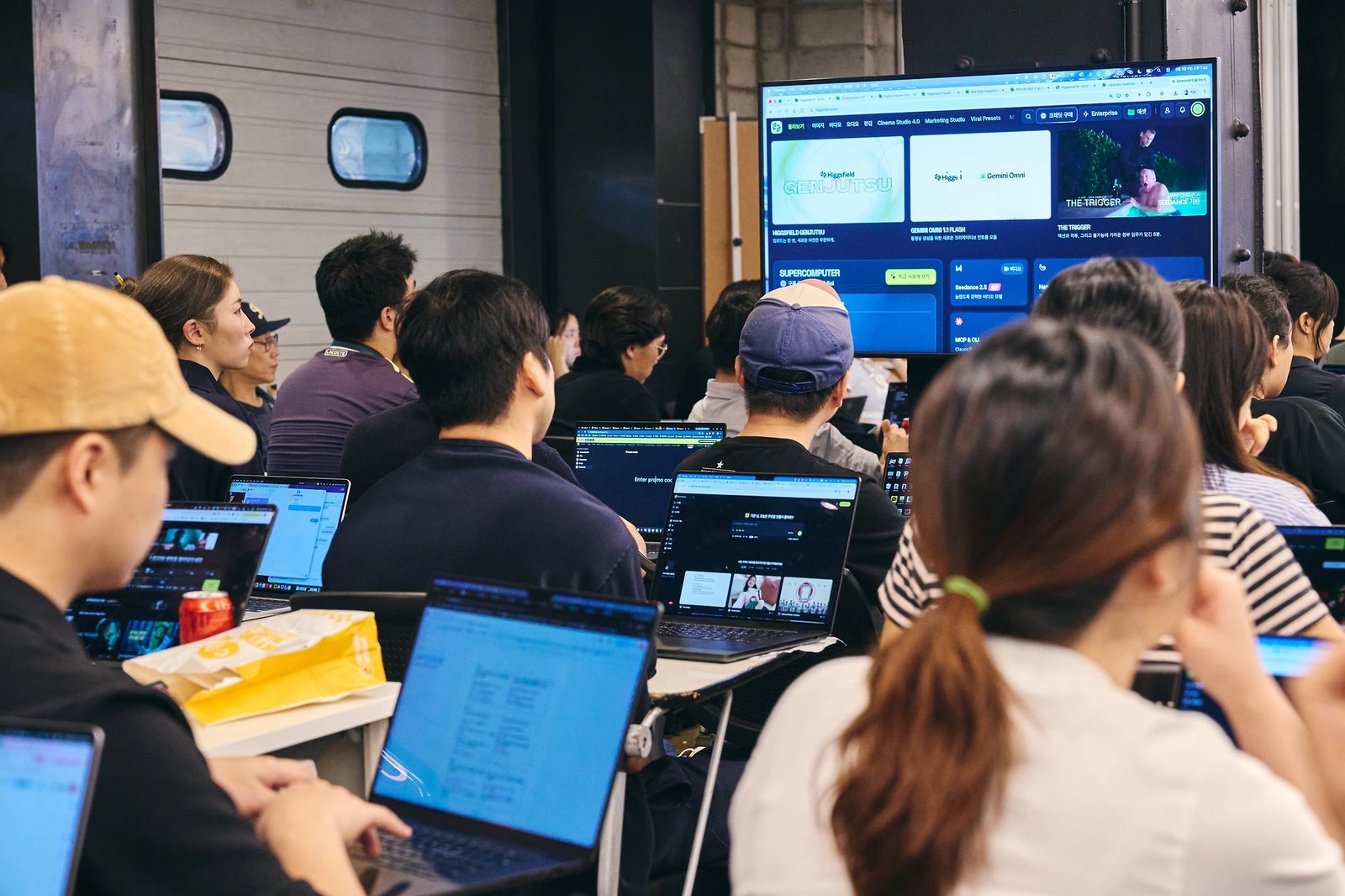
He described Higgsfield as an orchestrator, or an aggregator: engines like Seedance, Kling and Nano Banana picked from a single screen. Asked constantly which engine is best, his answer was that it depends on the purpose, and that a three-to-five-minute piece usually draws on four or more. He also raised the people vibe-coding games who stall on image assets — the AI wrote the code, but there are no pictures to go with it. Those assets can be made in the same place.
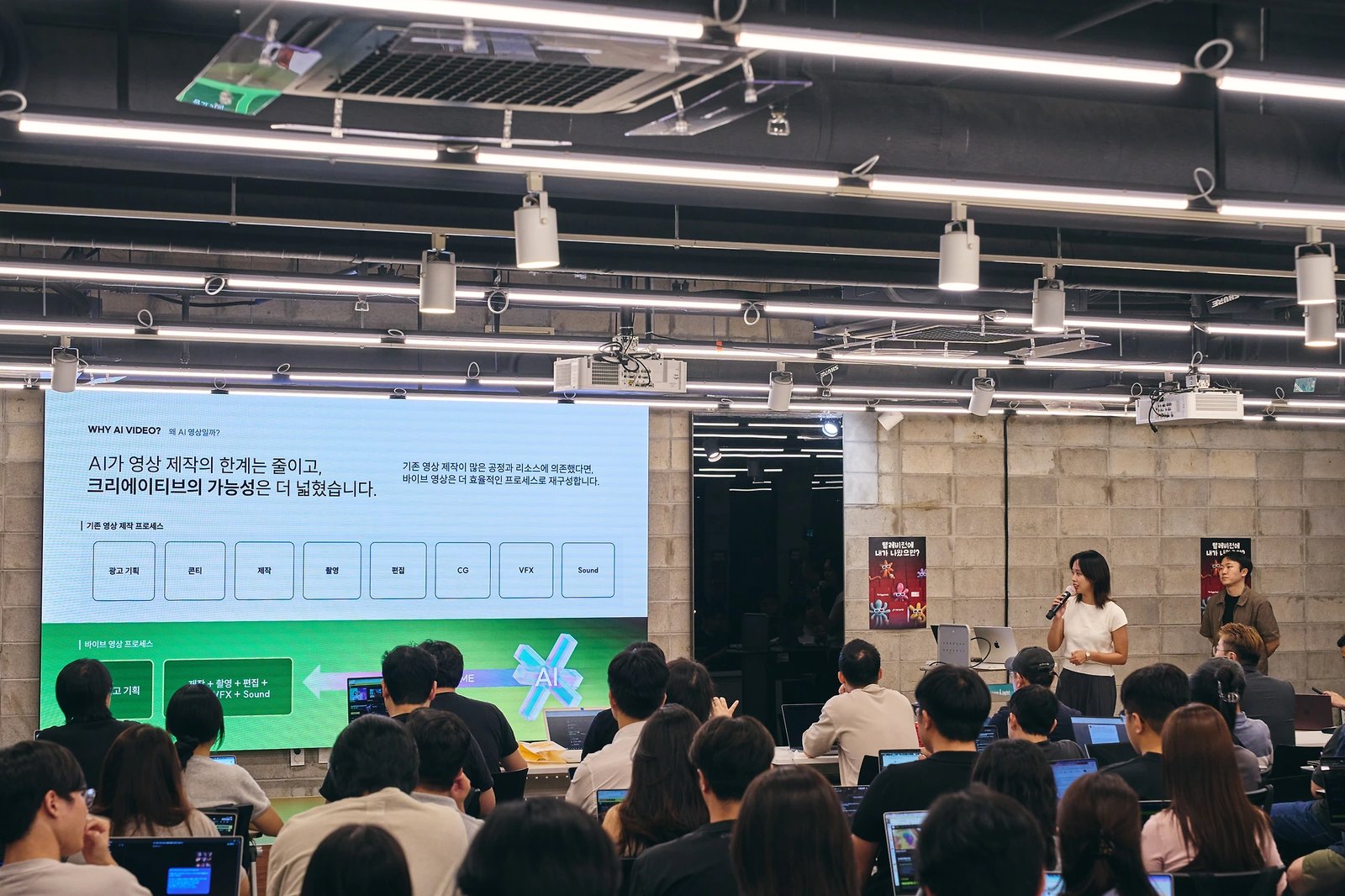
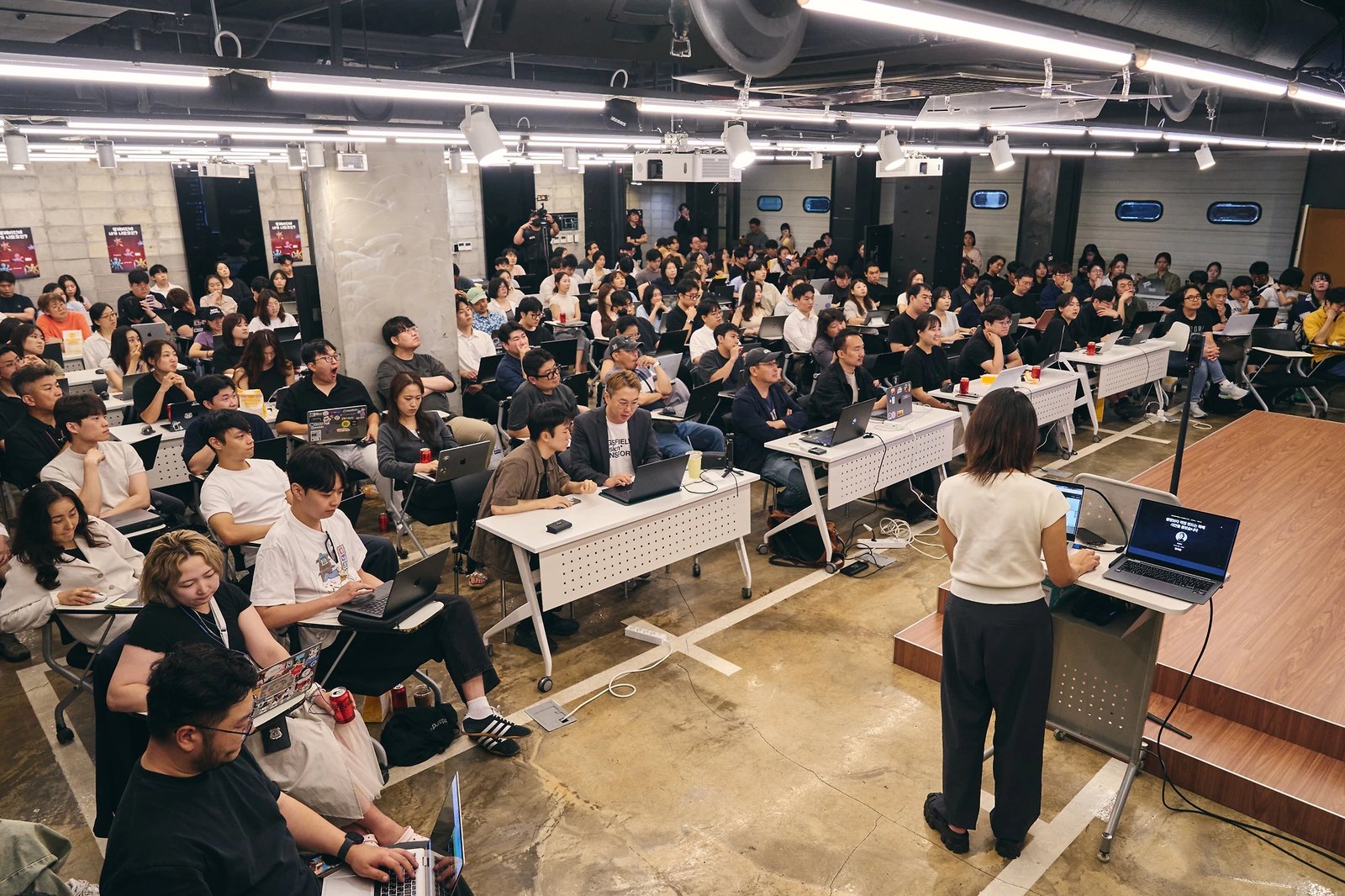
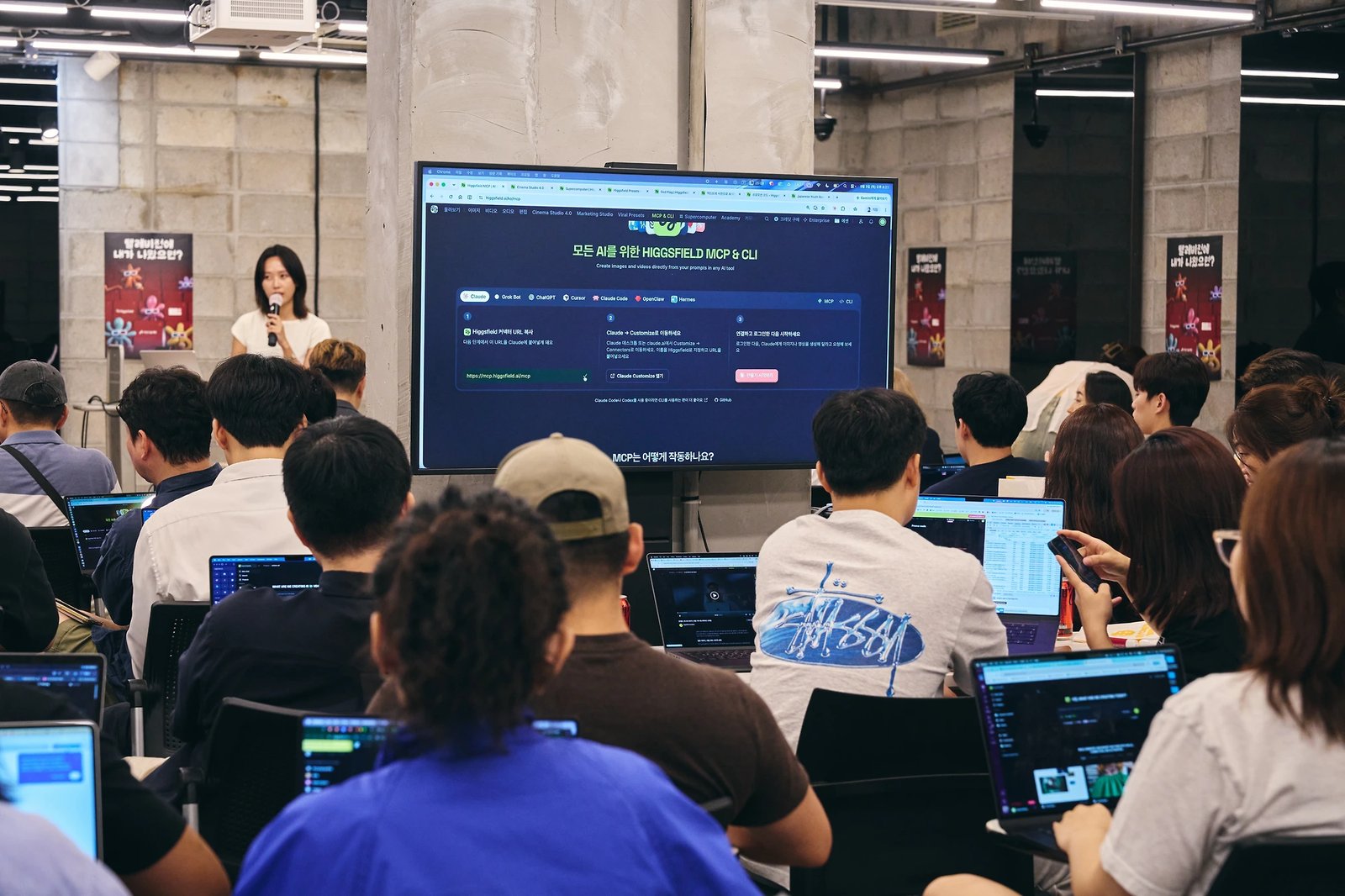
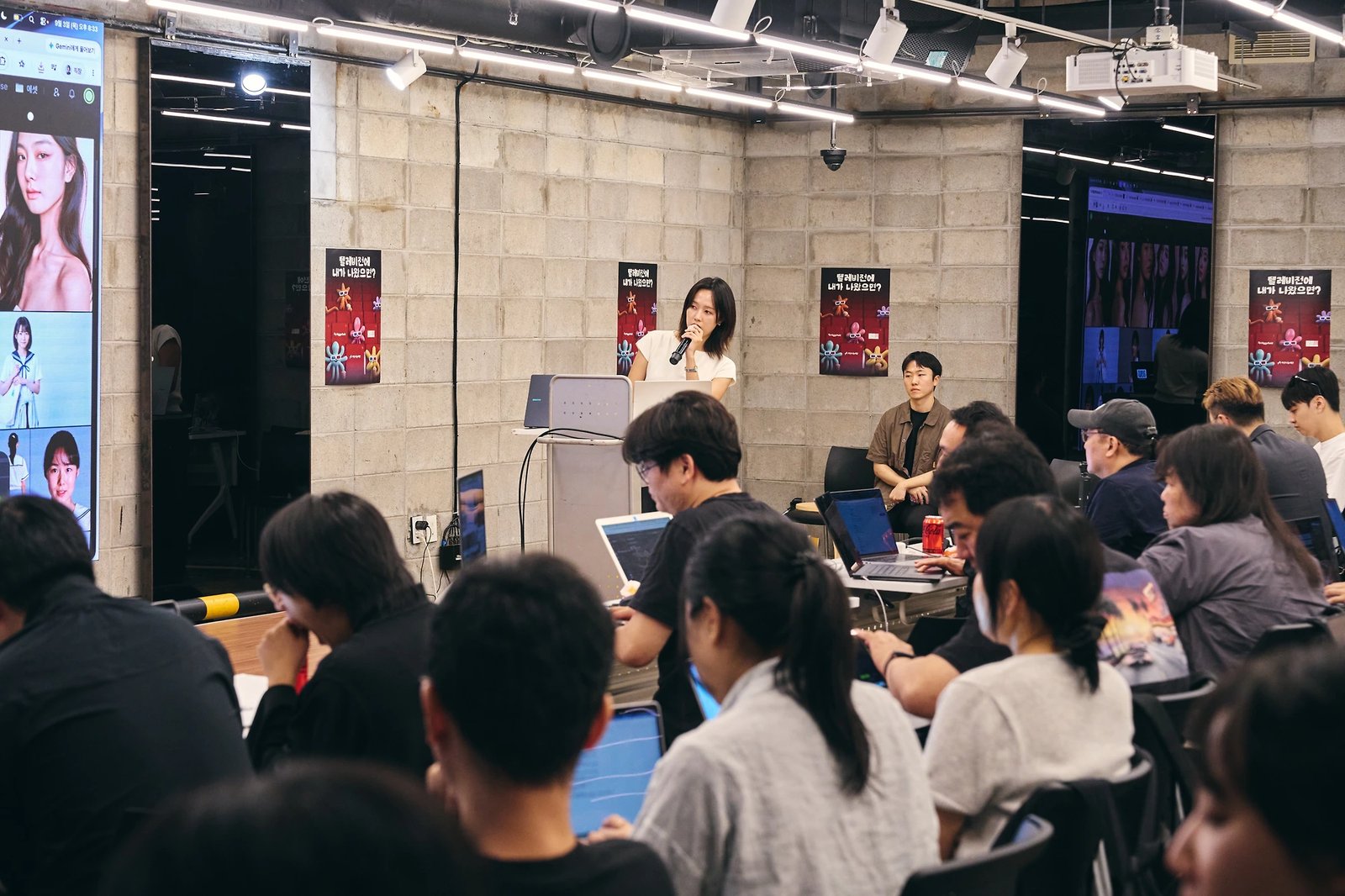
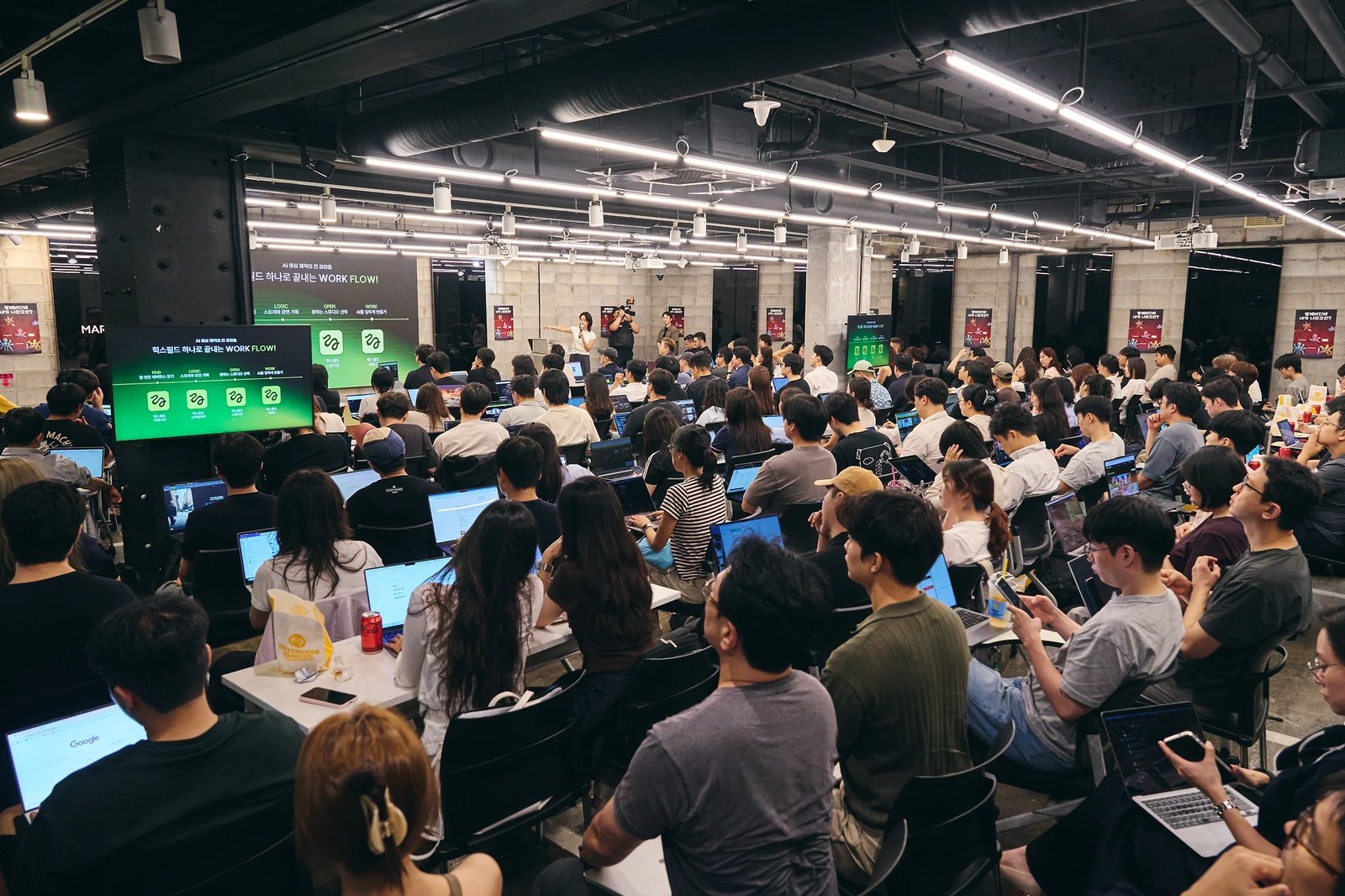
Da-sol Kim ran the hands-on half. She moved from agency planning to running HAXAI, an AI video agency, and posts on YouTube as Ro. People forget everything once a class ends, she said, so she built the session around a single keyword: FLOW. F is Find, gathering references. L is Logic, planning the story and scenes. O is Open, choosing a studio. W is Work — inverted: you are not the one working, you make the AI work.
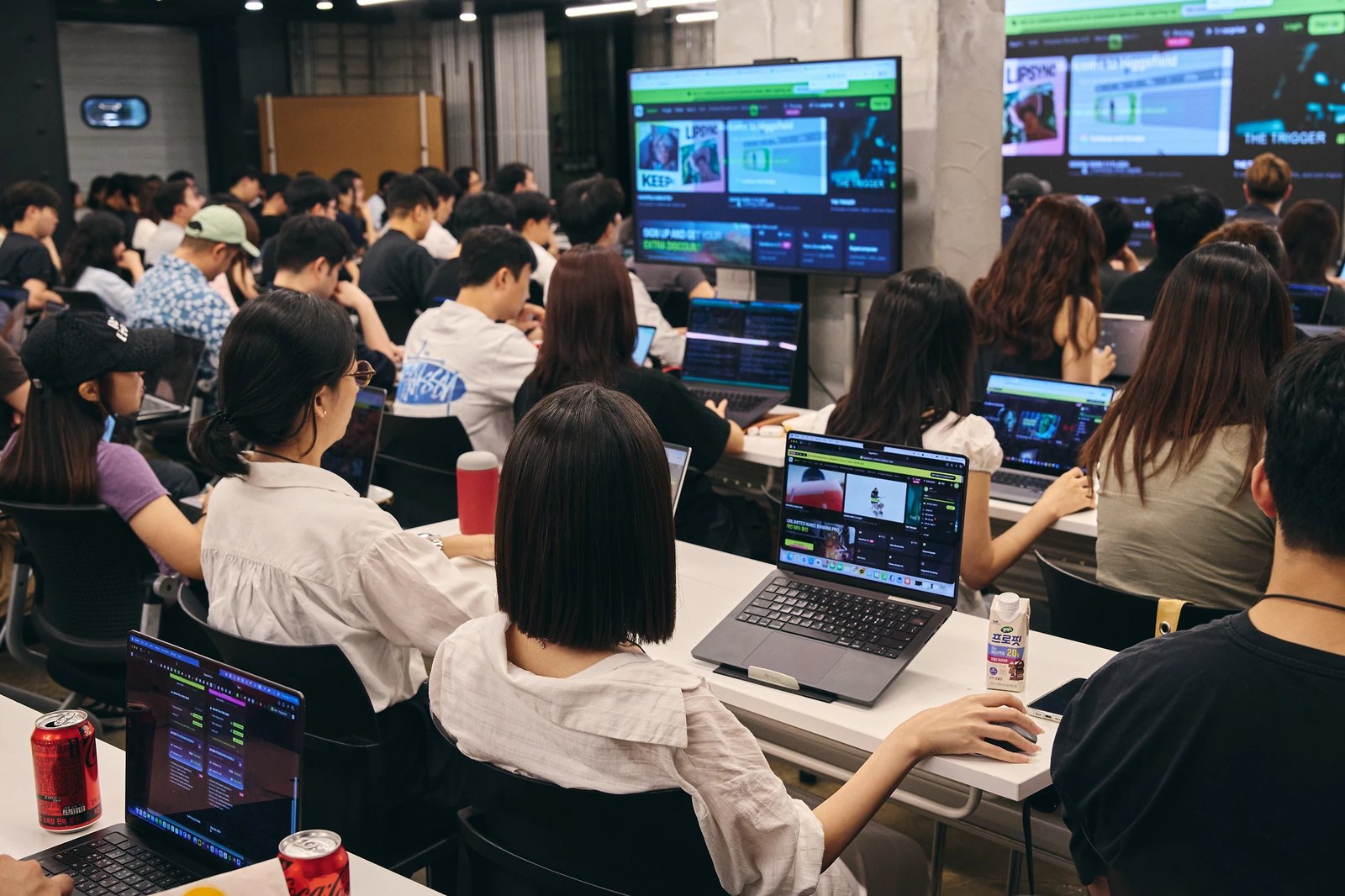
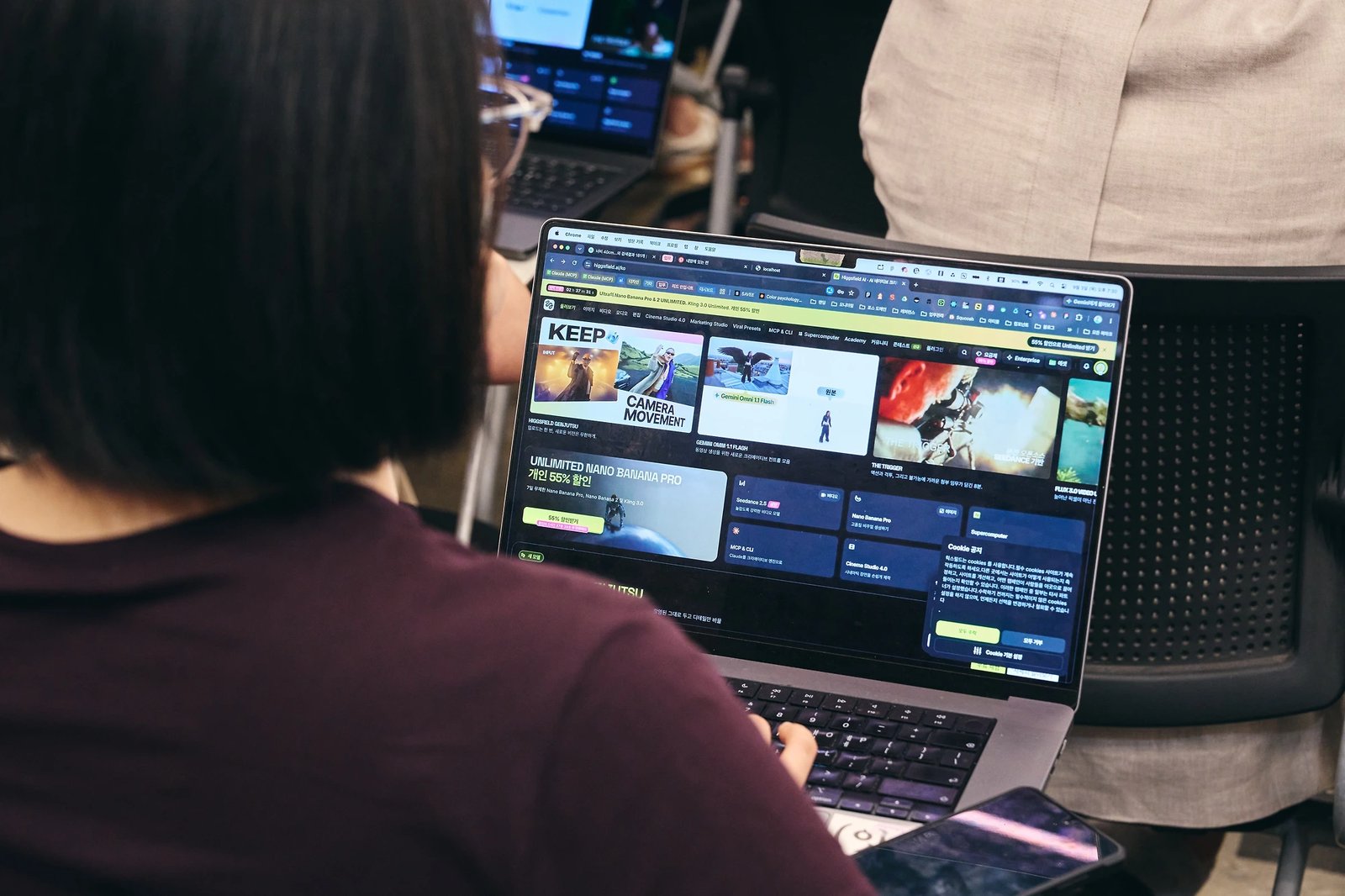
Find got the most use in the workshop. Open someone else's project in the Higgsfield community and the assets are laid out — character, wardrobe, location, props — and clicking a scene reveals the prompt, the model used and the resolution. You can take the working method of people who are good at this straight from them. It also helps with consistency, the problem of putting the same character in several scenes: you need angles from front to profile, and other people's assets show you that. She compared it to the order of making a film — cast the actor, let the stylist handle wardrobe, pick the location, prepare the props. She often copies a prompt into her own LLM and asks it to adapt it to her project.
The Logic demo was a Japanese youth romance short. She started with wanting a 30-second piece, and the model proposed settling the world first, offering choices of setting and leads. She picked a seaside town, and a few clicks produced character profiles, a storyline and narration. Asked for character images, it switched itself to Soul, the model that renders realistic faces — so realistic that her high-schooler read as an office worker in a school uniform. Younger, then not too handsome, and after a few passes she landed on the phrase that worked: an appealing, likeable face. The model had not got it wrong; she simply had not told it the direction yet, and not getting what you want on the first try is nothing to panic about. She was candid that she does not write image prompts herself either — an LLM does.
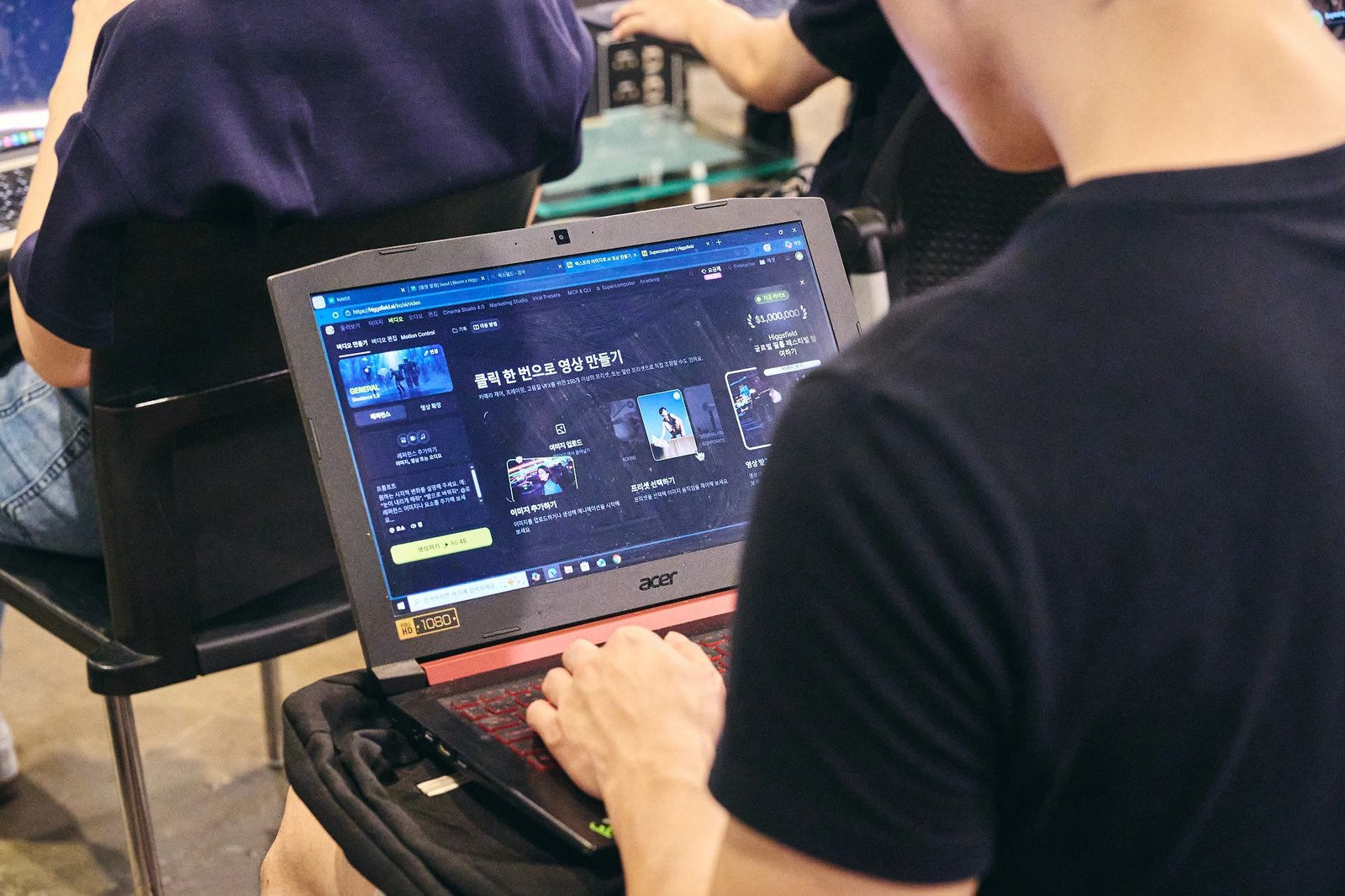
She covered studio selection too. If you do not know what to make, scroll the templates: an ad multiplier for advertising a product, a viral preset for social. For anyone with a product she recommended the marketing studio, where you upload the product and it composites without a prompt; for anyone wanting to make a film, Cinema Studio, where you upload a lead to the reference, set genre, period and tempo, and pick camera, lighting and color palette separately. Two practical tips: test at 480p and raise the quality once it looks right rather than rendering 1080p from the start, and begin with clips of four seconds — both credits and waiting time are at stake. Turning audio on adds music, and dialogue inside quotation marks comes back dubbed. Mid-demo she learned from the room that Korean-language support had shipped three days earlier, something she had missed despite using the tool daily.
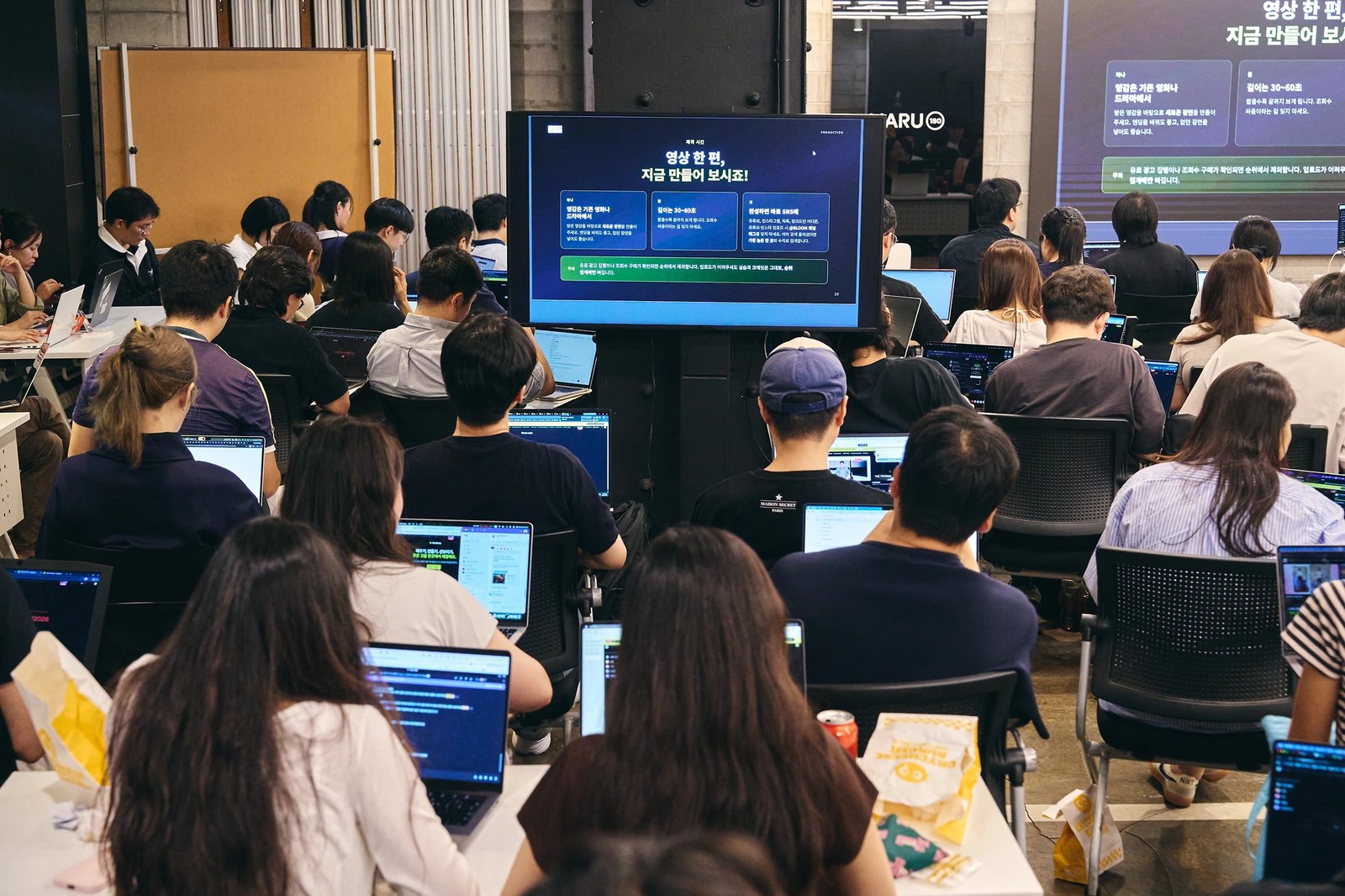
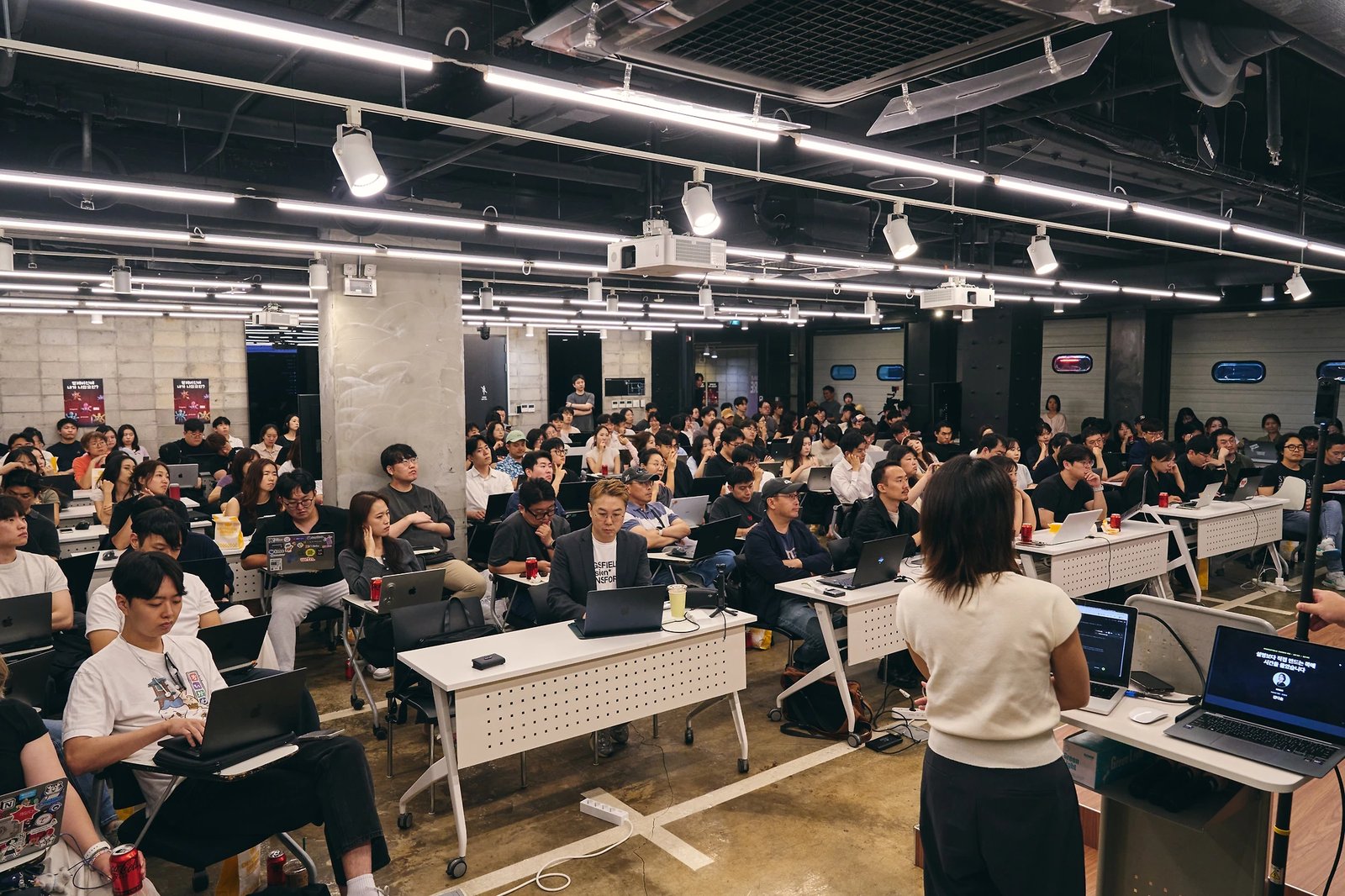
On the way into the workshop the credit promo code did not apply. The credit allocation covered 100 people and 150 had come, and the wifi struggled with a crowd underground. Da-sol Kim filled the gap by falling back on prepared slides when the screen would not advance and playing a recording of her rehearsal, and shared a written version of the talk so people could follow along while waiting. Min-sung Kim had asked at the start that anyone who already had credits use their own rather than the promo code, promising to repay them with 500 credits that week; six people raised their hands. Higgsfield headquarters then granted all 150 attendees an Ultra plan worth about 200,000 won each, and the prizes were extended from the top three to the top ten.
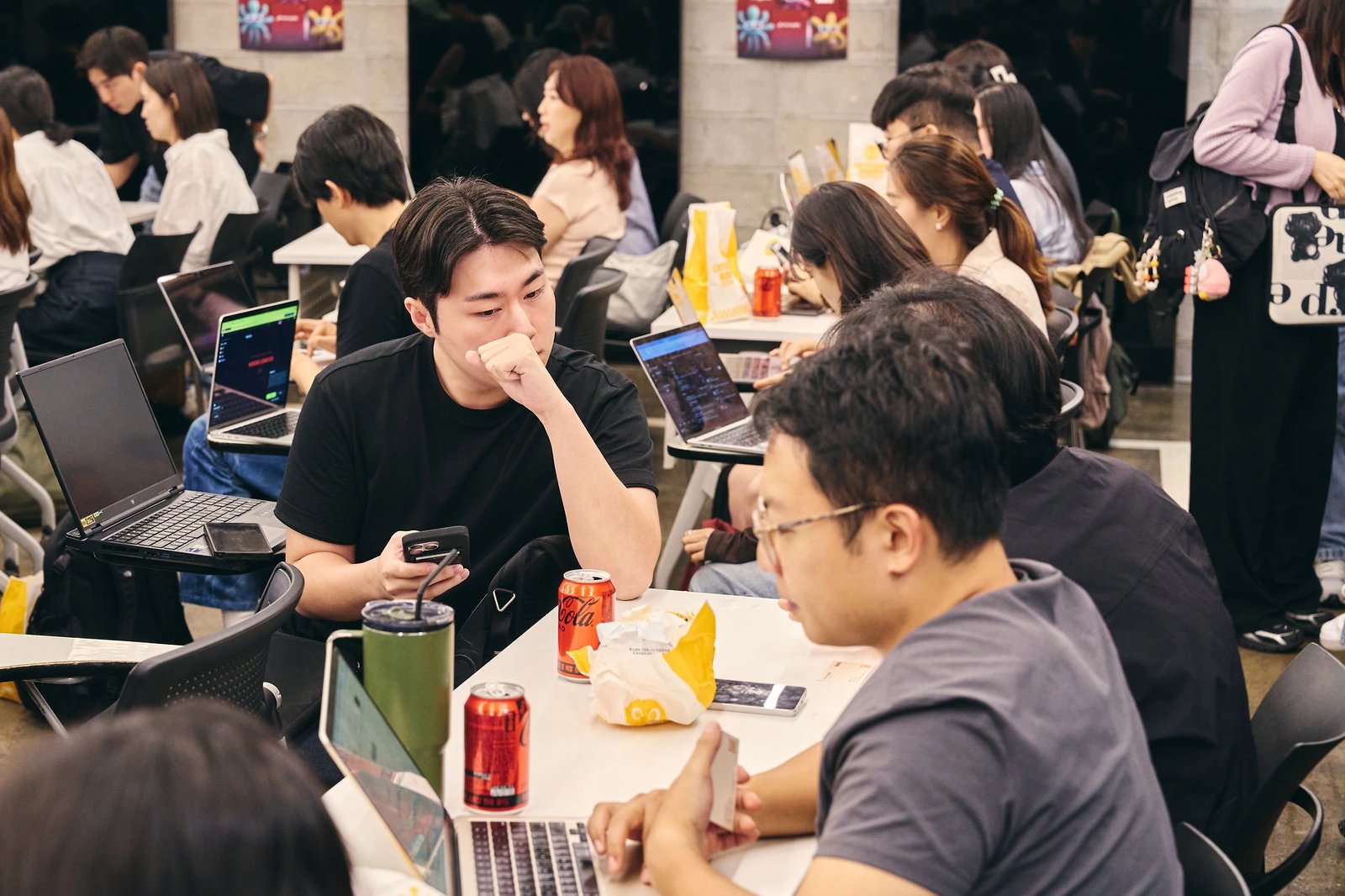
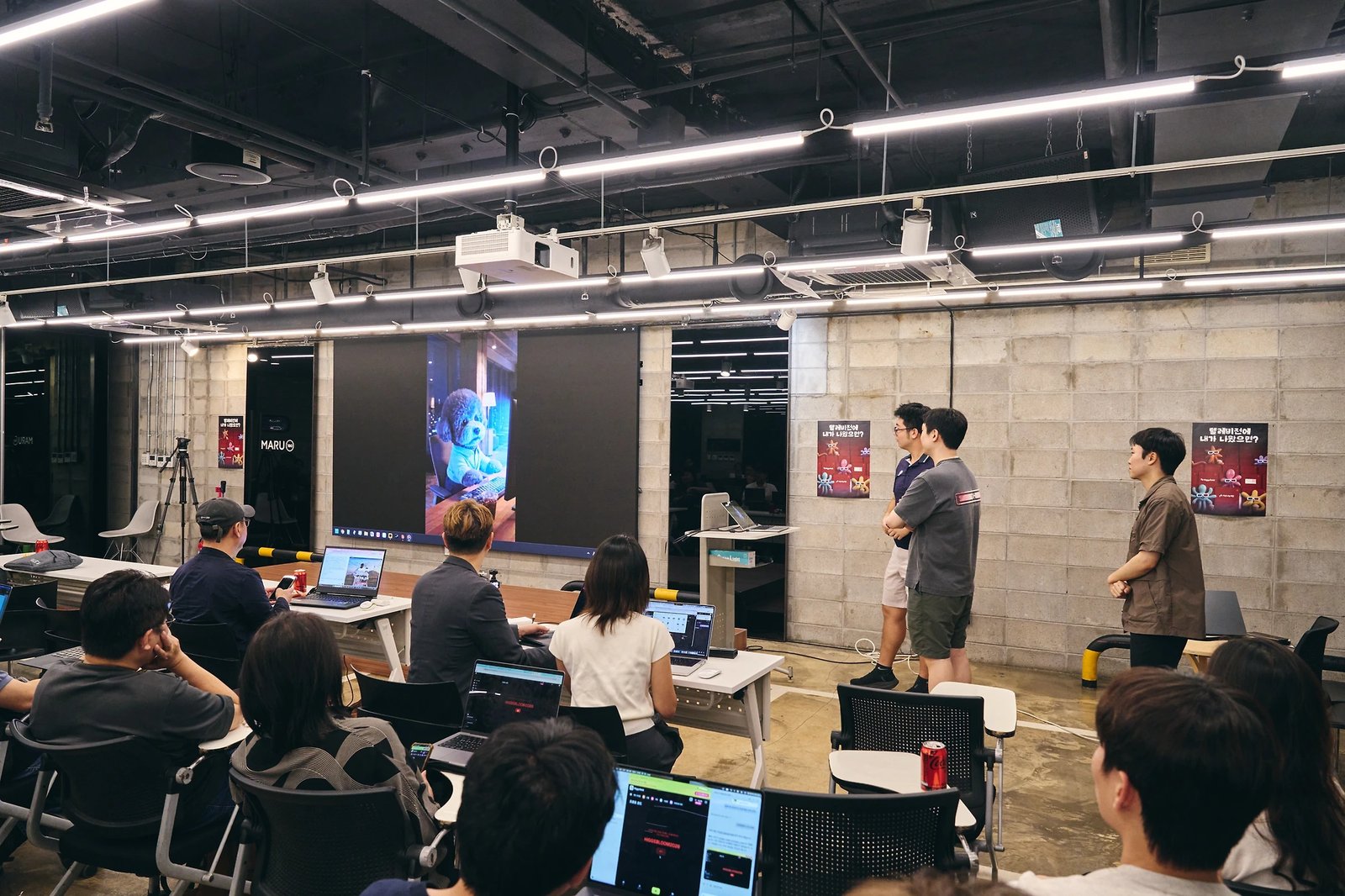
The last 20 minutes went to watching what people had built. Jeong-min's video drew a request to see it again, so it played twice. In-gyu Choi's was not a film ending at all: annoyed at his own workload, he made a video of his dog doing the prep for him, finding backup files — and though he never touched the sound, it came with a save sound effect. Min-sung Kim showed the marketing studio: no prompt, just a product page link, an avatar, two product photos and a 15-second order. In the result the model says the lenses block UV and blue light, that they are light enough to forget you are wearing them, and that the grey is uncommon enough to change the mood — all read off the reviews on the product page. The Namsan backdrop was never requested; it was chosen from the Korean text and a Korean IP. The whole thing cost four credits.
Read the full write-upGallery

Next event