
Don't set up a US entity before you have revenue
What was discussed

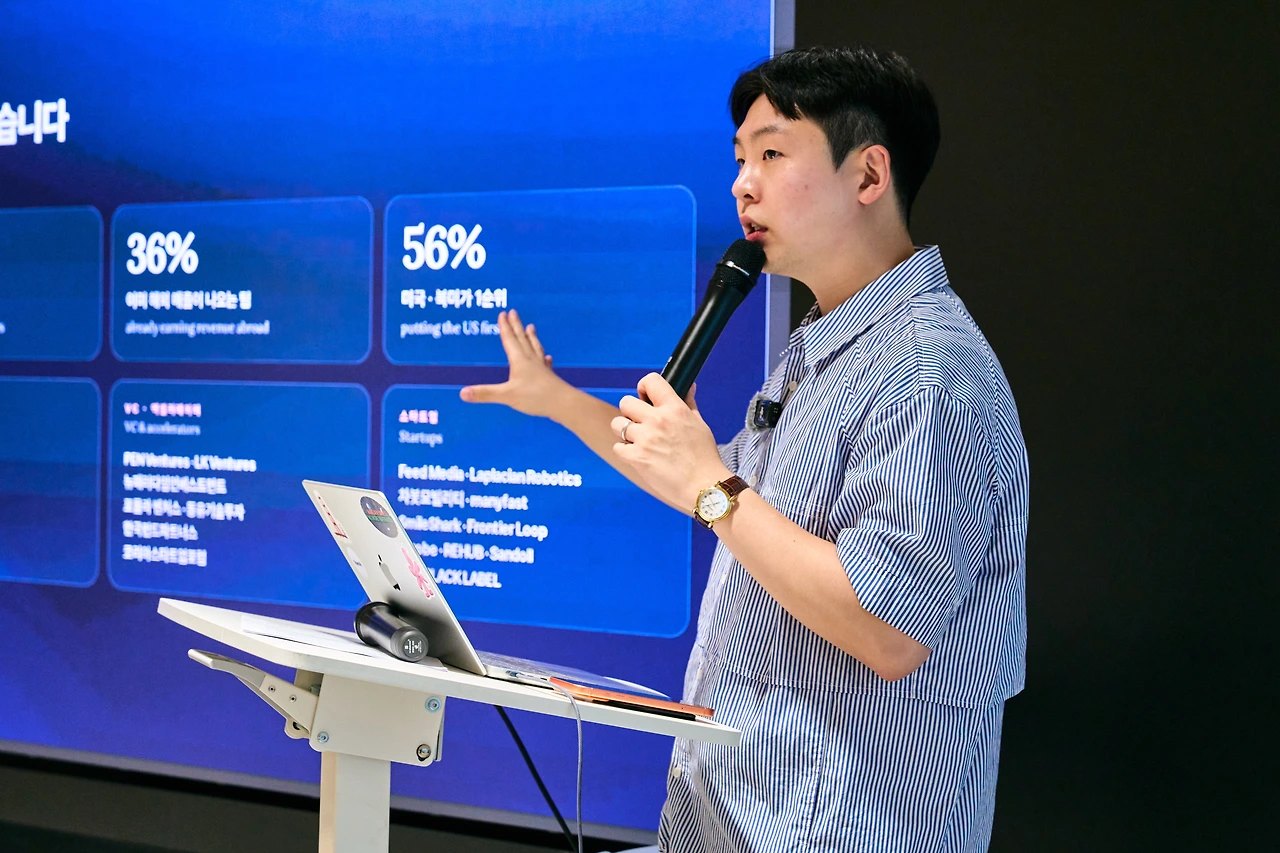
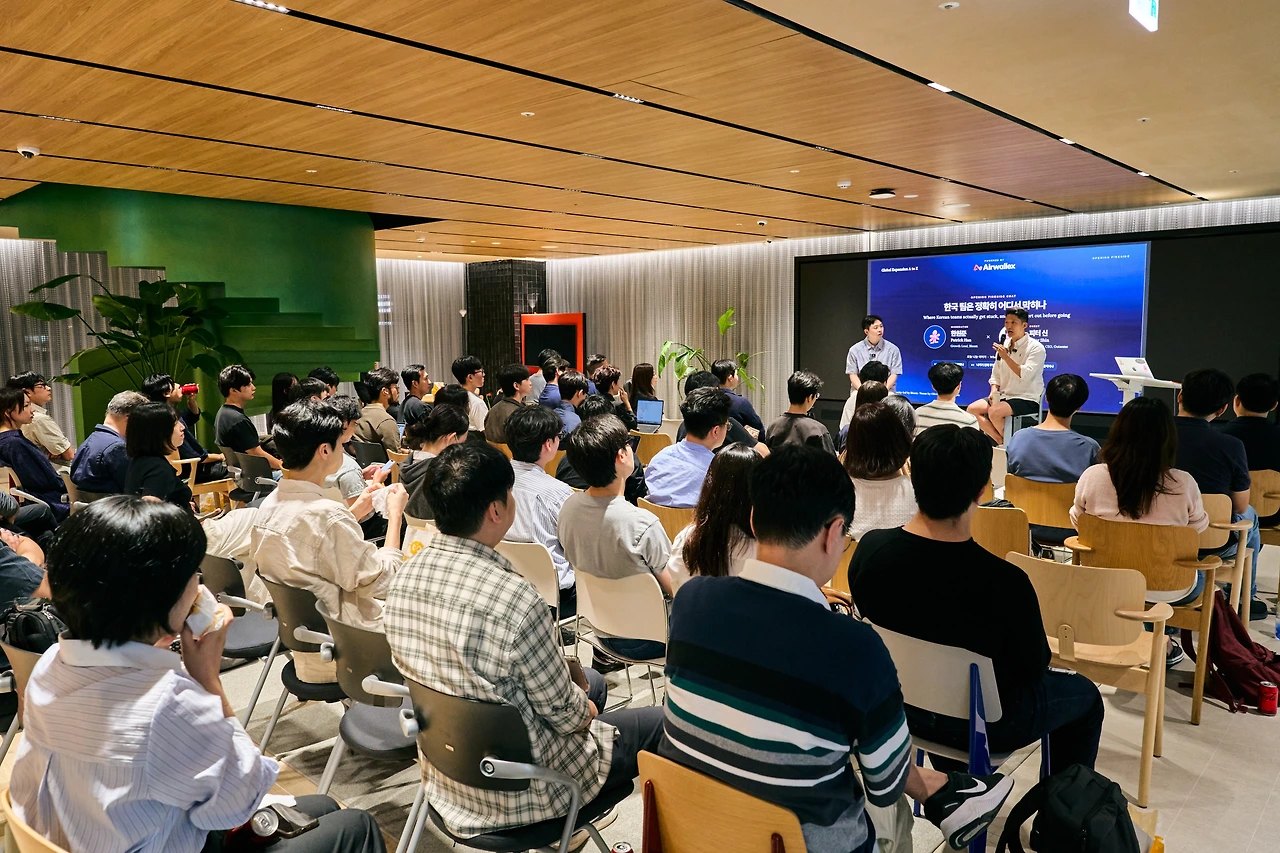
One hundred eighty-one people signed up, and more than half, 51 percent, were founders, C-level, or partners. Thirty-six percent already had overseas revenue, and 56 percent named the US and North America as their first market. Asked to pick the single biggest blocker in overseas payments and transfers, regulation, paperwork, and tax came first with 30 votes. Opening overseas accounts and entities came next with 26.
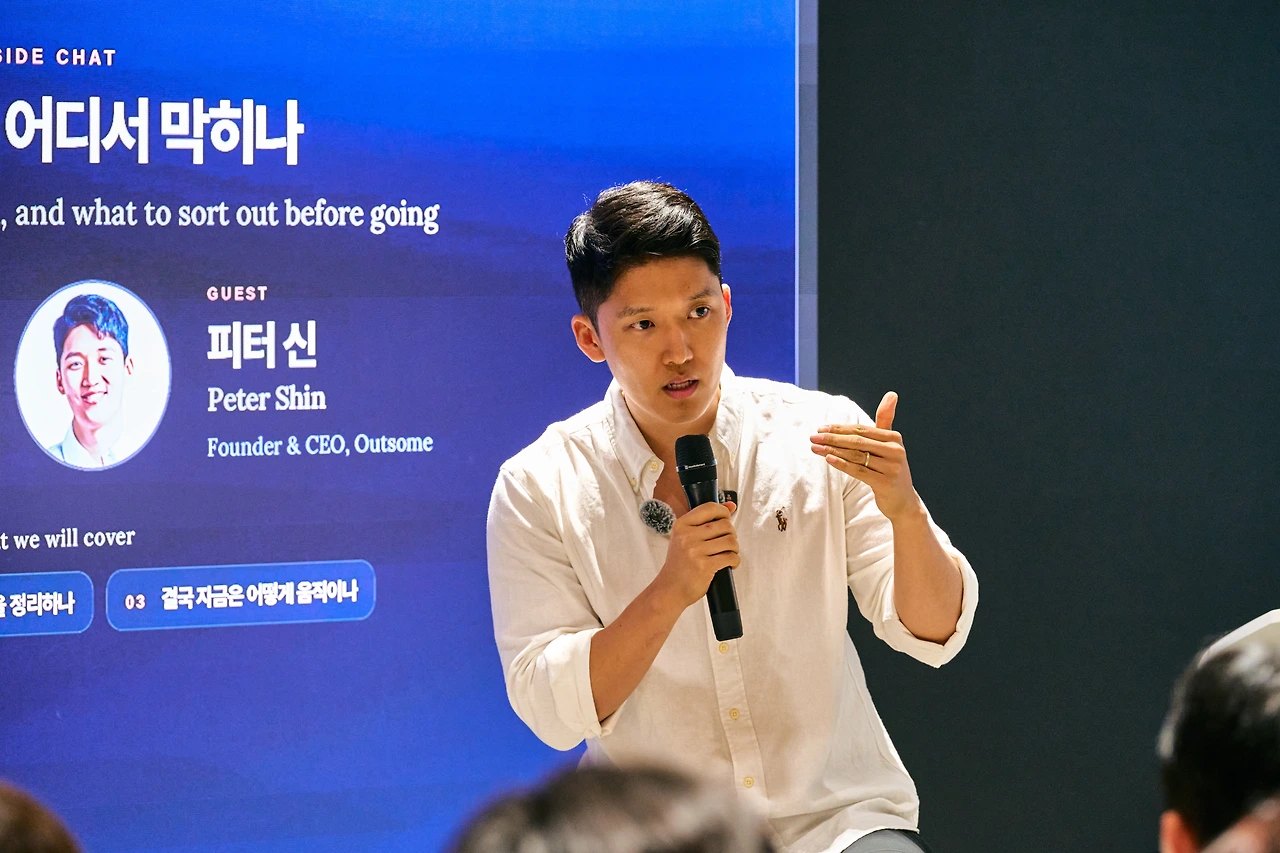
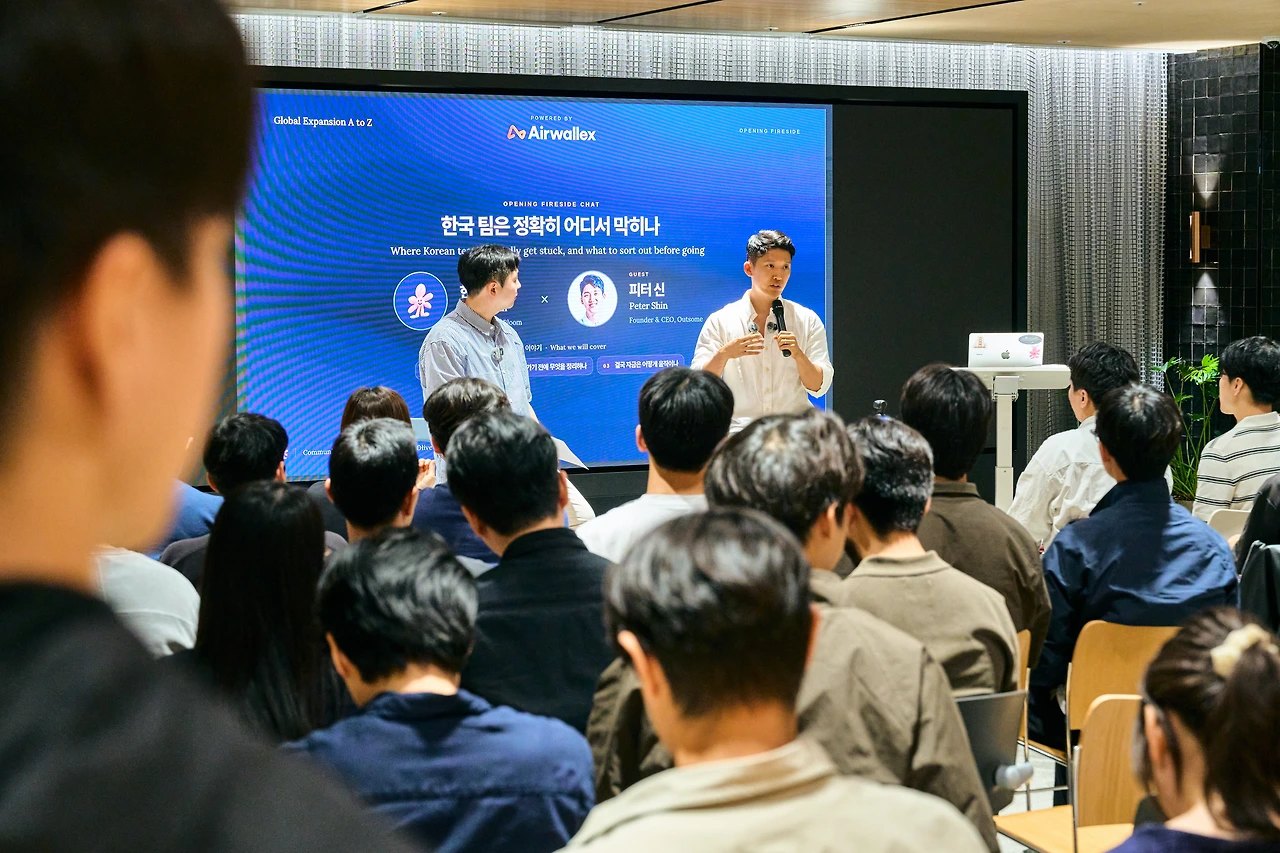
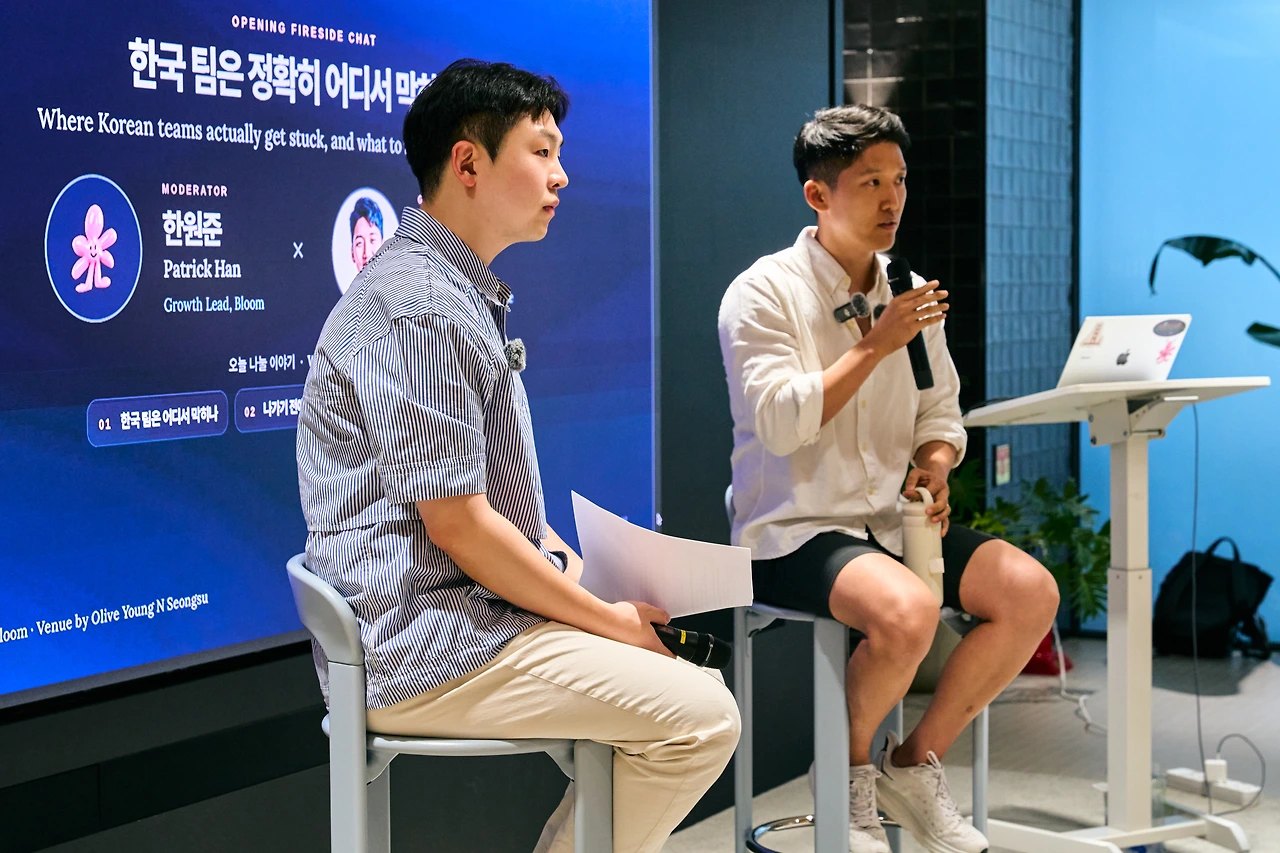
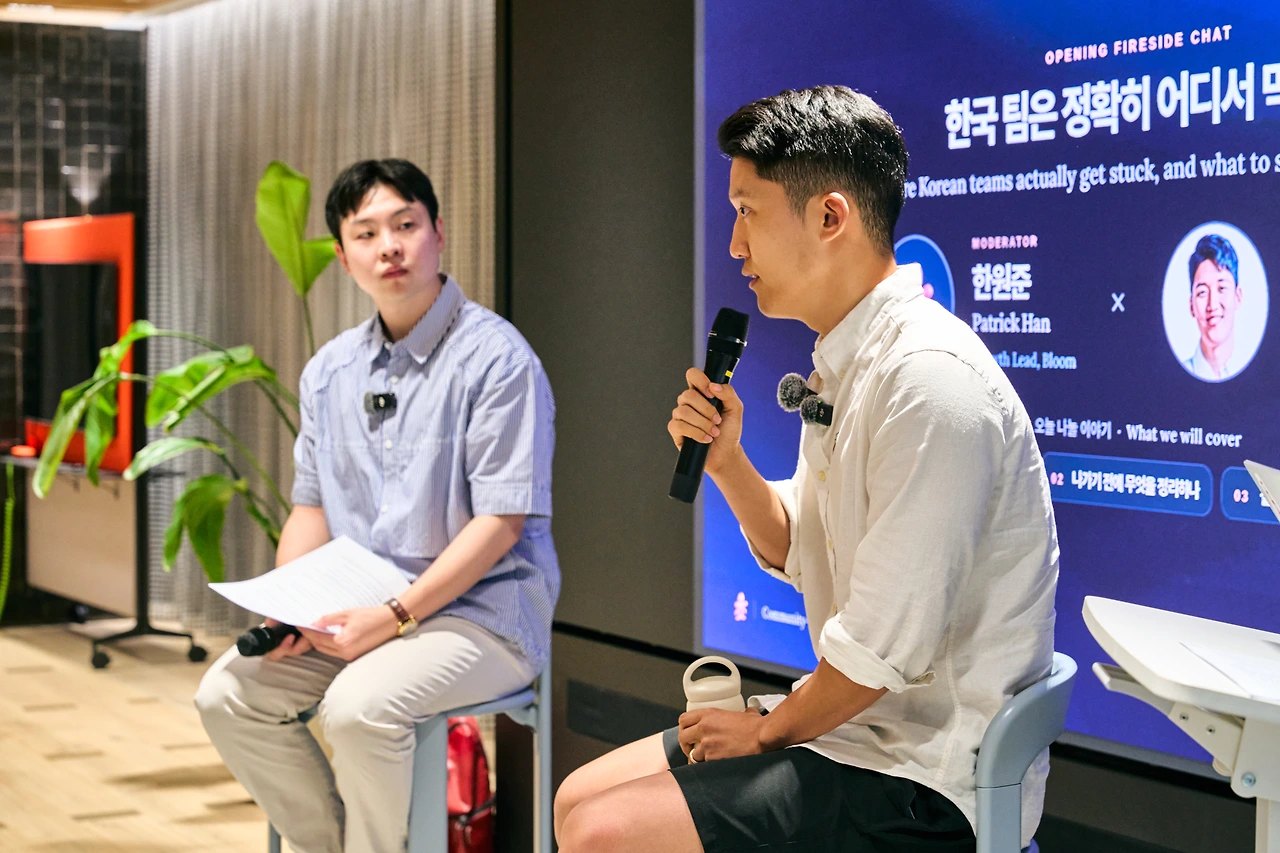
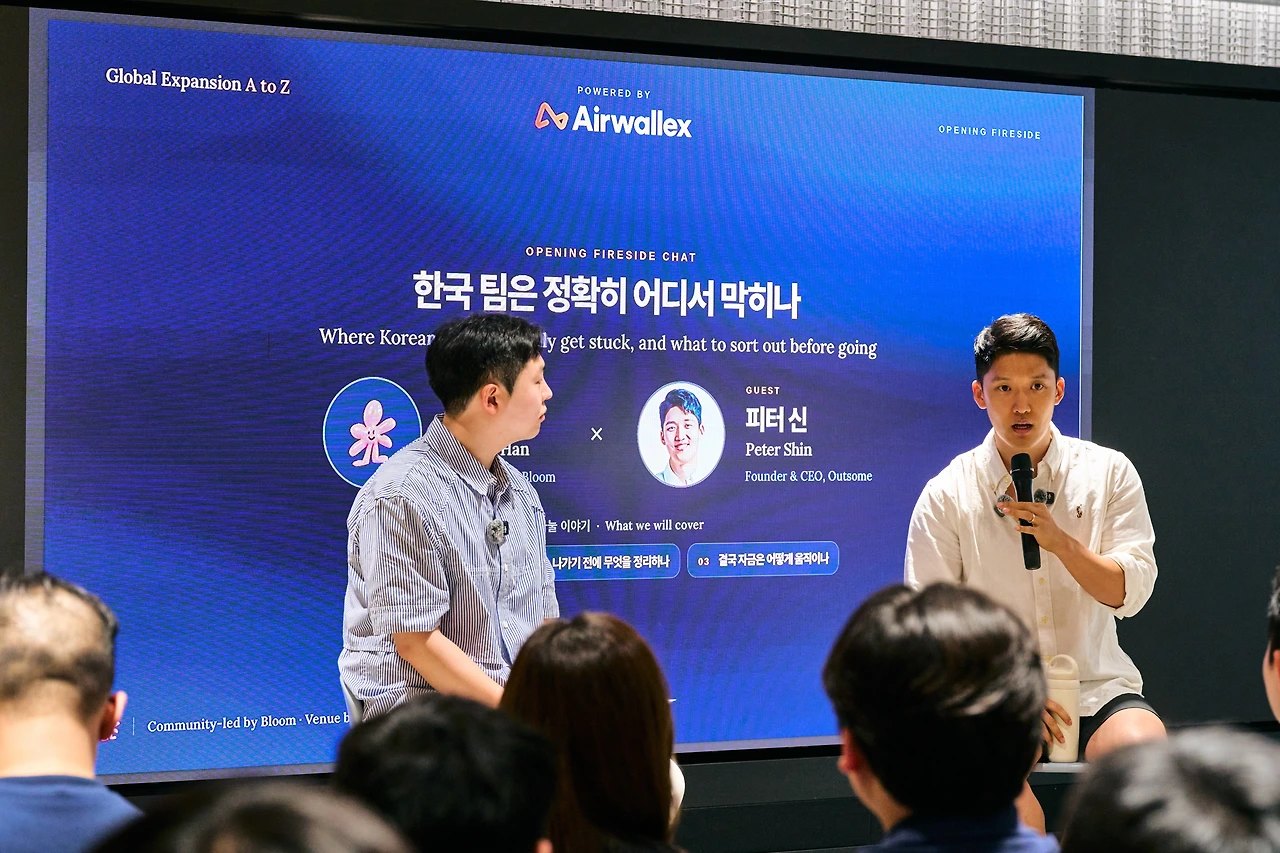
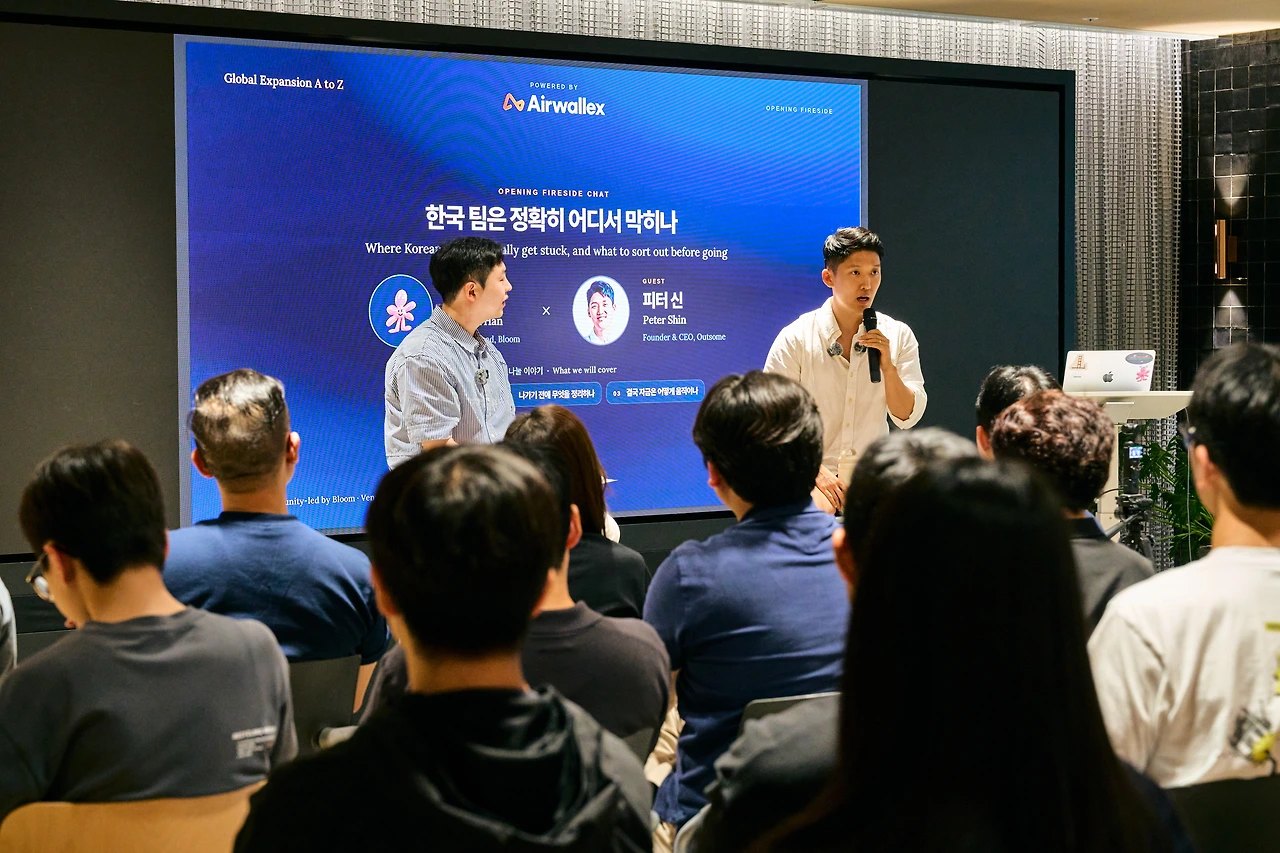
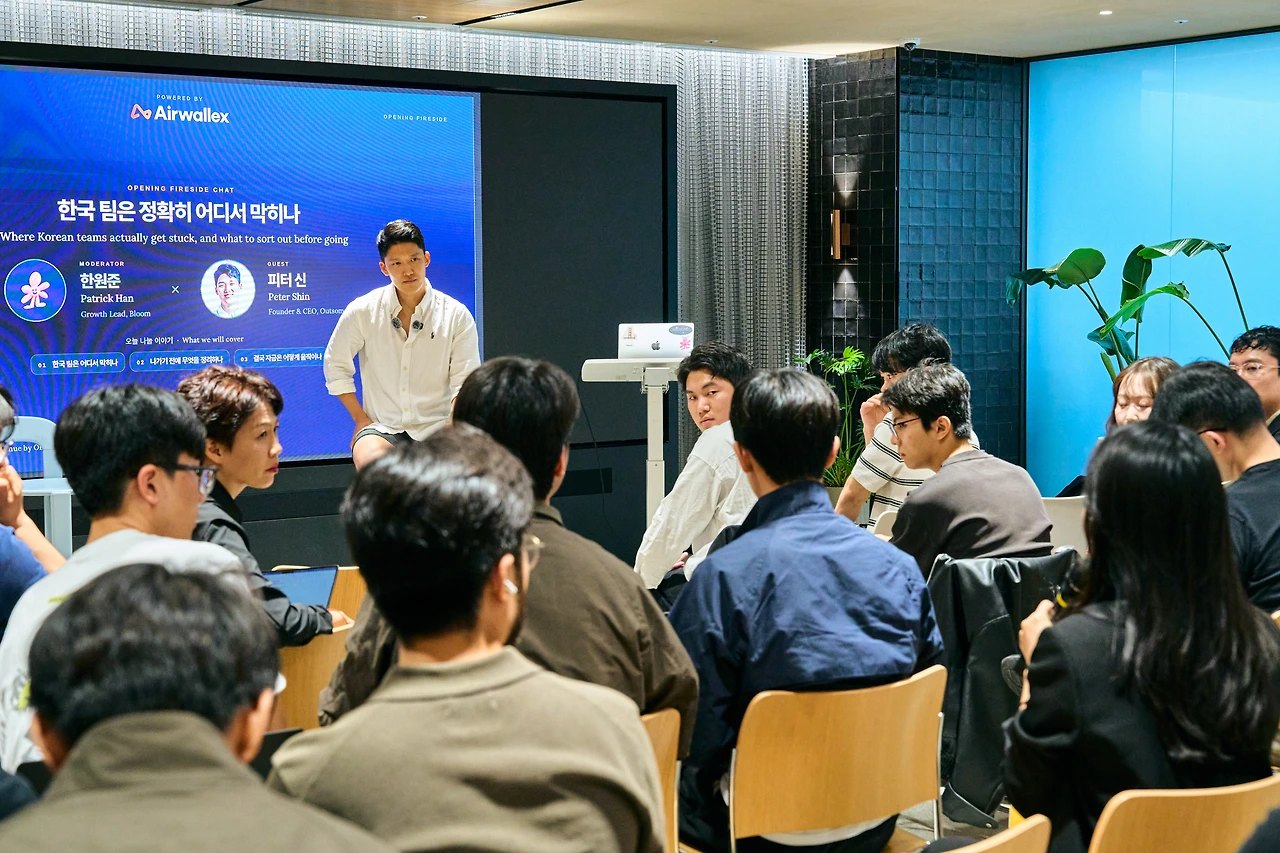
The first session was Peter Shin. He co-founded QueryPie and went through YC W20, ran 500 Global's Korea program for four years, and started the accelerator Outsome last July. We brought back something he had said on a video coffee chat earlier this year: sell the purpose, not the means. What did that mean? His answer was the iPhone. We are not buying a lump of CPU in a titanium chassis.
The first wall he named for Korean founders was not technology but self-censorship. Reaching Series A in Korea means clearing a difficulty close to Series D or an IPO by US standards. It is the same as saying Korea's national archery trials are harder than the Olympics. Carrying that difficulty straight to Silicon Valley is the arbitrage available to us, he said. Yet founders stay put, stuck on the idea that the product has to be perfect first.
Plenty go across without letting that go. They burn government grants and their own money to get there, then spend the night before meeting local VCs doing code review and QA. So the one metric he gives teams heading to Silicon Valley is this: go to Stanford or somewhere like it and make one friend. Dye your hair pink or yellow if that is what it takes to be remembered.
Outsome comes from outliers build something. Before YC he went to every investor in Korea and was turned down by all of them. Only after YC backed him did sales open up with major Korean fintechs and VCs line up. YC itself was an outlier, he said. When it set up the Continuity Fund to do follow-on rounds, Sequoia and other Silicon Valley VCs openly objected. Silicon Valley is where outliers build things and write the textbook, so if you are the outcast in Korea, Silicon Valley is home.
He said more than once to watch whether money comes in rather than running surveys. The best survey is a payment. Asked what to do without a product yet, he said one in six companies in this year's YC batch is a services company. Now that coding is easy, someone with industry insight interviewing customers and closing contracts is itself proof of product strength. The target should go past the company down to the job title. Not US healthcare, but which role at the insurer setting reimbursement rates for a new diabetes drug.
Asked whether being a foreigner becomes a trust problem, he flipped the premise. Korea is homogeneous, so someone from abroad stands out immediately; in the US, nobody can tell from an accent whether someone is a citizen. Unless asked, do not volunteer that you are from Korea or when you are going back. The moment you say you are leaving soon, the other person has no reason to tell you their problems. He added: do not leave a Korean street address in Korean at the bottom of your website.
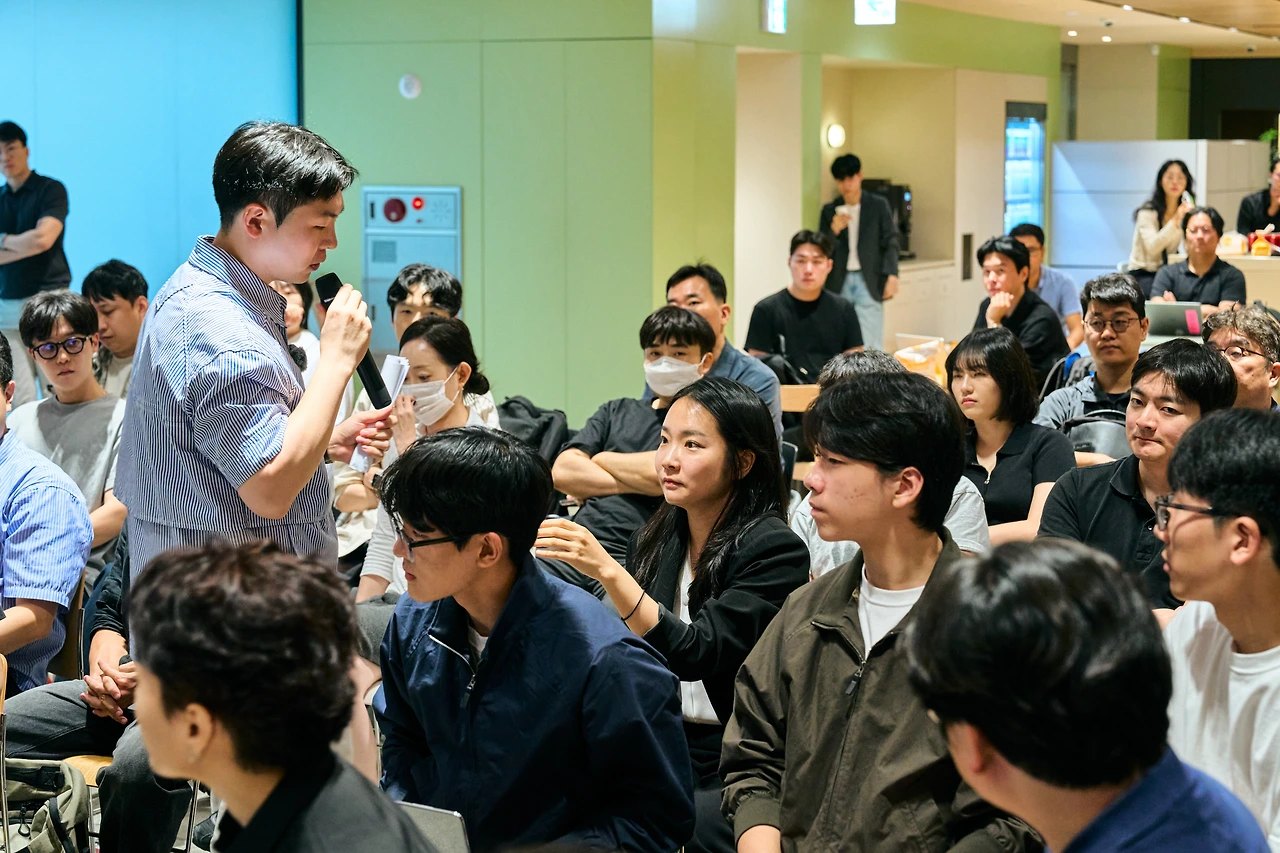
On when to set up an entity, his criteria were clear. When a contract is signed, when you have actually received three or five thousand dollars into a Korean account, and when that kind of purchase looks likely to happen elsewhere. A Delaware entity brings franchise tax and state filings from day one, and a local tax accountant alone runs two to three million won a year. Never set up a US entity without revenue, he said. Someone in the audience asked about gaining traction with agent commerce and running into payment terms. He said hacking the system is a framework Silicon Valley VCs love, and added that interviewing the people who broke through the barrier and bought again, to learn why, matters far more.
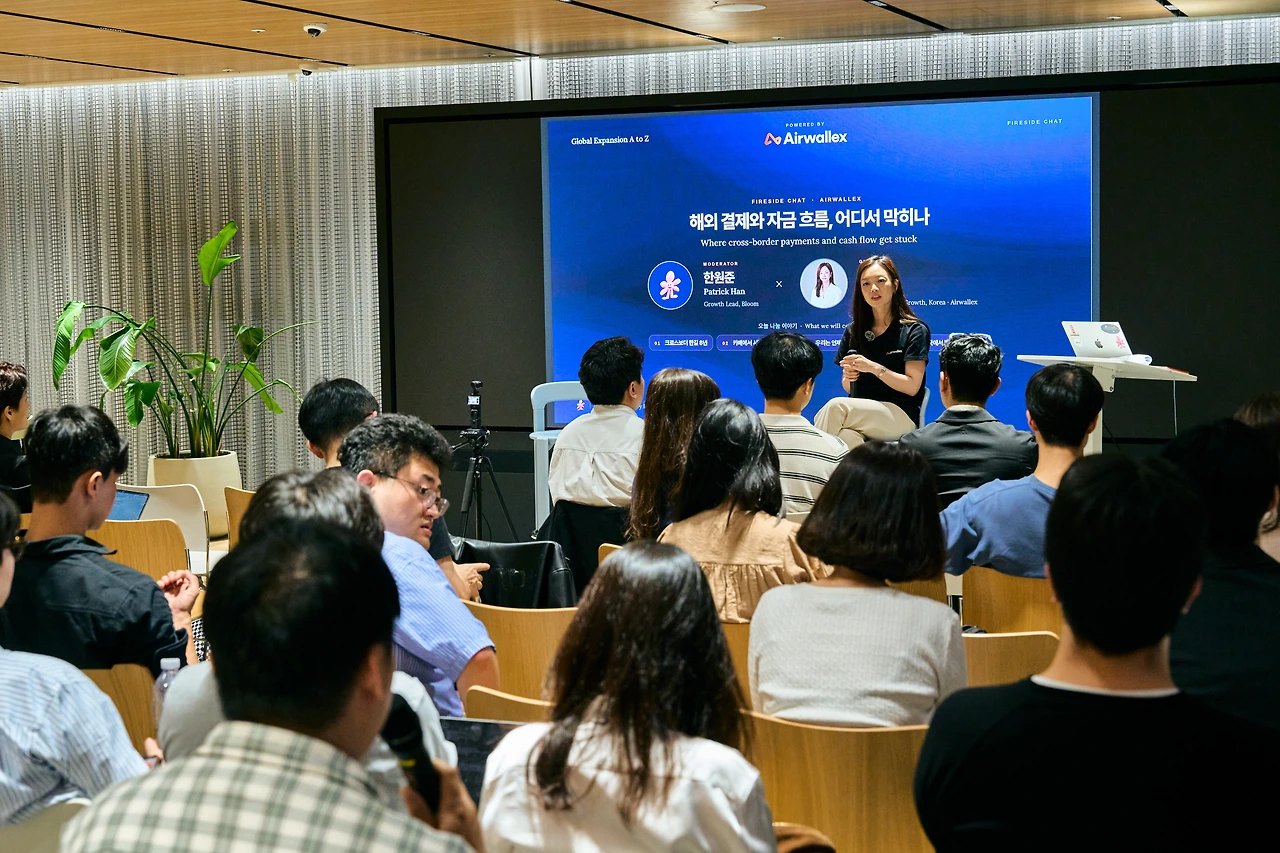
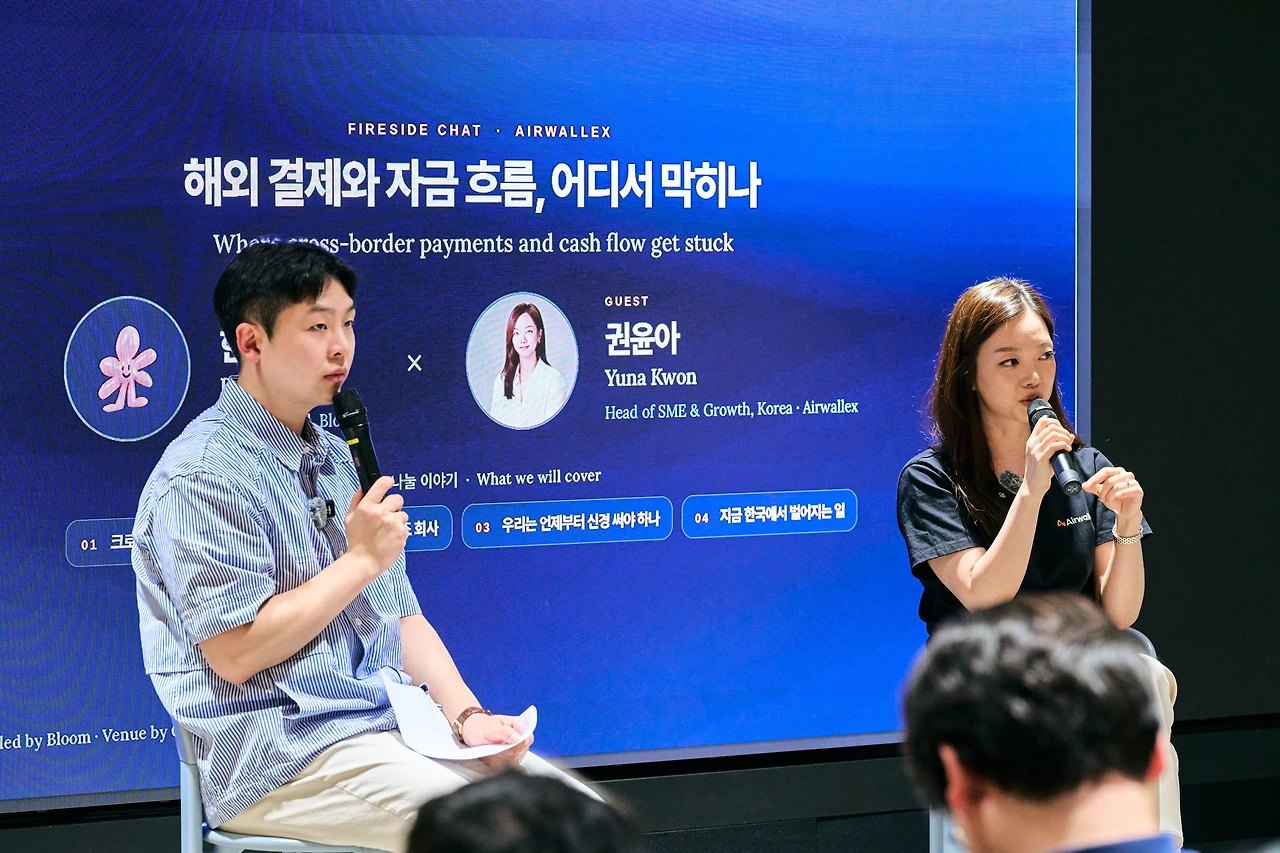
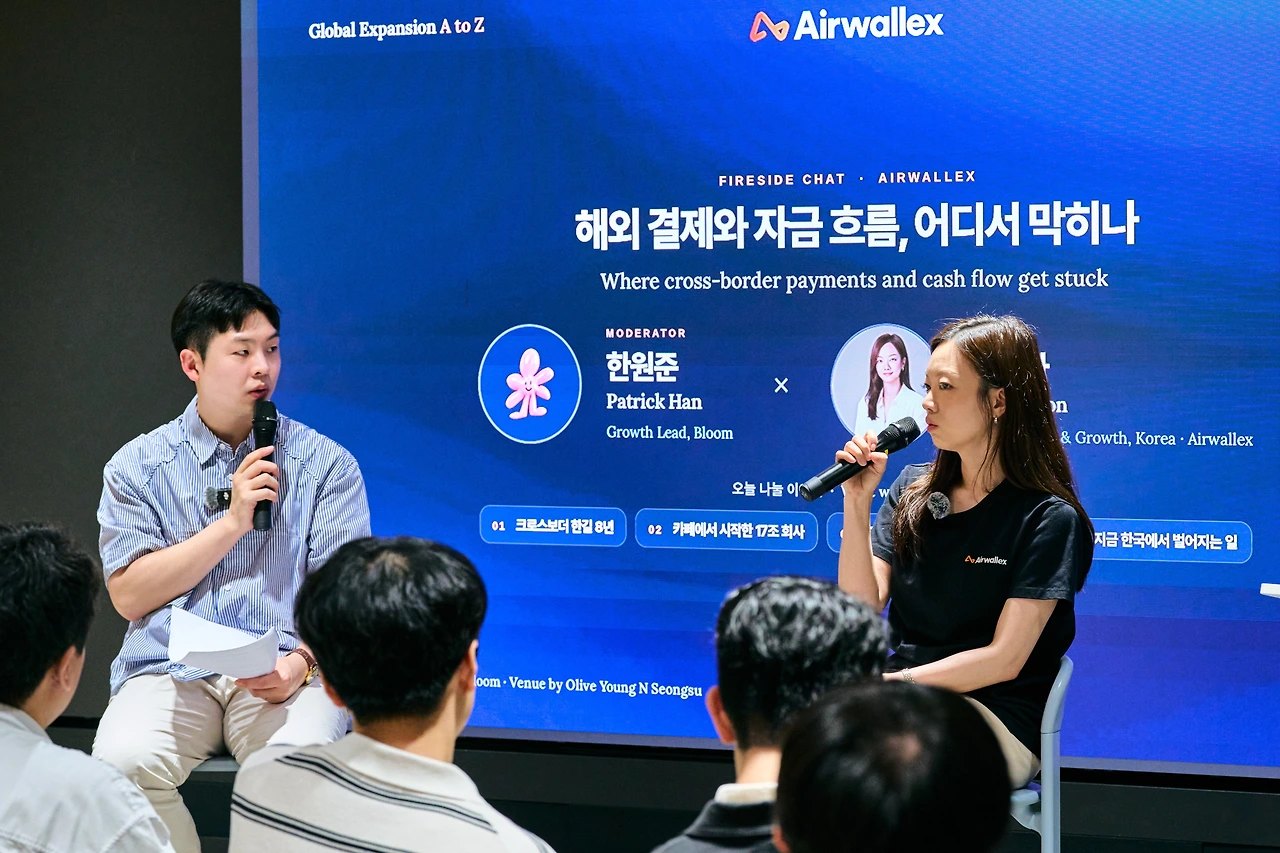
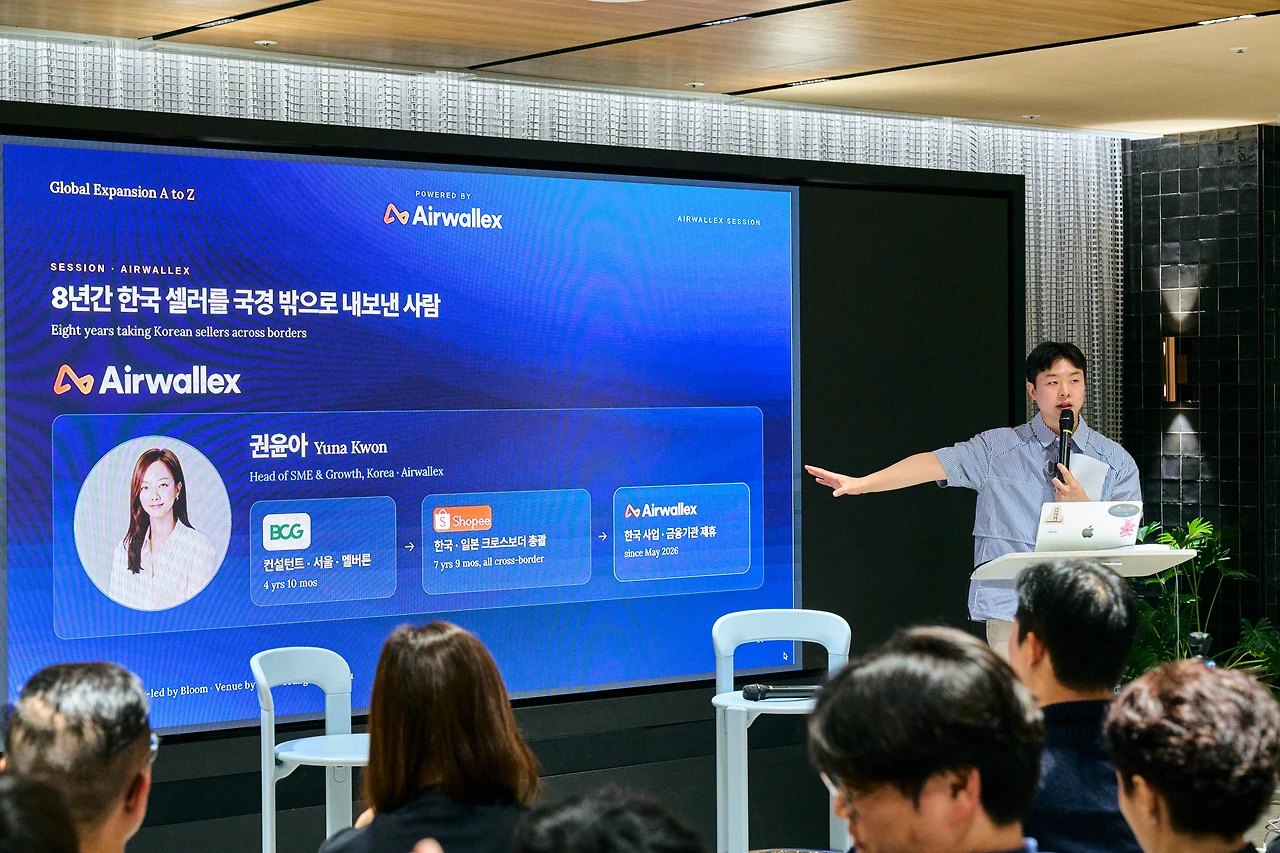
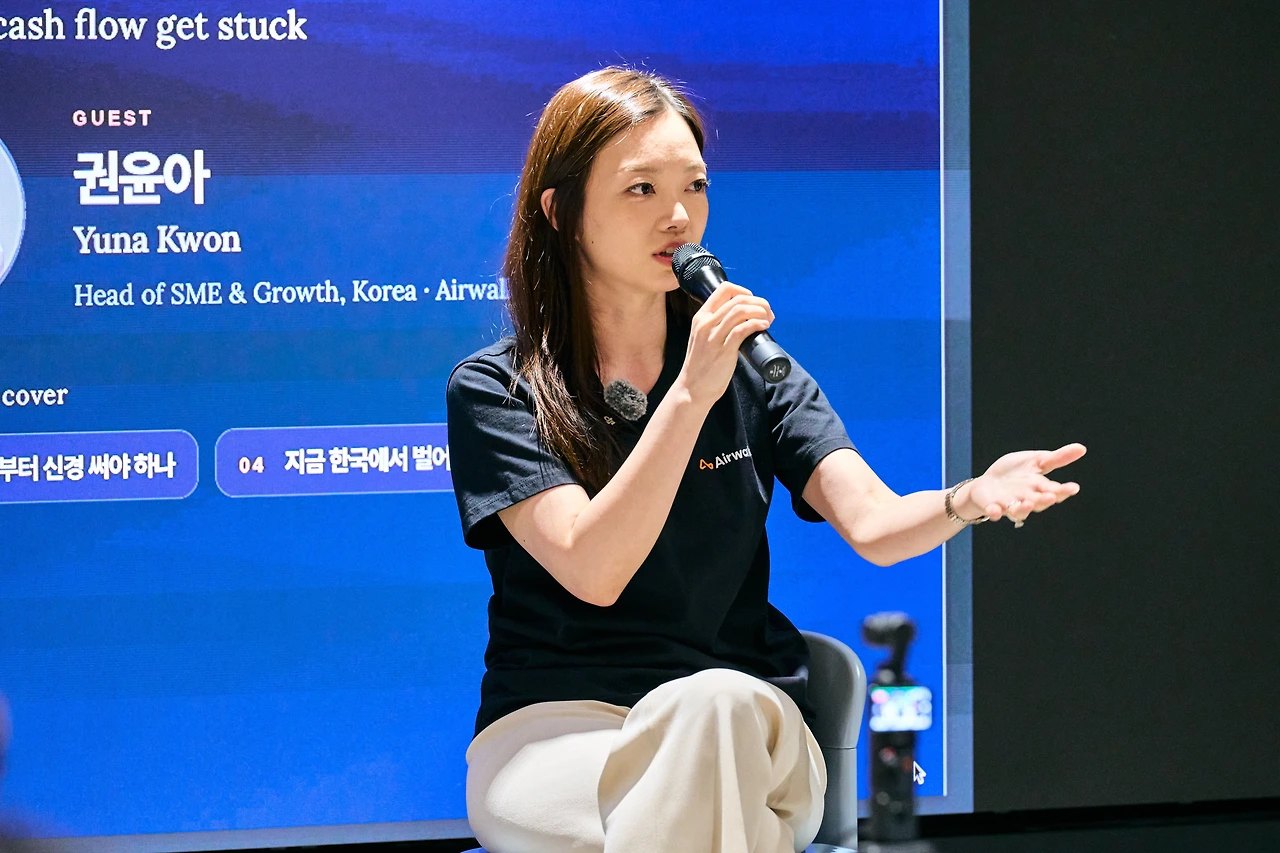
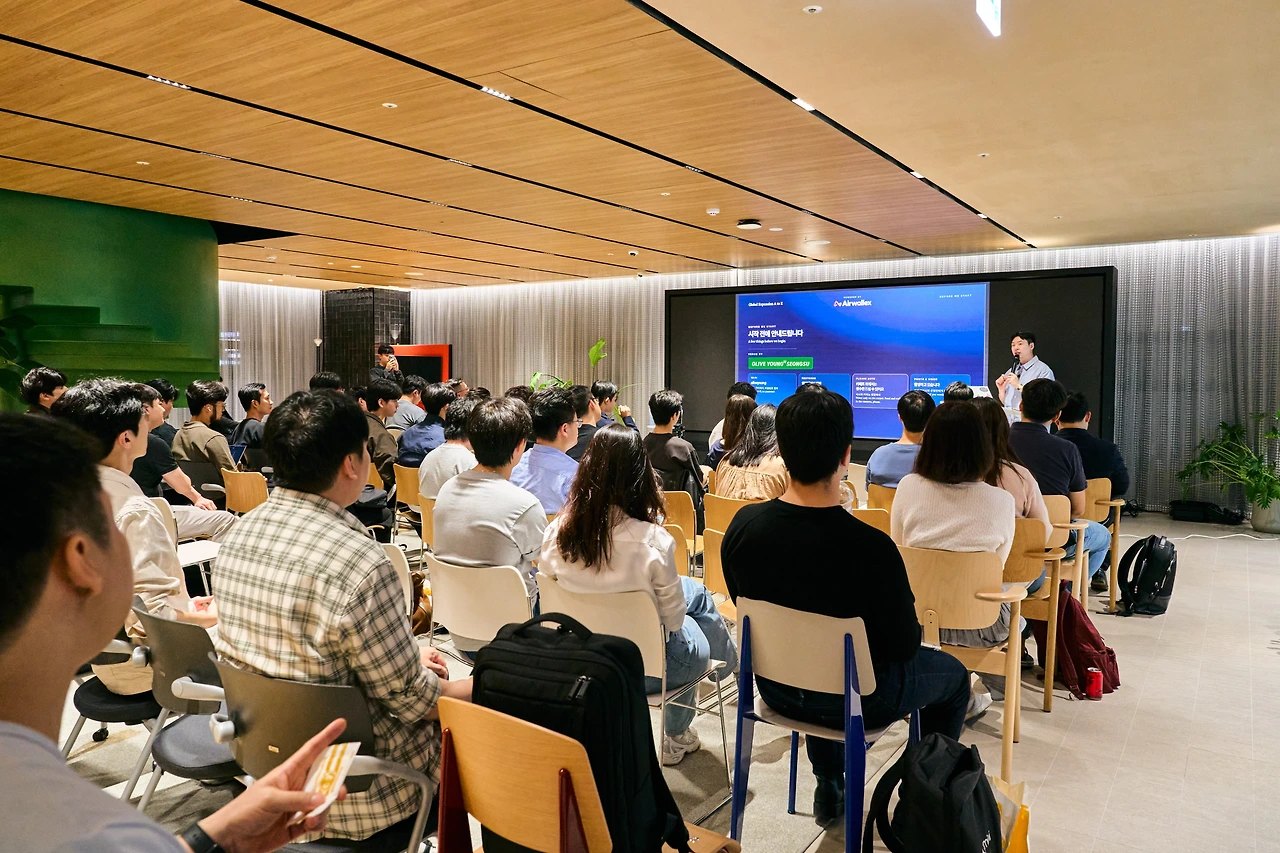
The main session was Yuna Kwon of Airwallex. She spent four years and ten months at BCG and seven years and nine months at Shopee running cross-border business for Korea and Japan, and joined Airwallex in May. Her criterion for career moves has been consistent. She wanted to build something from nothing without putting her survival at risk, so she looked for a newly started unit inside a company with money. Airwallex began in 2015 at a cafe in Melbourne. They imported coffee beans, and bank transfers could not keep up with how fast stock ran out. Today it is valued at 17 trillion won and processes 440 trillion won a year.
Her years at Shopee covering Korea and Japan were interesting. Japan, she said, is a market where not doing badly matters more than doing well. Sellers focus on avoiding mistakes and returns and are conservative about investing to grow revenue. The numbers show it: small businesses make up 5 percent of cross-border trade in Japan and 20 percent in Korea. We also asked why Korean sellers grew fortyfold in five years. Demand and supply were both there, and logistics, the bridge between them, was stuck. Once a middle option appeared between 20,000-won EMS parcels and 500 million won of Amazon inventory, the numbers jumped at once.
Asked whether opening accounts is really that hard, she was clear. The moment you become an overseas business in finance, you pay penalties in conversion costs and transfer time. You should convert currency only when you want to, and most people are forced to. So when does it start to matter? She did the math. Avoiding forced conversion saves four to five percent round trip, so working backward, breakeven sits at 5 to 6 million won a month in transactions.
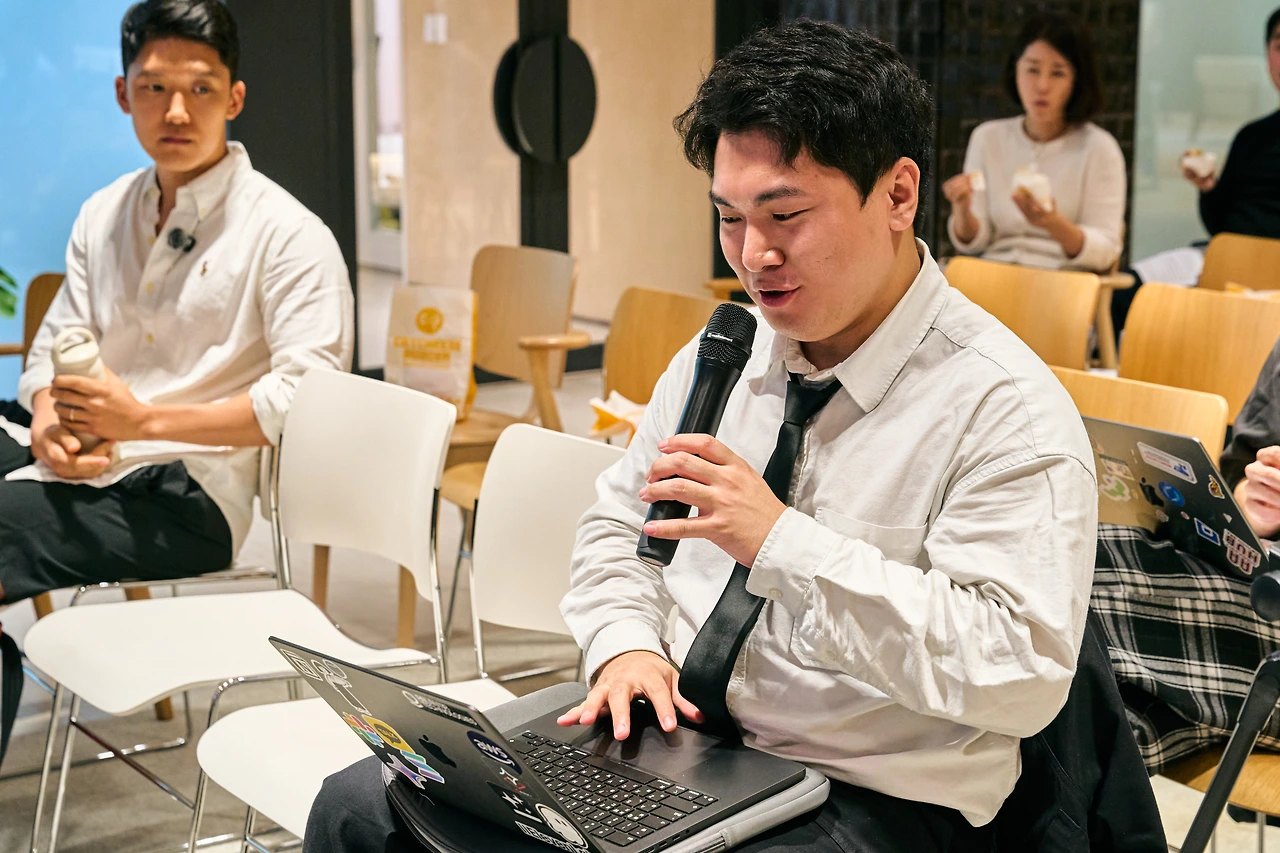
Someone asked whether you need an overseas entity to use it. Right now a Singapore or US entity opens up more, and from next year they are preparing to let a Korean entity alone receive payments directly from abroad. Her line that it is better not to set up an overseas entity if you do not have to matched Peter Shin's conclusion earlier. The last question was how those of us going abroad should carry ourselves. Her answer was short: do not think of yourself as an overseas business, act like a local one.
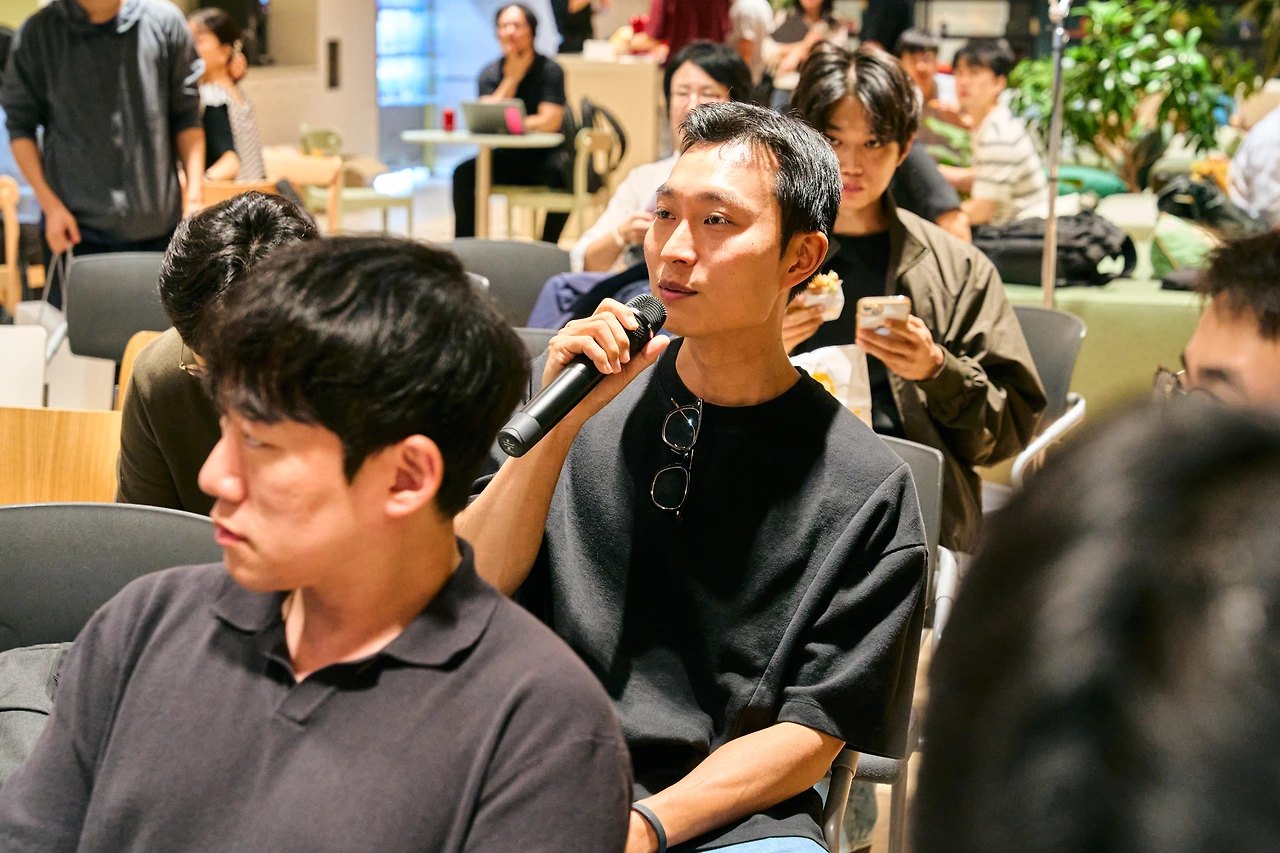
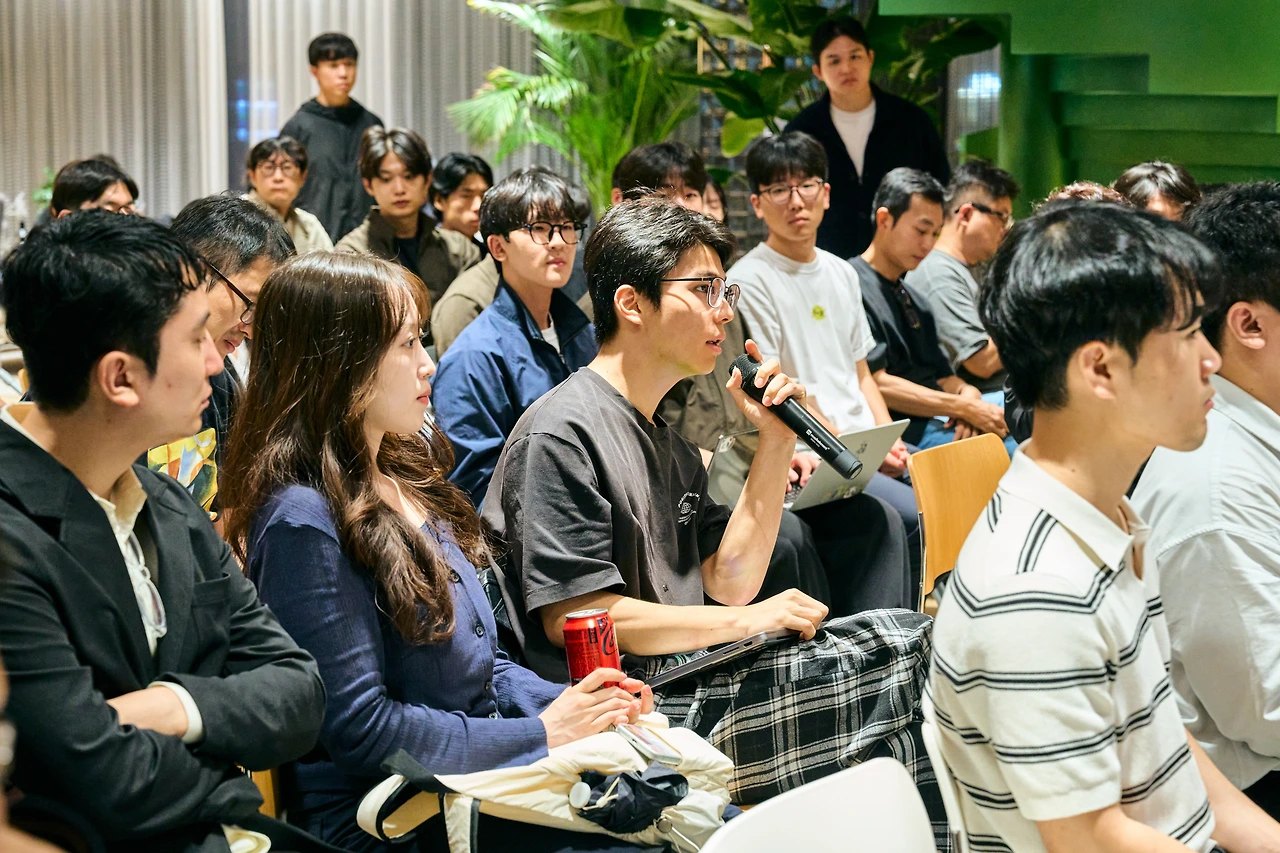
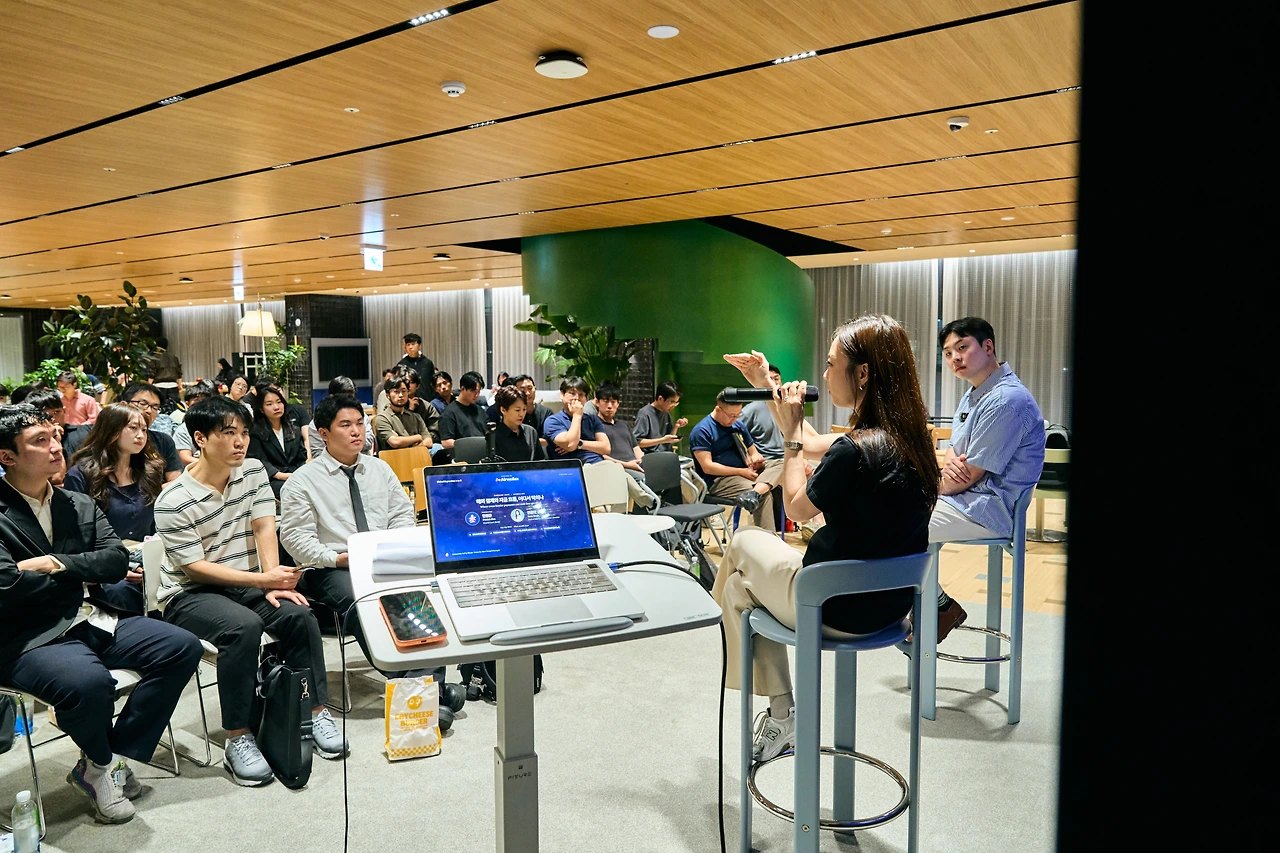
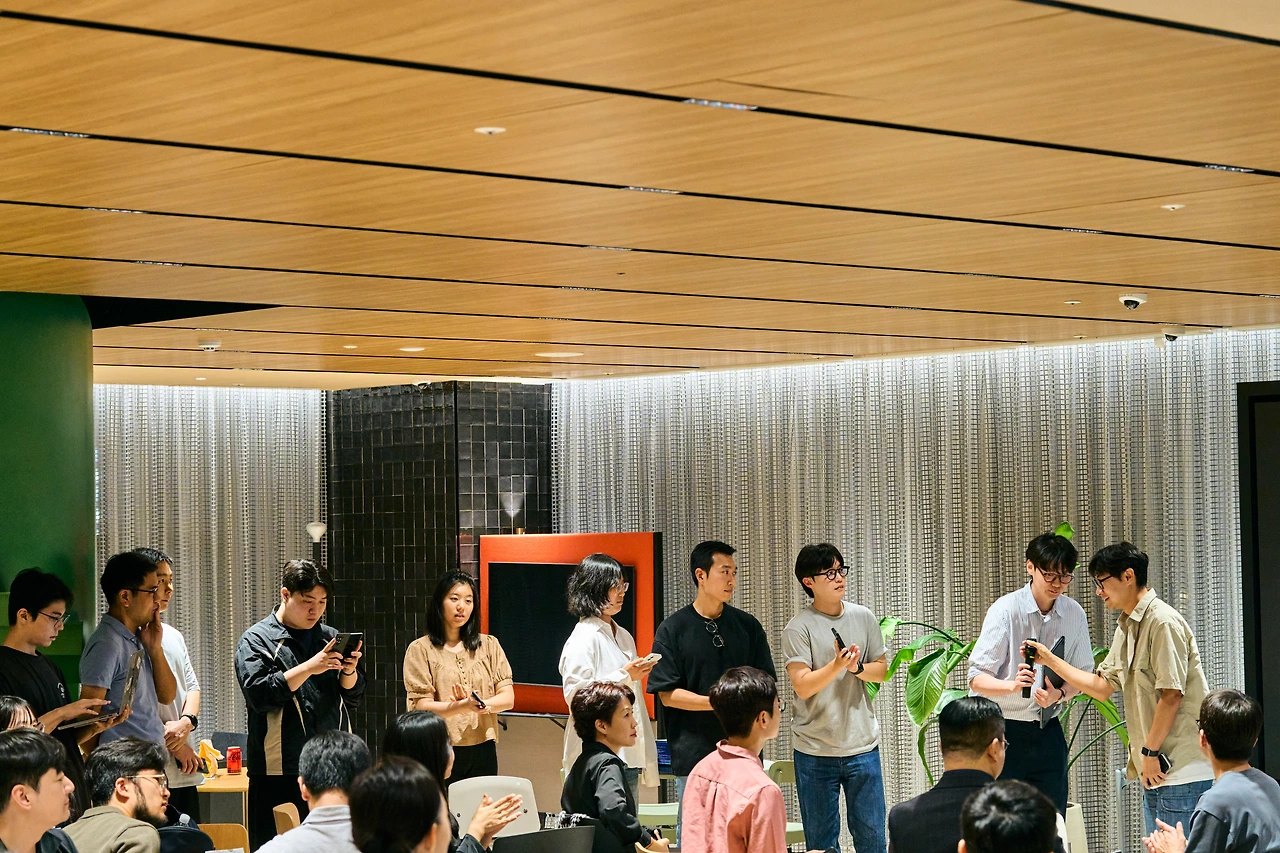
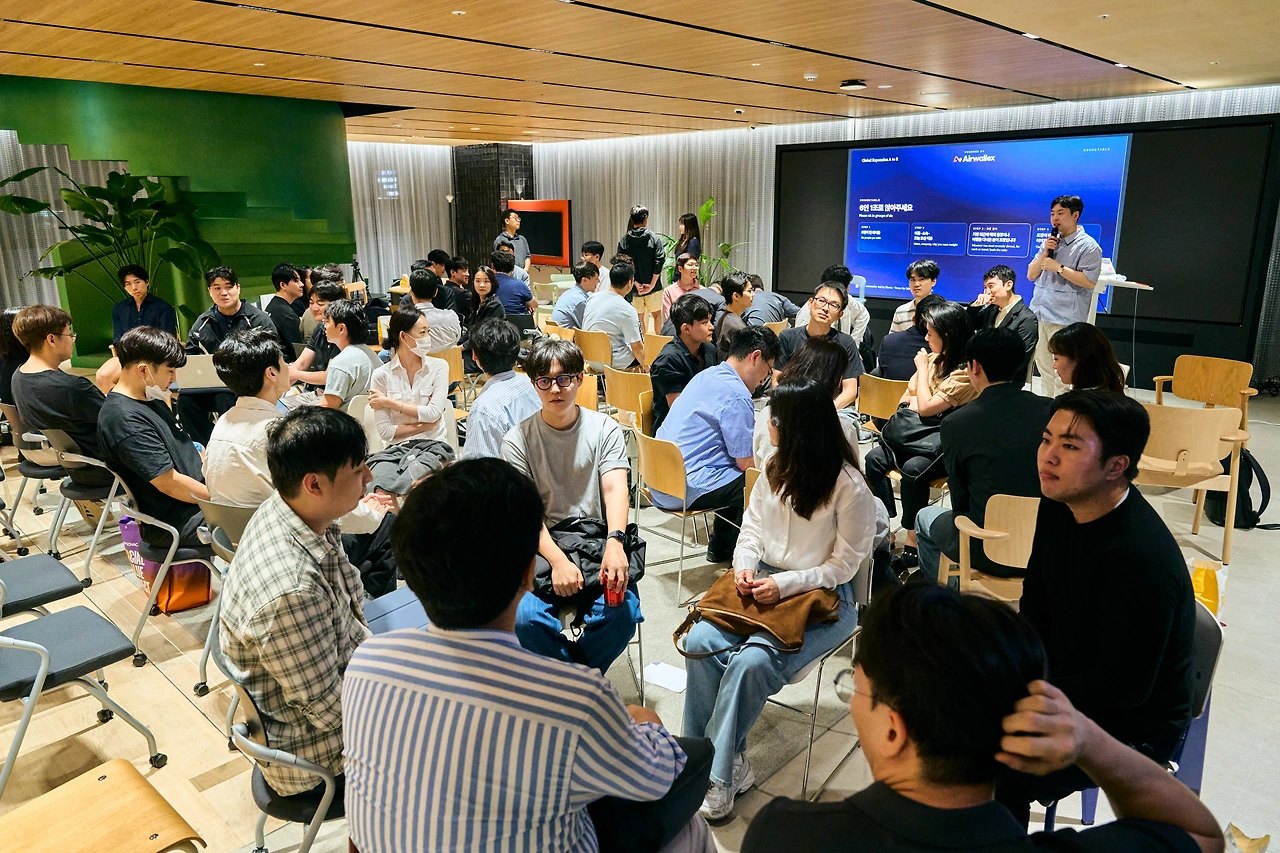
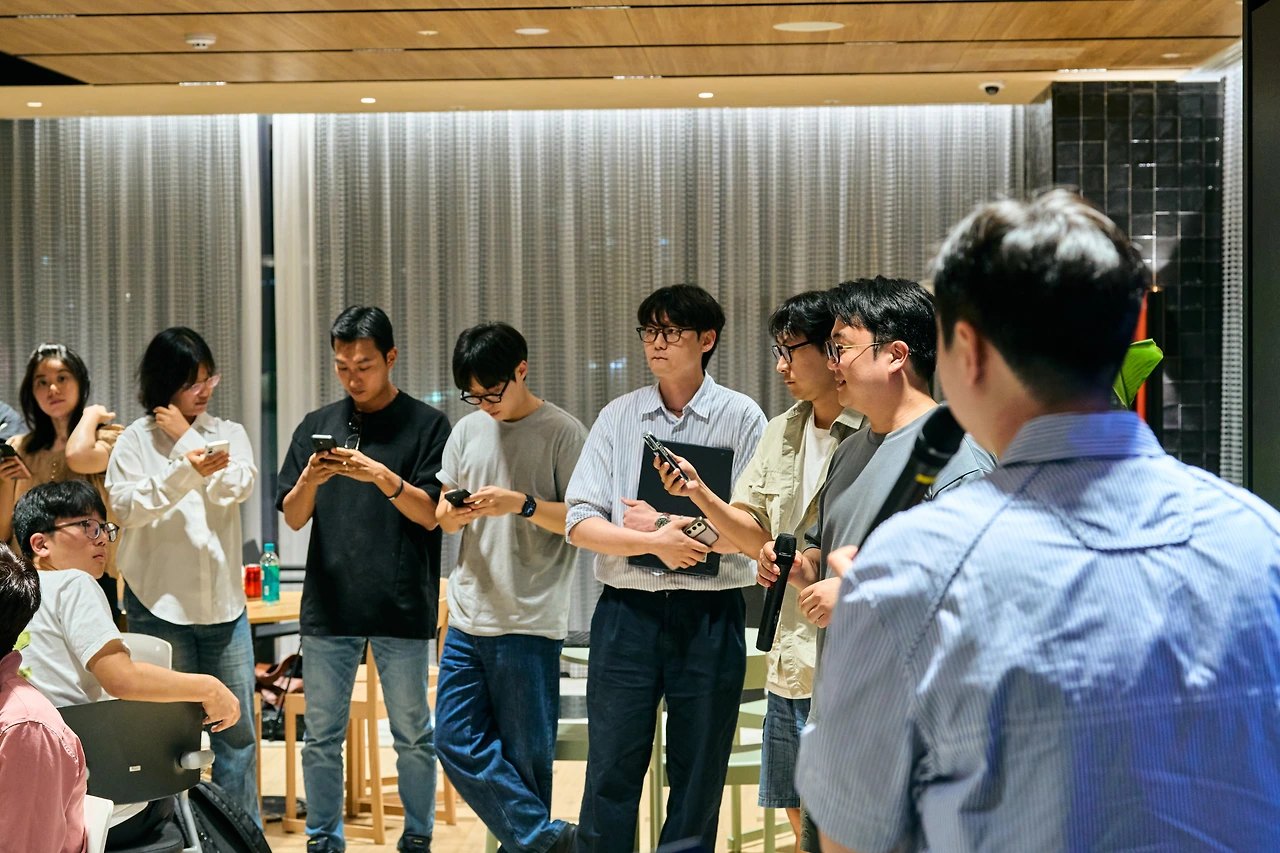
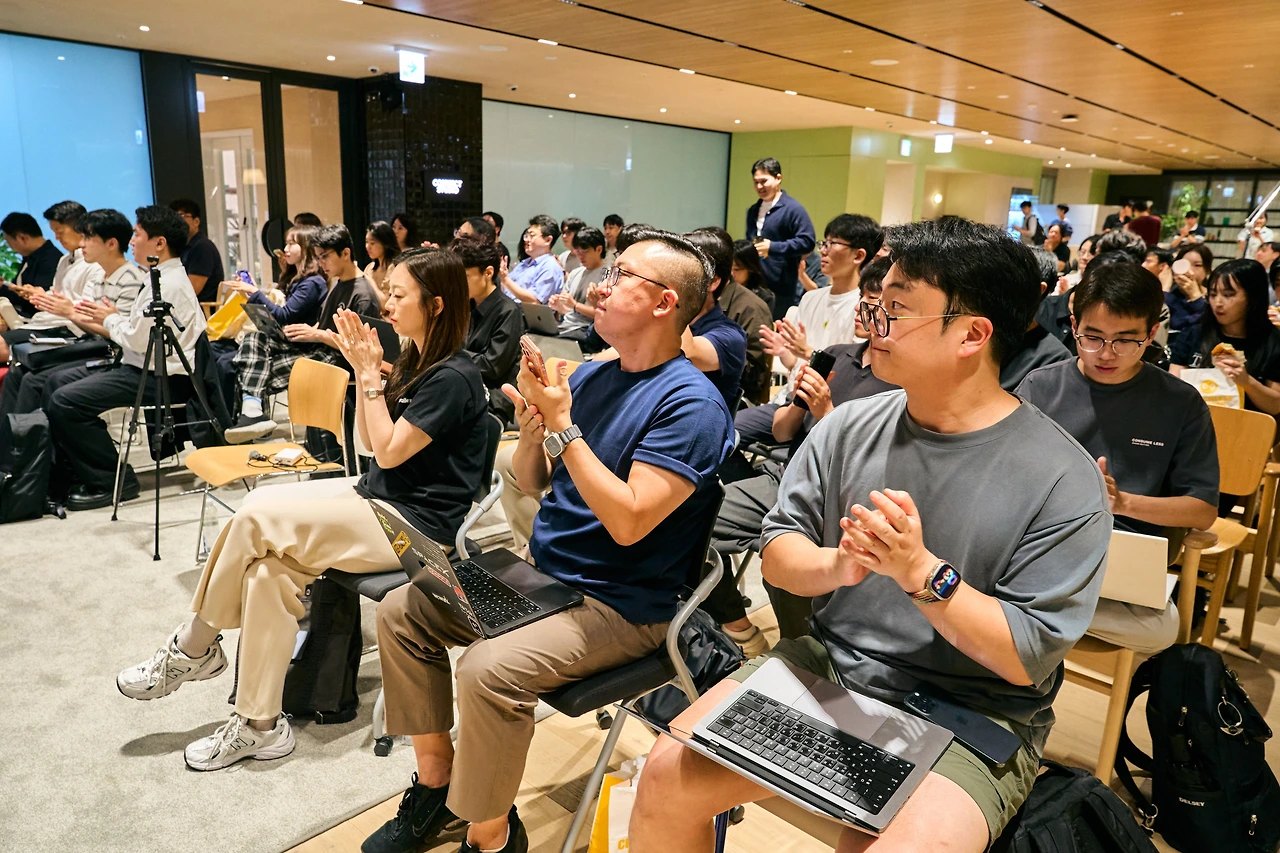
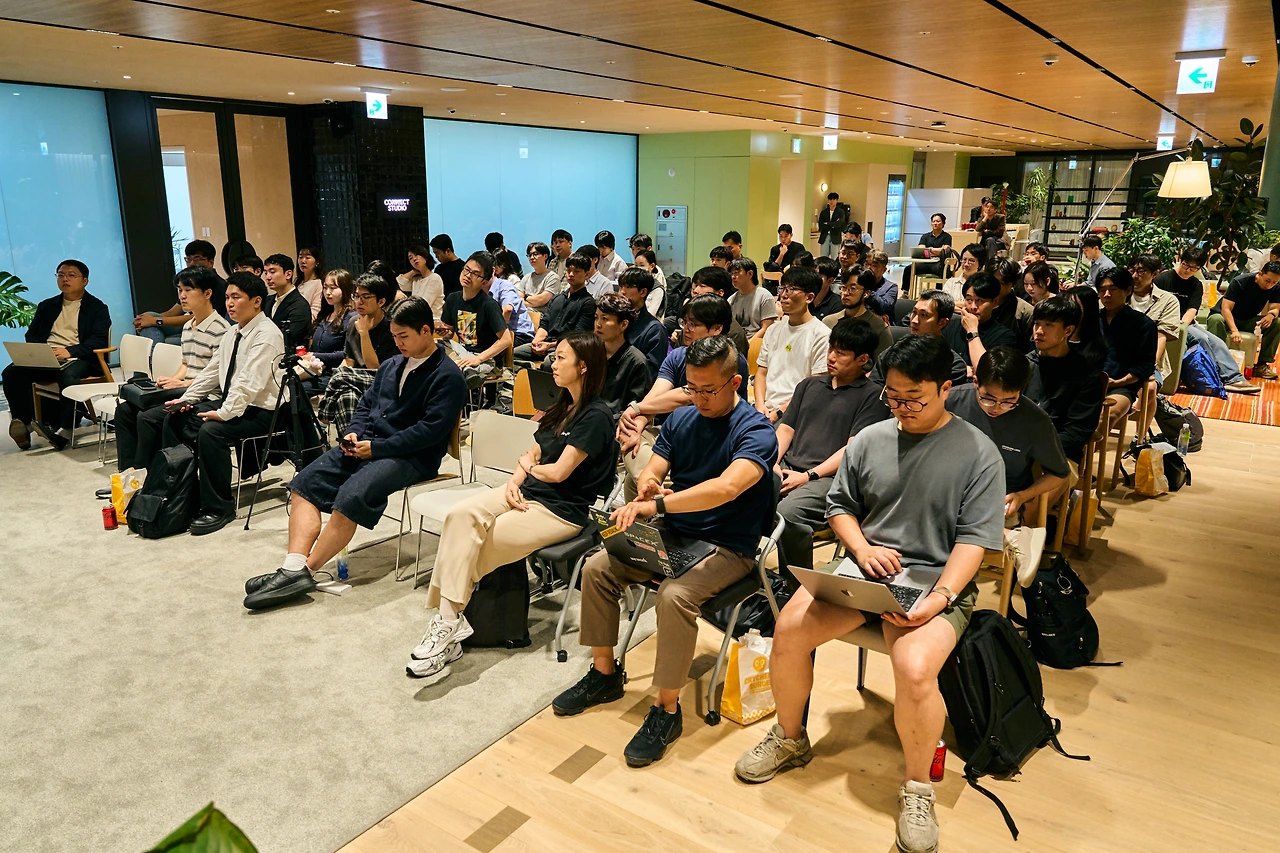
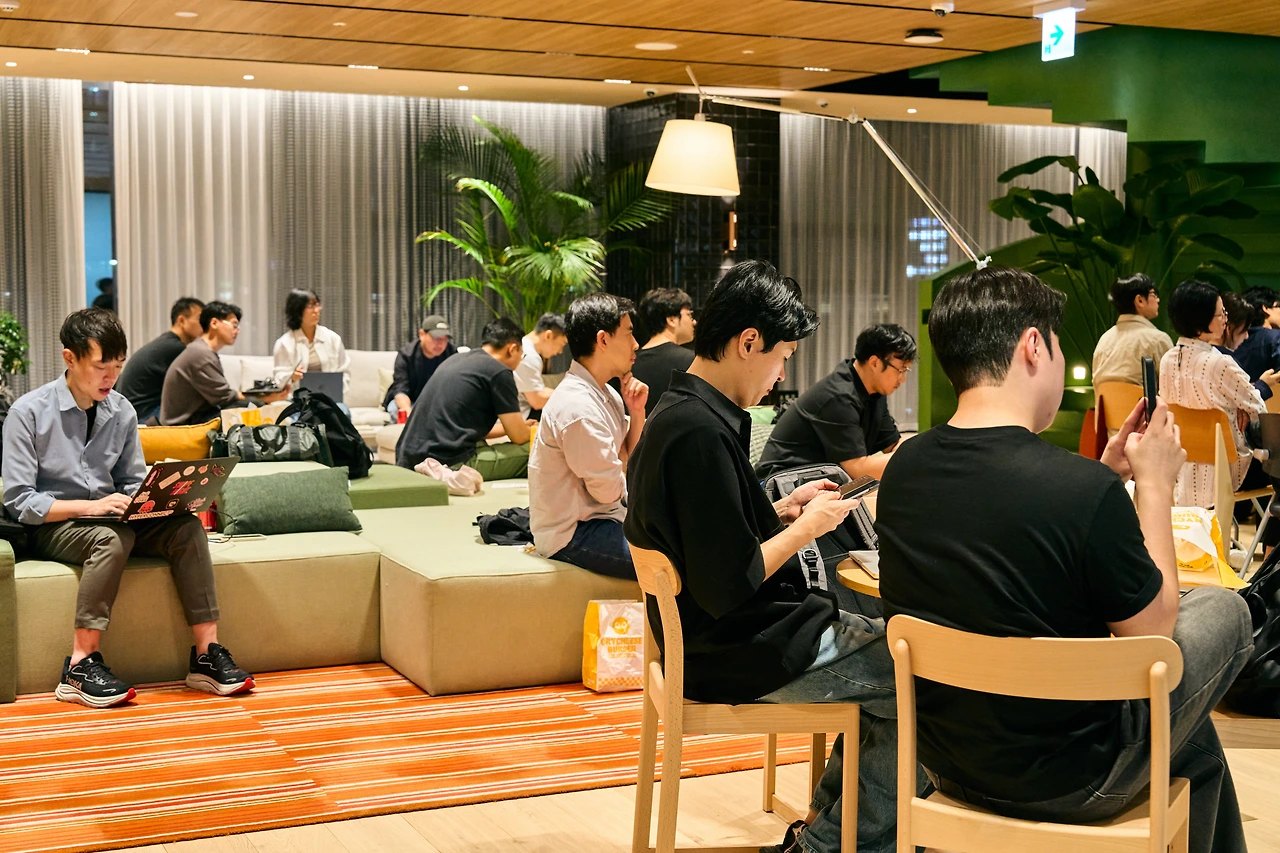
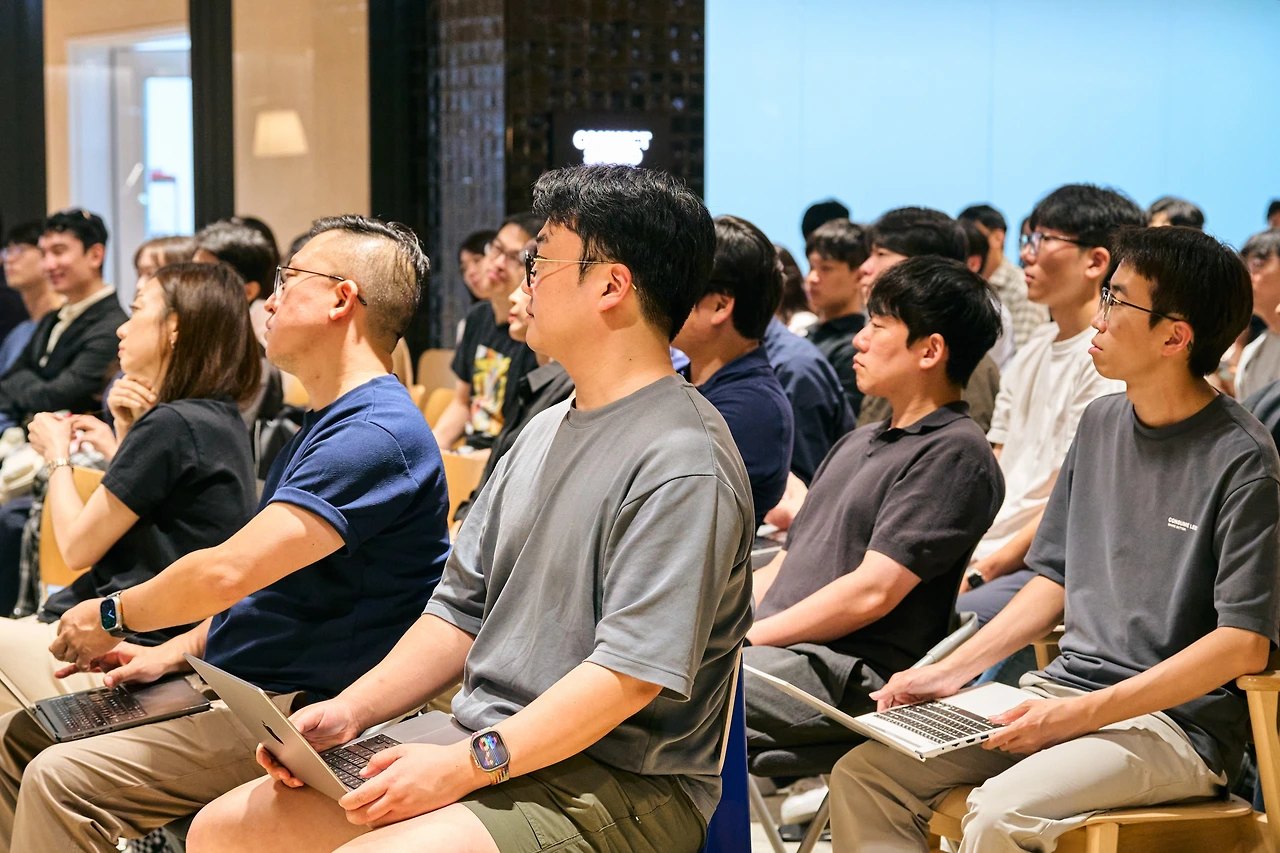
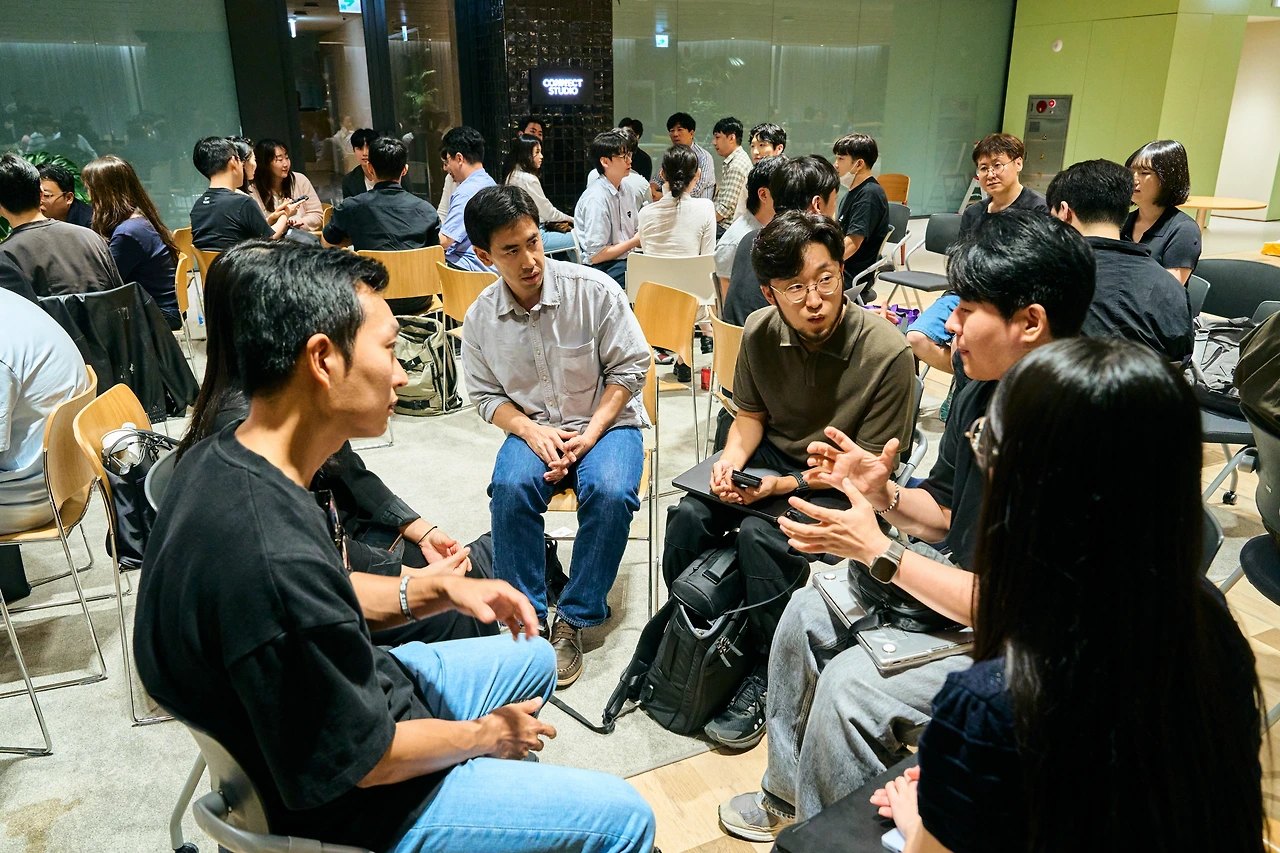
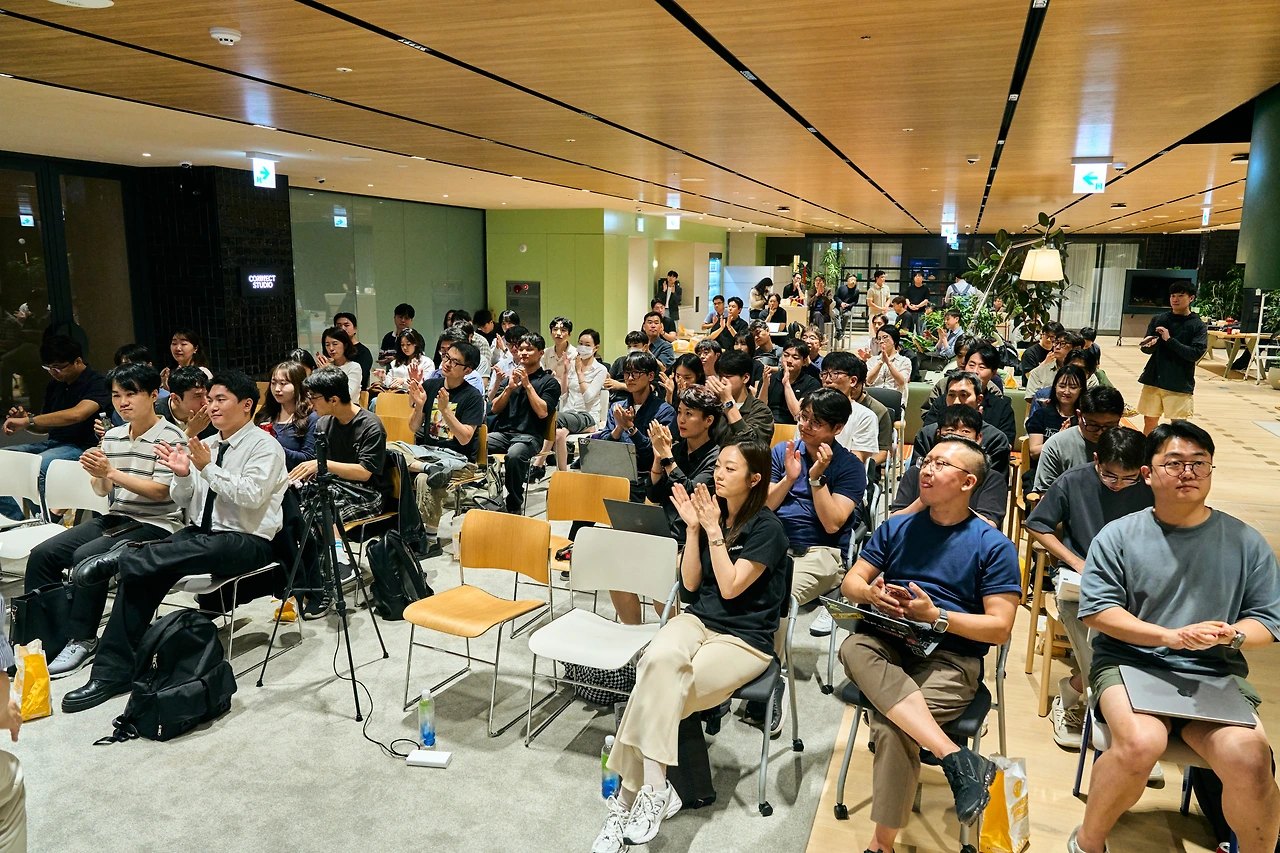
At the roundtables, whoever had most recently been abroad led the table. Deals failing to close came up at several tables, and one reached the conclusion that Korean politeness works against you. Nobody says it will not work to your face, so everyone says it all sounds great and the contract never lands. A table lead building a service that automates visa paperwork for international students had just come back from Uzbekistan with contracts at seven universities. Not because they trusted his team, he said, but because a regional vice governor he had met in Korea introduced them. What they bought was not the product but a person they trusted. The table that debated when to incorporate confirmed both sessions' conclusion. Before revenue is not the time.
Read the full write-upEvent video
Gallery






















Next event