Do you still need to know how to build?
What was discussed

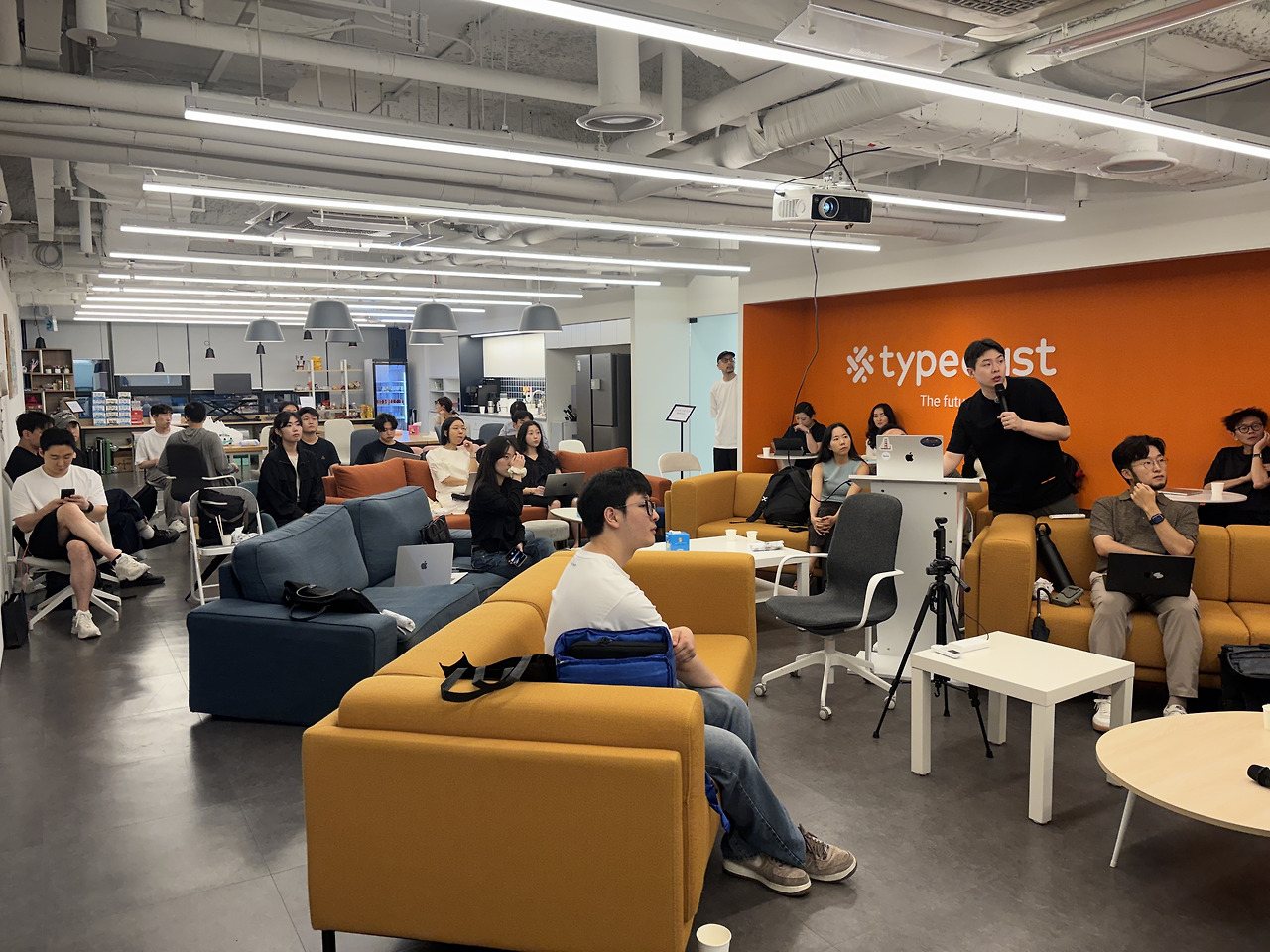
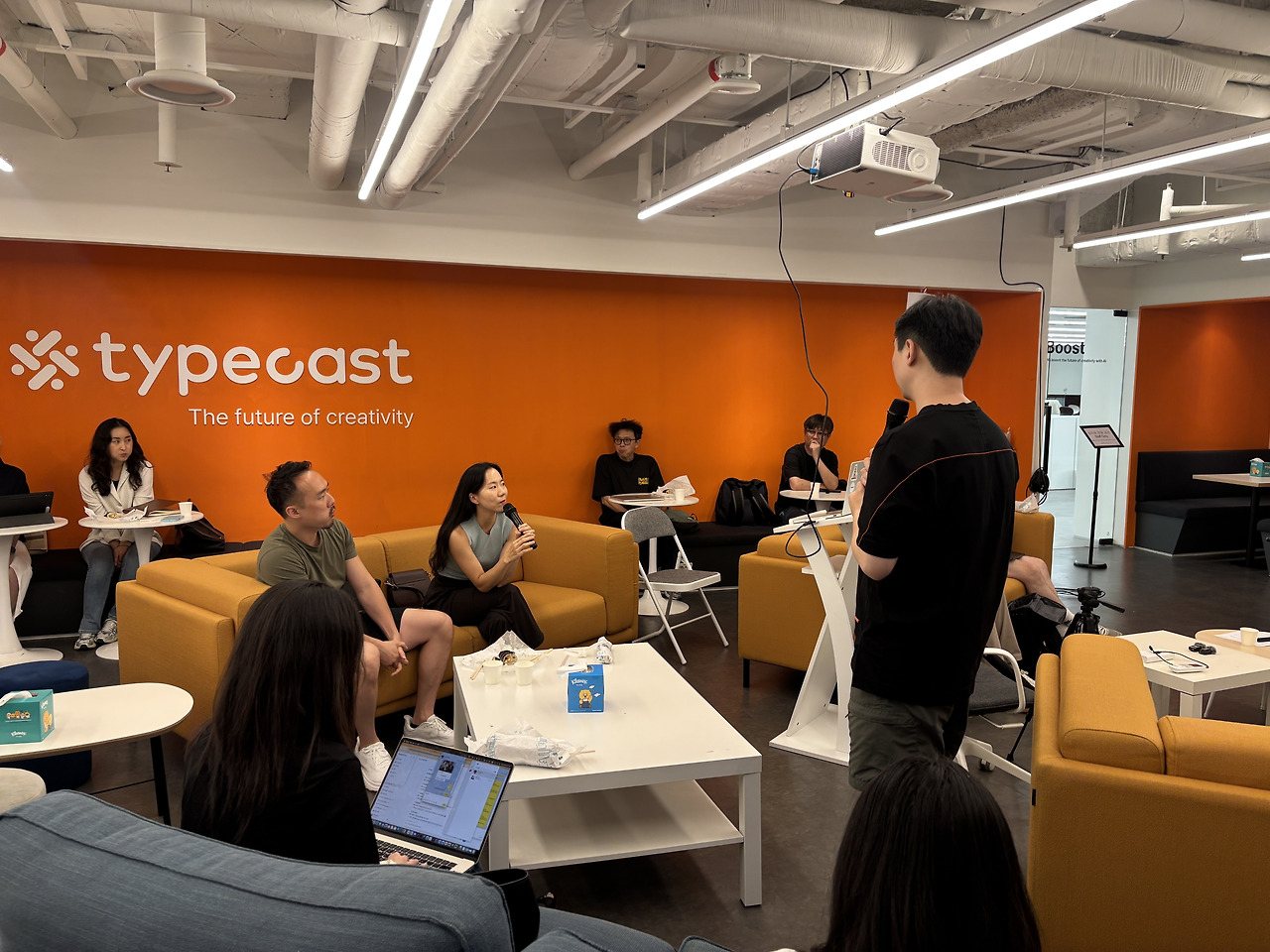
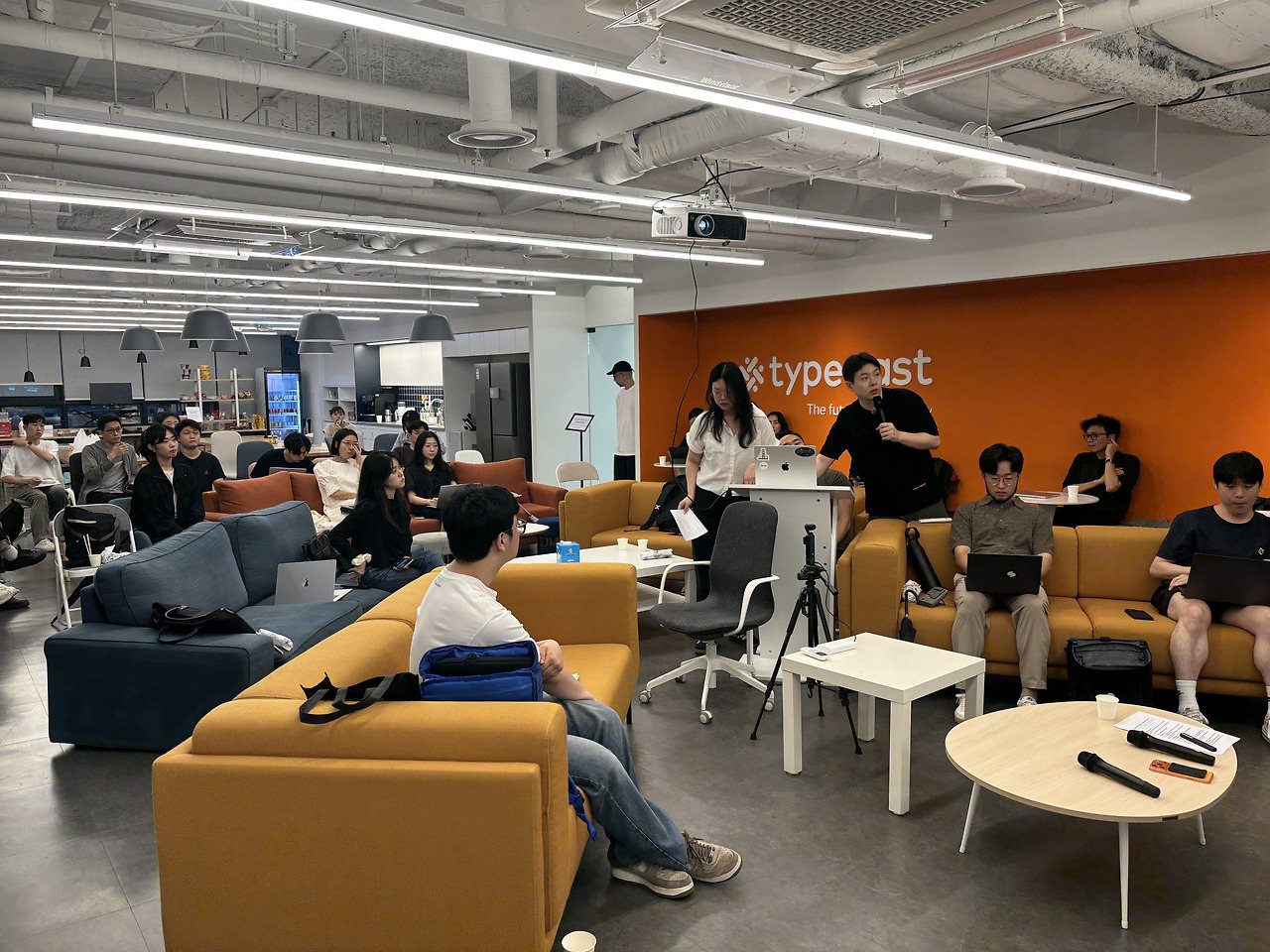
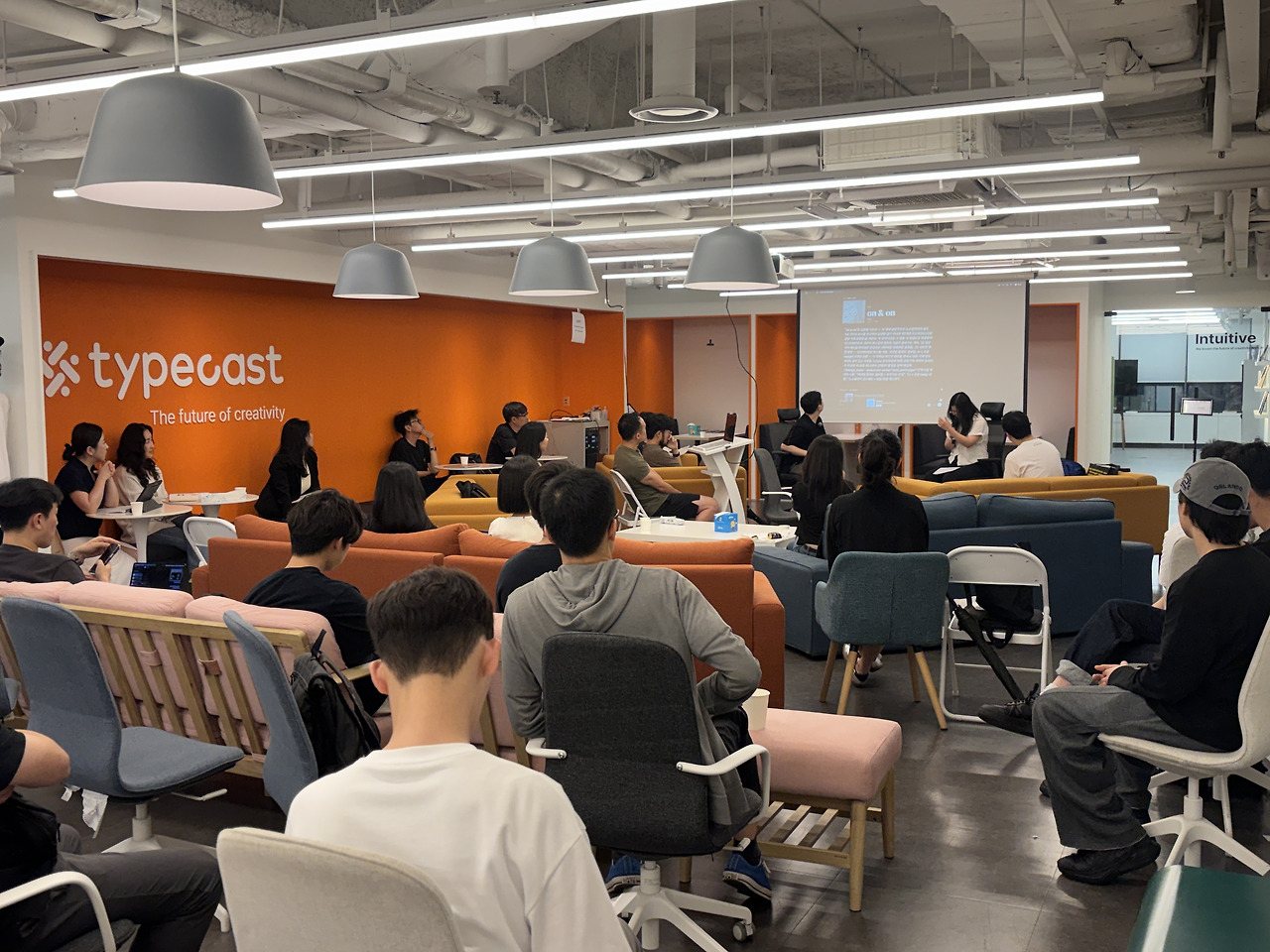
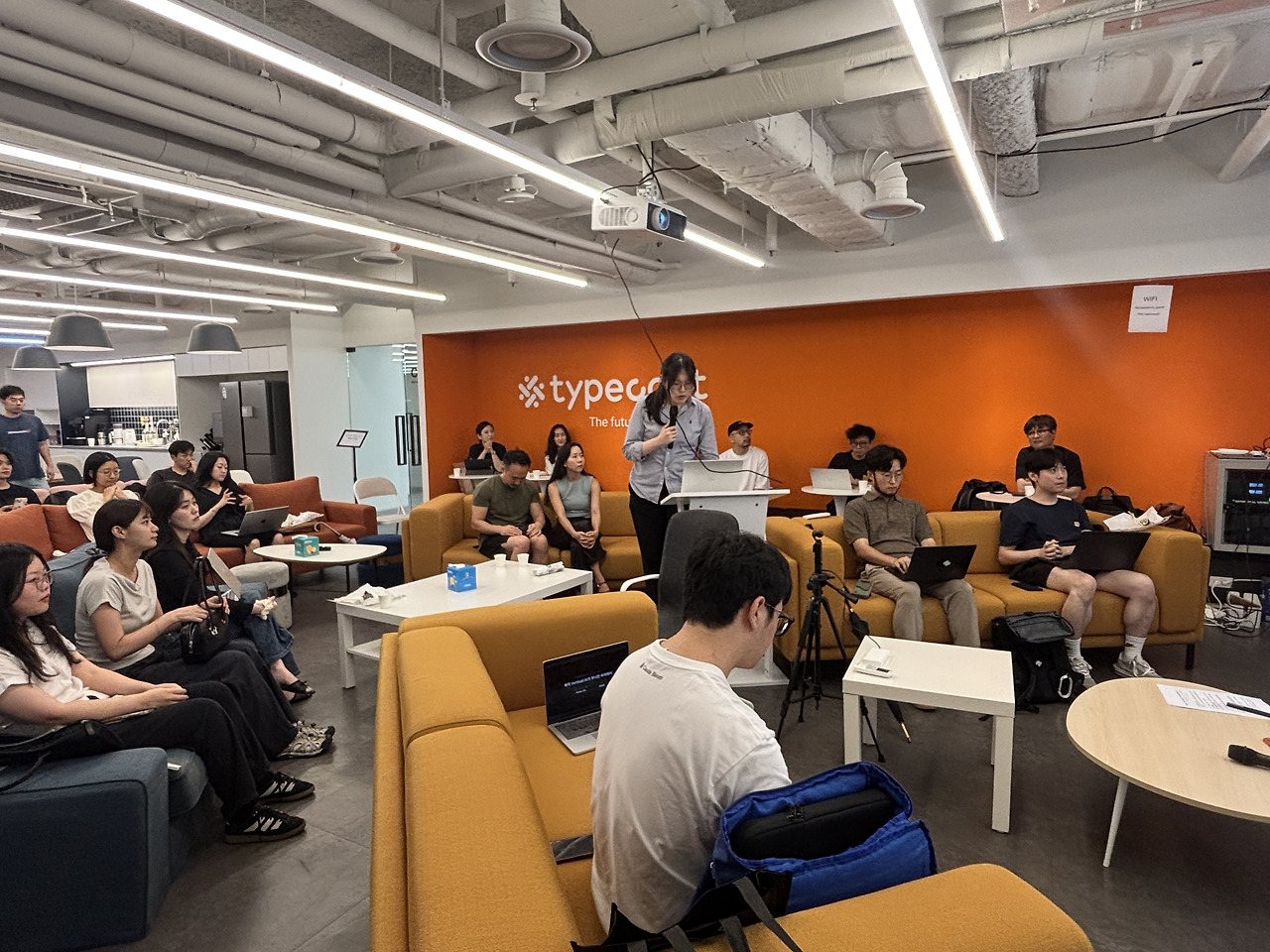
Held at the Neosapiens office by Samseong Station. We ran member demos for the first time: five minutes each for something you are building on the side, with company products explicitly not welcome.
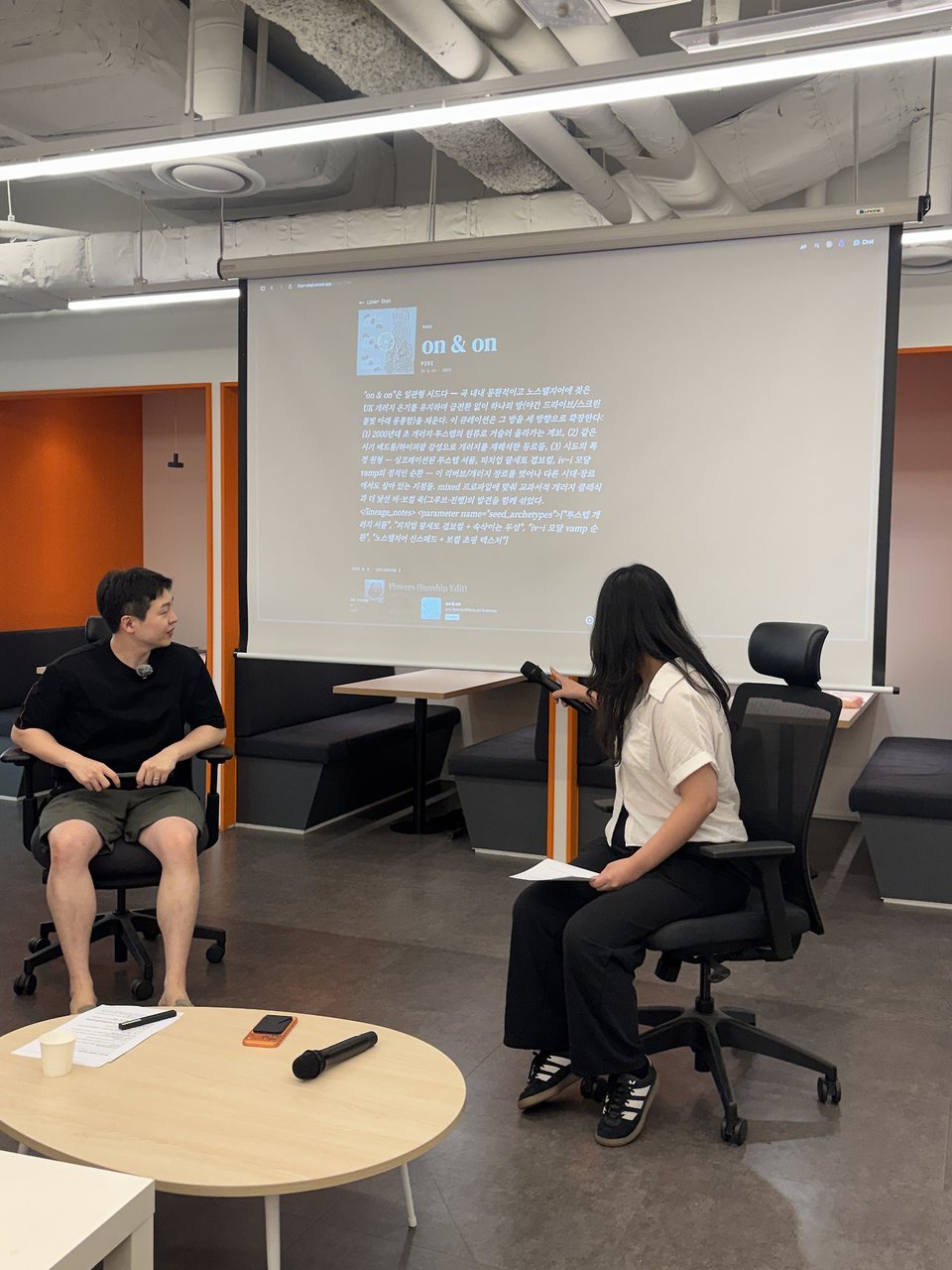
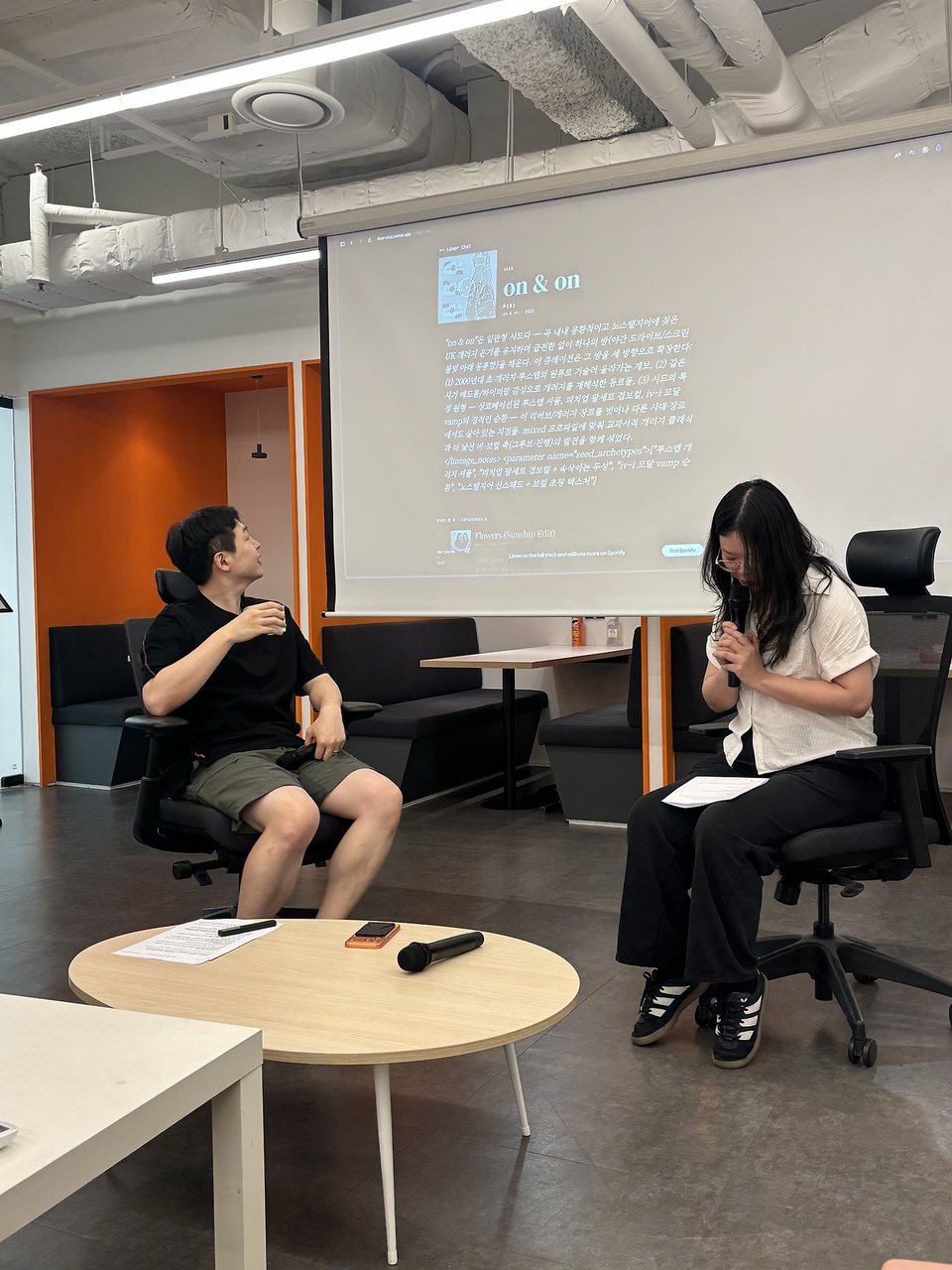
The first demo mapped musical lineage out of your Spotify library. Built at night by someone who develops by day. The problem was that the model kept returning the obvious songs. It could not connect tracks that clearly rhyme to a human ear but sit in different eras, genres and languages. Splitting the ranking model from the generation model cut one song's dominance from nine appearances out of nine to one out of six. The limit was still clear: it makes the obvious connection but cannot produce an unexpected one.
The second demo came from a doctor who also writes code. A university hospital outpatient clinic sees thirty patients in three hours, five minutes each. The tool summarises fifty records so a patient can be reviewed in thirty seconds and drafts the objective findings. The bottleneck was not the model but the vocabulary: the same condition gets written three different ways depending on the doctor.
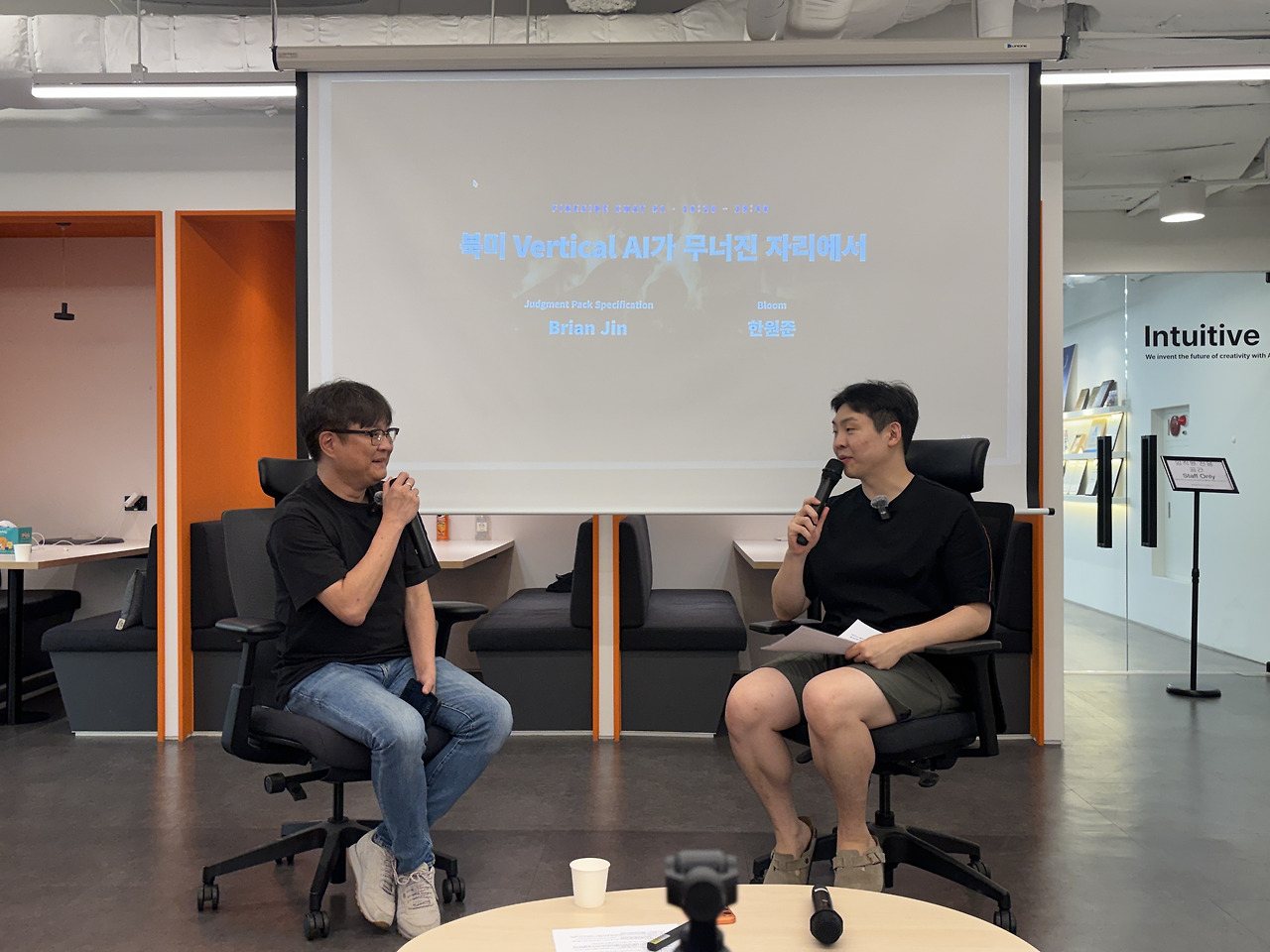
The first fireside chat was with Brian Jin, over from Toronto. Canada gets used as a testbed for the US, he said, so most founders there start with US expansion assumed. Four interviews across three months got him into Antler, and he was told he was picked for consistency and persistence rather than the idea.
At week six of the ten-week programme, fourteen of twenty teams were cut. He had spent nine weeks securing a VC commitment, and it was at that same week-six partner summit in San Francisco that the decision landed: no more vertical AI. Eighteen vertical AI teams went in that cohort. The two that survived had patents on hardware, or a founder with star power. The VC line was blunt: there is no technical moat left.
Investors asked one question every week, he said: how many design partners and LOIs. That led into founders having to become influencers. Where technical and business founders used to split evenly, he put it now at seven to three, or eight to two. His own answer was open source: a specification that separates business judgment from the model, so that judgment survives as an asset when the model changes. He starts from the assumption that 95% of internal agent MVPs fail.
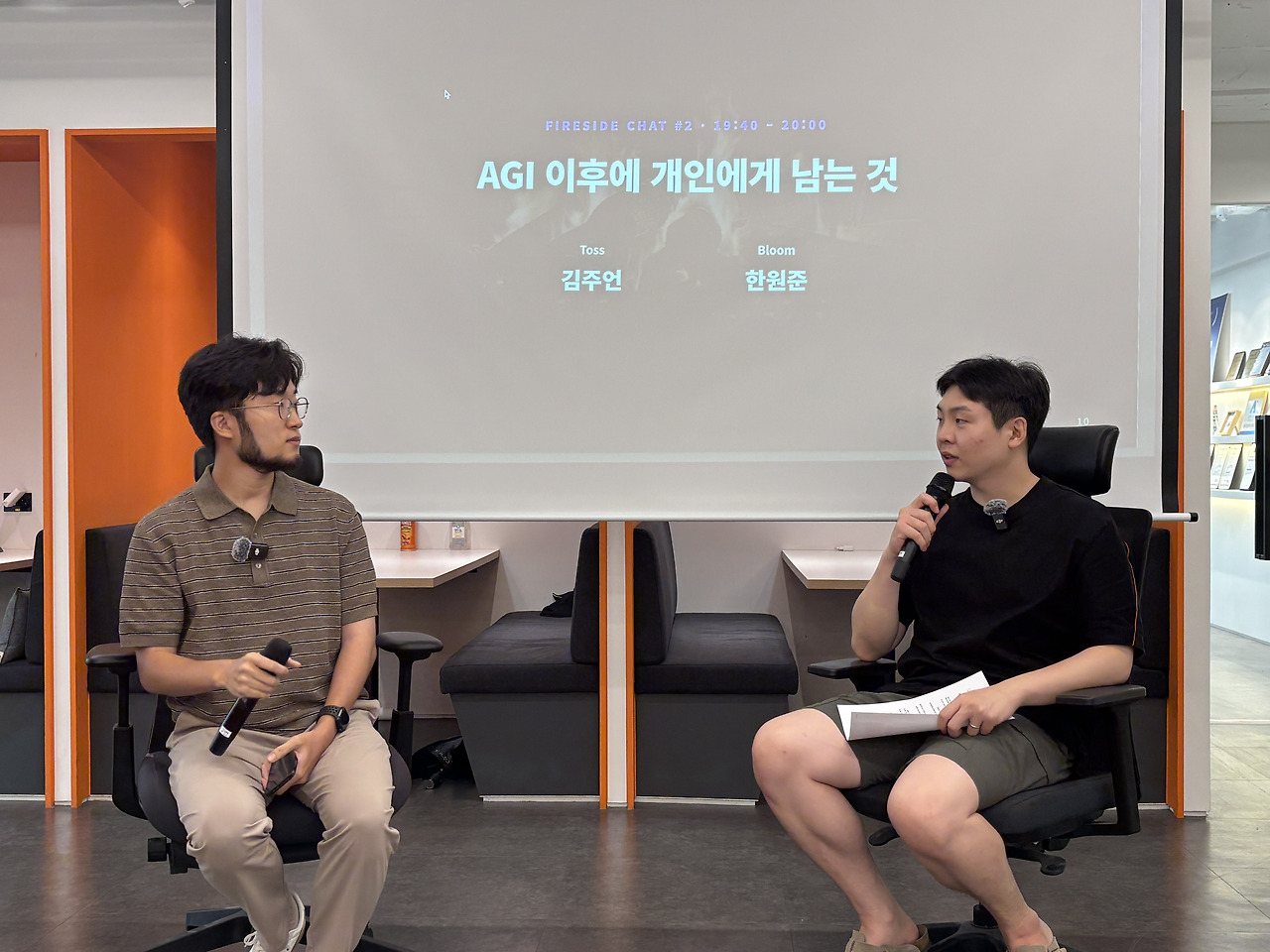
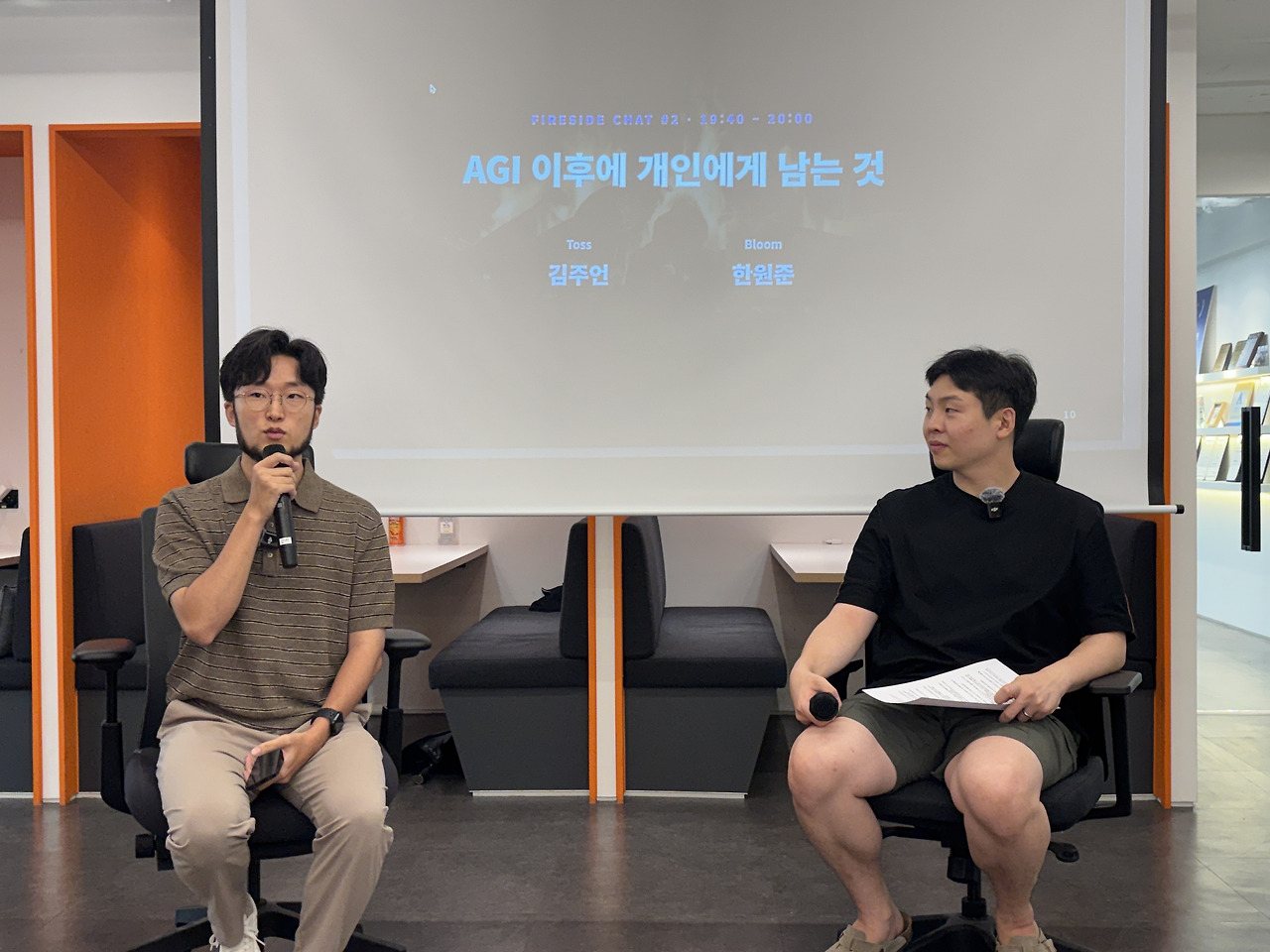
The second chat was with Kim Joo-eon of Toss, a member since our second event. For a definition of AGI he took Demis Hassabis's conservative one: it has to exceed humanity's best minds and shift a paradigm without being pointed at it. Today's models perform well inside a frame a human sets, but cannot set the direction. He put the date at 2030, three or four years out.
The strongest response came to his split of personal value into function, power and ownership. The essence of the AI era is functional replacement, and the fear comes from most people having no ownership. Someone who owns a building is untouched; AI only lowers their costs. So what he is building is personal media, on the view that occupying space in someone else's head is also a form of ownership.
He laid out identity in three stages. Today we define ourselves by occupation. In about five years it moves to which problem you are solving. After 2030 it returns to what you belong to, because every time function became obsolete, history went back to belonging.
Six roundtables landed in similar places from different directions. Low-level AGI has nearly arrived while the high-level version is far off; real intelligence needs a body, in the Yann LeCun sense. One table used navigation as the tell: we used to read a map and trust our own judgment, and now we trust the GPS more, and that shift in trust is already the line.
On medicine, the view was that AI has passed the mid-range doctor and that robots will handle external surgery soon, leaving liability and trust as the real obstacle. On business, several tables agreed that pure software will not hold: you need a physical product, hardware, somewhere offline.
The most quoted line came from the fashion and beauty table. Arguing about whether AGI has arrived misses it, because we already behave as though it has. The real fear is not AI doing everything but people stopping thinking. Someone at that table said the ability to sit and struggle with something is becoming rare: the more friction AI removes, the fewer people can stay with a question that has no immediate answer.
The last table raised the problem of recognition. Functional AGI could arrive without us noticing, because people cannot state what they want precisely and tacit knowledge leaks out the moment it is put into words. Someone from games put it plainly: we do not know what we want, so the companies that propose an answer are the ones that survive.
The two speakers took different routes to the same place. One chose open source, the other personal media, and both were saying that technical work alone does not leave anything behind. The tables kept arriving there too: knowing a domain deeply and having people of your own outlasts a single technical advantage.
Read the full write-upEvent video
Gallery
Next event