AI slop vs AI assets
What was discussed
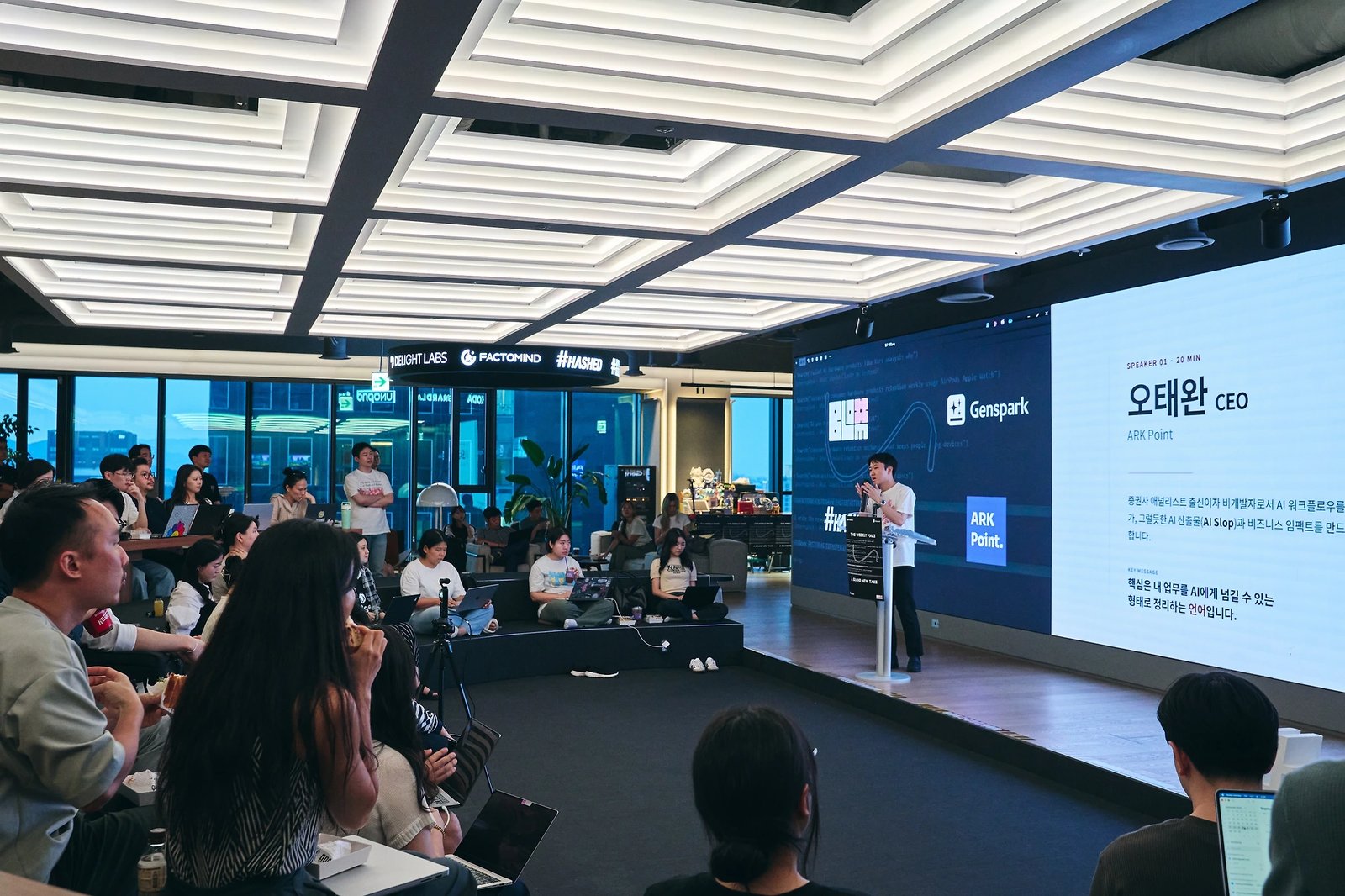
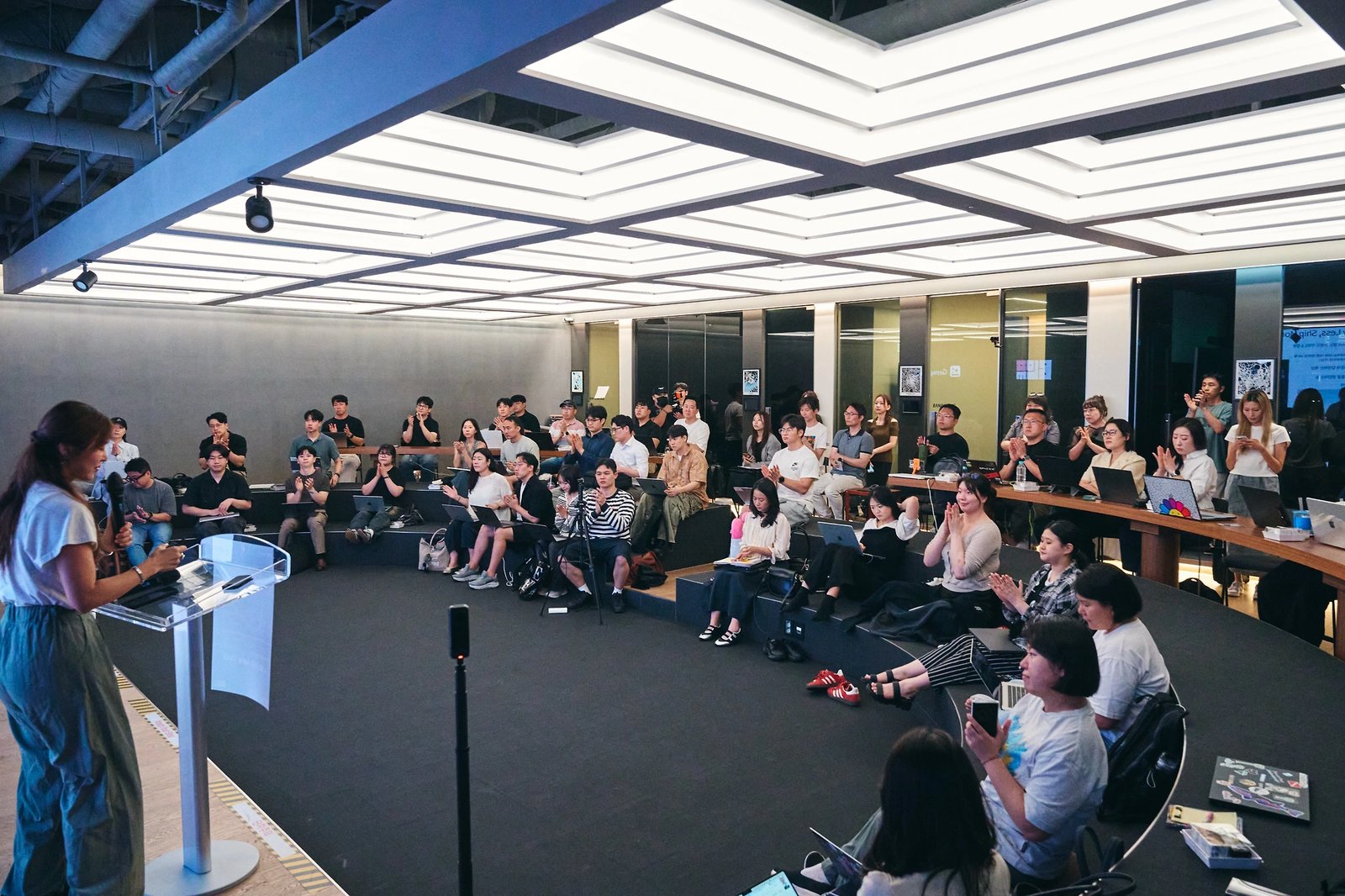
The first session was Tae-wan Oh, CEO of ARK Point — a non-developer who came up through equity research and consulting. His starting point was a slide that read "the model is the same." We all use the same models, yet some people build assets with them and others produce slop. He noted that the Korean equivalent of "slop" is closer to swill or animal feed. His example was rare disease: common illnesses already have drugs, but a rare condition, or a pet's illness, does not — and those are exactly the cases where people are now using AI to approach drug development. With the same model, one person gets that far while another cannot diagnose a cold.
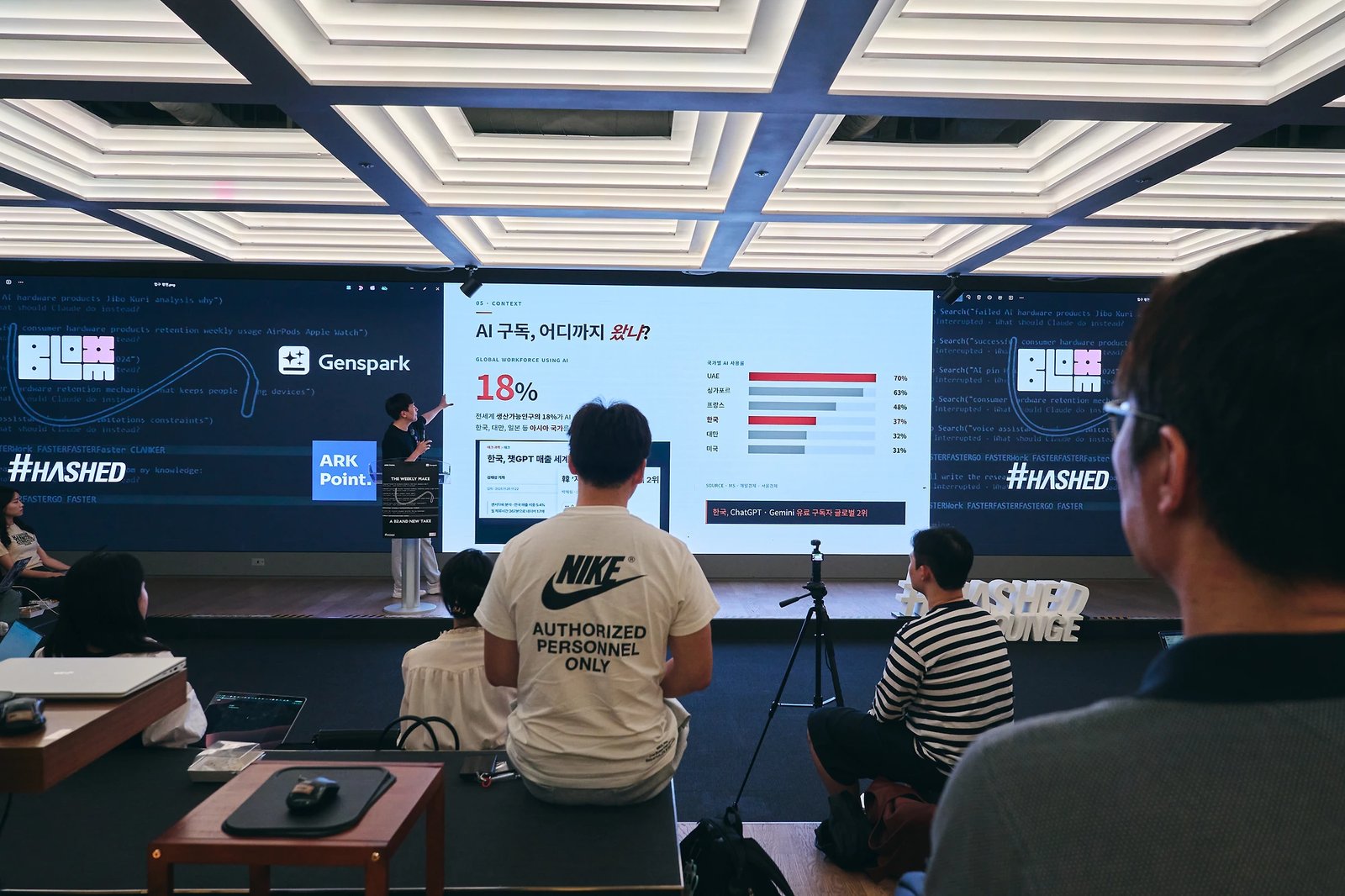
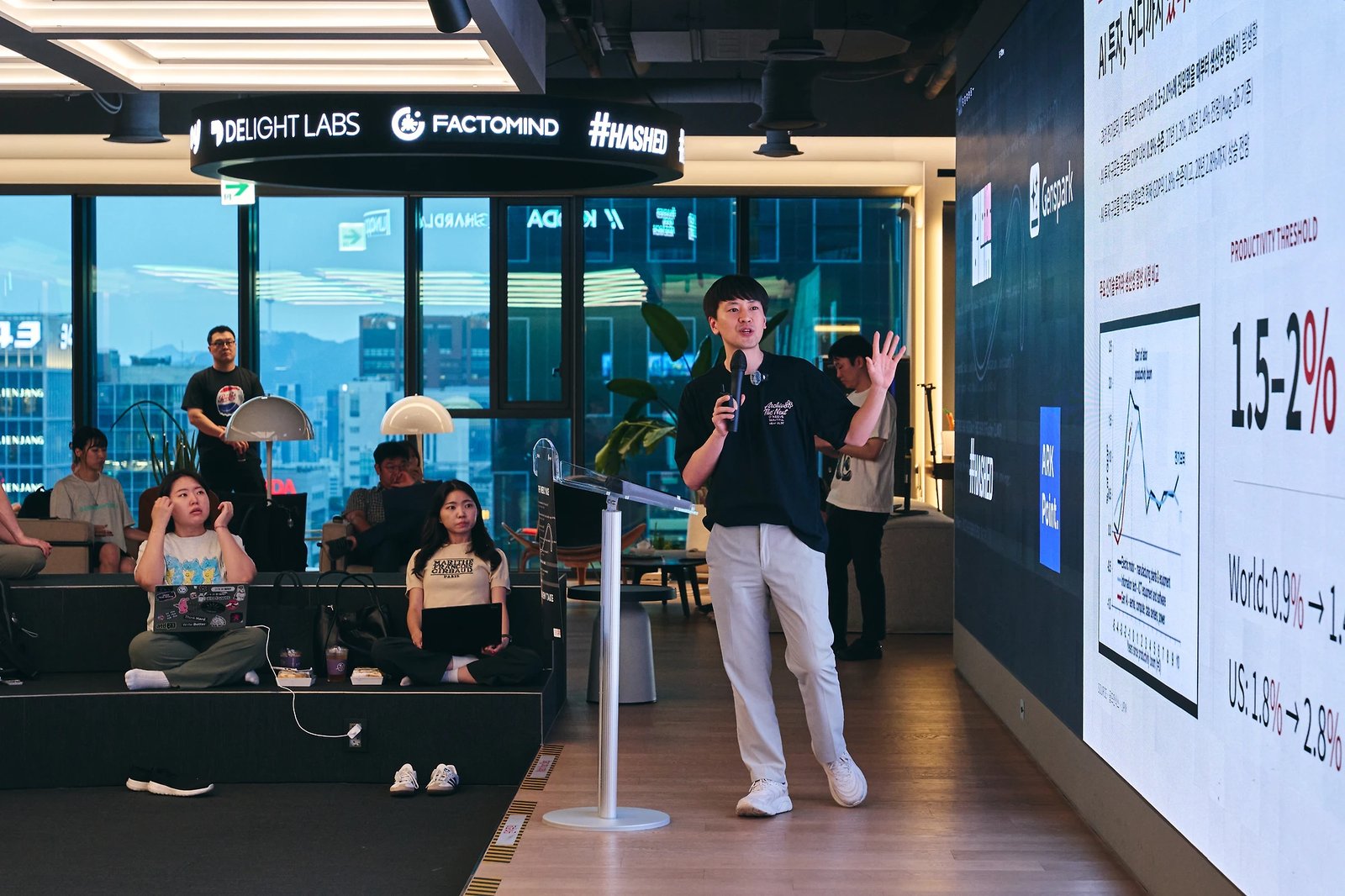
He also put numbers to the sense of urgency. Eighteen percent of the world's working-age population uses AI; in Korea it is 37 percent, and Korea ranks first in the share of paid subscribers to the major models. Citing Goldman Sachs and JP Morgan, he pointed out that electric motors and IT did not raise productivity the moment they appeared — real gains showed up only once investment passed roughly 1.5 percent of global GDP. AI investment currently sits at 0.9 percent of global GDP and 1.8 percent in the US, projected to reach 1.4 and 2.8 percent by 2027–2028. The US, in other words, has already crossed the line.
He was candid about his own failures. He did not know what a terminal was until a colleague talked him into opening Claude Code one evening; his first product was built that night, and he moved on to two a day. A "lawmakers' restaurant map," built by analyzing four years of National Assembly corporate card records and plotting the restaurants they frequent, went viral and made the news. A Michelin parody guide followed, then more than ten apps submitted to Toss, then a site that scraped Coupang to pick the product with the best ingredients. His conclusion was blunt: he had built hundreds of things and uses none of them today.
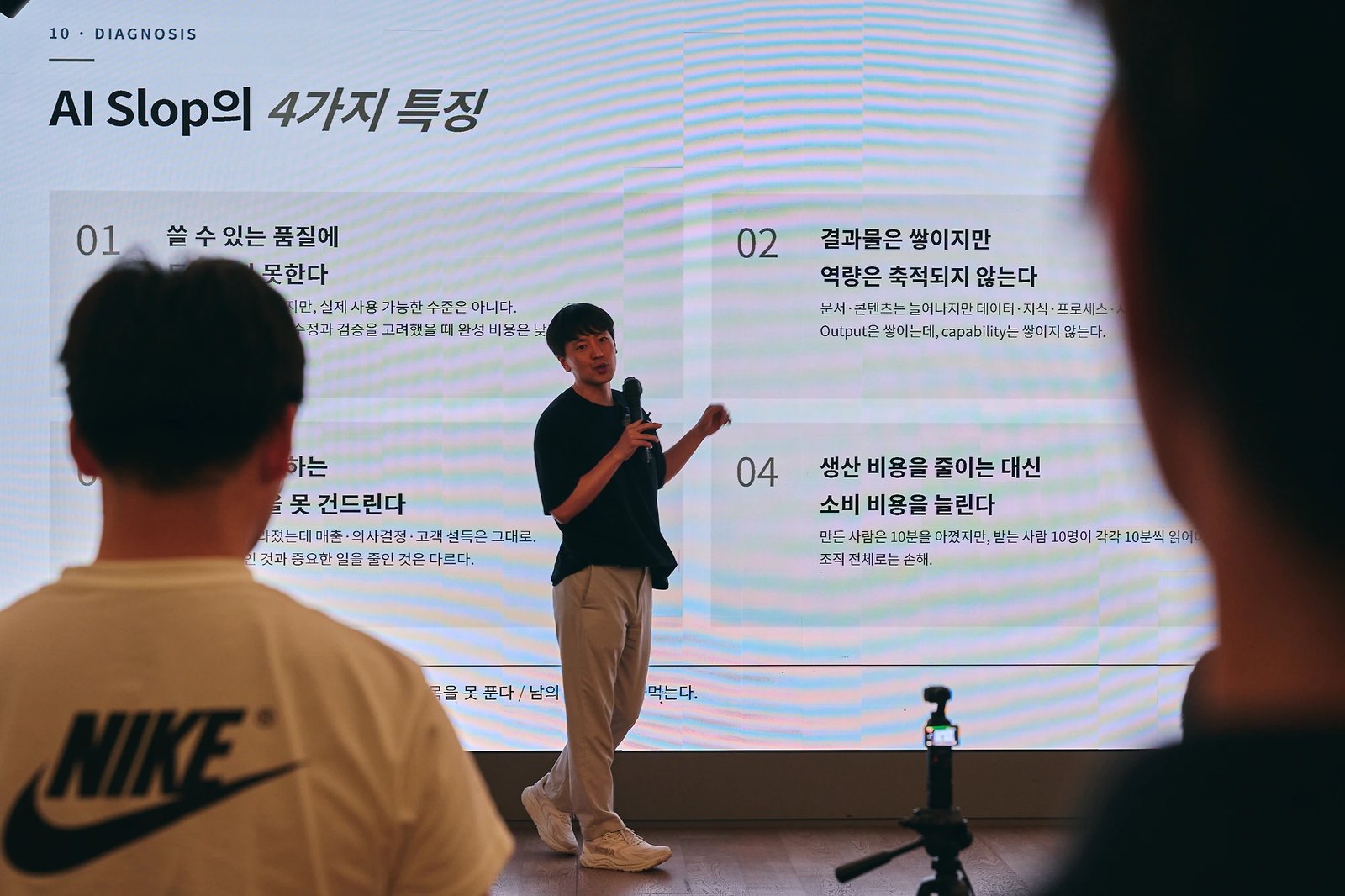
From that he drew four marks of slop. First, it never reaches usable quality — people start using something at 80 points and call it good past 90, while AI output stalls at 70. Second, output piles up but capability does not. Walking to work every day never makes you a sprinter; you have to walk while studying how to go faster. Third, it never touches the bottleneck that decides the outcome — one consulting report found 85 percent of companies using AI saw no improvement in operating profit. Fourth, it cuts the cost of producing something while raising the cost of consuming it: summarize a meeting in one minute and share it with ten people, and those ten spend longer working out what it says.
Assets, by contrast, answer four questions. Is it still used and still improving? Did it produce real business impact? Did it remove the core bottleneck, or just push it onto someone else? And was the workflow redesigned to be AI-native? He explained the last one through the advertising industry he covered as an analyst. In the early 2000s an offline agency's core skill was handing out flyers where the crowds were; when the internet arrived, they put QR codes on the flyers and called themselves a digital agency. Real digital agencies ran on entirely different grammar. AI is the same fork: bolt a QR code onto the existing structure, or redesign the business around it.
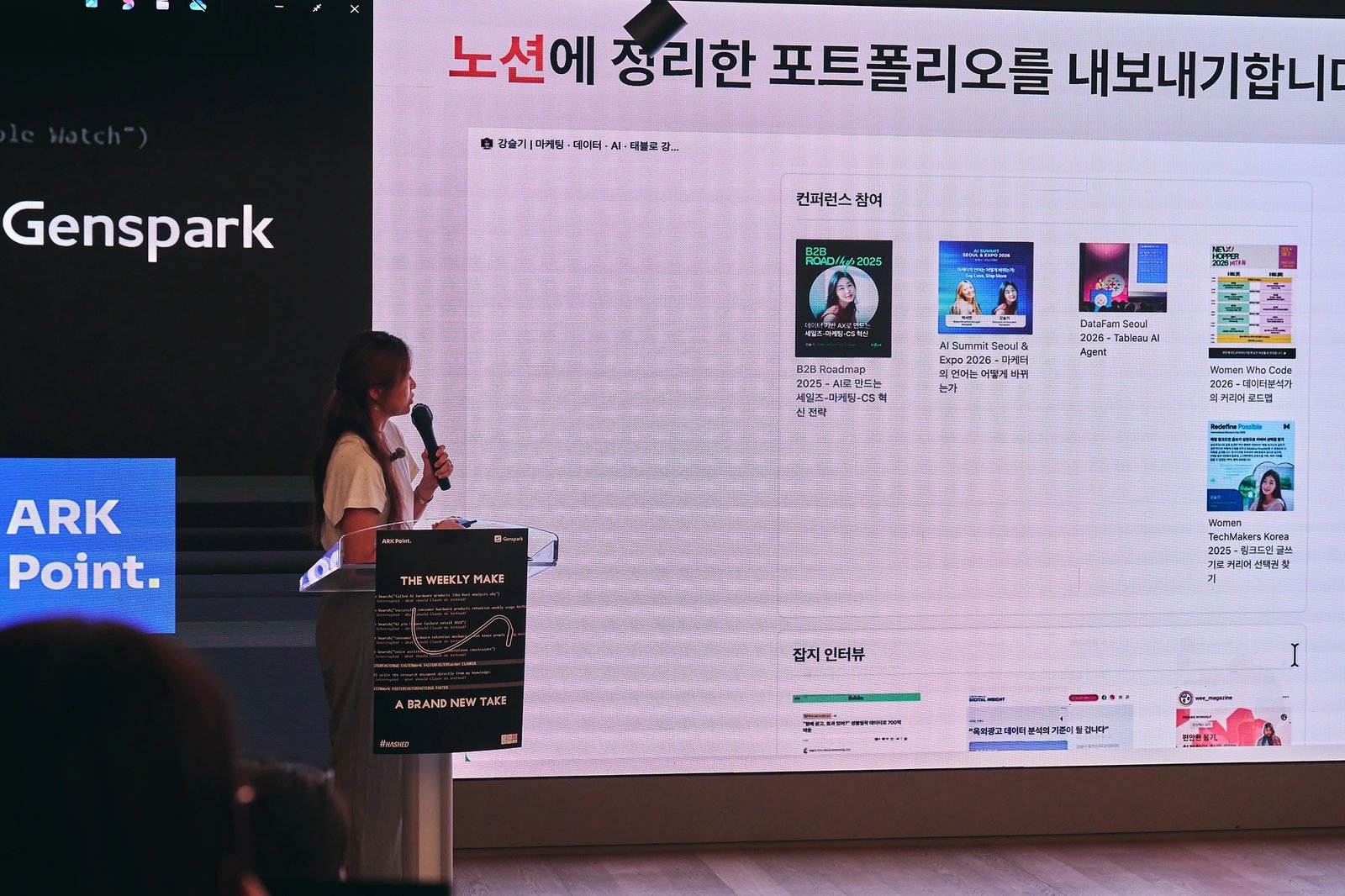
He shared one skill he actually uses. Bookmarking a good article means never reading it again, so he built something that takes a link and generates a study document in Notion. It fills in background the article assumes, lays out the alternatives it is competing with, and raises applications and questions specific to his own organization. The commentary sits folded inside toggles so the team can discuss first and open it after. Studying this way, he covered in five weeks what a semester would take, and published an 18-page write-up of everything he had learned since March.
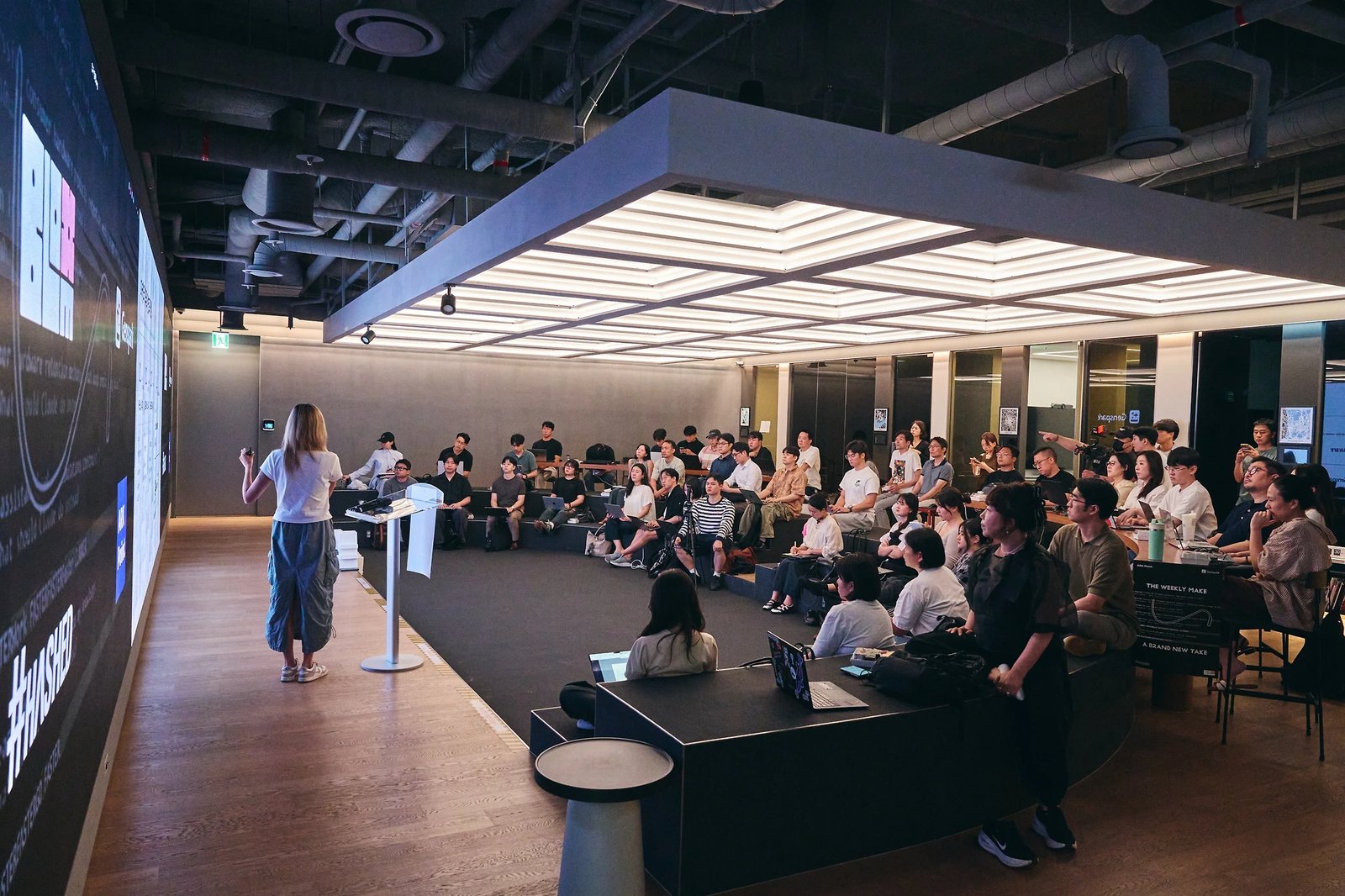
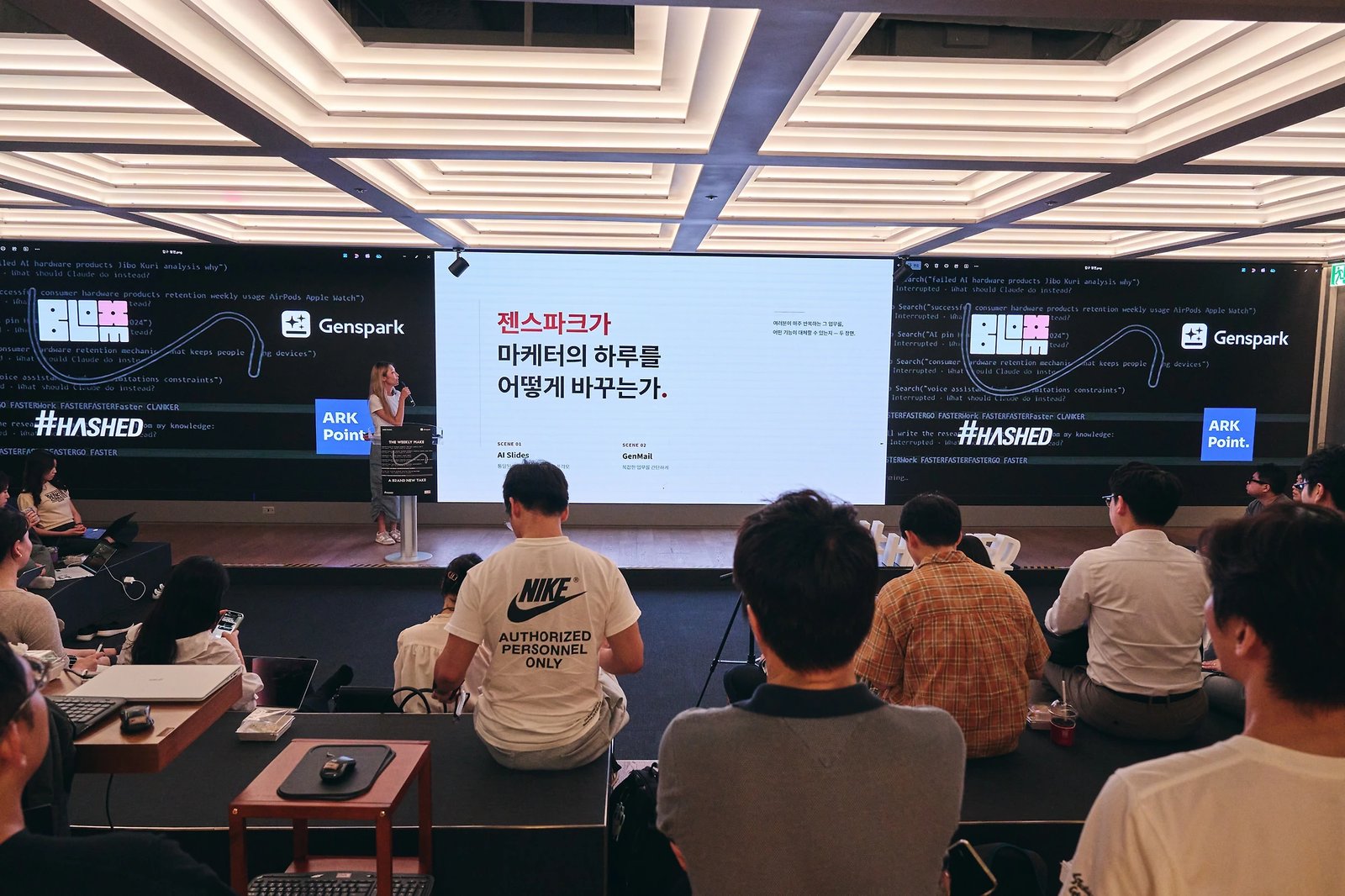
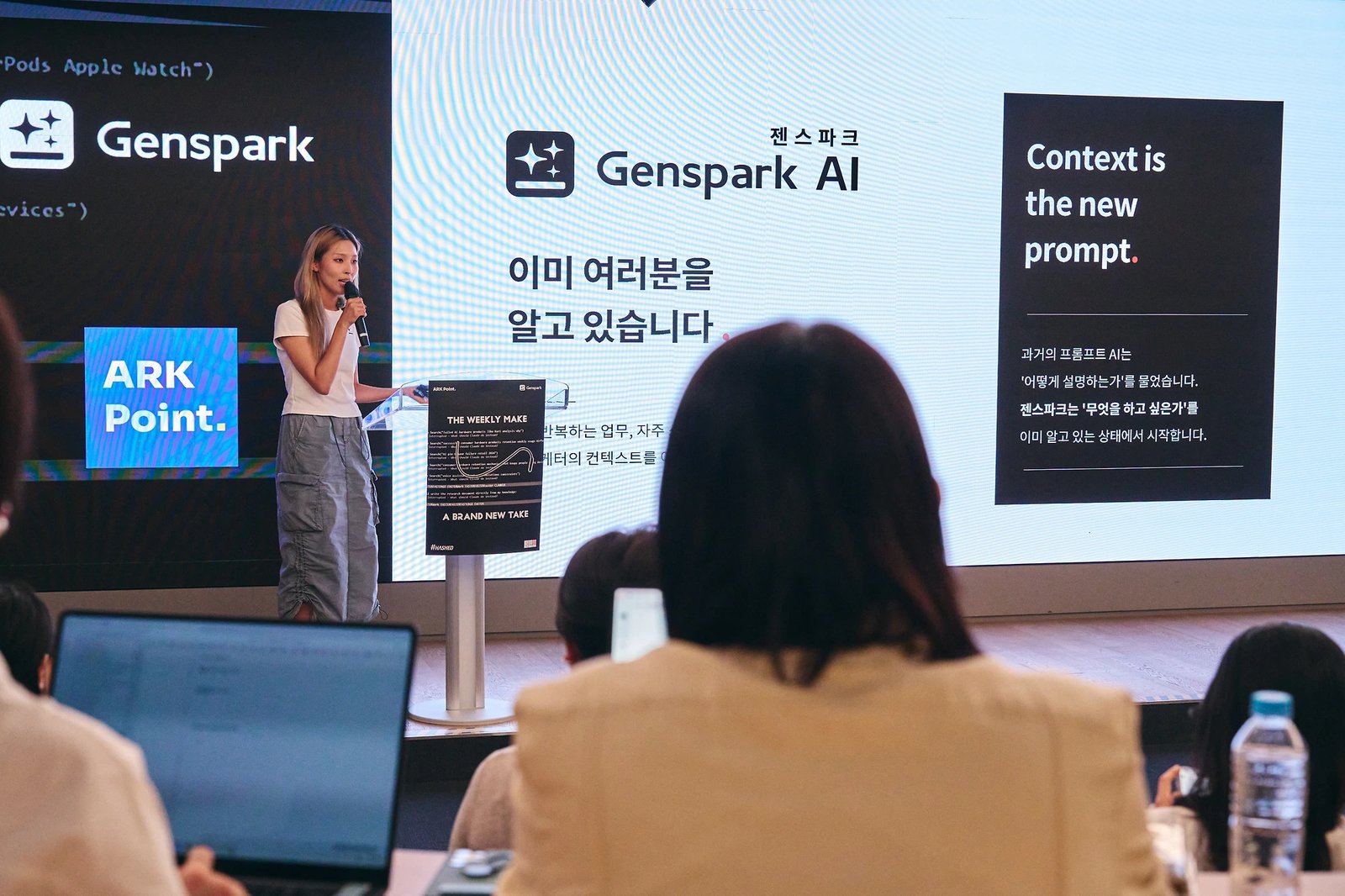
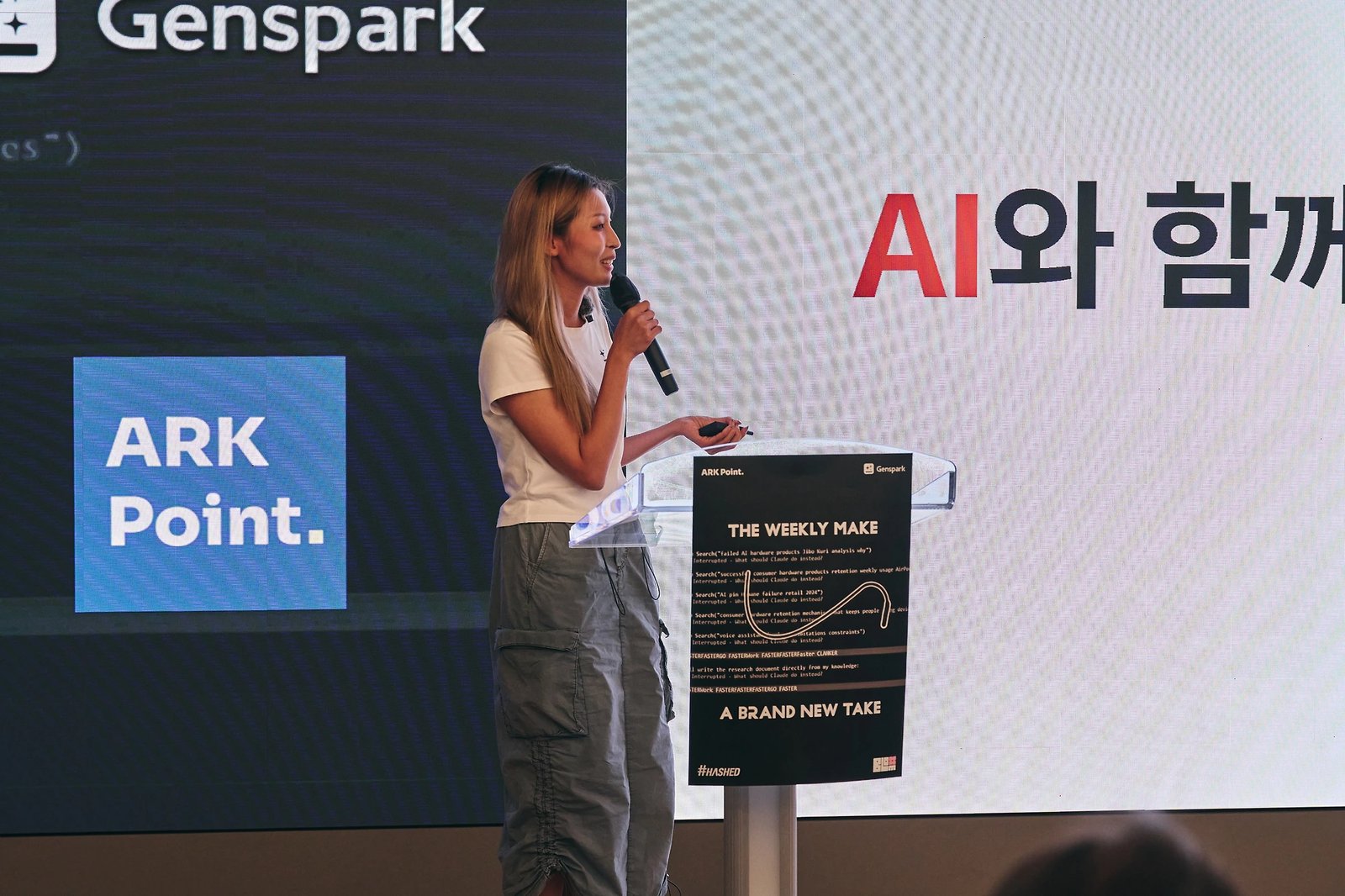
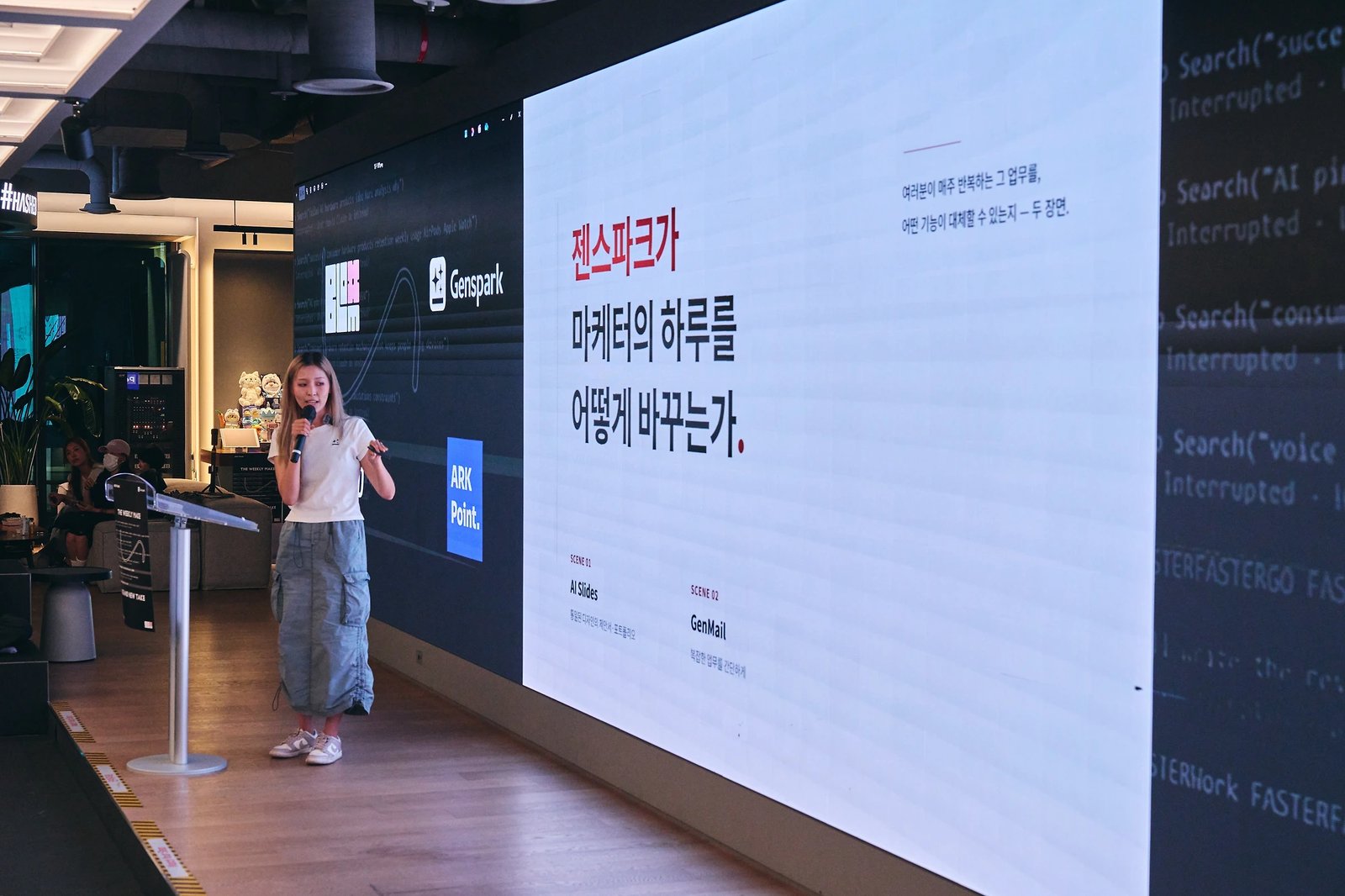
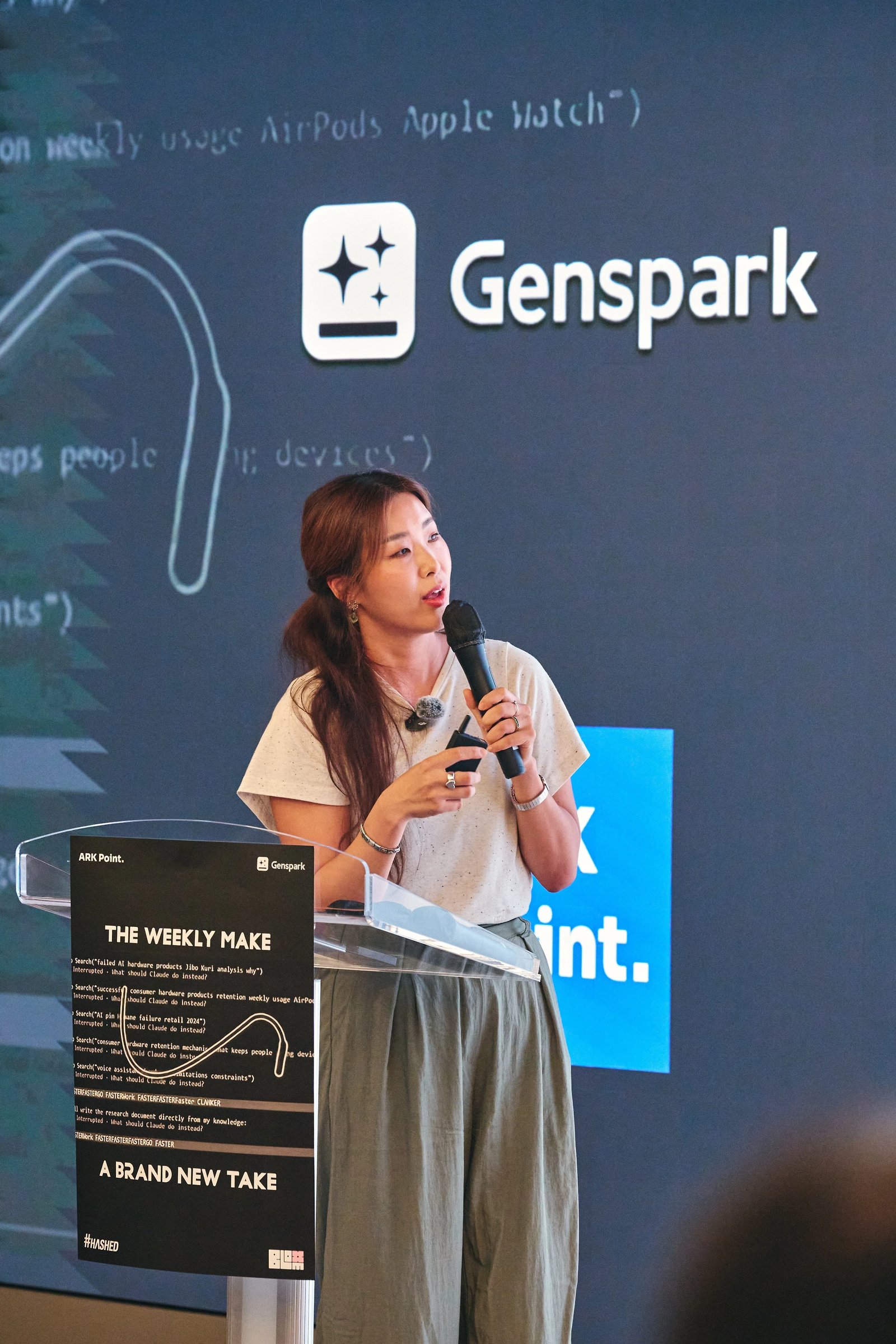
The second session was Genspark's Seo-yeon Park and Seul-gi Kang, titled "How the marketer's language changes," subtitled "Say Less, Ship More." Park traced the marketer's job through outsourcing, self-service and prompt-based AI to a fourth stage: AI that understands context, where you set a direction instead of learning a complicated tool. One line on the slide summed it up — context is the new prompt. She introduced the Second Brain feature, which works from your project history, connected apps and habitual tone, and the room nodded hardest at the gap it fills: the work that is awkward to hand a designer and awkward to do yourself.
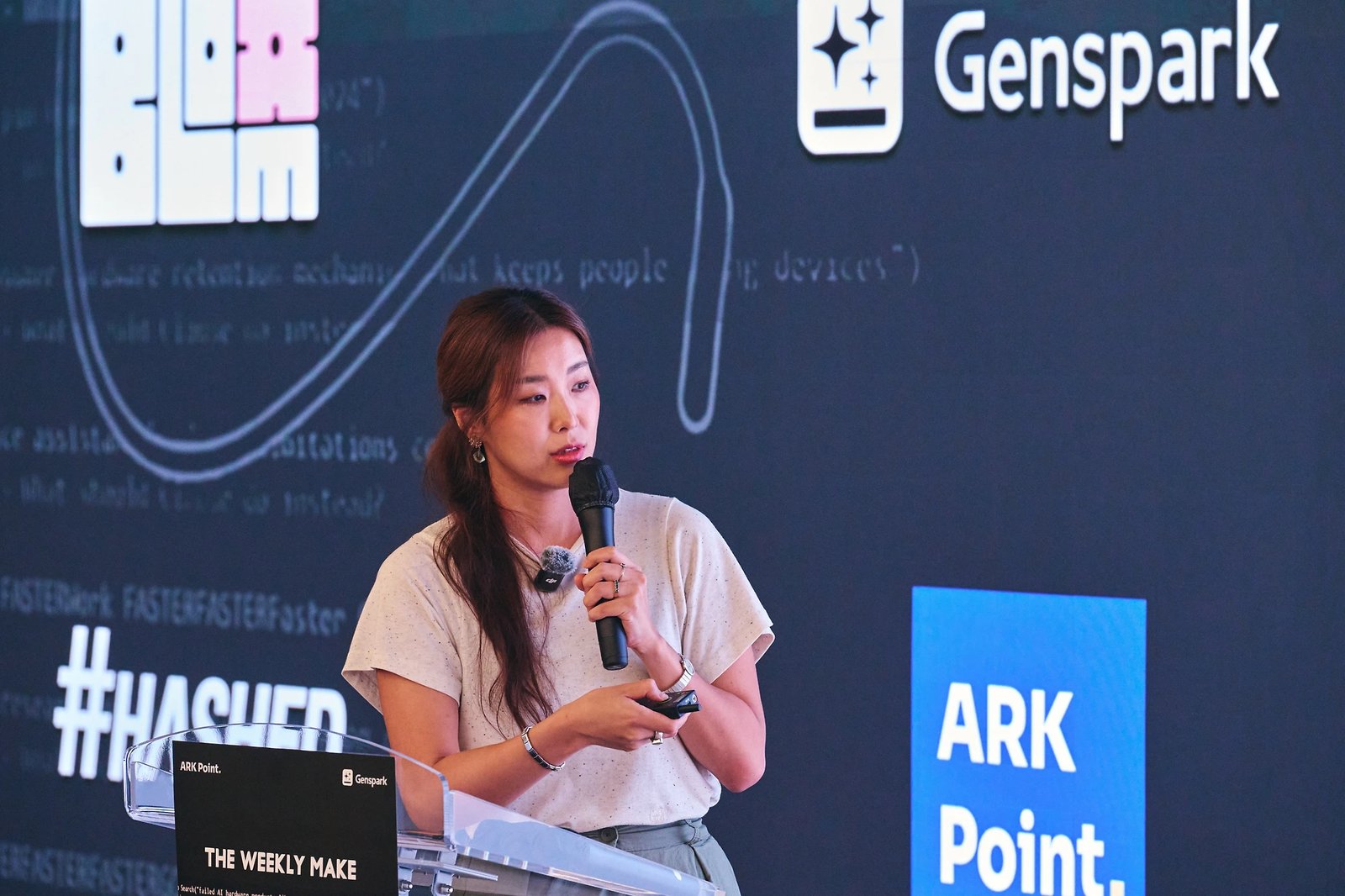
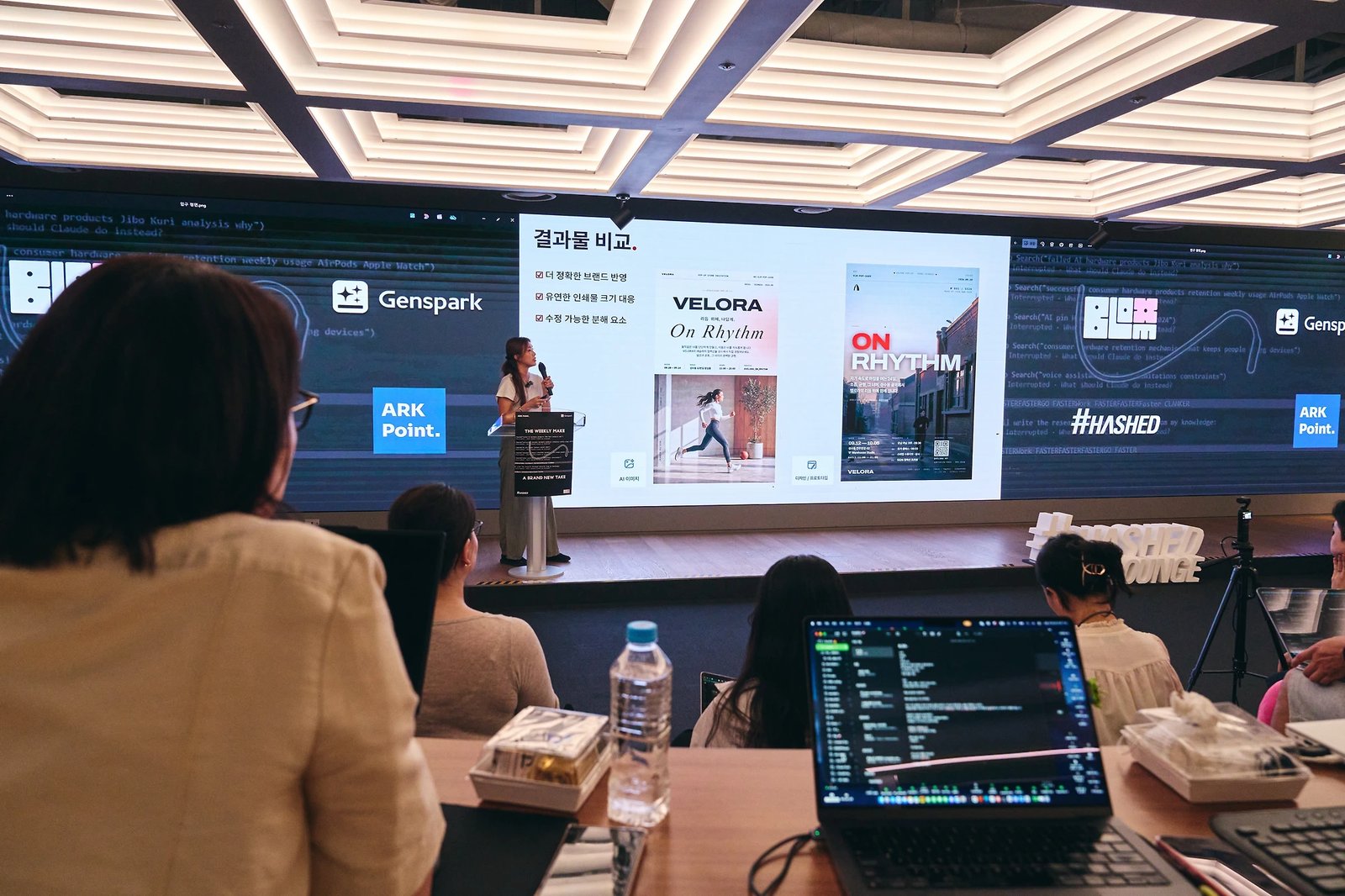
Kang ran the live demo. Her most practical tip was to right-click a brand's CI page, save it, and register the whole folder of HTML and images as a design system. Generating an image whole makes it hard to verify the brand guide was followed; composing text and a logo over a background, the way you would build a front end, keeps the guide intact. She built pop-up posters and card news for a fictional athleisure brand, Bellora, and a kiosk interaction page for a mochi brand, Mochi No, generating the sound effects as well. What stood out was the process rather than the output: instead of building on request, it asked back about subcopy and visual direction. It behaved less like a tool for making things and more like one for settling what you think. Her five requirements were a brand guide, a direction, the conviction to answer those questions, an eye for judging the result, and follow-through. As making gets easier, what is left is judgment and execution — which ran straight back into the first session's slop and assets.
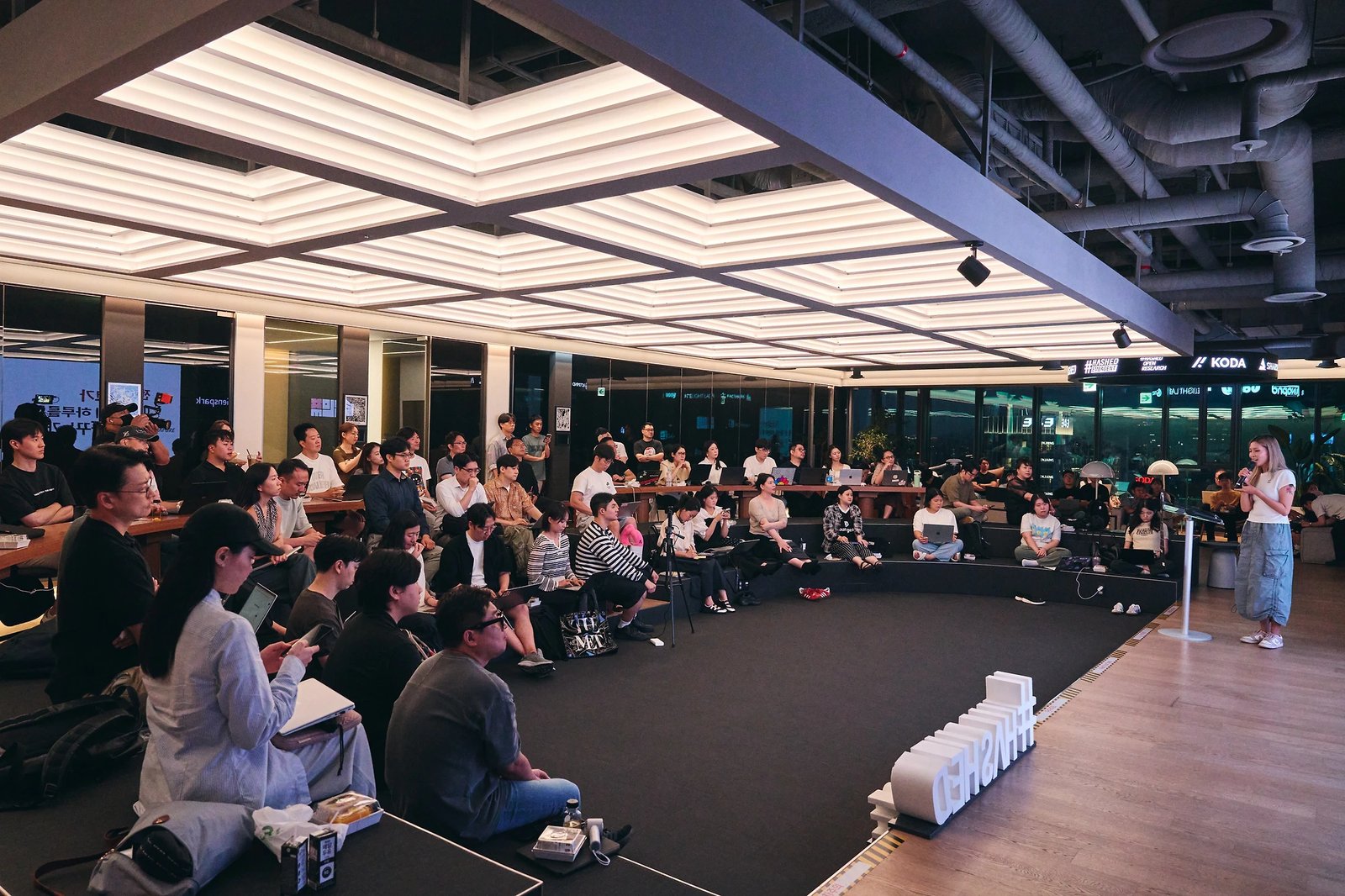
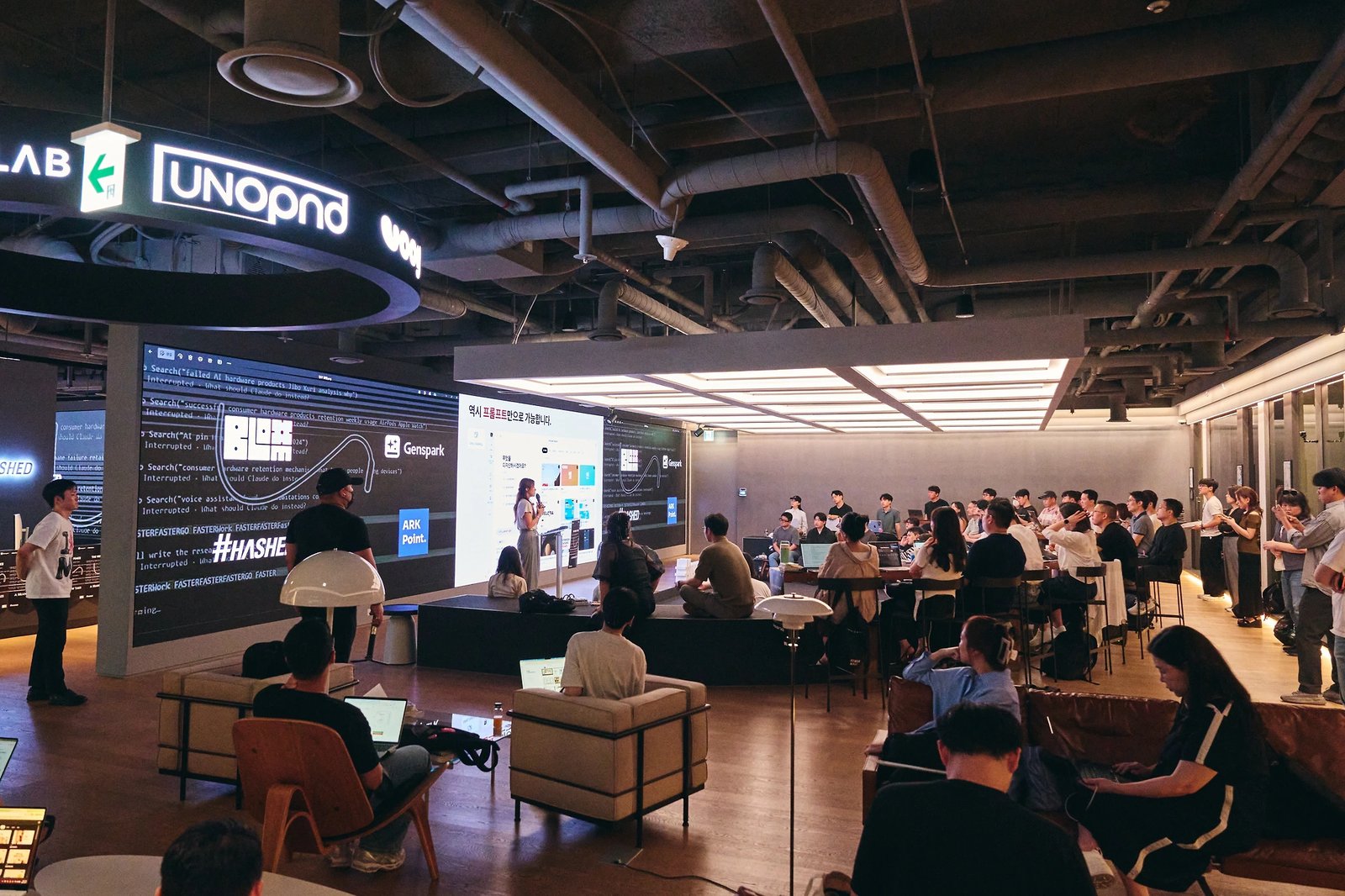
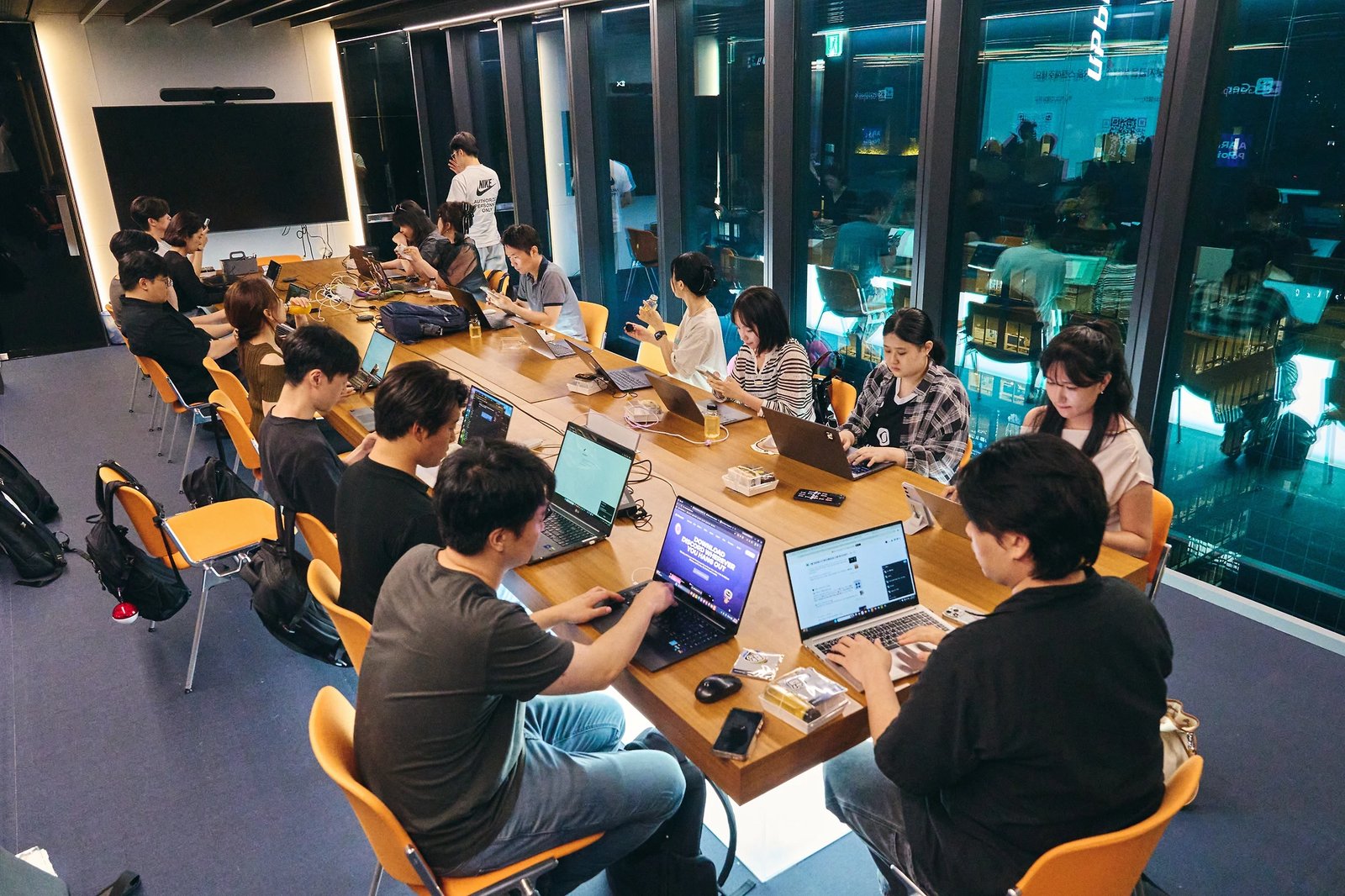
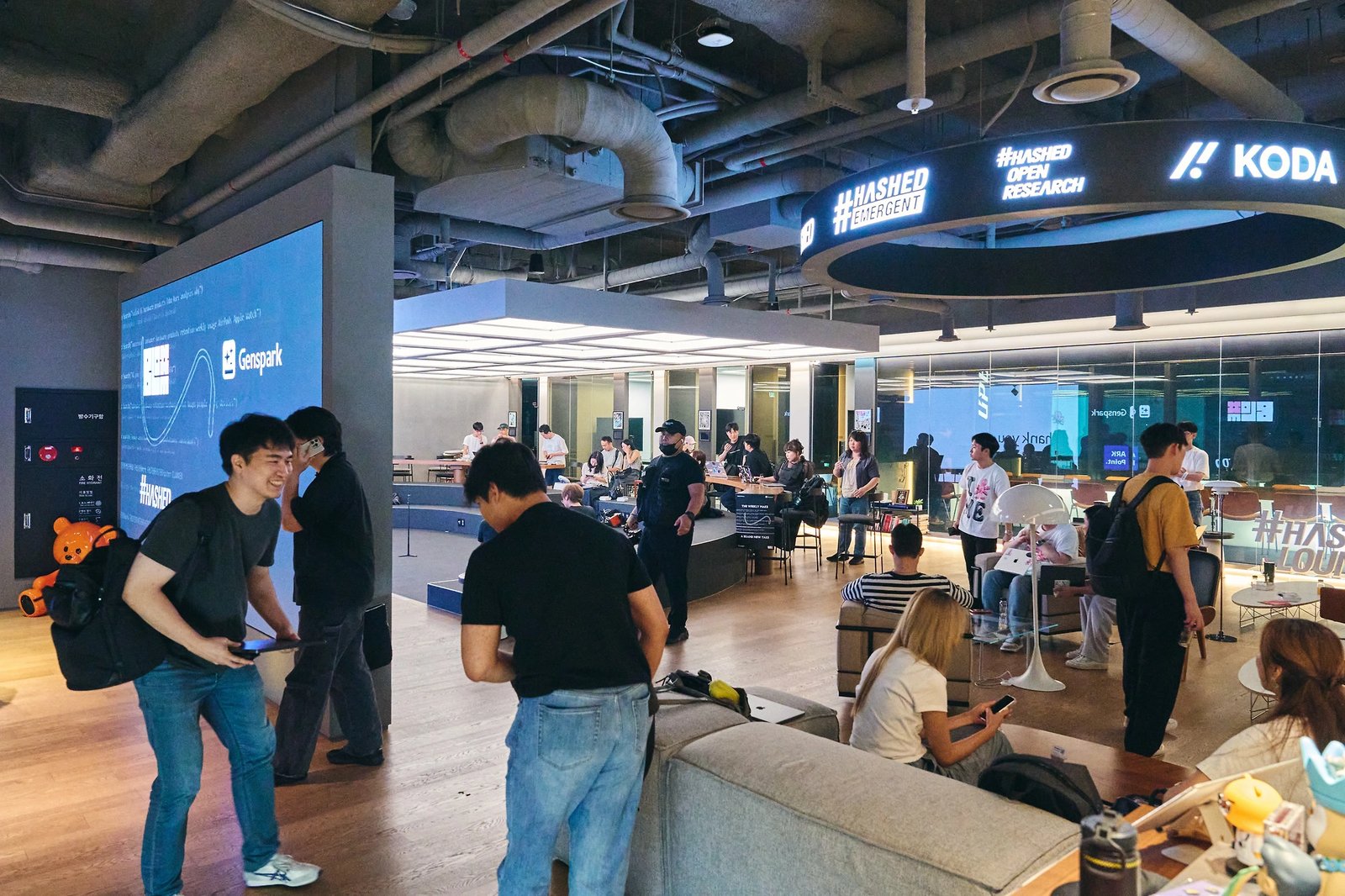
The opening addressed the assumption that AI events are for developers. This community is 30 percent developers and 70 percent everyone else, and all three speakers that night were non-developers: an analyst-turned-CEO, a marketing manager and an advertising ambassador, showing 100 non-developers how to build.
Read the full write-upEvent video
Gallery


















































Next event