Claude Bloom
What was discussed

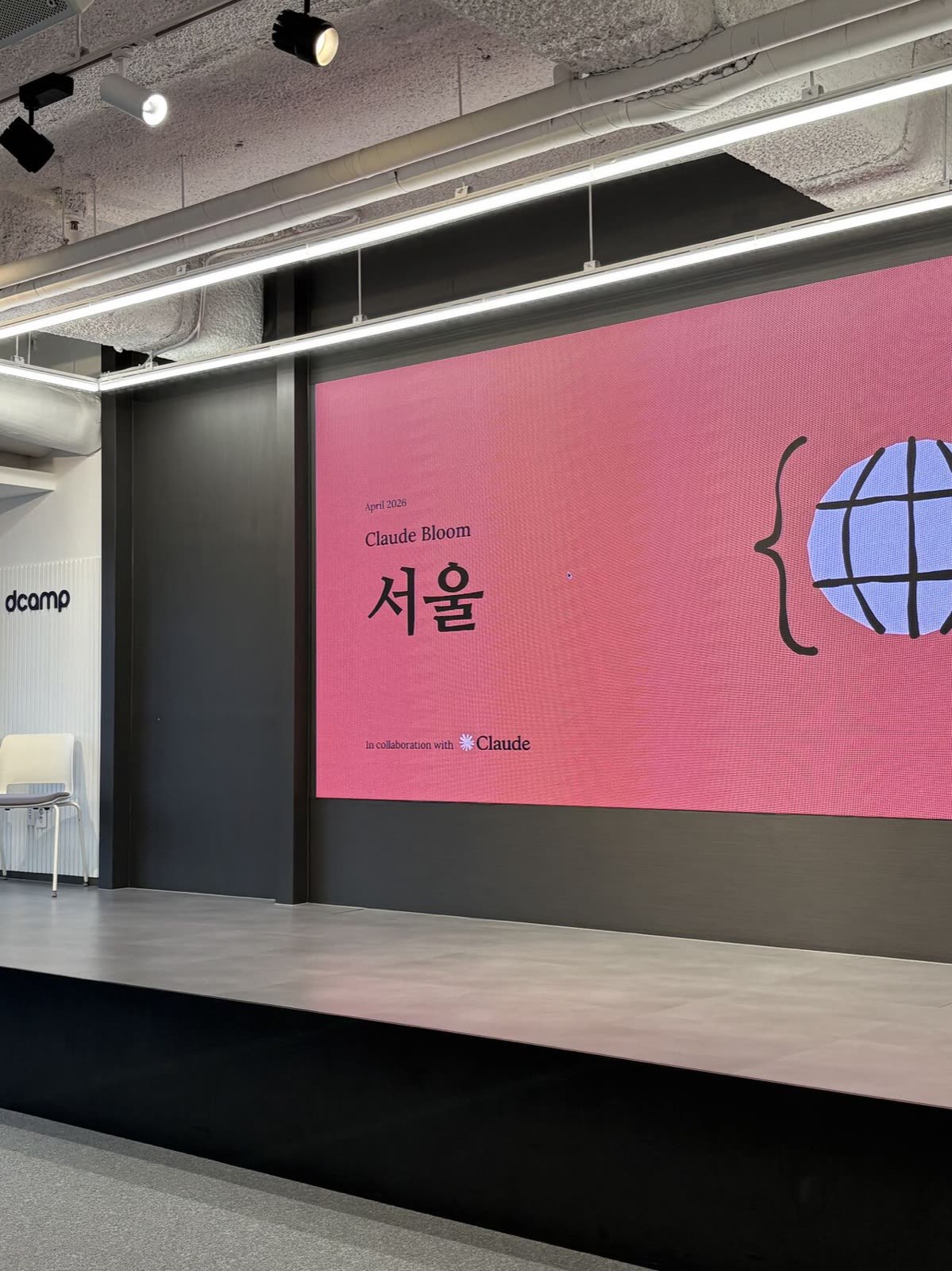
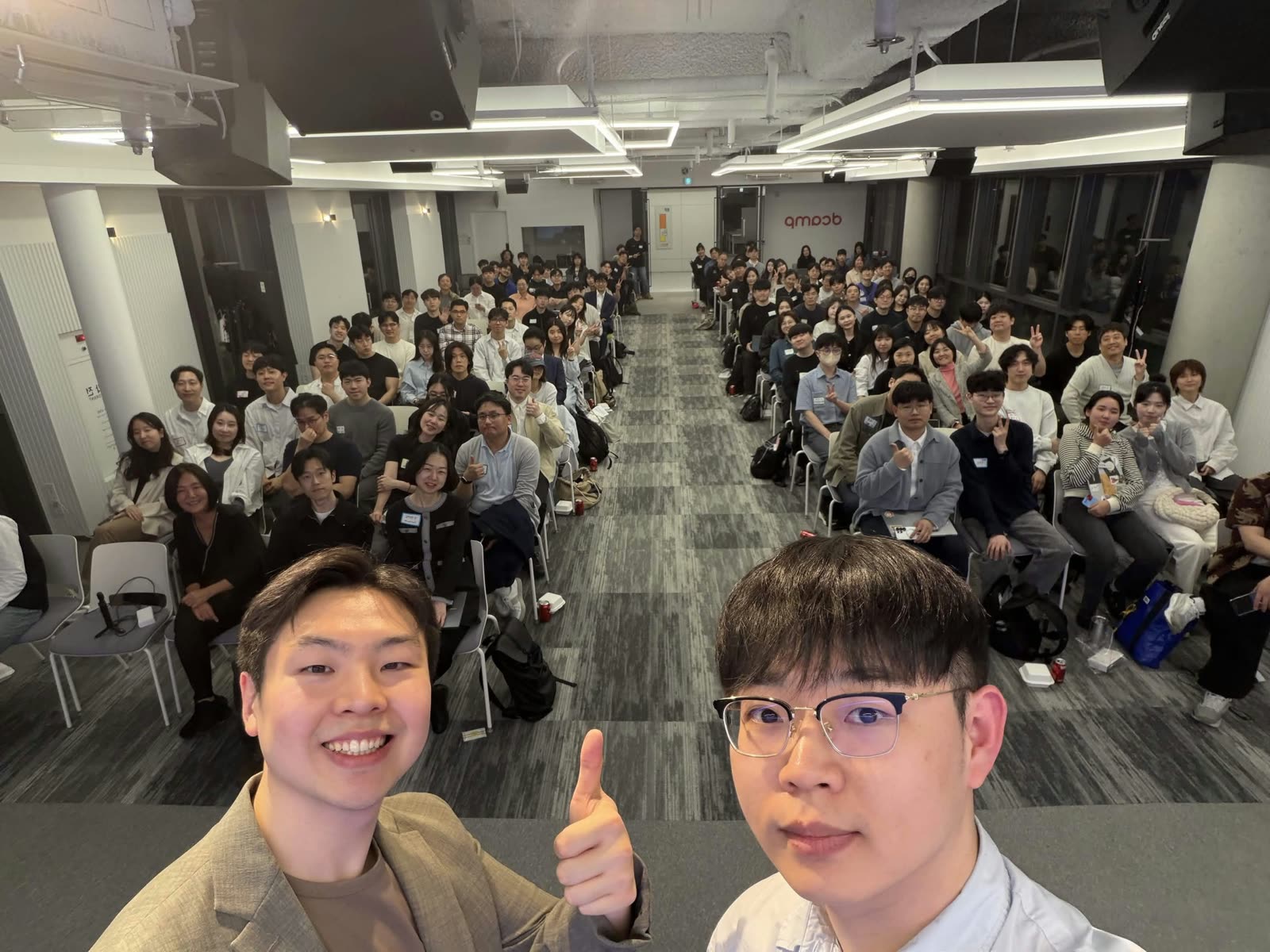
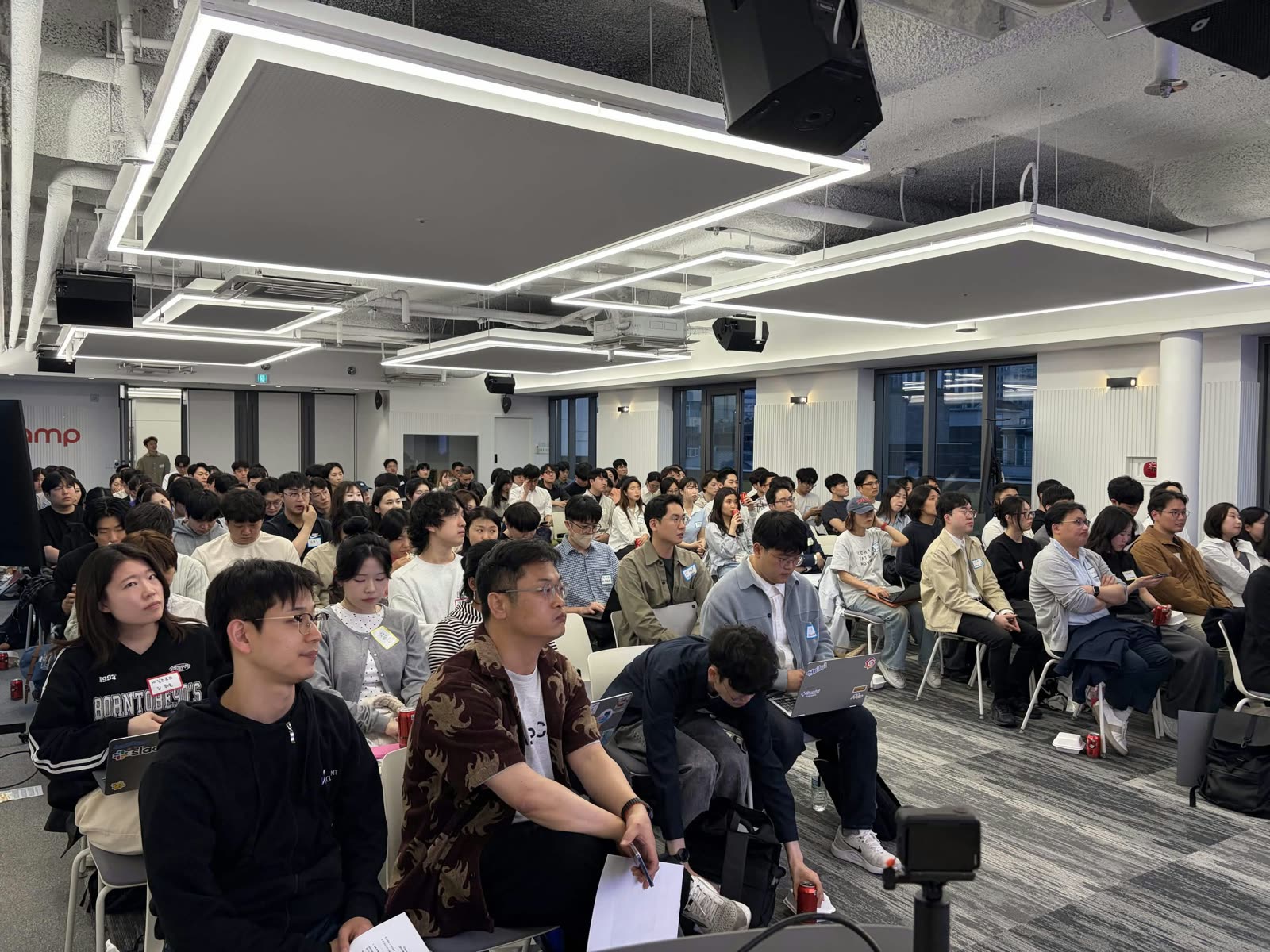
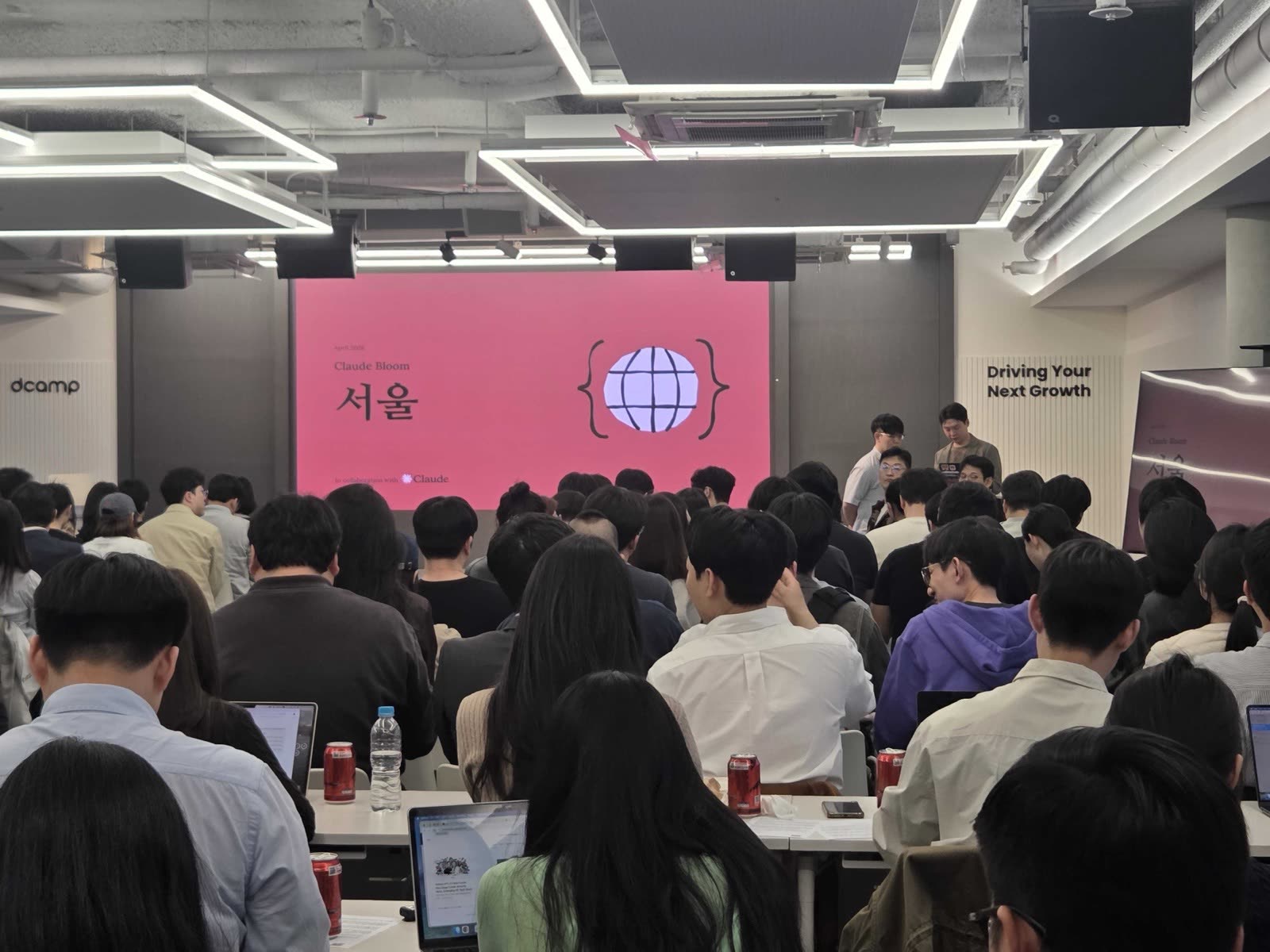
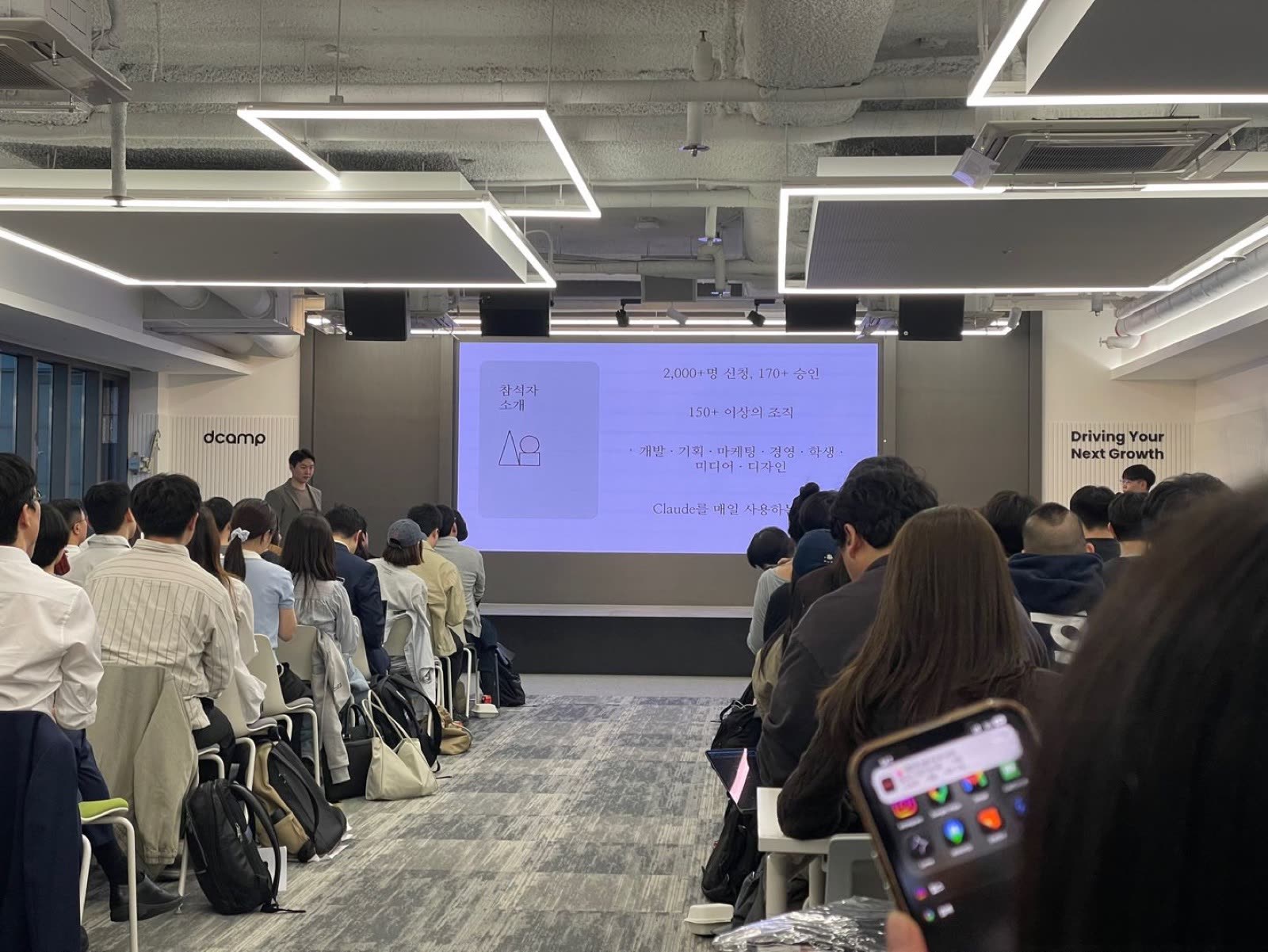
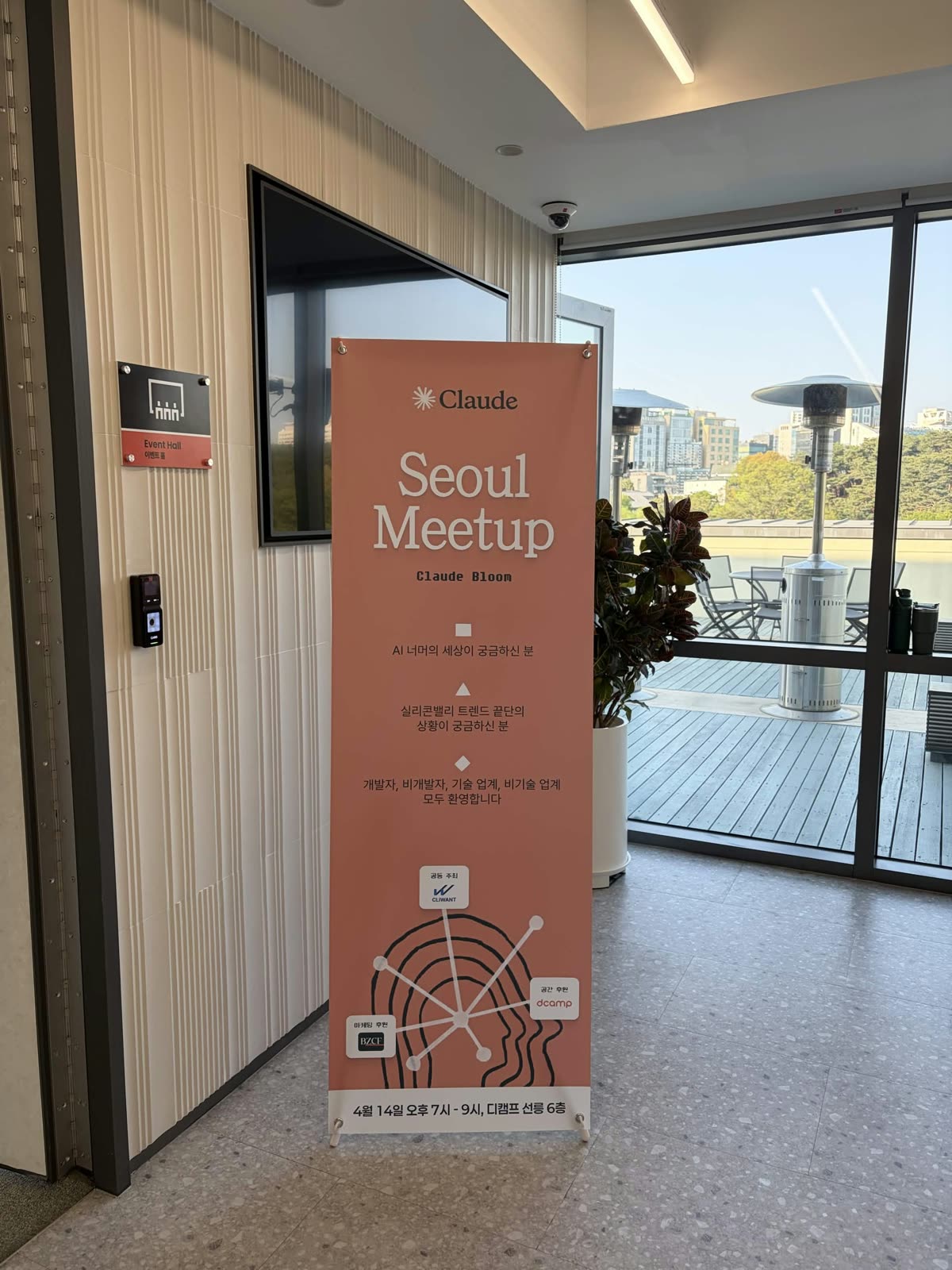
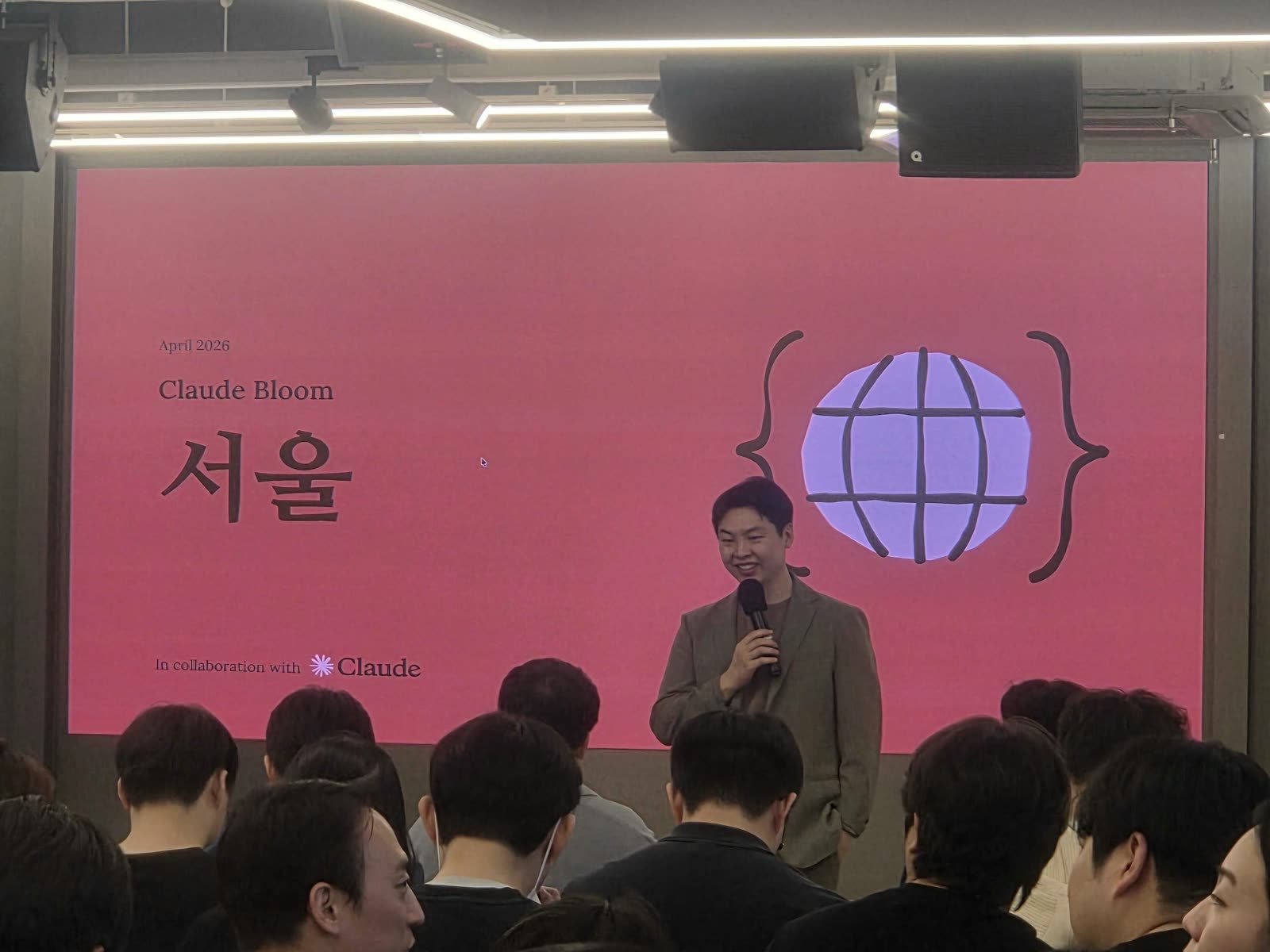
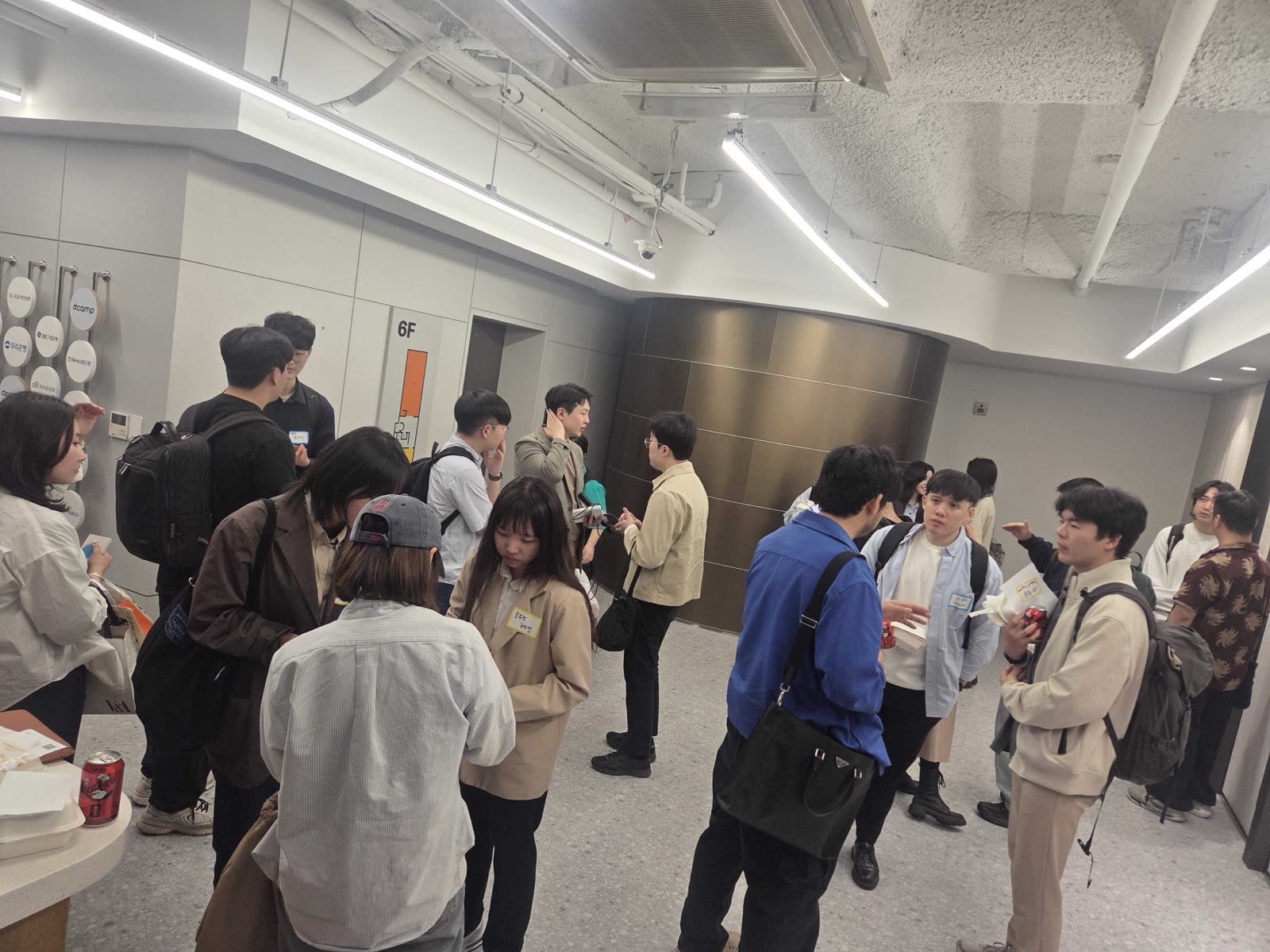
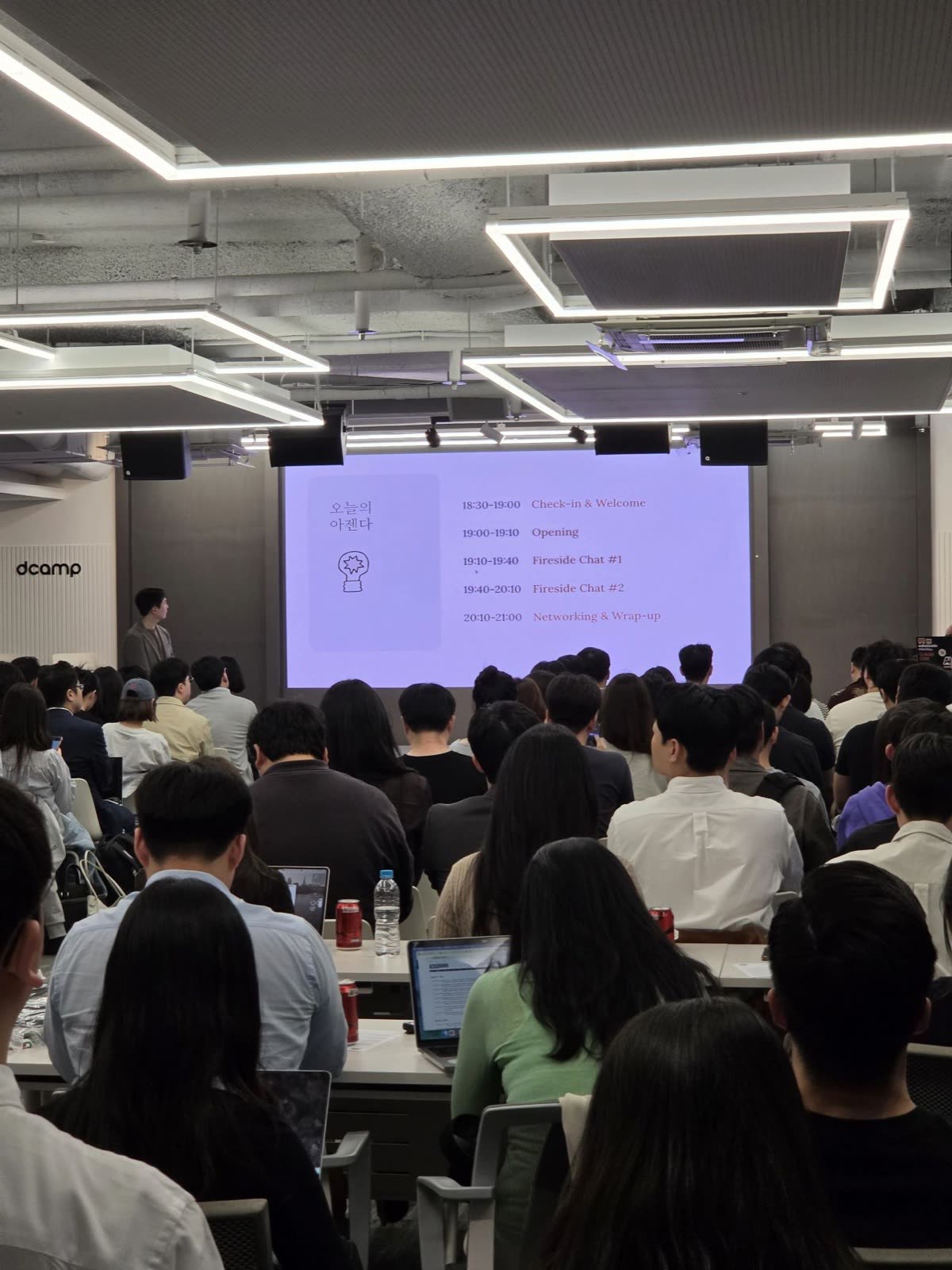
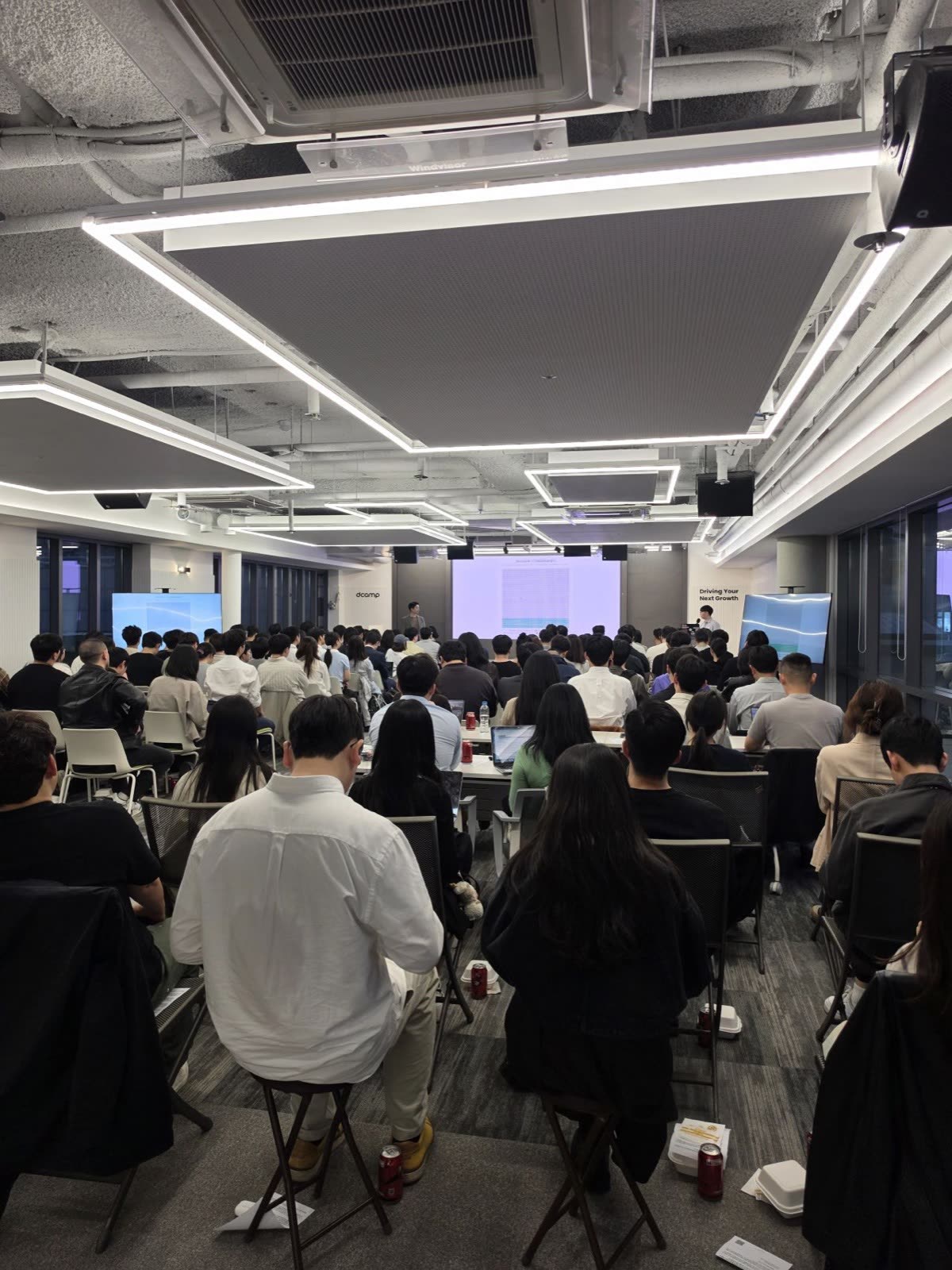
This was Bloom's first event. More than 2,000 people signed up within days of registration opening, and space limited us to 170, yet almost no one was a no-show. The discussion carried on outside the building until 11 p.m., when the venue closed its doors. Anthropic did not host this; Bloom planned it and Anthropic came on as a partner. That independence is what made the conversation as candid as it was.
A statistic Claude ambassador Choi Hoon-min opened with set the frame for the night. It came from an Anthropic multilingual qualitative study covering 81,000 people across 150 countries. Eighty-four percent of the world's population has never used AI, and only 0.04 percent use it for coding. Being that far ahead and still feeling anxious turned out to be especially pronounced in East Asia. At the center of that anxiety sat the fear of leaning on AI until you lose the ability to think for yourself.
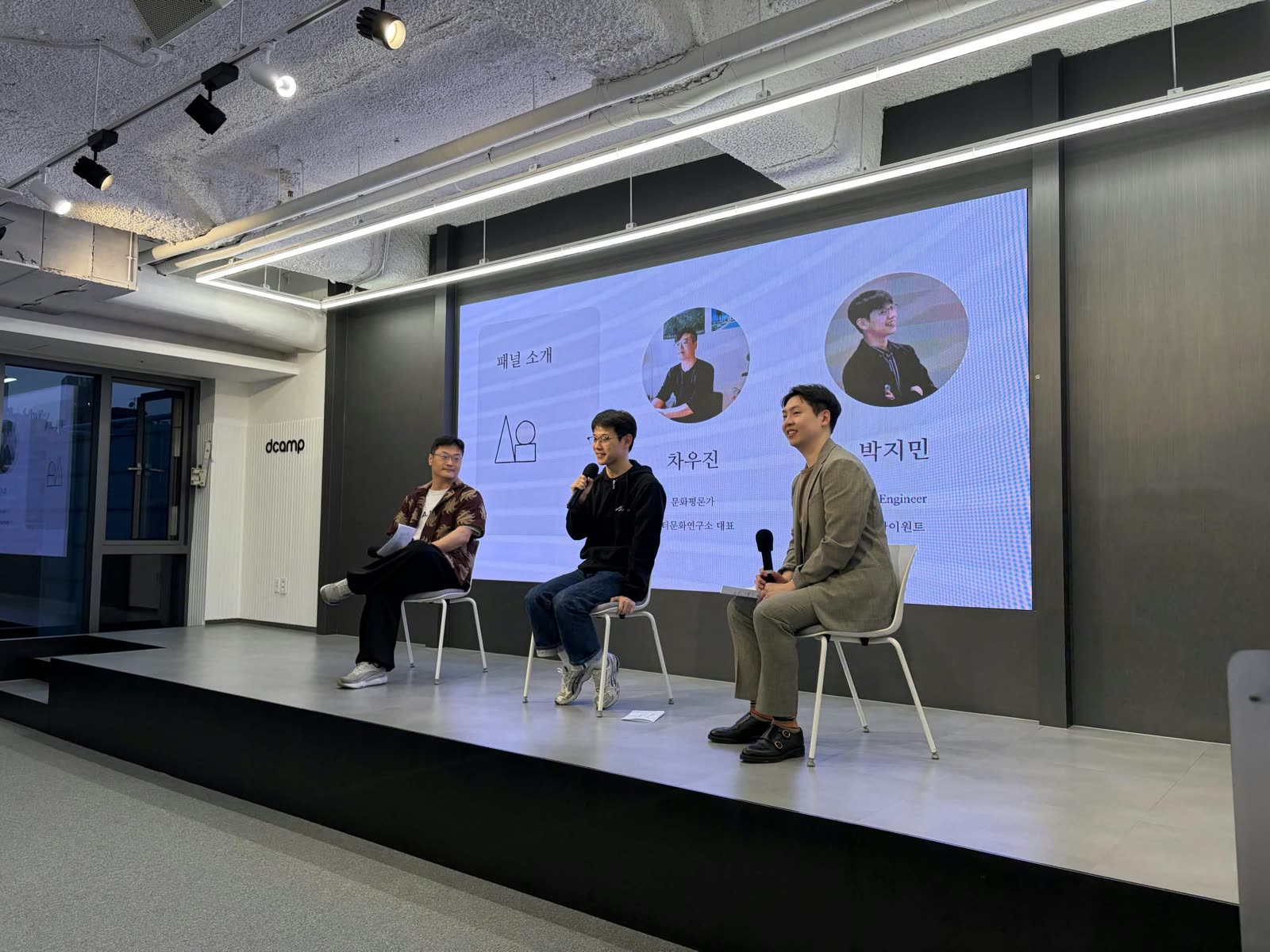
The first session's guest was Park Ji-min, an AI engineer at Cliwant. He introduced himself as an ordinary developer and said he had come not because of any remarkable career but because he wanted to put words to what he was feeling. The phrase he chose was that it feels like being a job seeker again. Until last summer it was AI helps me write code; now it has flipped to AI writes the code and I help the AI. In the cycle of planning, designing, building, and verifying, the building has largely moved to the AI's side.
The sharpest diagnosis of the night was about agency. A developer becoming a manager and no longer writing code is a natural progression, and it does not mean losing agency, because it is a change you chose. What stings about blue is that it is a change you did not want.
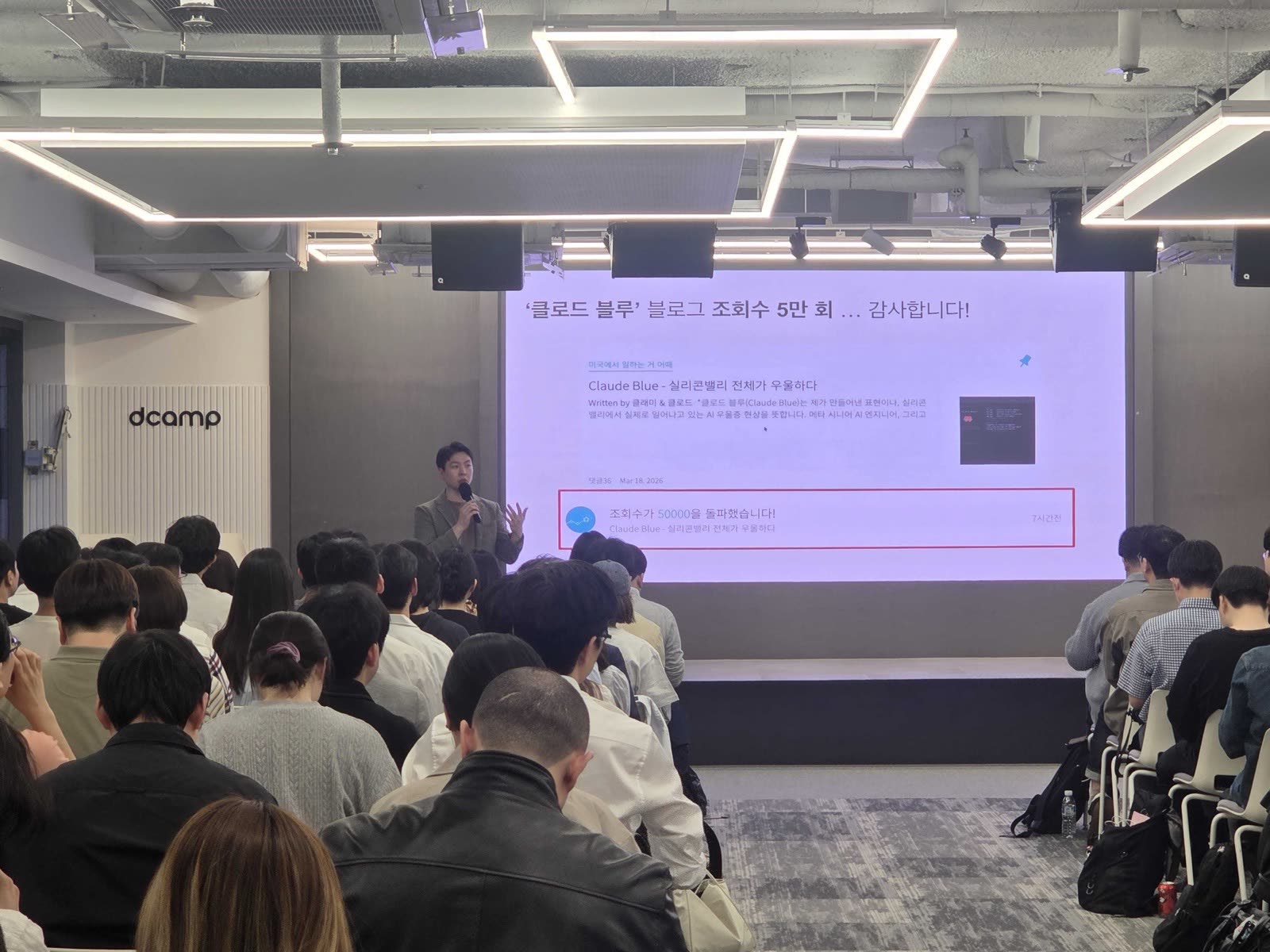
Cha Woo-jin, an entertainment tech critic, joined after leaving a comment on a Claude Blue post on LinkedIn. He pinned the start of his own blue to mid-February: the sense that something was changing and that it was not moving the way he wanted it to. Over the Lunar New Year holiday he spent six days glued to AI, coding until 7 in the morning, sleeping three hours, and starting again, and then at 4 a.m. it hit him.
The output was there, but understanding what a commit was and how Git worked took a long time. As vibe coding spread, a sense took hold that anyone can code, and he thought so too at first. Give it a little time and the story changes. He spent two million won on coding classes and what he learned was not how to develop but how to talk to developers. Understanding the language developers think in turned out to be decisive for giving AI precise instructions.
What Park Ji-min added from the developer side ran along the same line. Domain-driven and test-driven development are less techniques than development philosophies. Set them up well at the start of a project and the codebase gets a skeleton; after that you add flesh to it. A non-developer starting with vibe coding sets out without that skeleton. It runs at first, then starts creaking, and in the worst case you end up with a structure no one can collaborate on.
Korea as a risk society came up too. Get it wrong once and you fall, so you have no choice but to get addicted to speed. Layer AI onto a place built on the pressure that missing a certain school ends your life and the path dependence that only that school leads to that company, and the existing path shakes loose entirely. The example he gave was the IMF crisis. It was a catastrophe at the time, and a decade later some people realized it had been an opportunity. That learning cycle has since compressed to three to five years.
Cha Woo-jin has more than a dozen projects running at once, from newsletter research to automating a paid community. The more interesting part was the shift in how he sees the tool. Through February he saw AI as a search tool with better grasp of context. By April his thinking had moved toward generating raw data instead. You give an agent an identity, say someone living in early twentieth-century Hong Kong, train it on 10,000 hours, and analyze the data that agent produces.
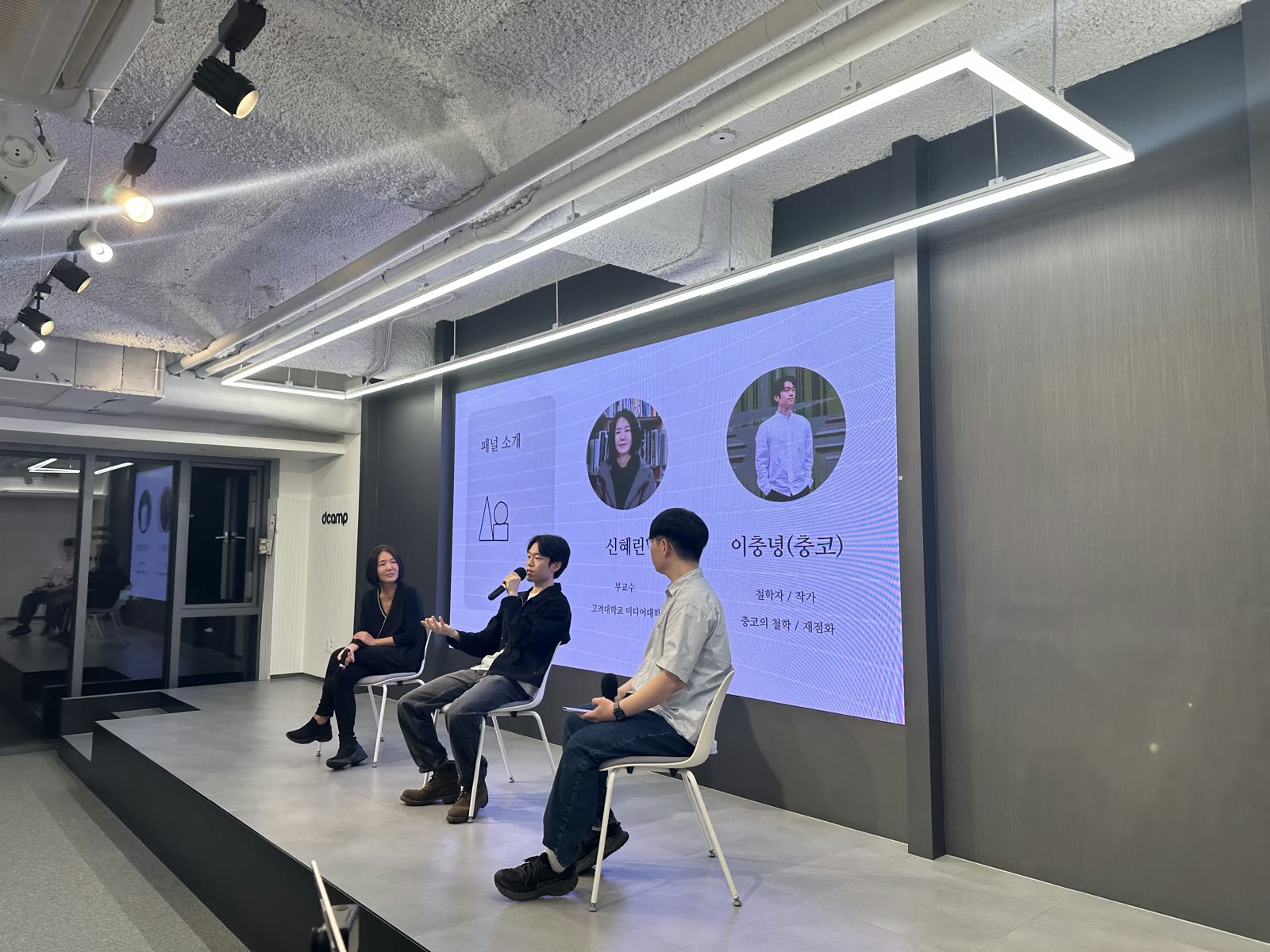
The second session brought together Lee Chung-nyung, a philosophy YouTuber and author, and Professor Shin Hye-rin, who researches AI ethics at Korea University's School of Media and Communication. Lee spends most of his AI time on translation, and Shin said she spends five to six hours a day with it. What was interesting is that both draw a line somewhere. Lee will not automate content creation. That part, he said, is tied to his identity.
Lee's diagnosis was blunt. Feeling blue may partly be wounded pride at AI being smarter than you, but underneath it is probably economic. He brought in Habermas and the idea of political powerlessness: as society came to revolve around the economy alone, people stopped even considering the possibility of changing the economy through politics. Shin offered a more concrete scene. The head of a well-known Korean game company told students in a lecture that they use AI for everything these days and hire few entry-level people, and she watched the light go out of those students' eyes.
The conversation went deepest on thinking less. Lee said everything around us is packed too tightly. Get a job and you have to buy a house, buy a house and there is a next step, and every next is designed so densely that there is no room to stop. Humans drift toward the gaps whenever the smallest one opens, and modern society has filled them all in. If AI can open a gap, he said, that in itself is a possibility. Shin added the practical reality that in a society where 80 percent of a cohort goes to university, putting that into practice is not easy, and framed the larger question as not whether humans lose the position of most superior being but how we move forward alongside these models in line with the values we consider worth holding.
Asked from the audience about bias in AI, Shin said the bias built into the models we use now has accumulated over a long time and will not be solved in one pass. It takes many fields sustaining the conversation together and changing things little by little, and she noted that this is a winter for AI ethics. The field is growing while attention and investment shrink.
Read the full write-upGallery
Next event
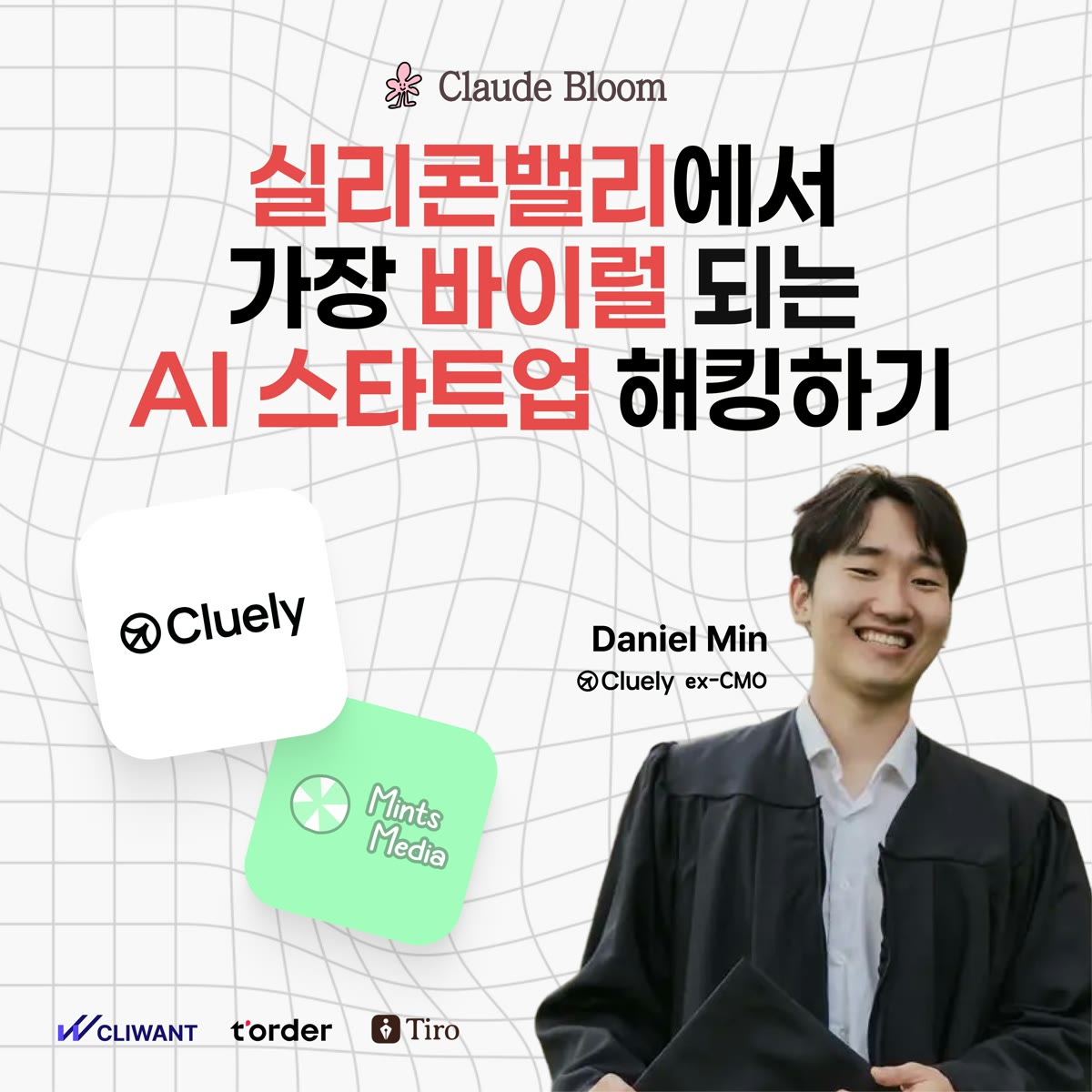
- Hacking the growth marketing of America's most viral AI startup
- How are we blooming in the AI era?
- What AI can't replace, and what we should grow instead
- Has AGI already arrived? And what comes after?
- Content, AX and SaaS: the new OS of the AI era
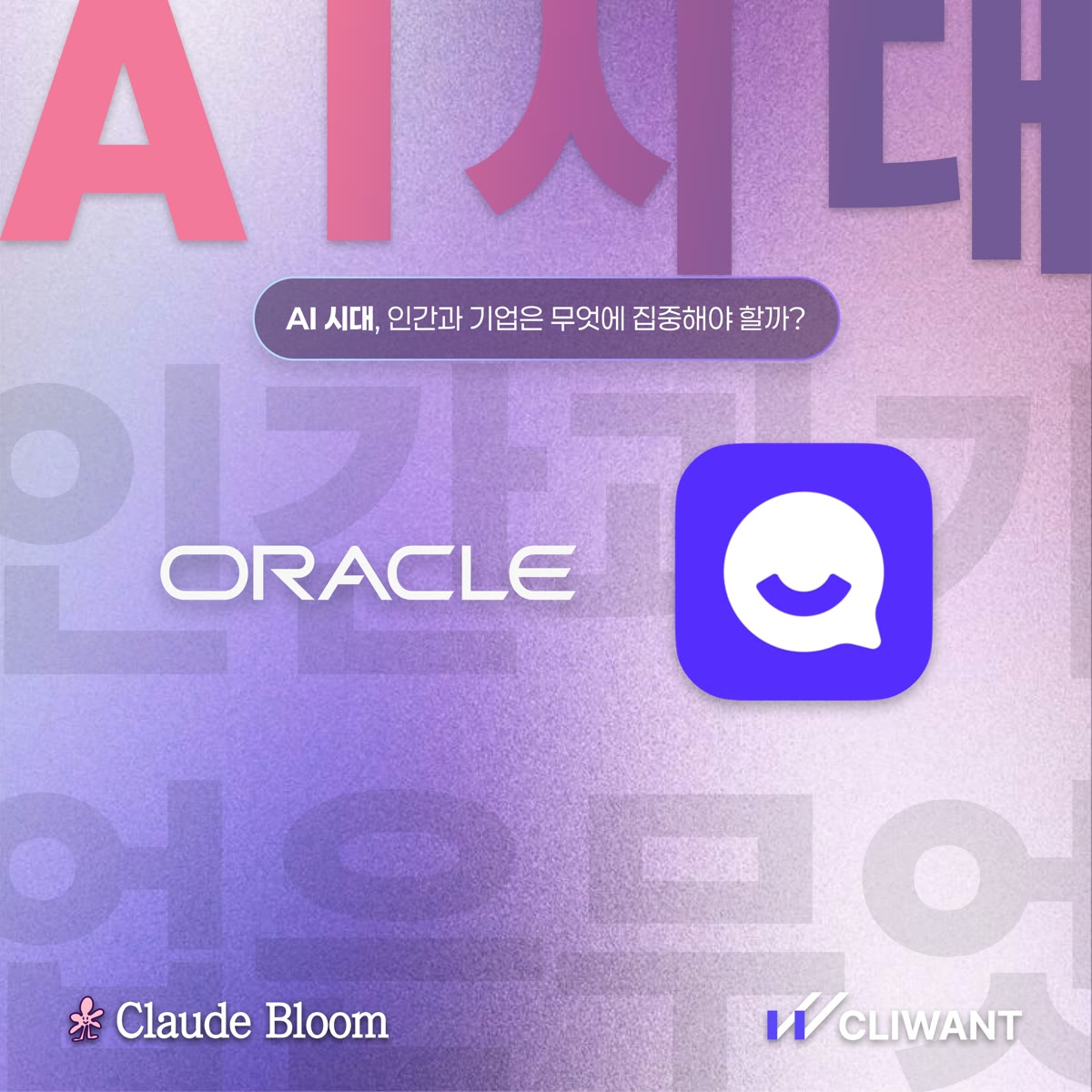
- When AI starts acting, what should people and companies focus on?