Hacking the growth marketing of America's most viral AI startup
What was discussed
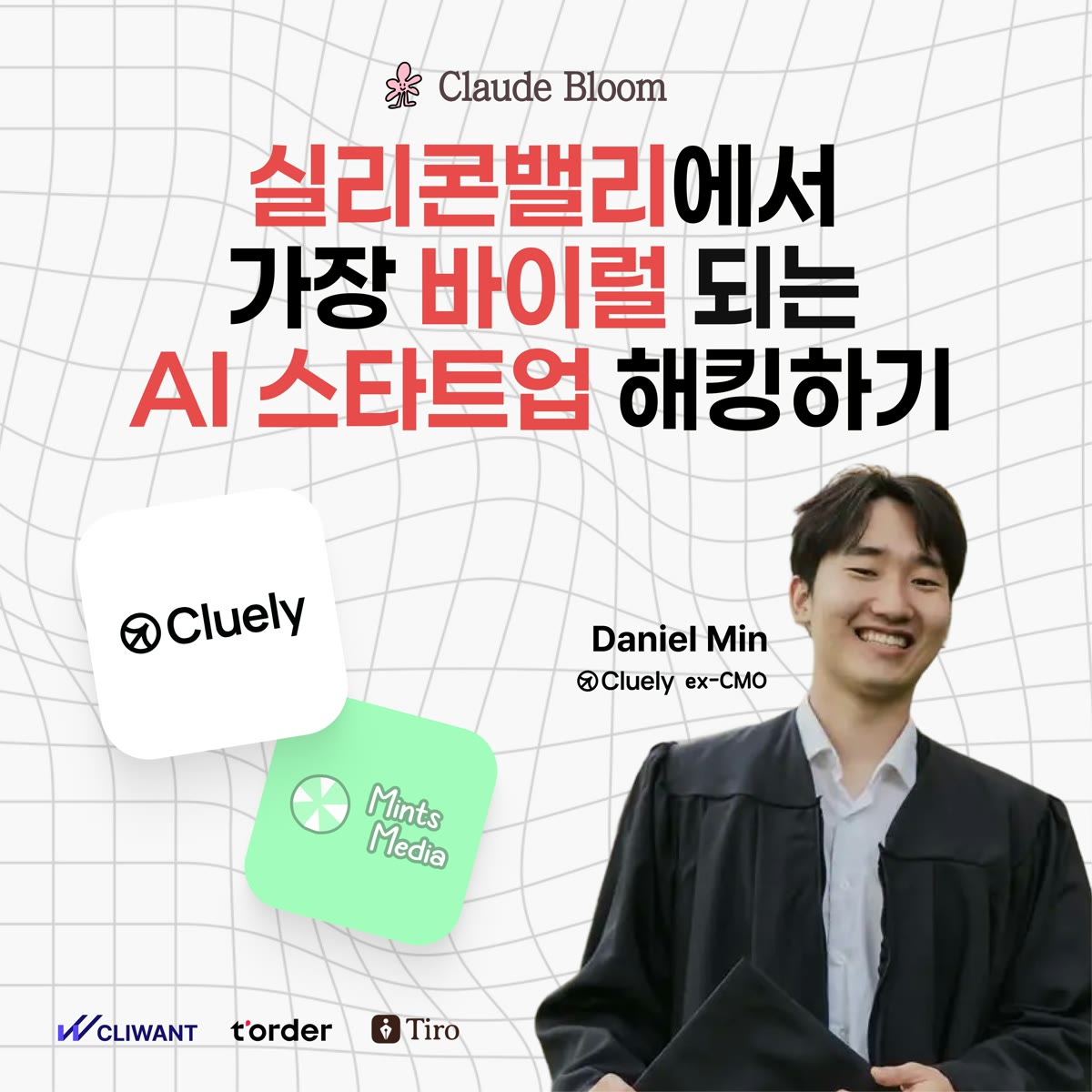
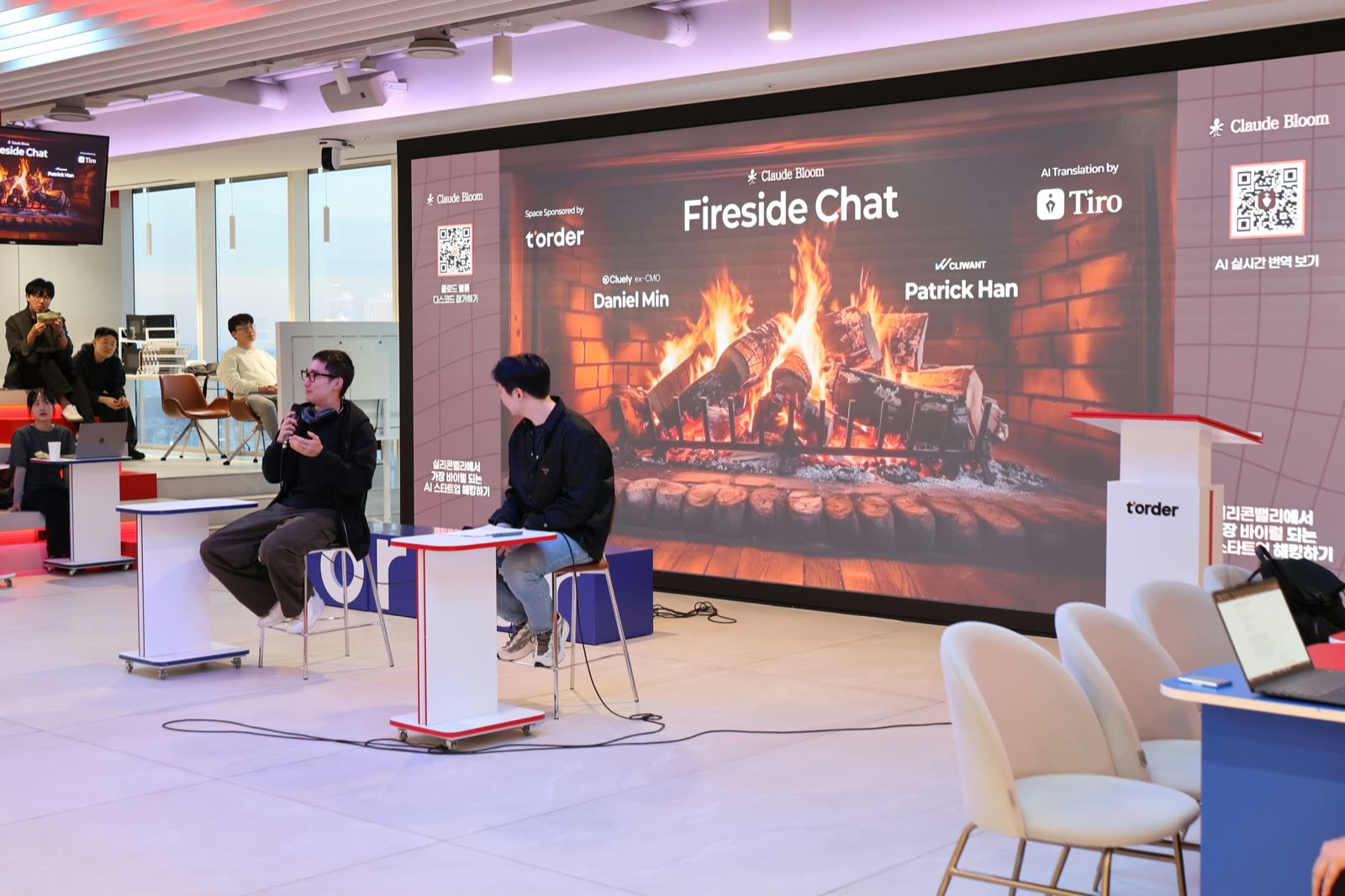
The event started with one Instagram DM. Daniel Min, whom Wonjun had followed for a long time, posted a story asking what he should do during a week in Korea, and Wonjun proposed a meetup on the spot. Told that 2,000 people had signed up for the last Anthropic ambassador meeting and that 1,100 were in the Bloom Discord, the reply came back: sounds good, but where?
Daniel Min designed growth at Cluely, the most viral AI startup in Silicon Valley. Cluely raised a cumulative 26 billion won from a16z within two months of founding, and what drew more attention than the money was how it marketed itself. With copy that is irritating and impossible to look away from, it became one of the most talked-about AI startups around.
His thinking starts by splitting the marketing funnel into three distinct layers, each with a completely different job. The top is brand awareness: the official Instagram, cinematic videos, office skits. No conversion is expected there. Like Red Bull, the point is to lodge the name without tying it directly to the product. The middle is UGC video, aiming for virality and user conversion at once. The bottom is paid ads, run on the simple rule that if ROAS is not positive it stops immediately. Expect one piece of content to deliver both awareness and conversion and you lose both.
The first thing he took on at Cluely was a UGC program. He hired 100 creators, gave them viral scripts, and built a pipeline that turned those videos into ads. Early results were mixed: some videos hit millions of views, and plenty converted at zero no matter how high the count went. The fix was quality, not quantity. He narrowed to the 70 creators who actually drove conversion and gave them more refined scripts. At its peak the system reliably produced 100 to 150 million views a month.
The extreme case at the top of the funnel was a Times Square billboard. When a discounted four-week placement came in by email, he and founder Roy discussed it for exactly ten minutes and committed $375,000 on the spot. The design was black text on white, reading hi, my name is Roy, I'm 21, please buy my product. A 21-year-old putting his name on Times Square became the content itself, with people filming the billboard for TikTok and parodies circulating on Twitter. If you have an eye for a good bet, he said, you do not need long to confirm it.
The question that came up most from the audience was whether viral views convert into paying users. He started by saying not every company needs viral marketing. He cited a resume AI company with no Instagram account that spends $100,000 a month purely on Google SEO and does $20 to $30 million a year. A job seeker searches for resume builder, the company comes up first, and they pay $30 to generate one. Figuring out where your target users search comes first. If you have chosen organic content, there is an order to it. Worrying about conversion rate while posting videos that get 200 views has it backward; only once you are confident one in ten videos will clear 100,000 views can you talk about conversion optimization.
His content philosophy fits in one line: make something that does not exist on the internet. Everything on the internet repeats, but personal experience and the risk you are willing to take do not copy. The signature example was an open-water swim near Alcatraz, which he trained four days for before swimming from near the island back to shore. A series rating 40 university dining halls as a tier list follows the same logic; it is 40, not one or two, so nobody can replicate it. When a new idea comes up he asks whether it exists on the internet and whether it is hard to make. If it is hard, nobody else will do it, and that difficulty is the moat.
Asked whether Cluely's marketing is deliberate ragebait, he said half true. The point is not to anger the internet but to choose framing that gets people talking. The principle he emphasized is that the opposite of hate is not support but indifference. Say exercise is good for your health and nobody reacts; frame the same message provocatively and the comments explode. The slogan cheat on everything actually means use AI for everything, and calculators and the internet were both called cheating at first.
He also shared the method that got a previous company to 75,000 followers in four months. It starts with competitor analysis, looking for the format nobody is filling. Next is making the ideal viewer extremely specific. He narrowed the target to one person, an 18-year-old freshman who just started at a particular university and wants to work at Goldman Sachs, and tuned every video to that one person. Last is the viral format. He built street interviews asking finance people for advice, 90 percent of those approached refused, and that difficulty was the barrier to entry.
He left Cluely after roughly seven months and started a marketing agency called Mints Media. He works with only two or three companies at a time, and his ideal client is Series A to B: enough capital to move, not yet bureaucratic enough to be slow. For B2B he recommends focusing on LinkedIn and Twitter, because in finance and enterprise the sales cycle is long and internal introductions decide things, so the quality of the network matters more than follower count. For a Korean company entering the US, he was categorical that the first thing to do is make English content.
The last topic was execution. He used himself as the example, having watched 100 tutorials and made no videos for 60 days, and warned against mistaking thinking about ideas for progress. The question beginners ask most is how to start, and the answer is to shoot and post one video tonight. Right after a talk, inspired, is when motivation is highest; by tomorrow it becomes let me prepare a bit more, and it never happens.
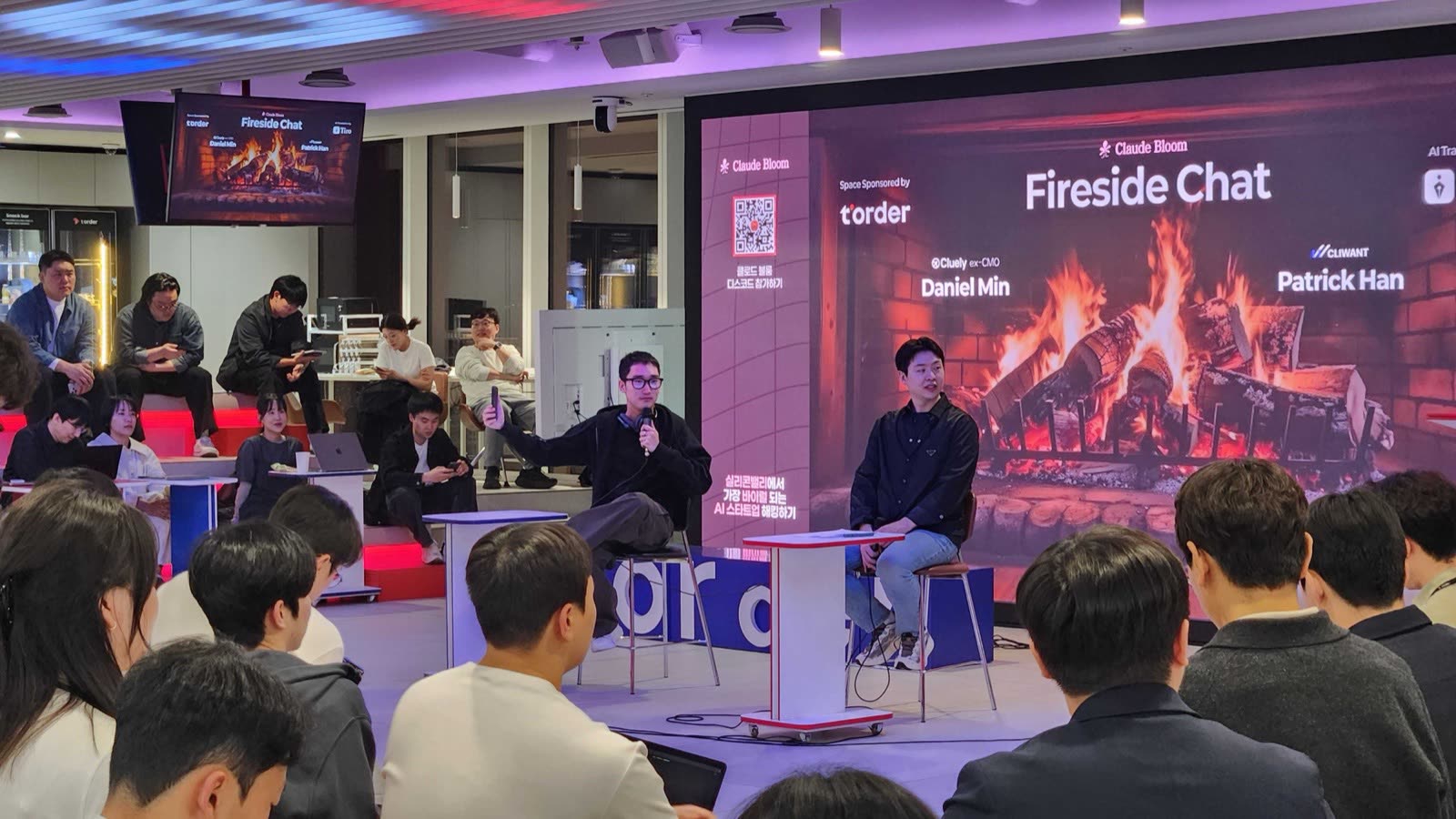
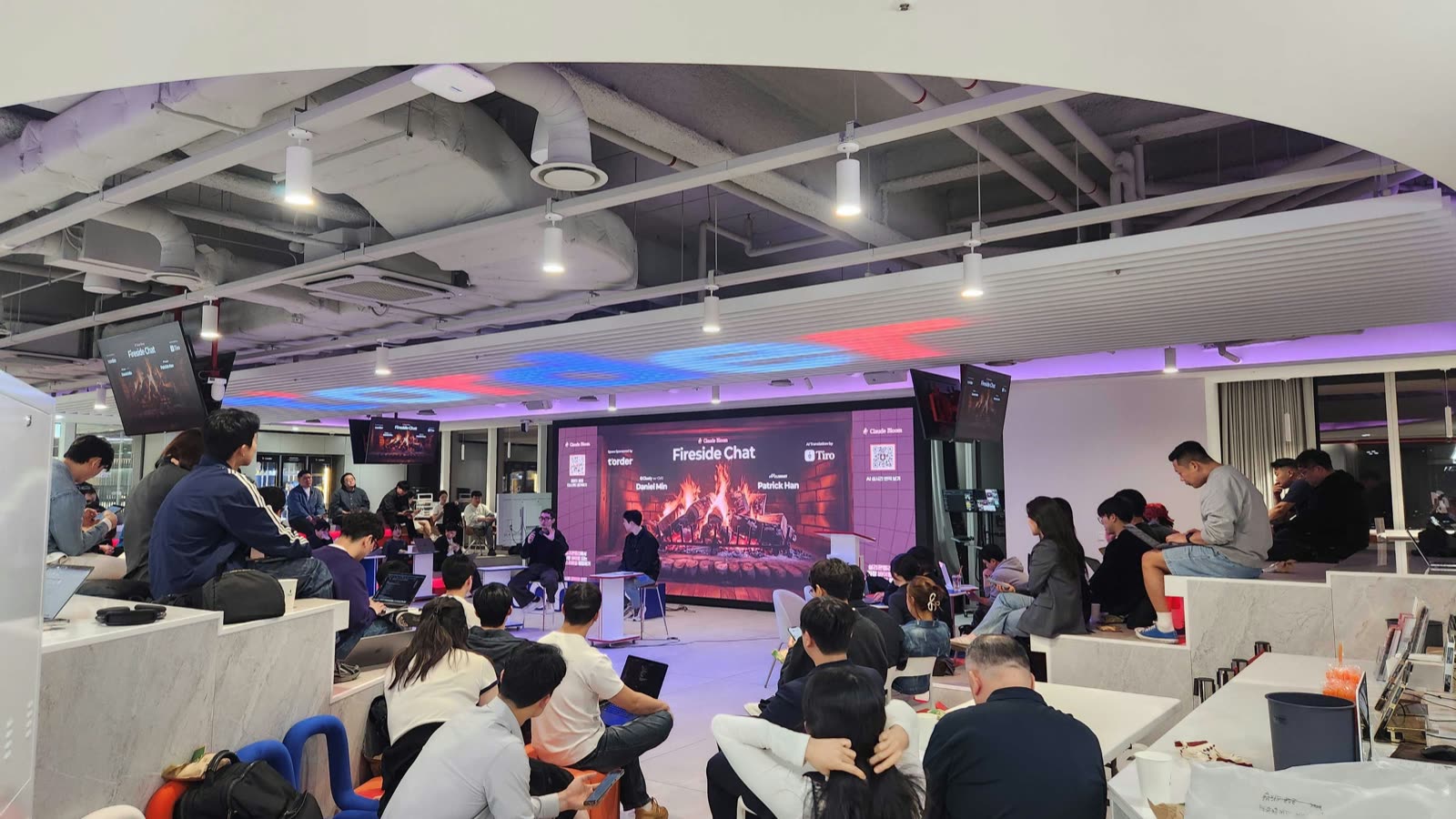
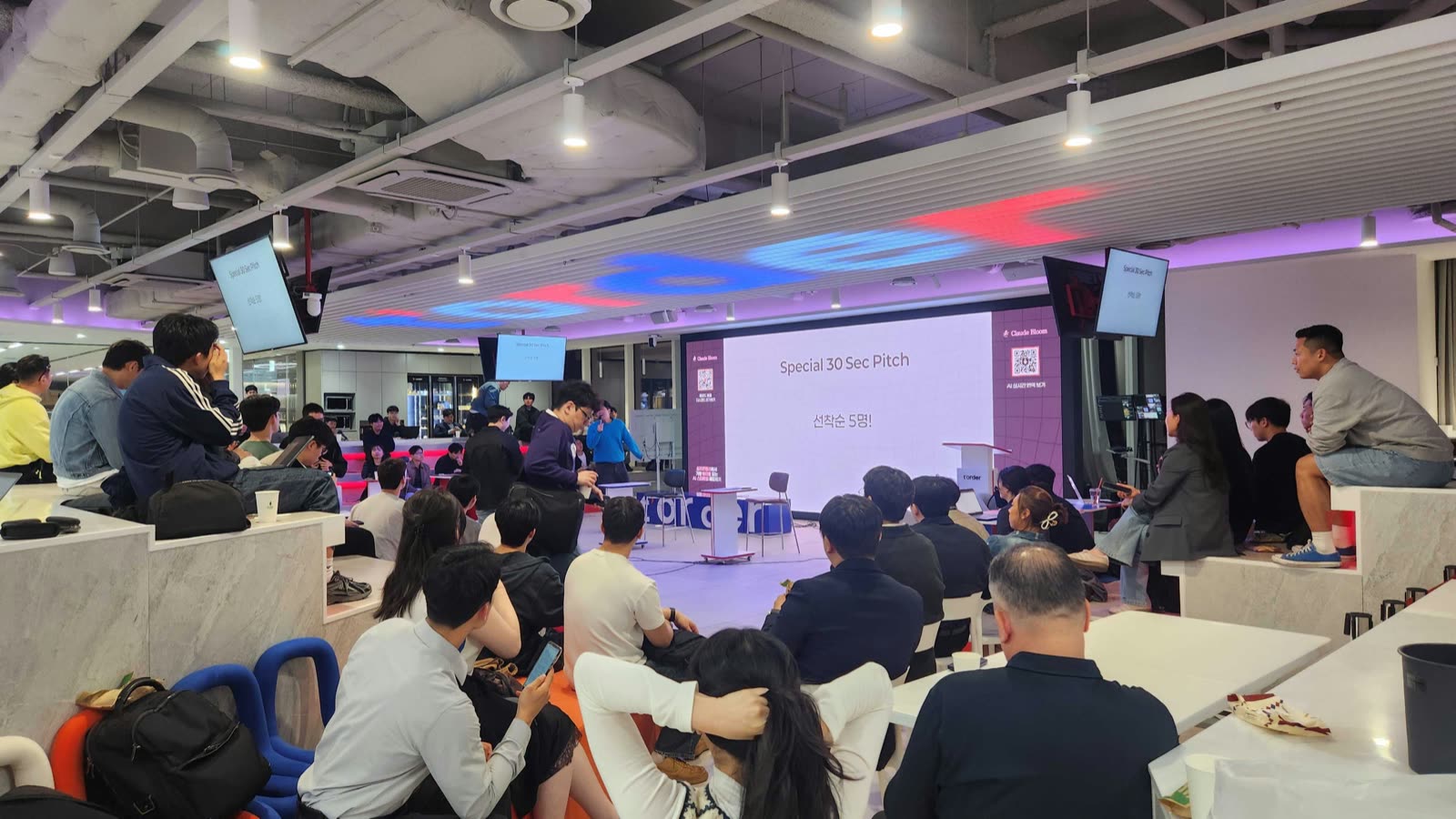
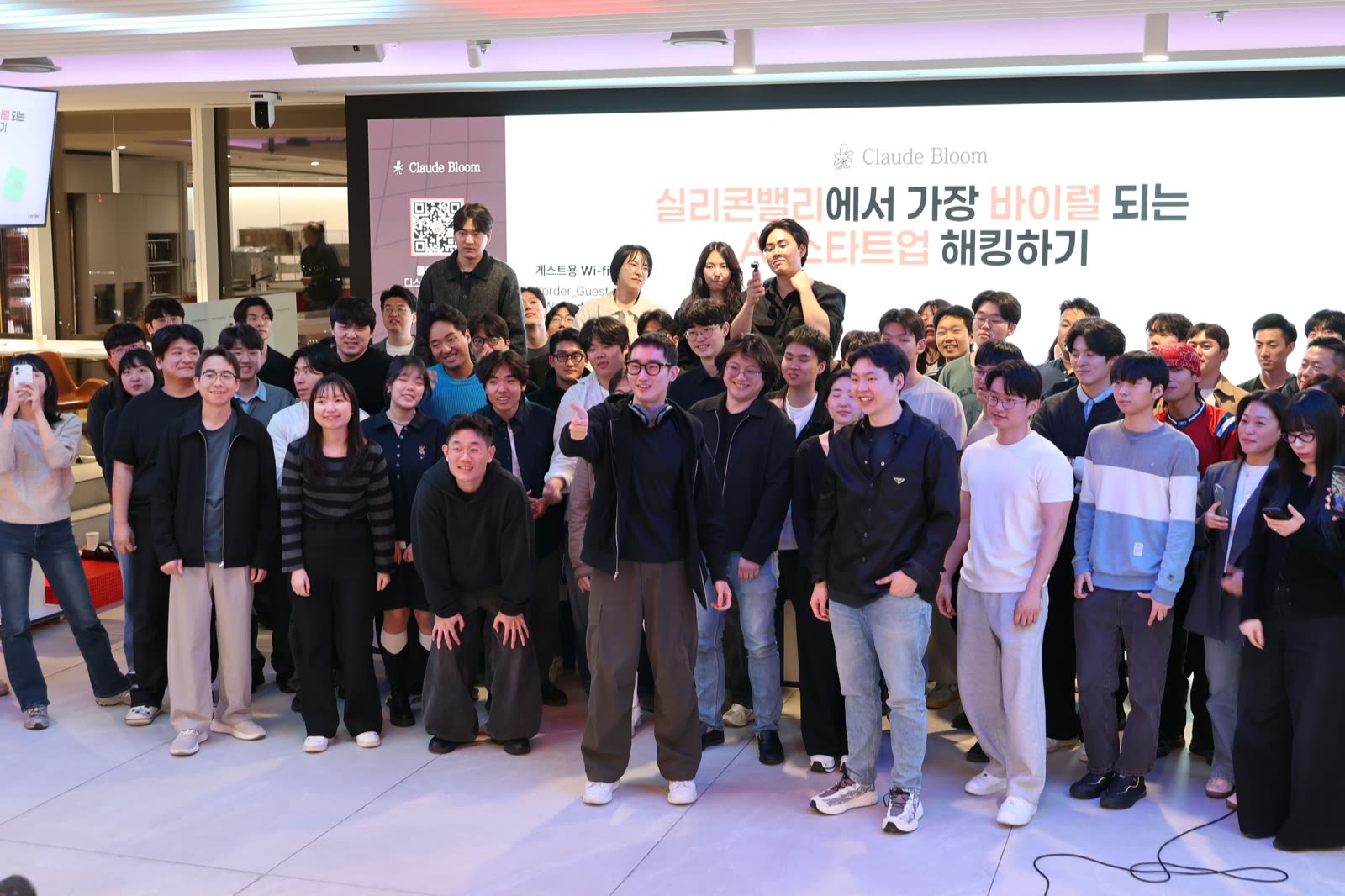
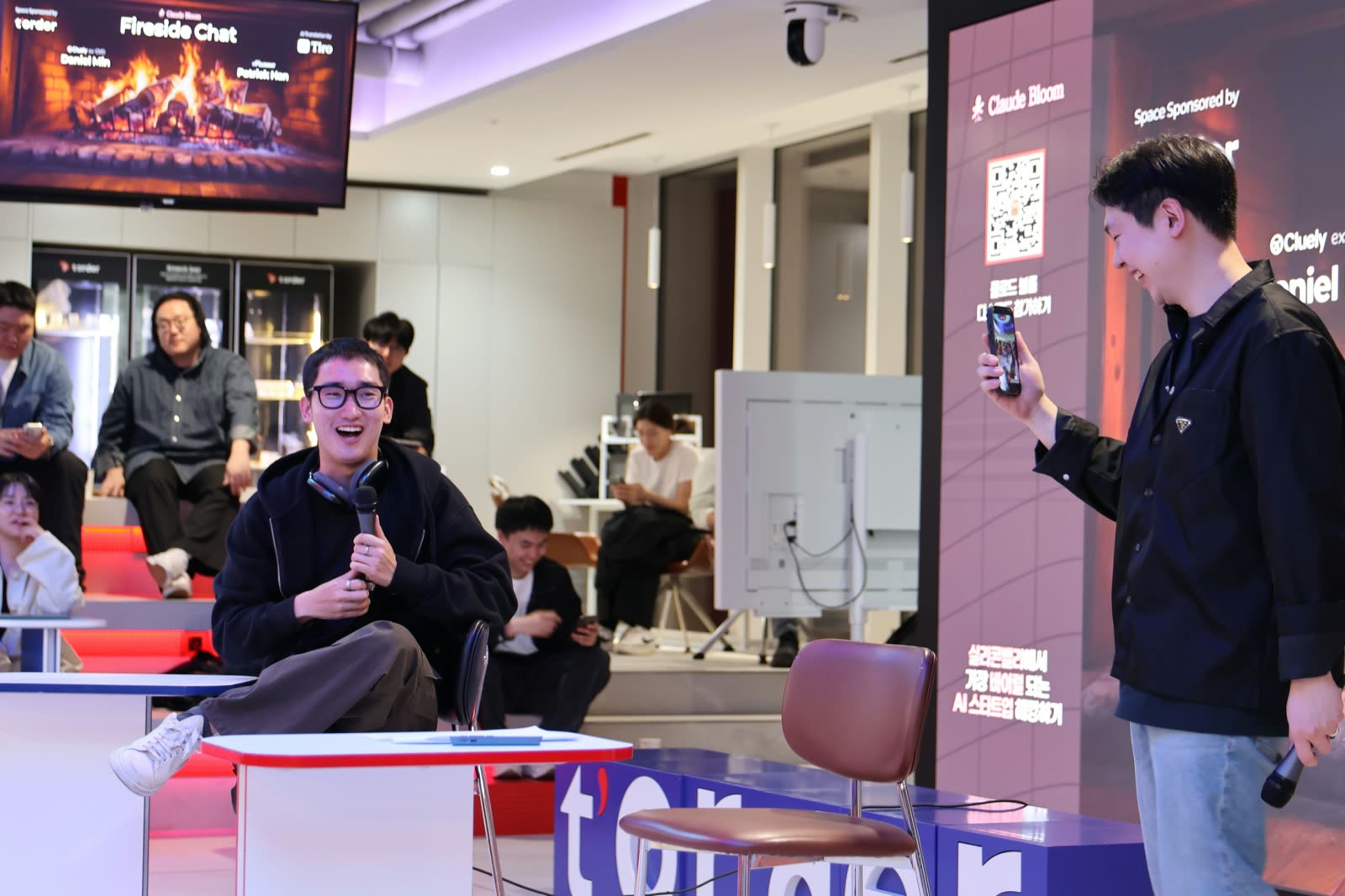
How this meetup came together is worth recording too. The speaker was booked, the usual venues were full, and with three or four days left, finding a space was close to impossible. Then a marketing community leader who had come to the first Bloom event took the proposal directly to their own CEO, argued it was a good chance to get the word out about their AI transition, and got an immediate yes. The Han River view space at Parc1 that resulted suited a fireside better than the original plan. A speaker who only speaks English was another problem, and a teammate secured free sponsorship from a real-time AI interpretation service. In the closing 30-second pitch session, everyone from a European founder to a creator who got 10 million views from vibe coding memes walked up and told their story.
Read the full write-upEvent video
Gallery



Next event