Leave for San Francisco now
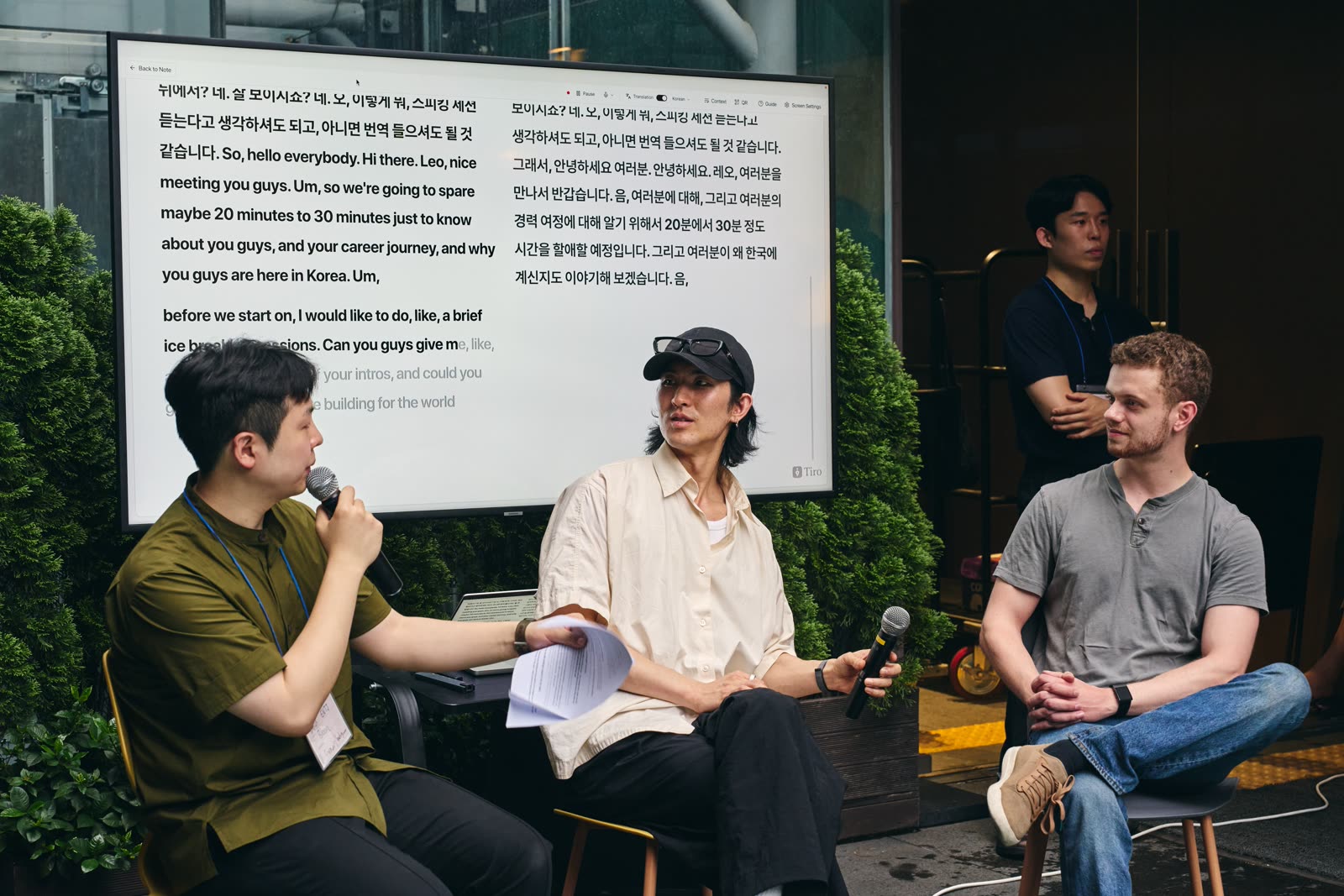
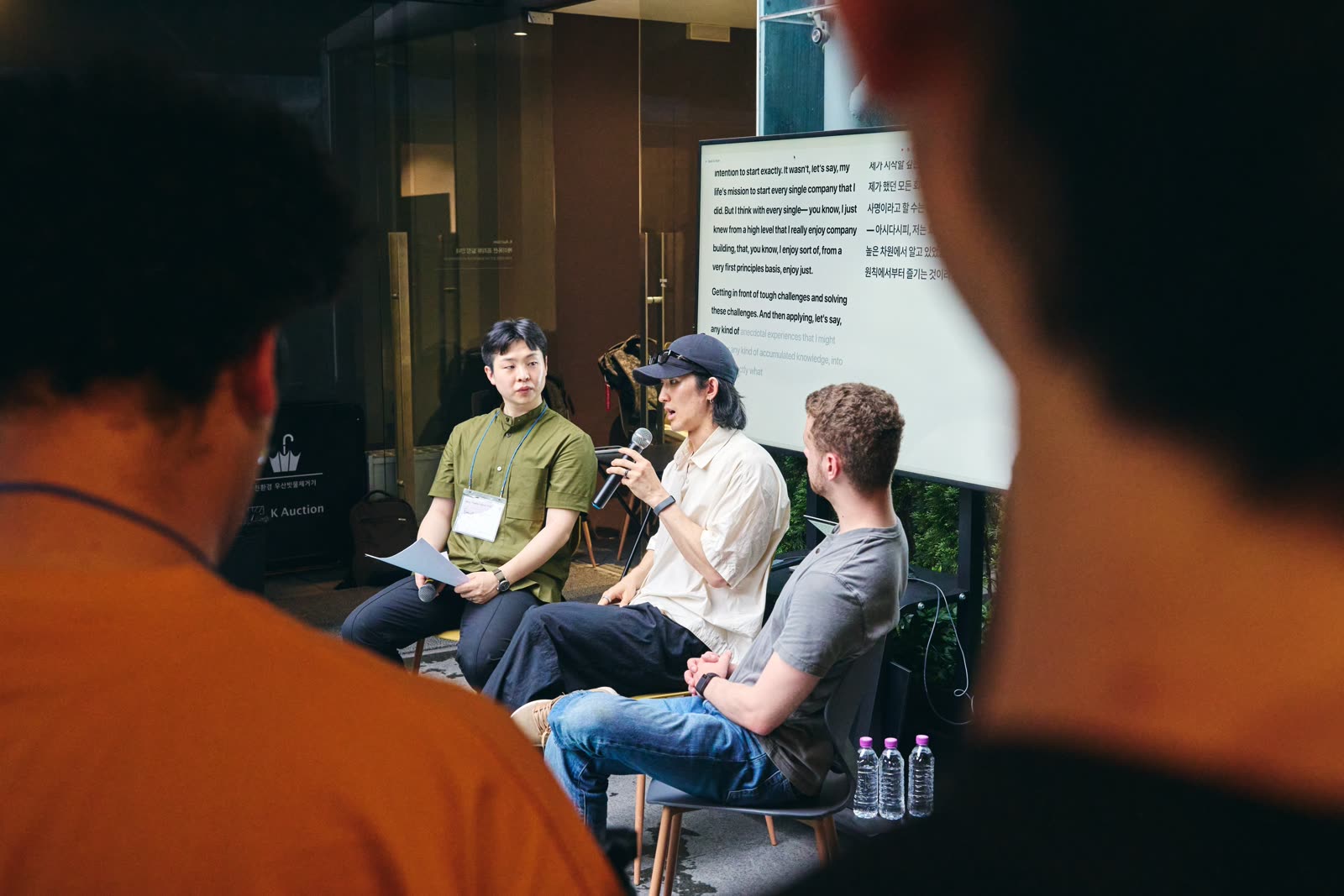
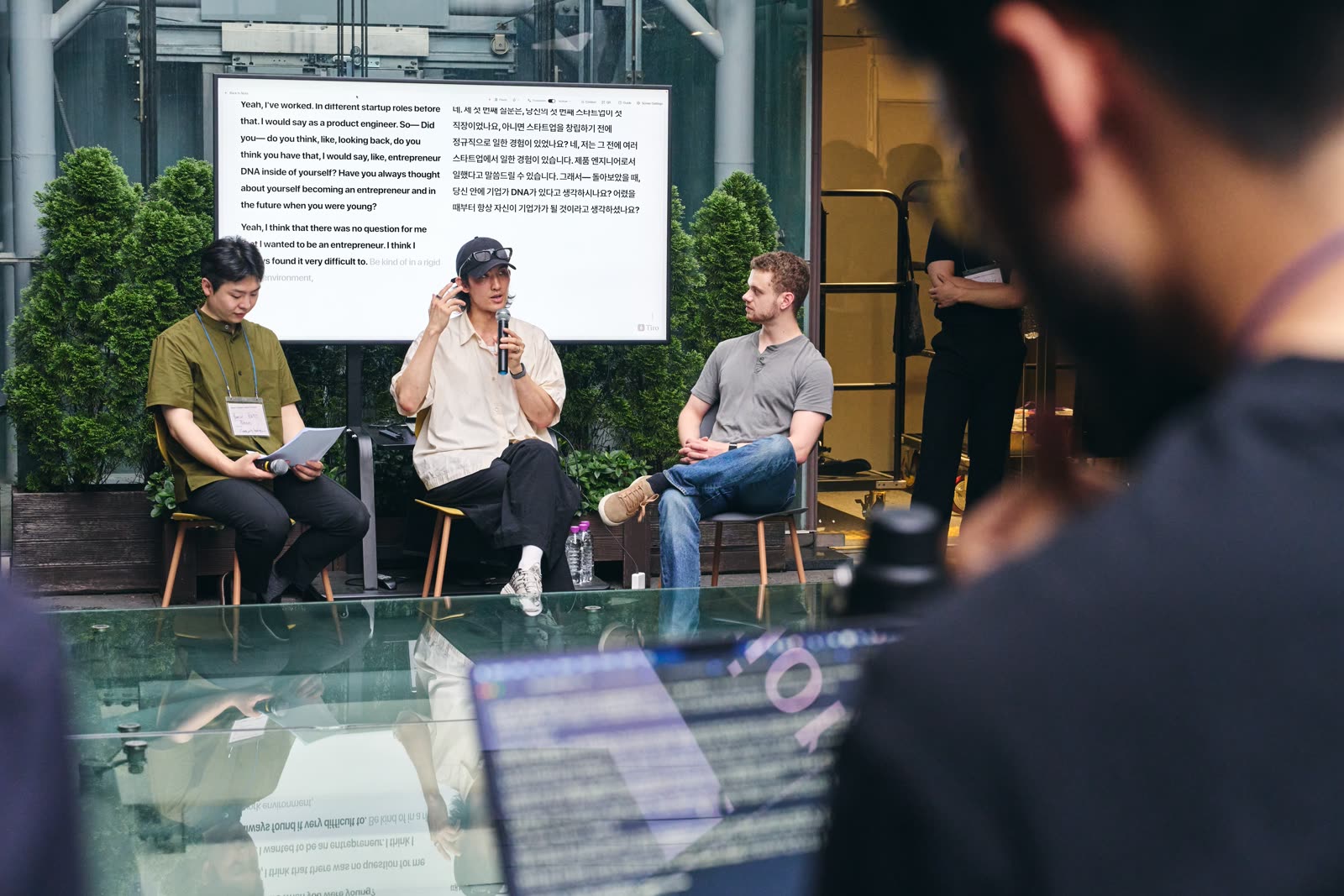
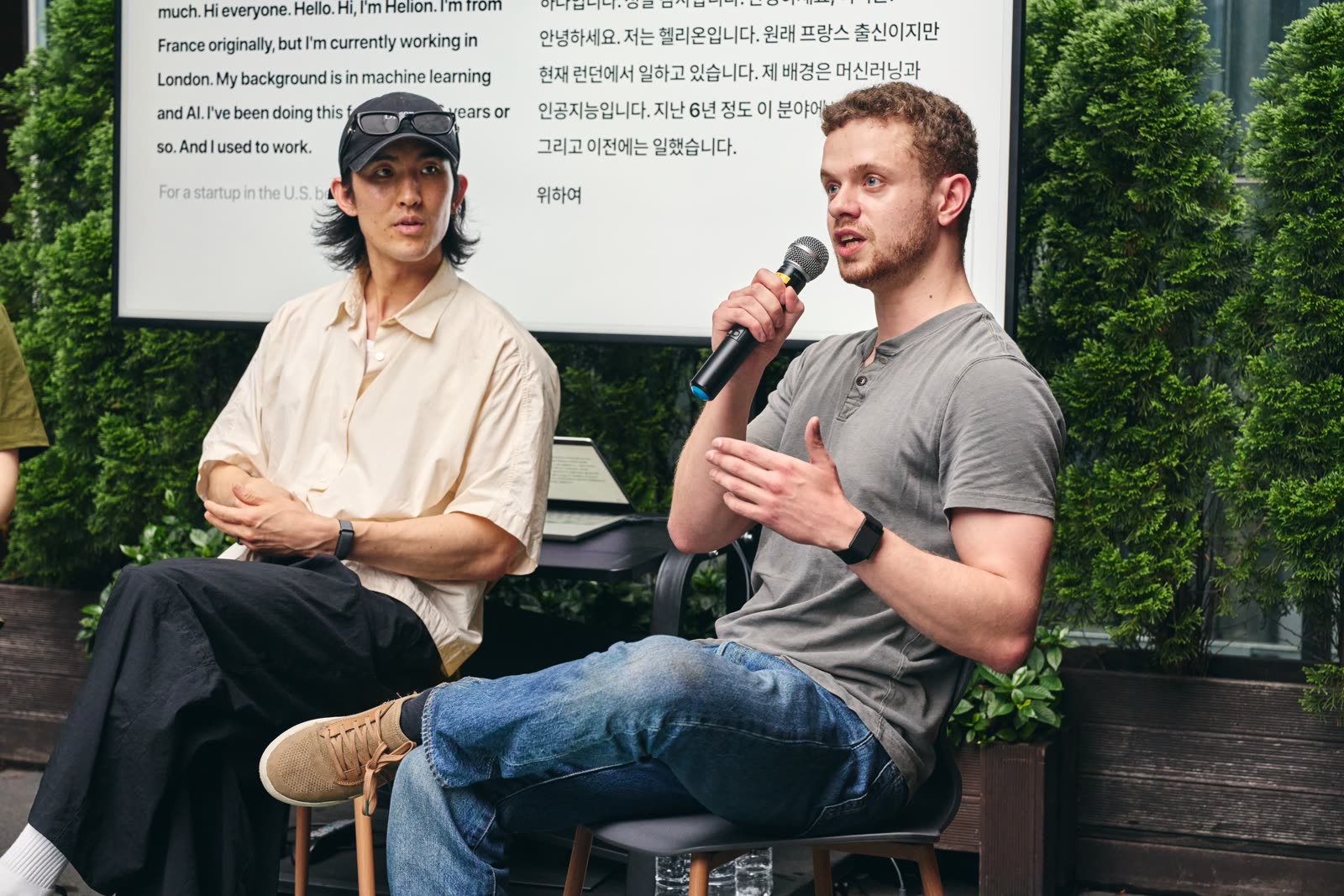
What was discussed

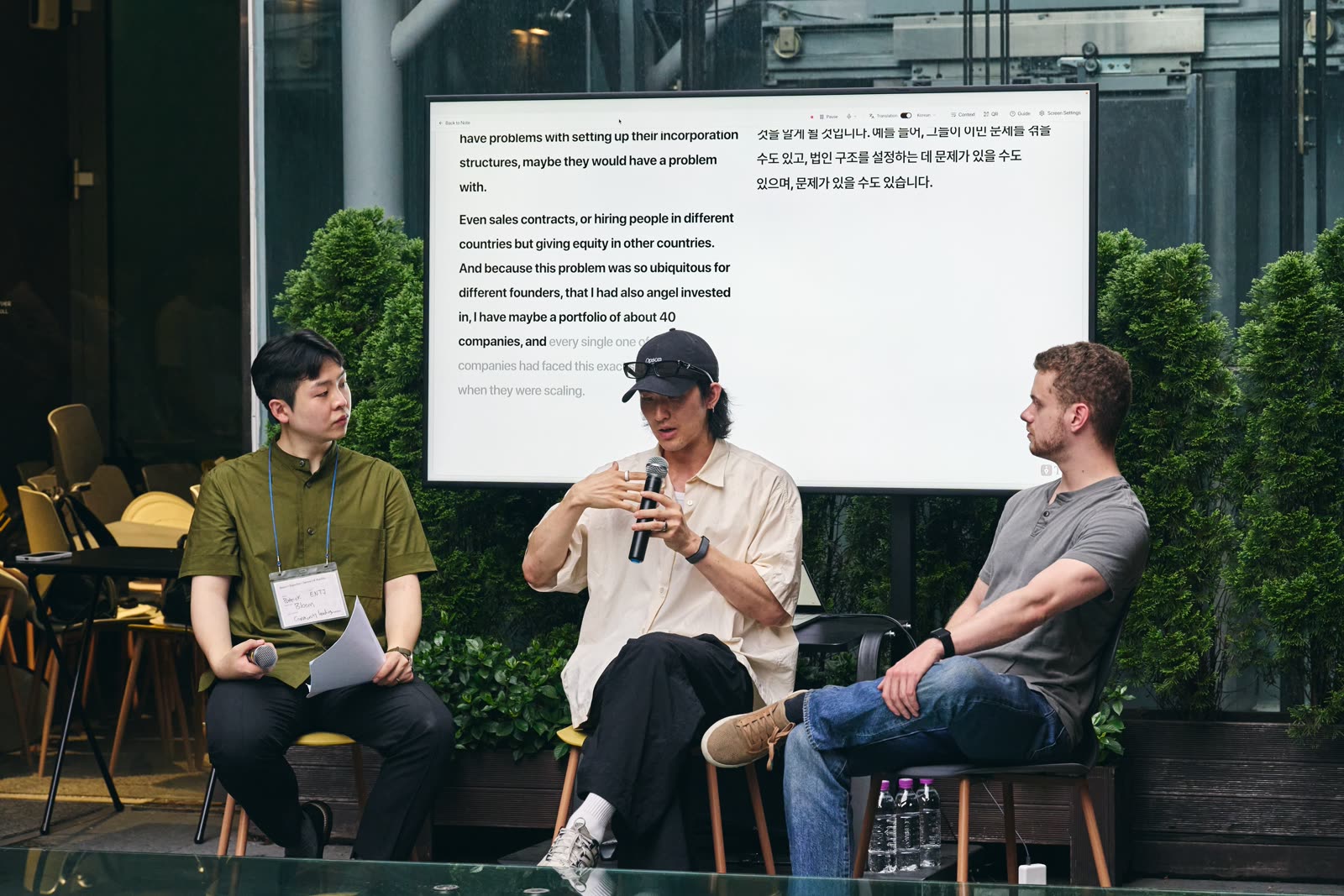
Leeho has been through three startups. His first, Encord, was a computer vision data labeling company that started at Entrepreneur First in London. The early breakthrough came from an NHS gastroenterologist customer who kept passing along introductions, and after winning an Amazon innovation grant tied to the Royal Navy, the company had references in both healthcare and defense. He freely admits the second company was a mistake: he met his co-founder through YC's co-founder matching and they started before they really knew each other, and it wound down within a year.
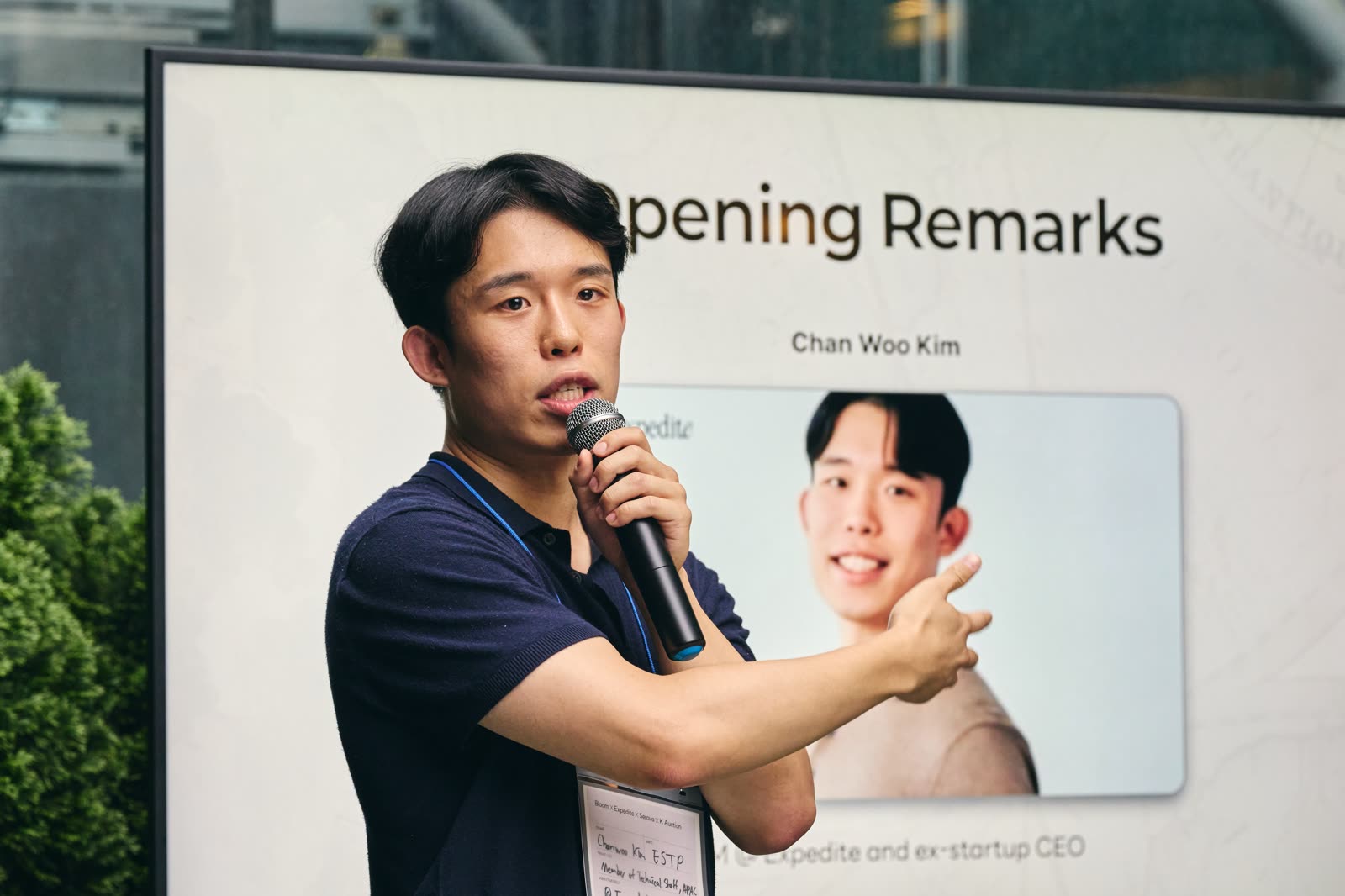
Expedite, what he is building now, grew out of something he kept noticing. Founders trying to move to the US from the UK or Canada kept getting stuck on immigration, corporate structure, and equity. The tipping point was a lunch. He watched a Series A company pay outrageous fees just to flip its UK entity into a US one, and decided that rather than pay a premium for bad service, he would solve it himself. As he puts it, it is a law firm he built because he did not like lawyers.
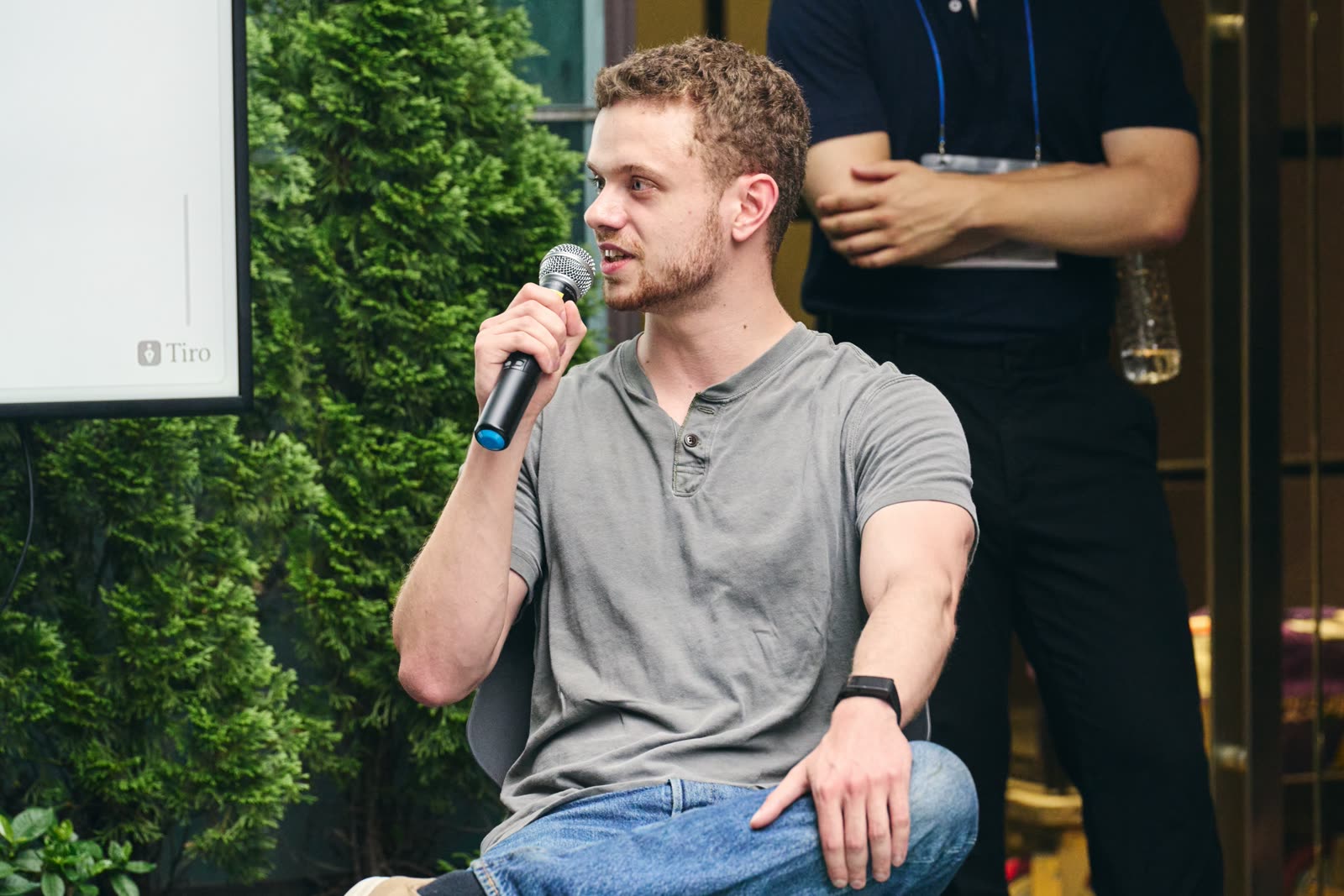
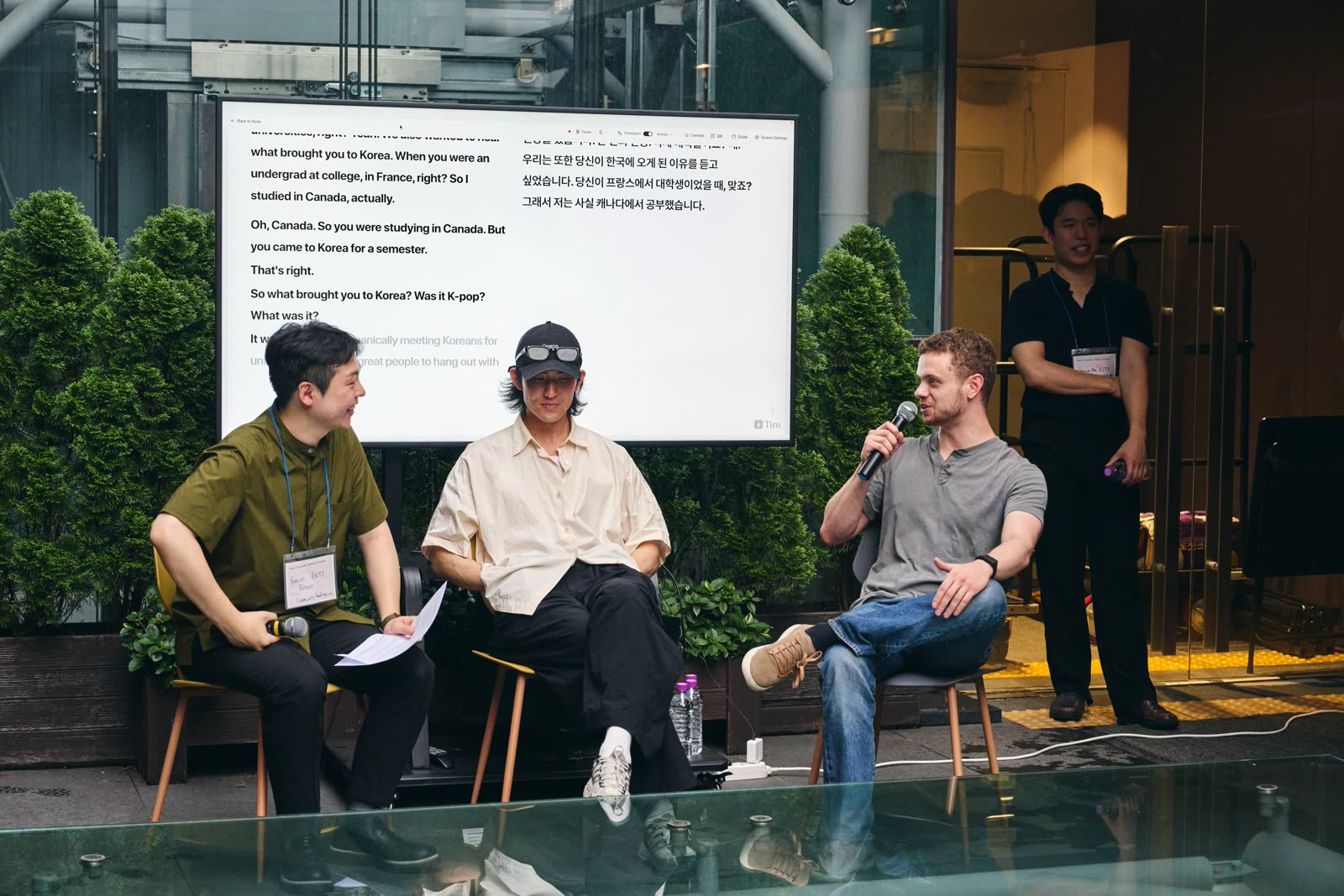
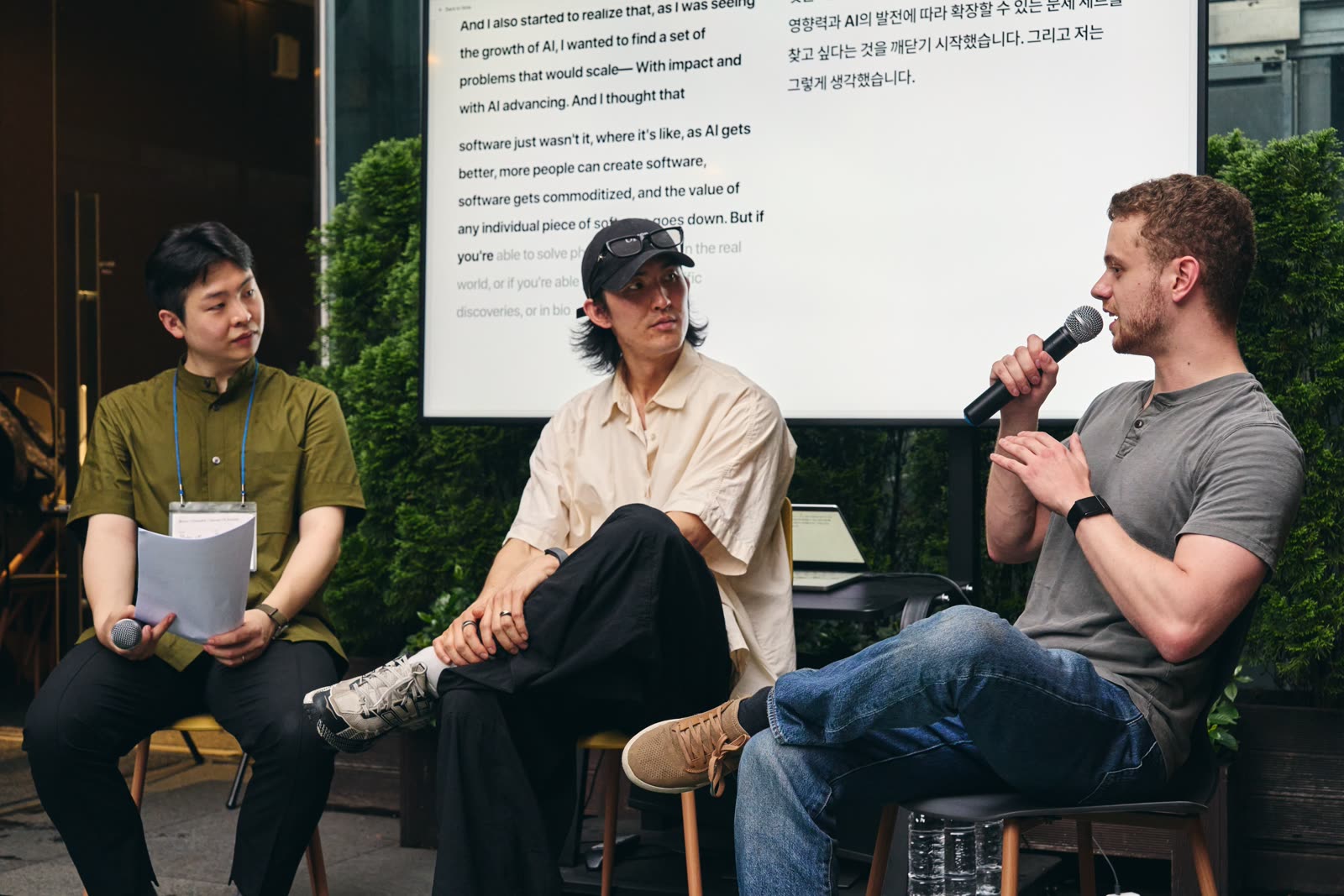
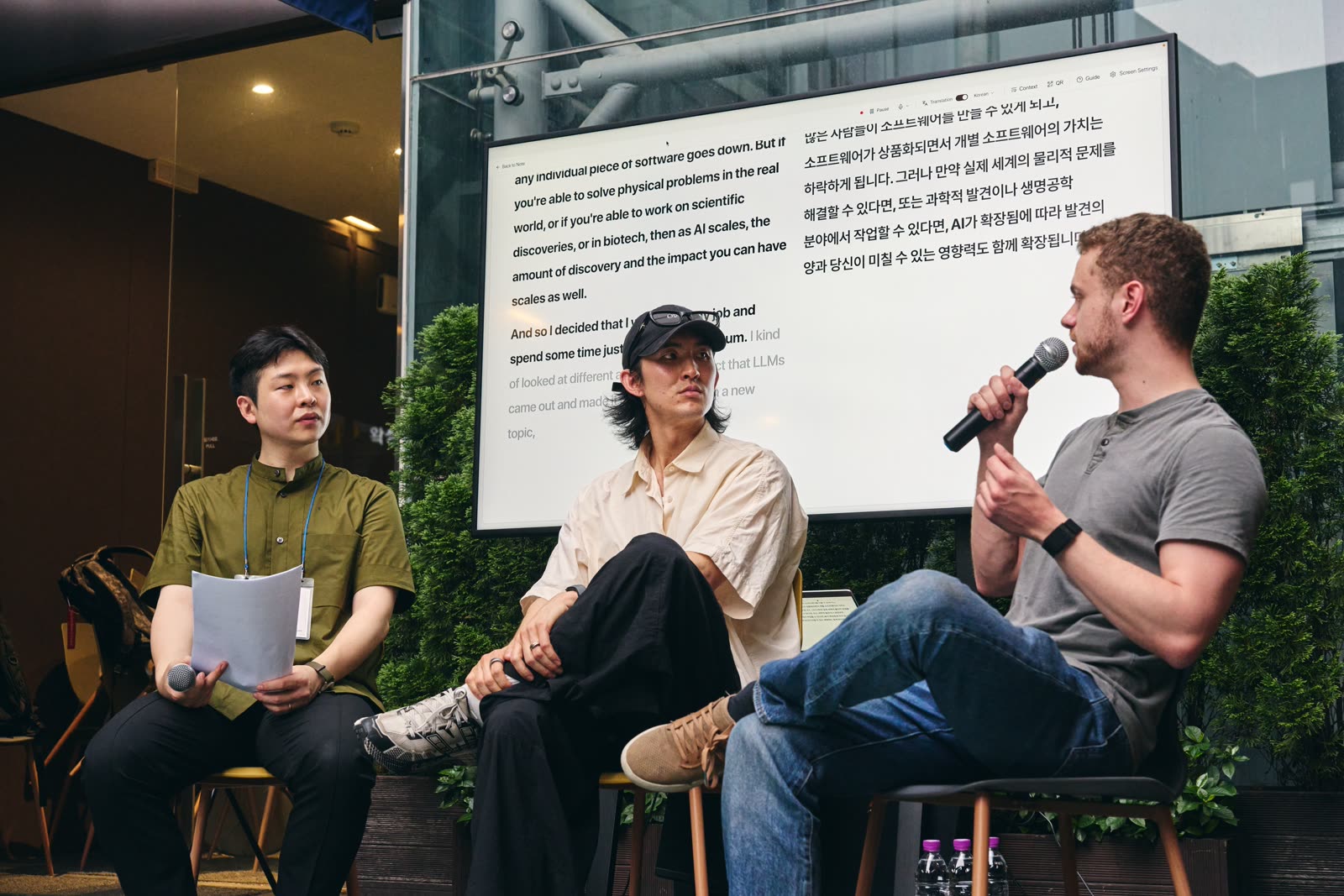
Elian moved from software into biology. He studied computer science and machine learning at McGill and spent about a year as an AI engineer at a San Francisco startup, where it struck him that as AI gets better, software gets commoditized and any individual product is worth less. Biology looked like the opposite: a field whose value grows as AI grows stronger, because it demands working with enormous amounts of unstructured data. So he joined Serova, a London-based personalized cancer vaccine company that had raised $8 million in pre-seed, as its first technical hire.
The comparison across markets was one of the more interesting threads. France, they said, is risk-averse enough that anyone serious about building a company should head to the US. London sits somewhere in between: the language works, it adapts quickly to the internet, and it has plenty of unicorns, but the community is getting less tightly knit, which makes it harder to find the right people. What sets San Francisco apart is how readily people give first, and how close-knit it is. Founders will hand you an introduction without being asked, and they are genuinely curious. With a population of 100,000, about a hundredth of Seoul's, the density is high, and a single introduction fans out into several more.
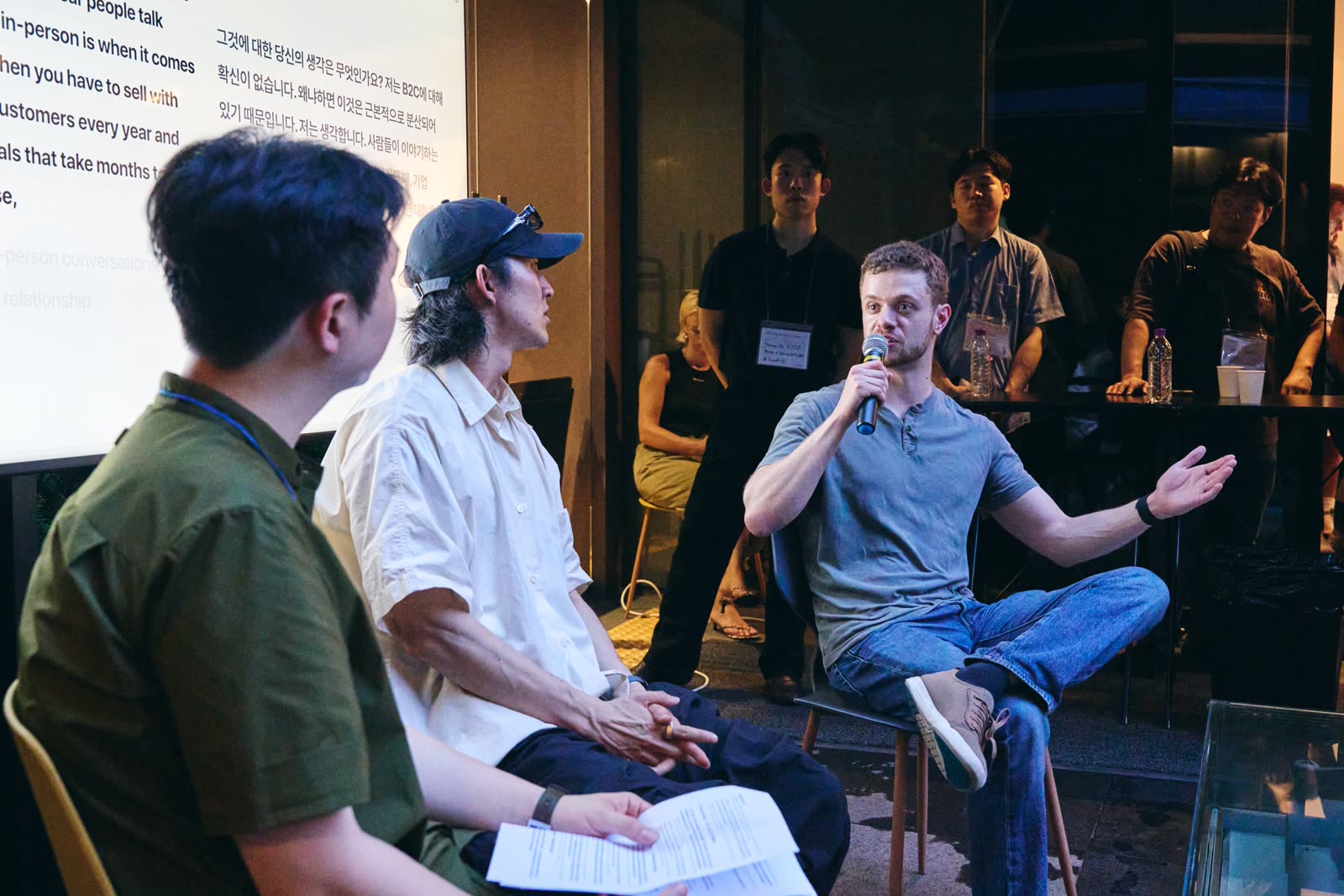
The advice for Korean founders was specific: aim for the US before the UK. American companies are more open to startups, the sales cycle is shorter, and B2B conversations are more direct. The playbook is simple. Book a two-week ticket to San Francisco, ask anyone you know for introductions, find events on Luma or Partiful, and send personal messages to specific people on LinkedIn.
There was practical detail too. YC looks at traction right now, meaning actual revenue and market size, especially for B2B SaaS. Leeho was rejected several times before getting in, and he noted that alternatives like Entrepreneur First, South Park Commons, and HF0 offer comparable value. On the O-1 visa, which Expedite has handled more than 400 of, what matters is evidence that you stand out: judging hackathons, raising funding, press coverage, conference talks. Other routes such as the L-1 or E-2 exist as well.
Elian framed cancer as an information problem. There is no reason cancer has to be incurable; at bottom it is a question of information, and AI is very good at handling information. With pharmaceutical companies having already exhausted the easy targets, keeping up with a cancer that keeps mutating means processing vast amounts of unstructured data, which is exactly where AI is strong. After cancer, he said, comes aging. The shift of Silicon Valley capital out of software and into the physical world, into bio and hardware, is part of the same story.
A student asked whether not having the right academic background puts you at a disadvantage, and Leeho took it. What matters is having lived the problem yourself and being intellectually honest, more than any credential. He recruited lawyers not by knowing the law but by showing that he understood what was broken about legal services. He added that these days he drafts contracts with Claude very easily, and a lawyer's light touch closes the remaining gaps. His closing advice was straightforward: build a prototype fast, decide who it is for, and learn from the ecosystem while holding on to your own identity.
Read the full write-upEvent video
Gallery




Next event