Claude Bloom Singapore
What was discussed
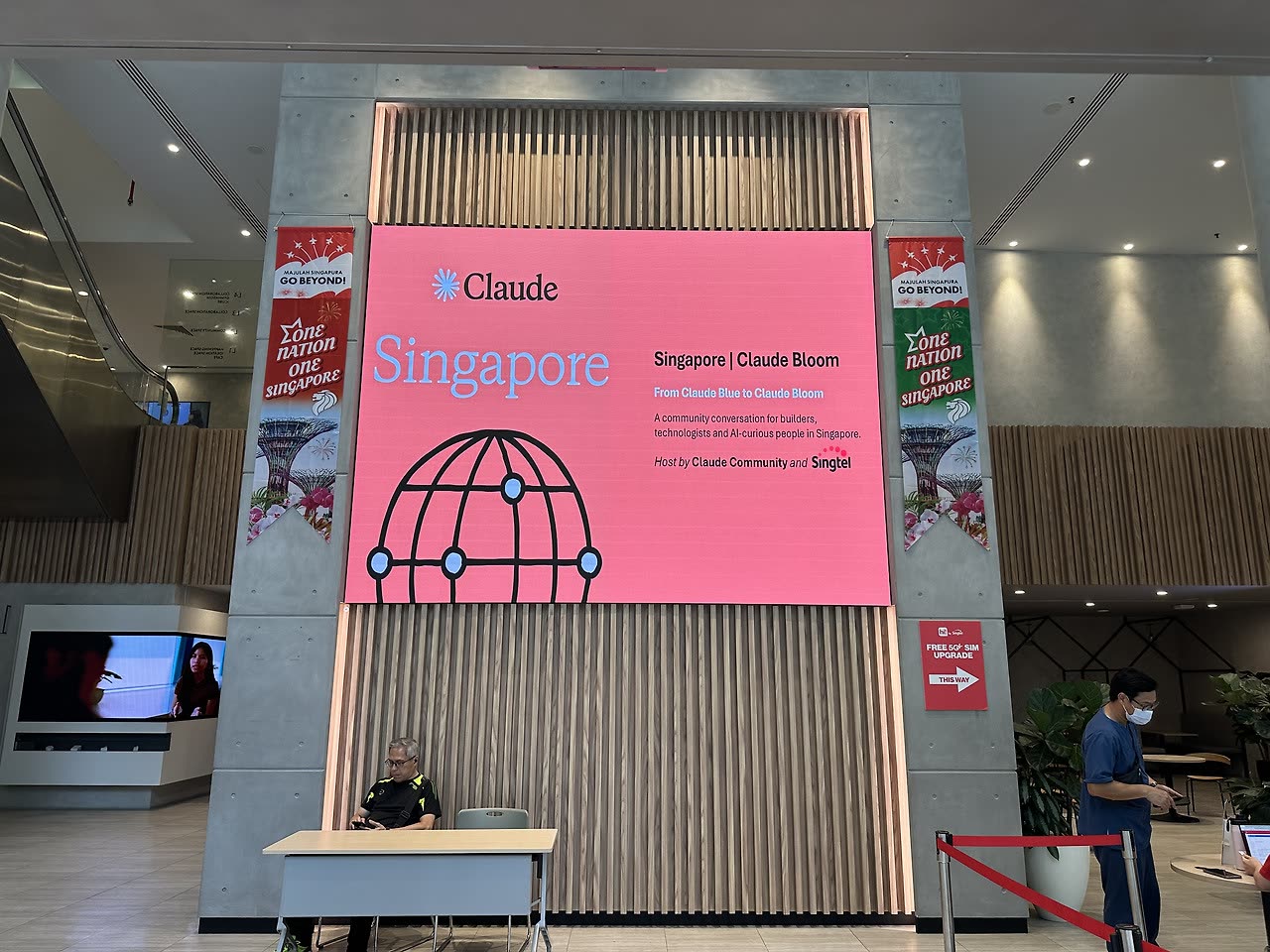
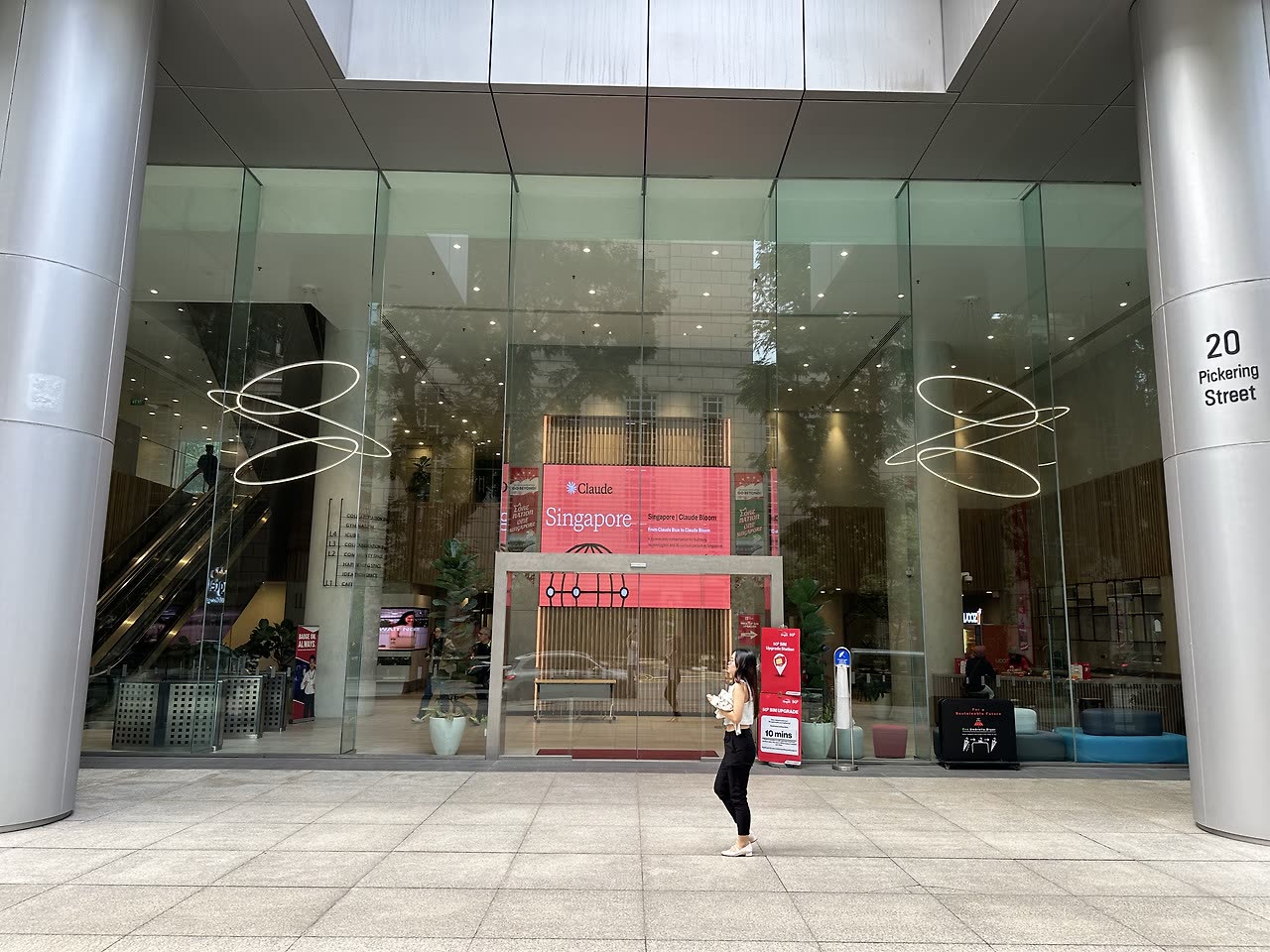
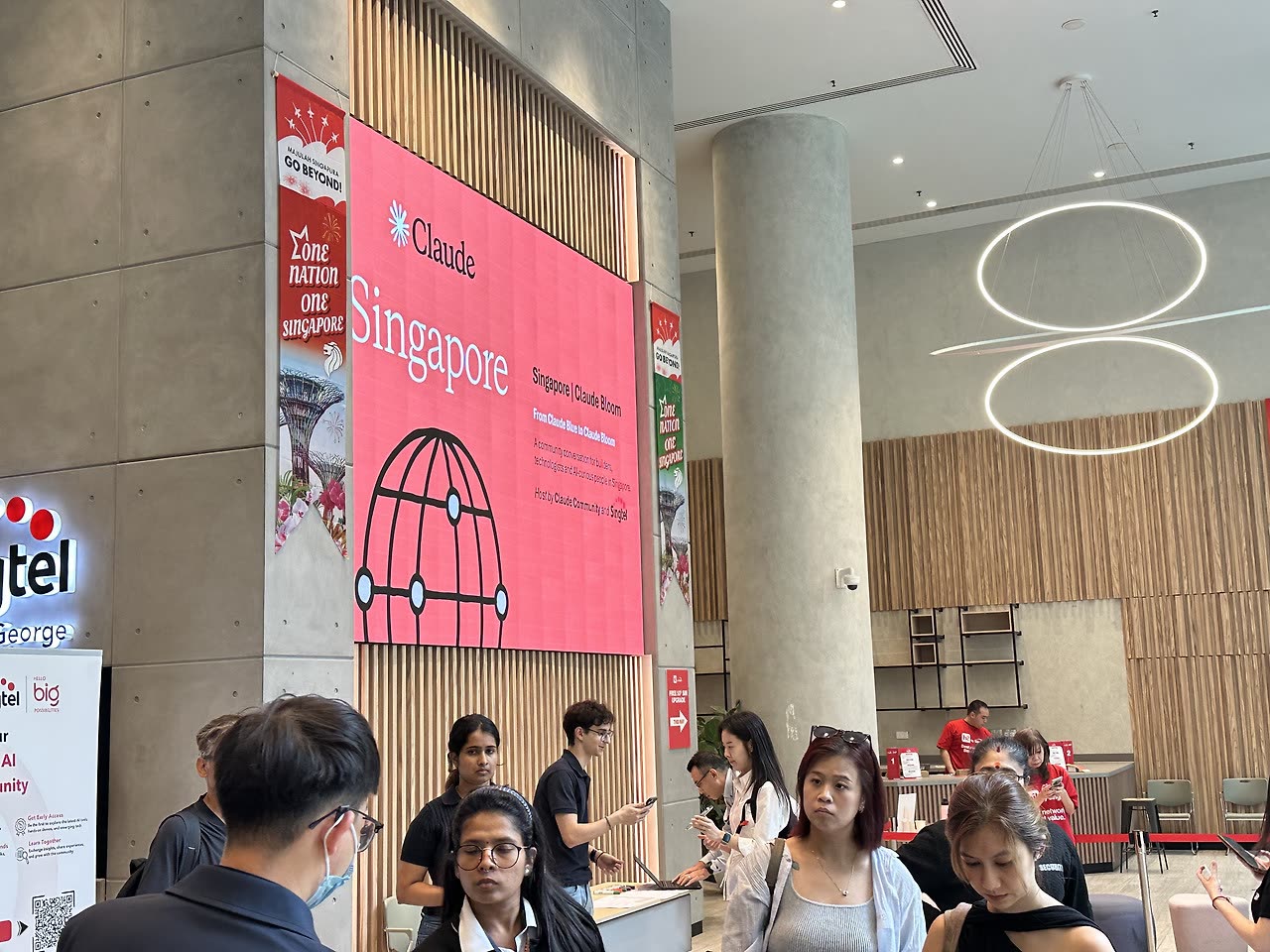
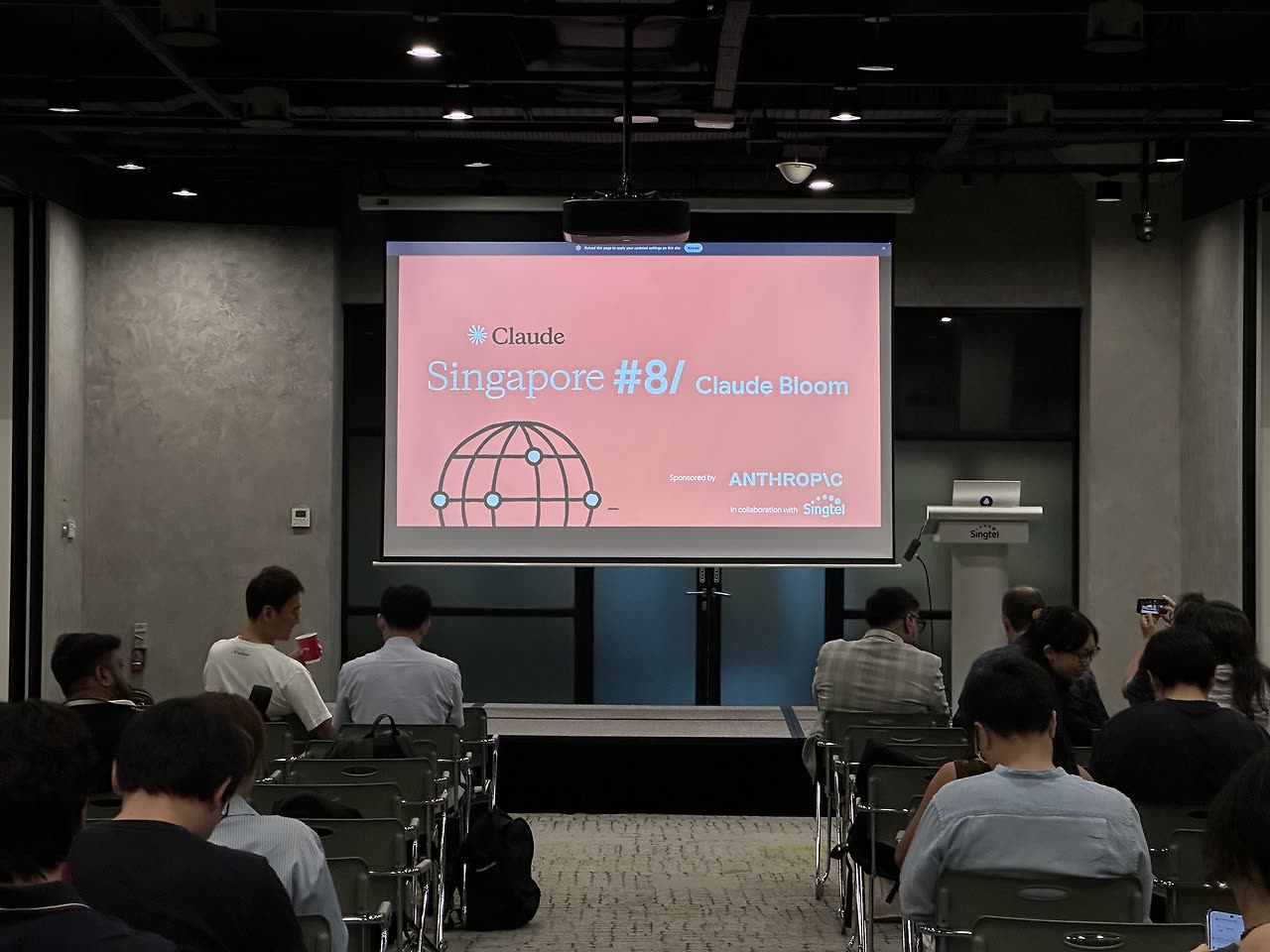
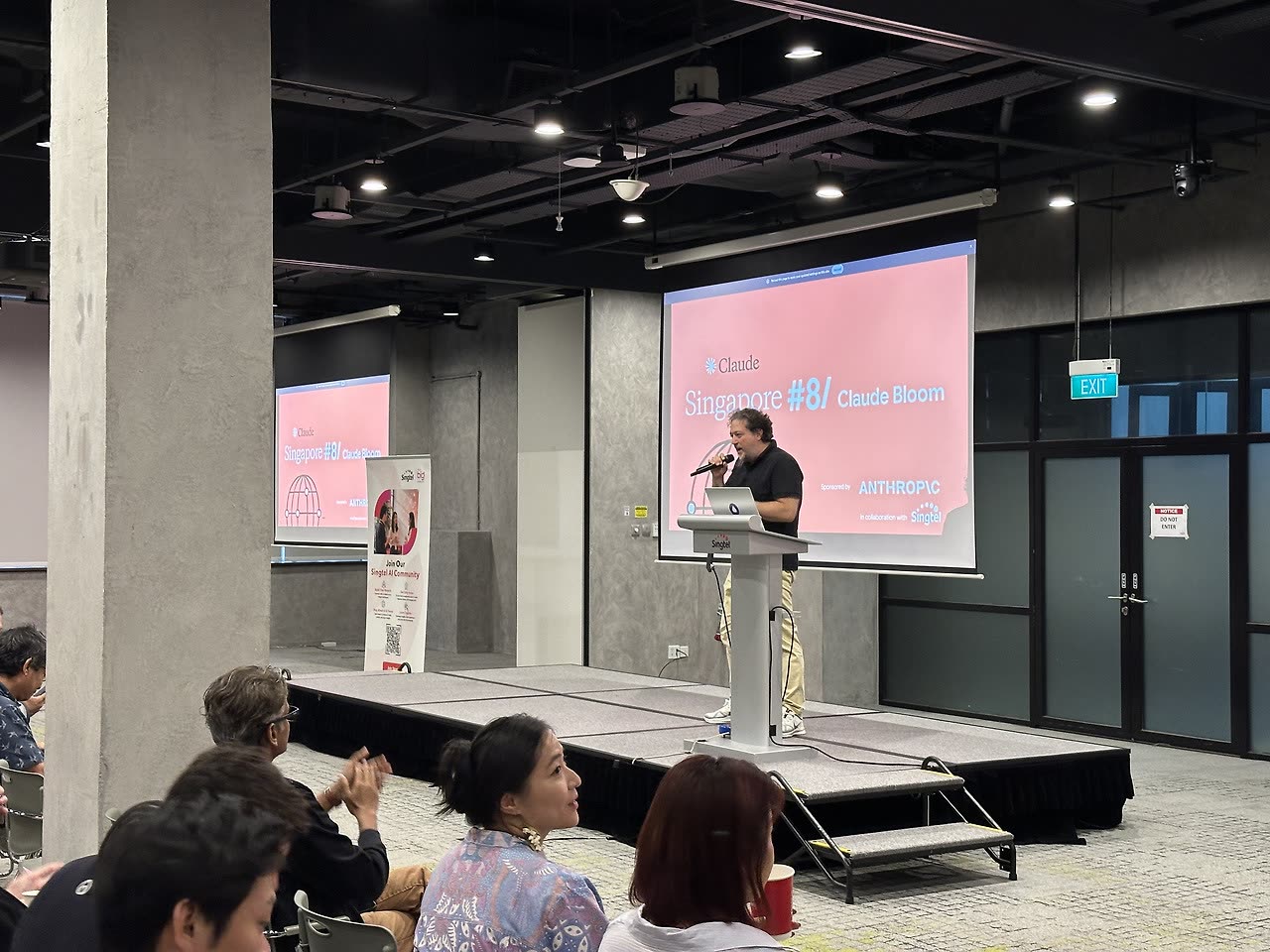
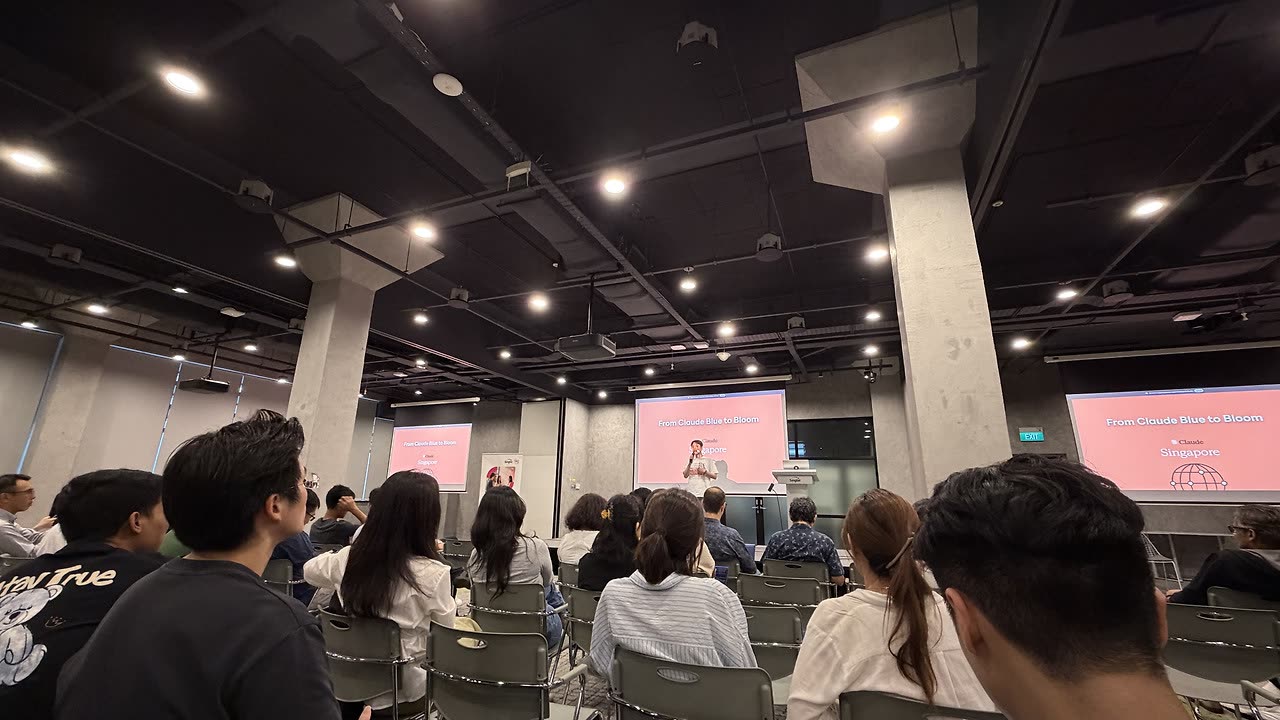
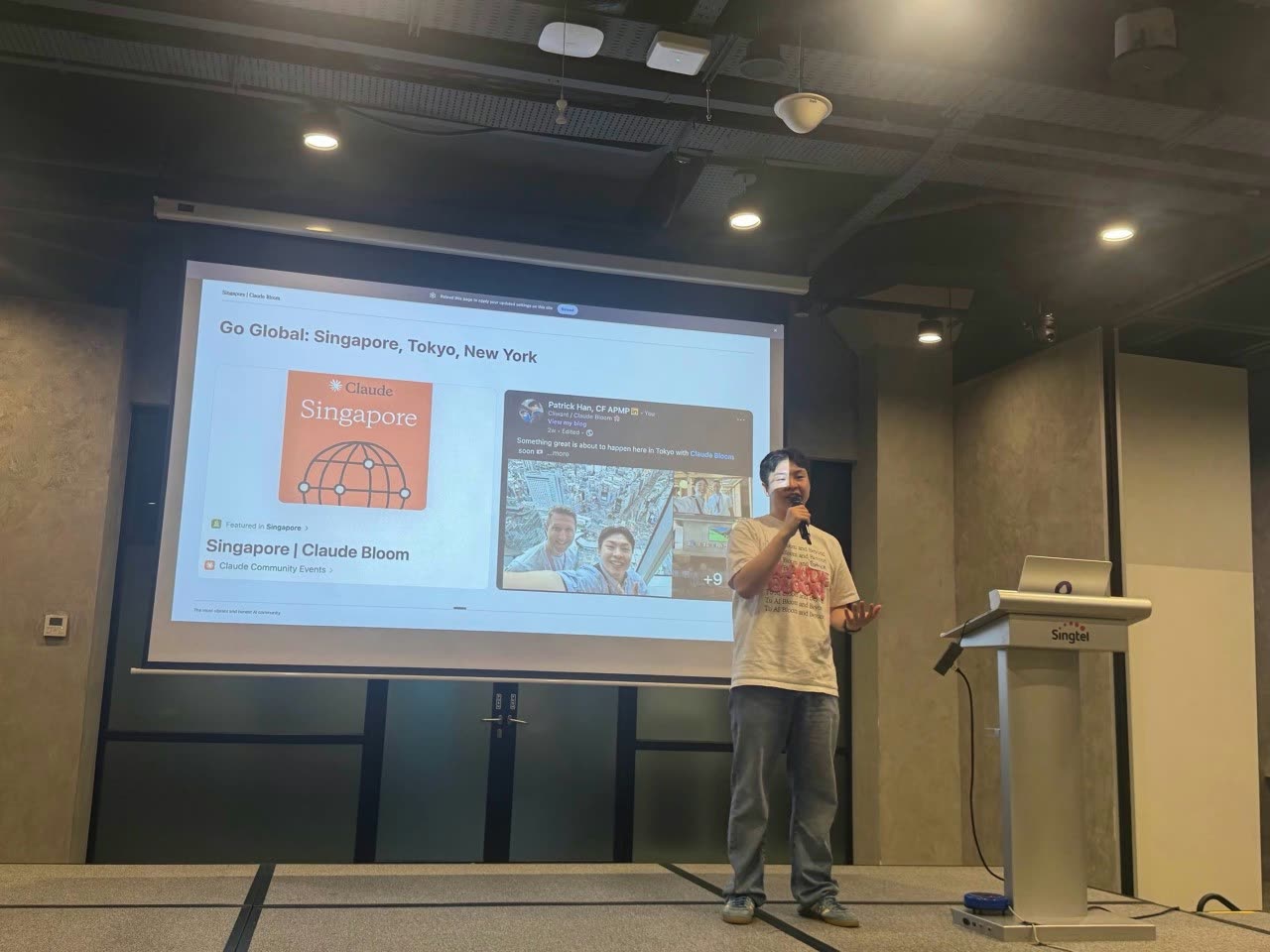
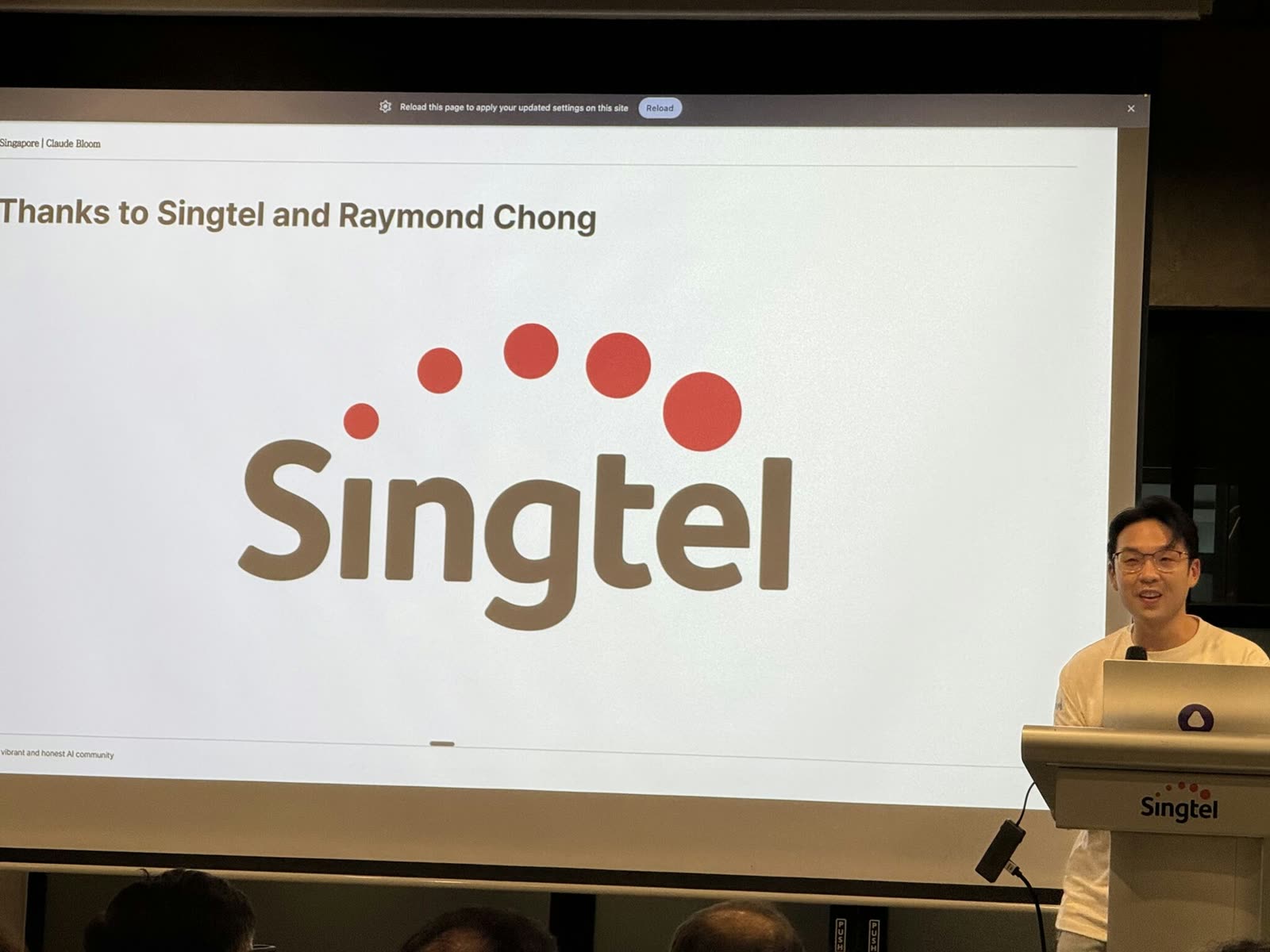
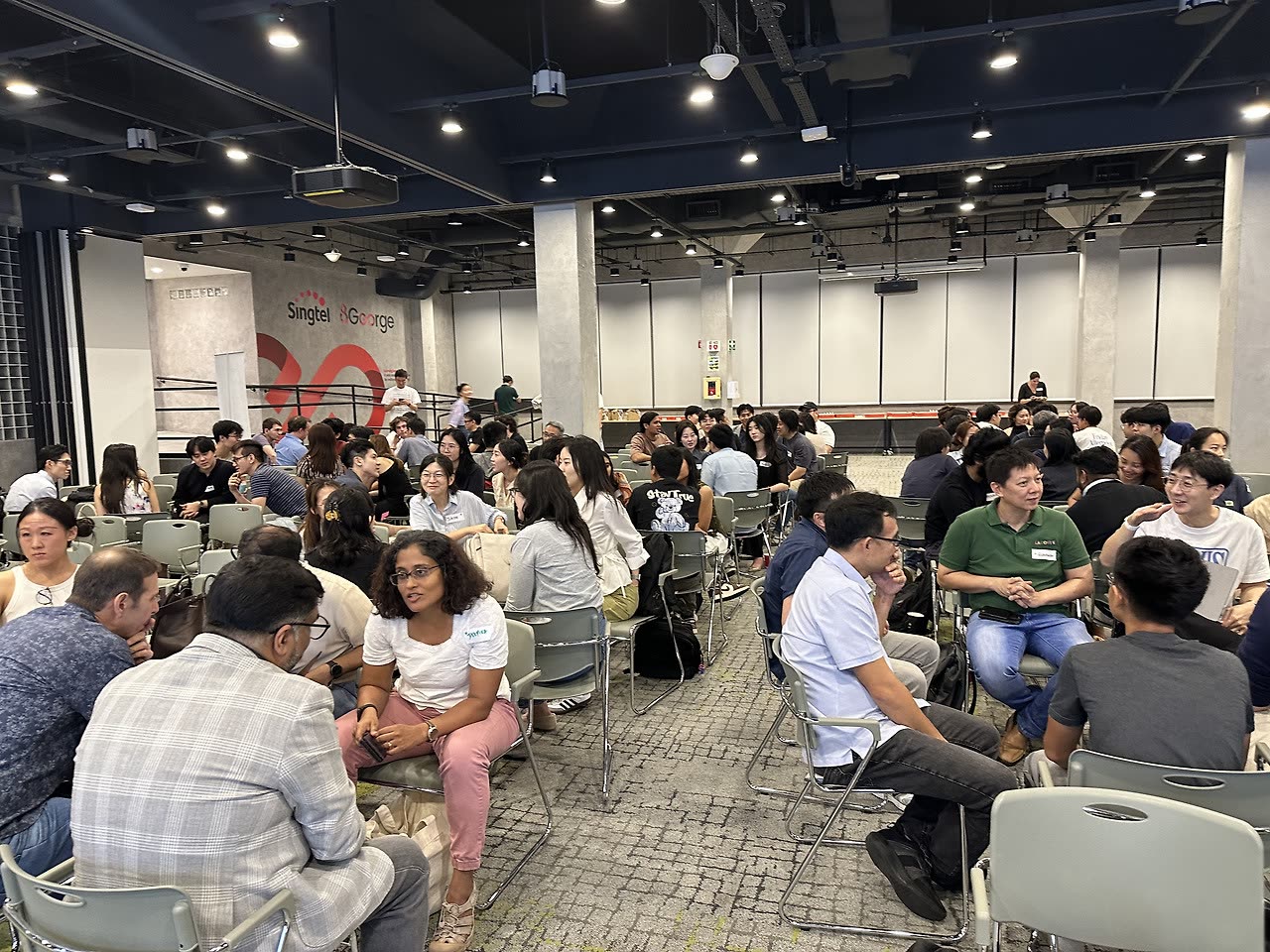
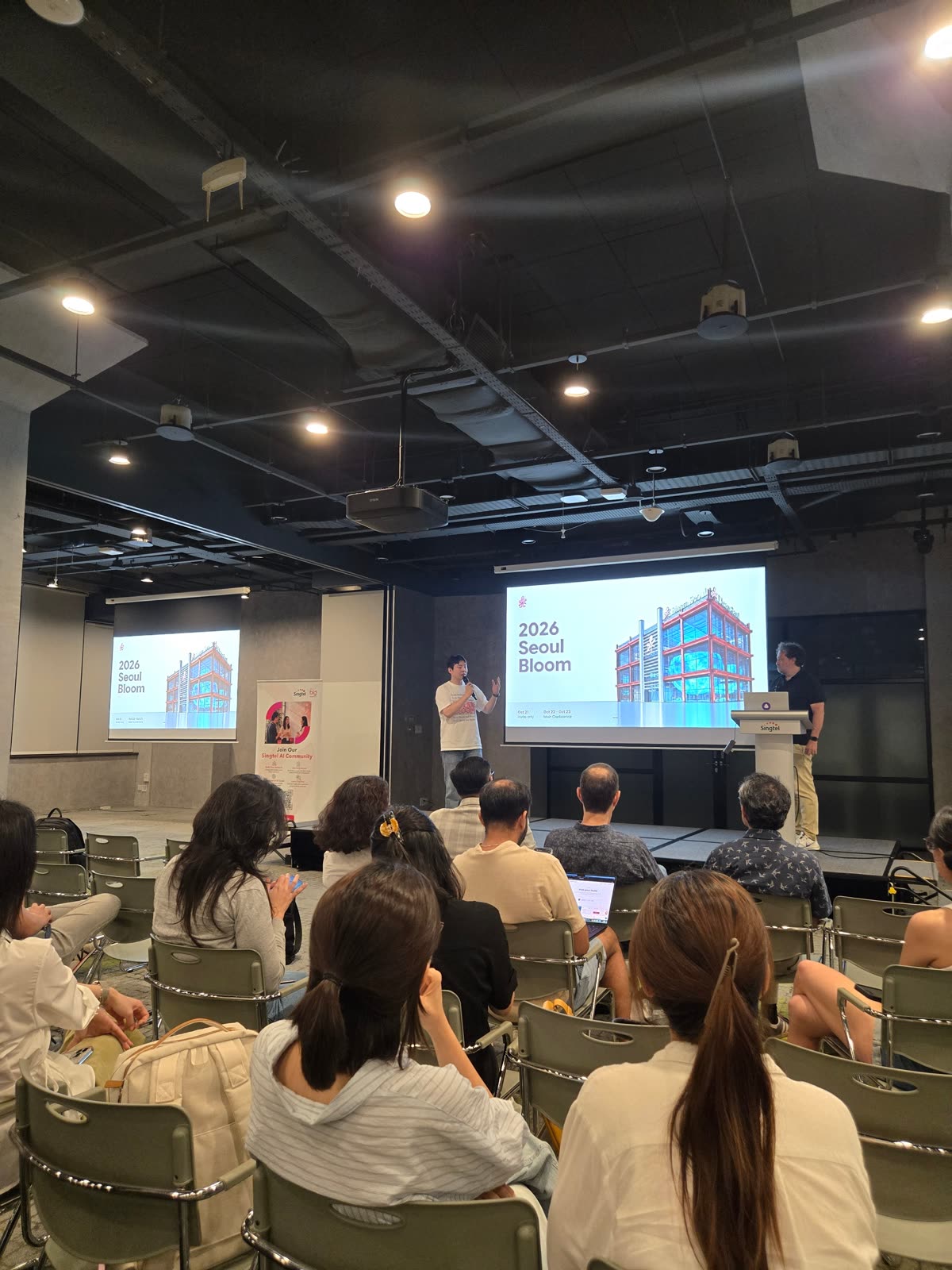
The Bloom community held its first meetup outside Korea. The same event drew 2,000 signups in Korea in April, and more than 1,500 people signed up in Singapore, with every seat gone within 24 hours of the announcement. The space came from Singtel, Southeast Asia's largest telecom and a name locally on the order of AWS, a collaboration that came out of cold DMs on LinkedIn with no prior connection whatsoever.
What struck us was that Singtel proposed a conversation rather than a technology showcase. They are in the middle of a workforce transformation redesigning how people work, how they lead, and the business itself around AI. Companies that invest in AI culture rather than AI infrastructure are rare. The collaboration with the Singapore Claude community also started on LinkedIn. A local community of only Koreans is not worth much; people from Korea, Japan, Singapore, Australia, the US, and the UK in one Discord is meaningful on its own. We had been warned that Singaporeans are cautious and do not readily show what they think, and the energy in the breakouts matched anything in Korea.
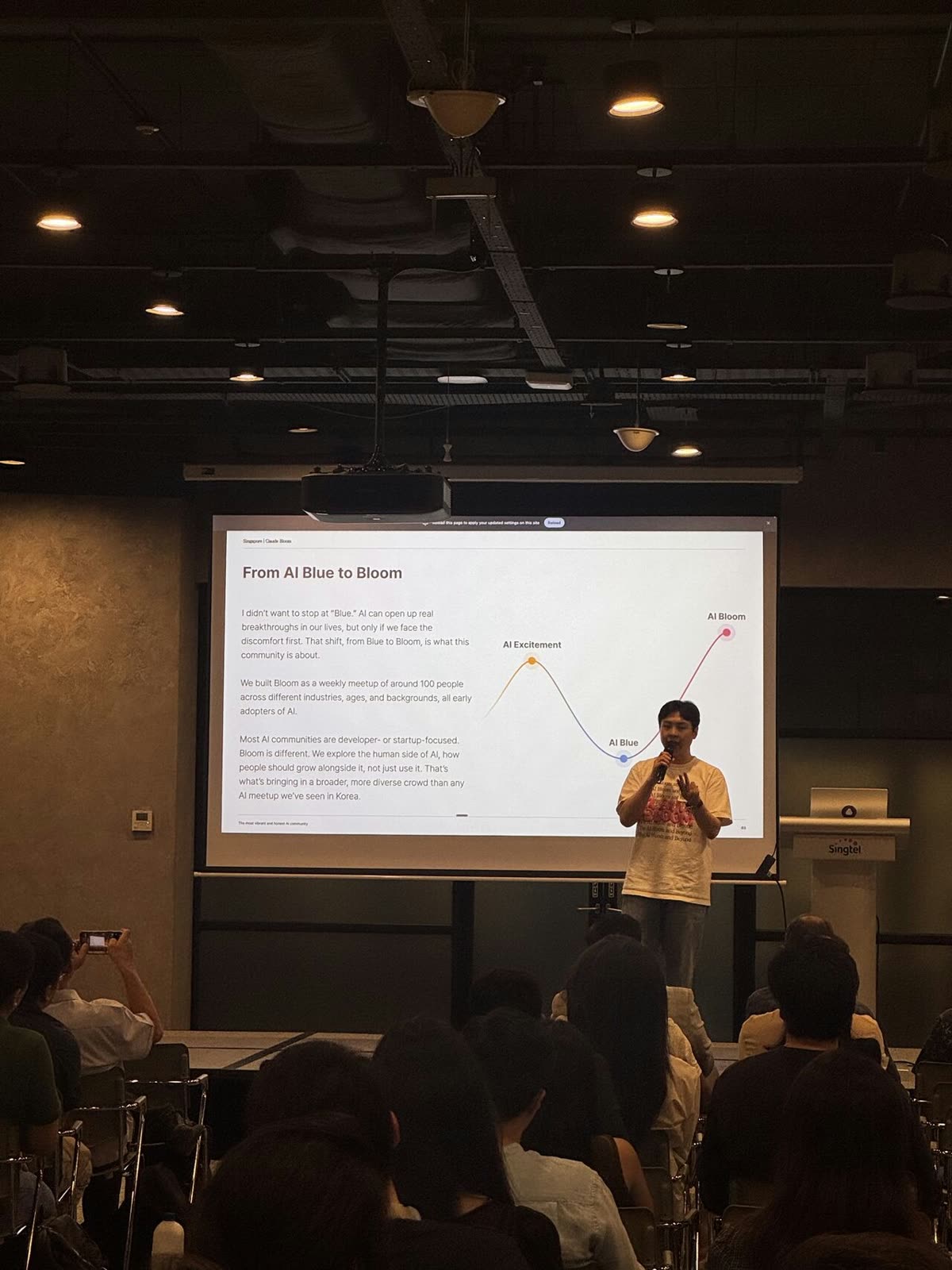
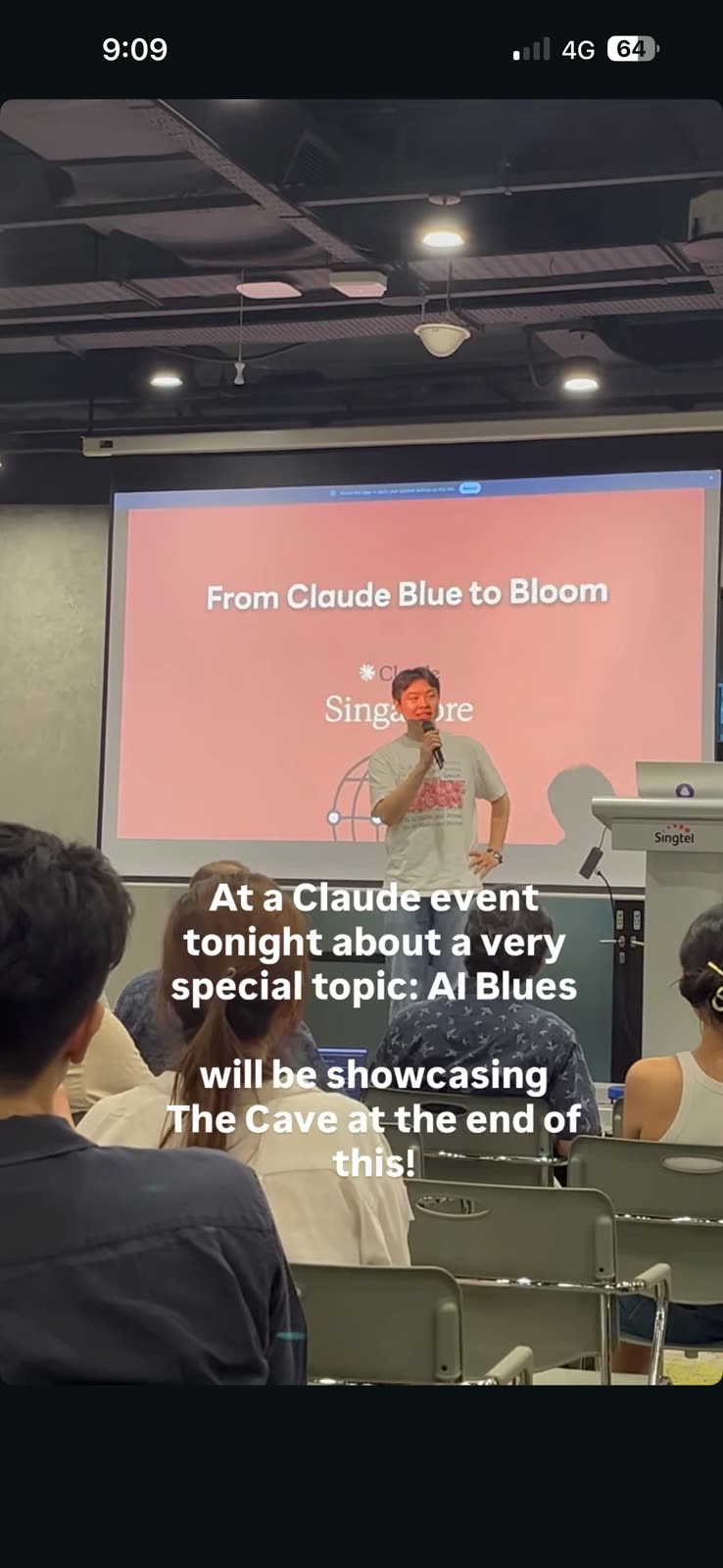
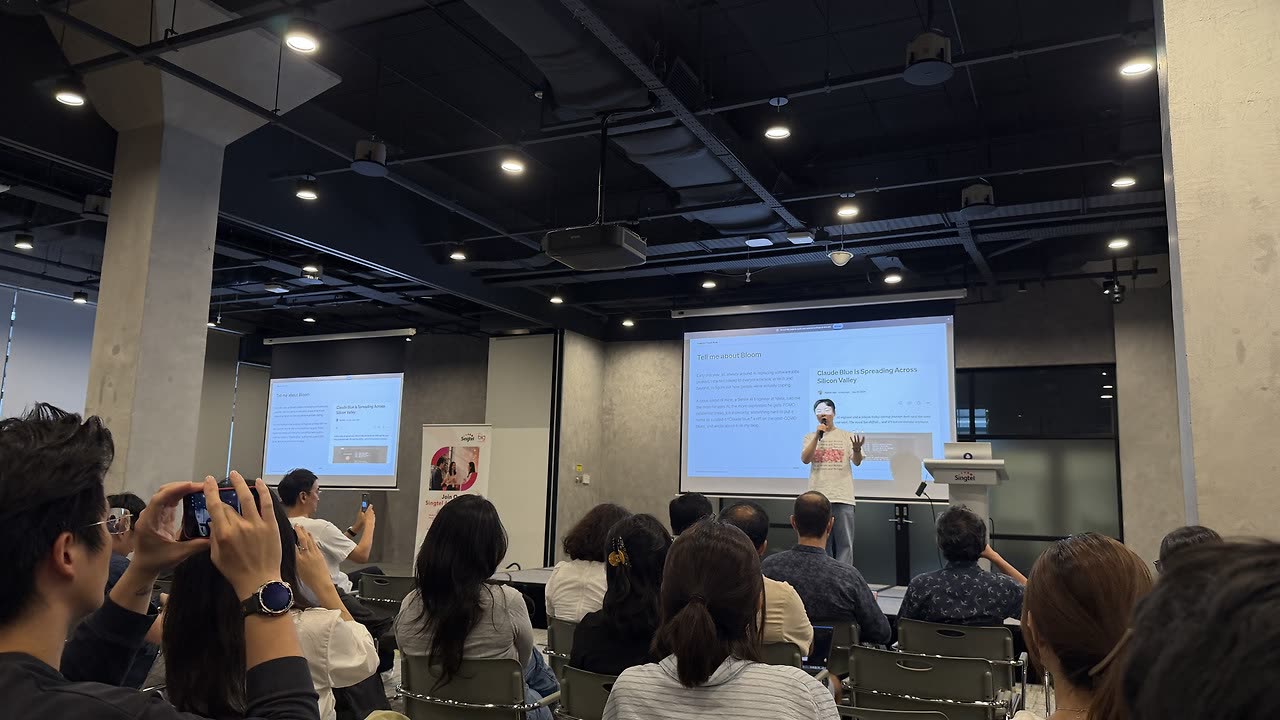
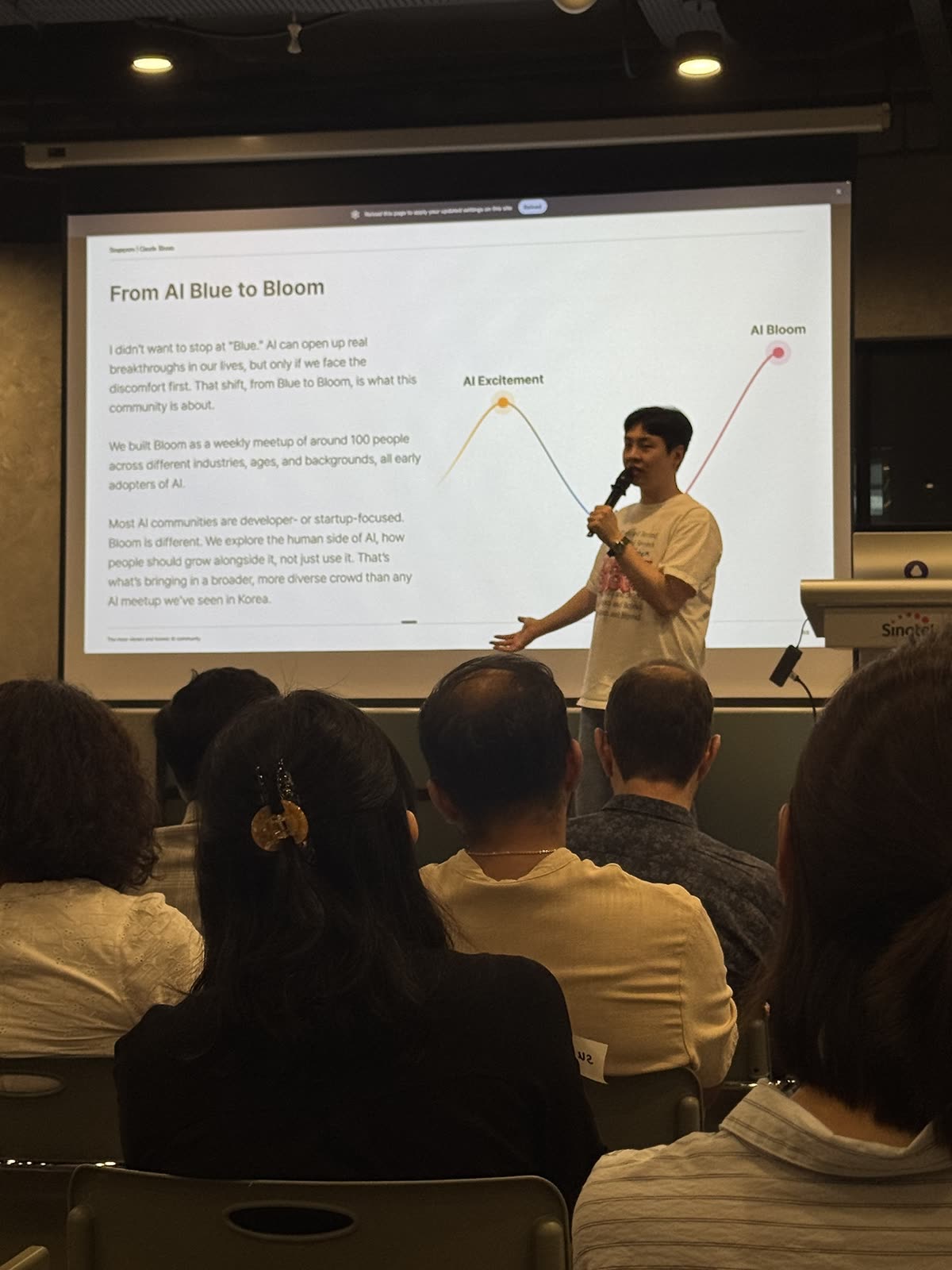
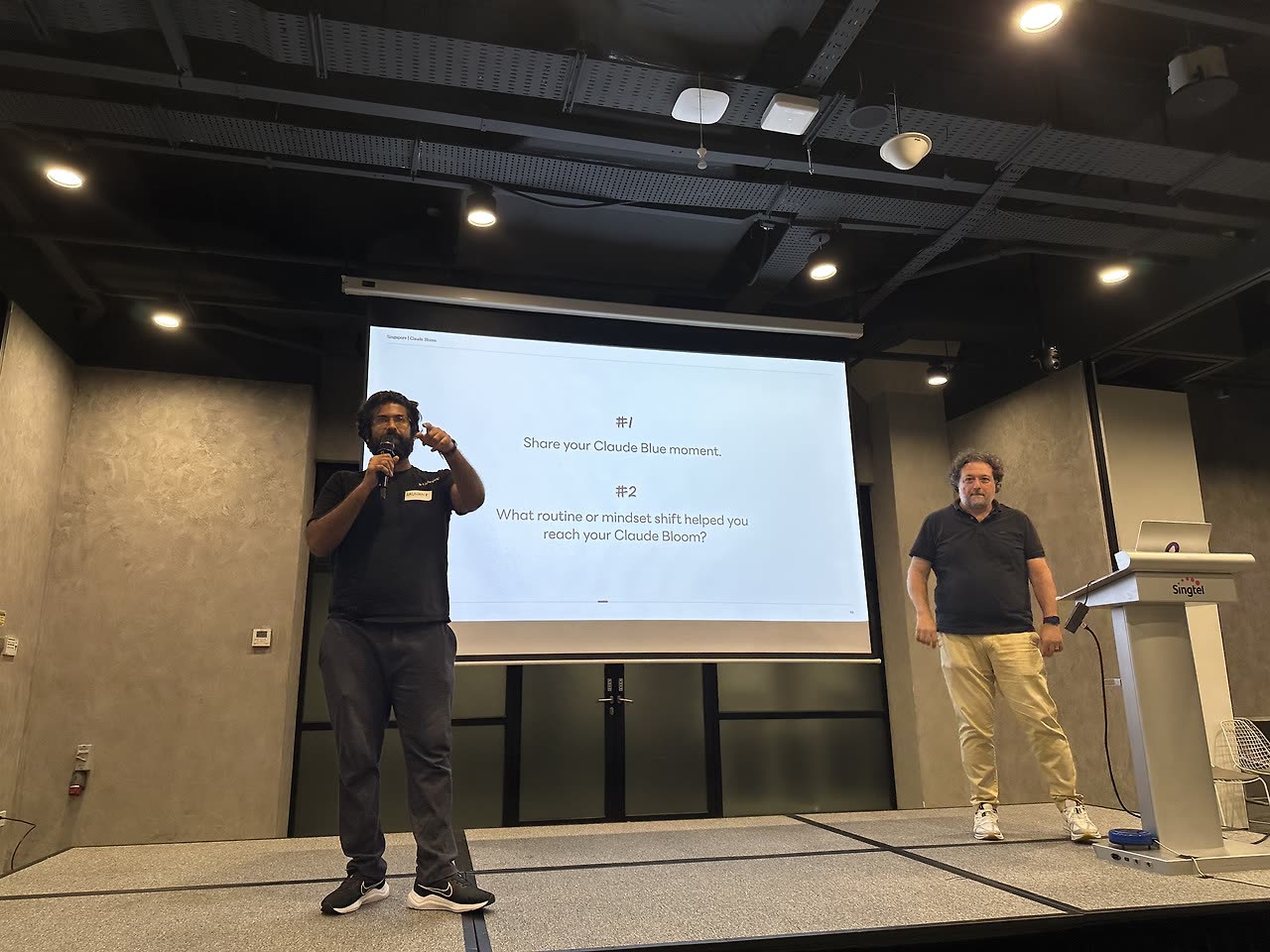
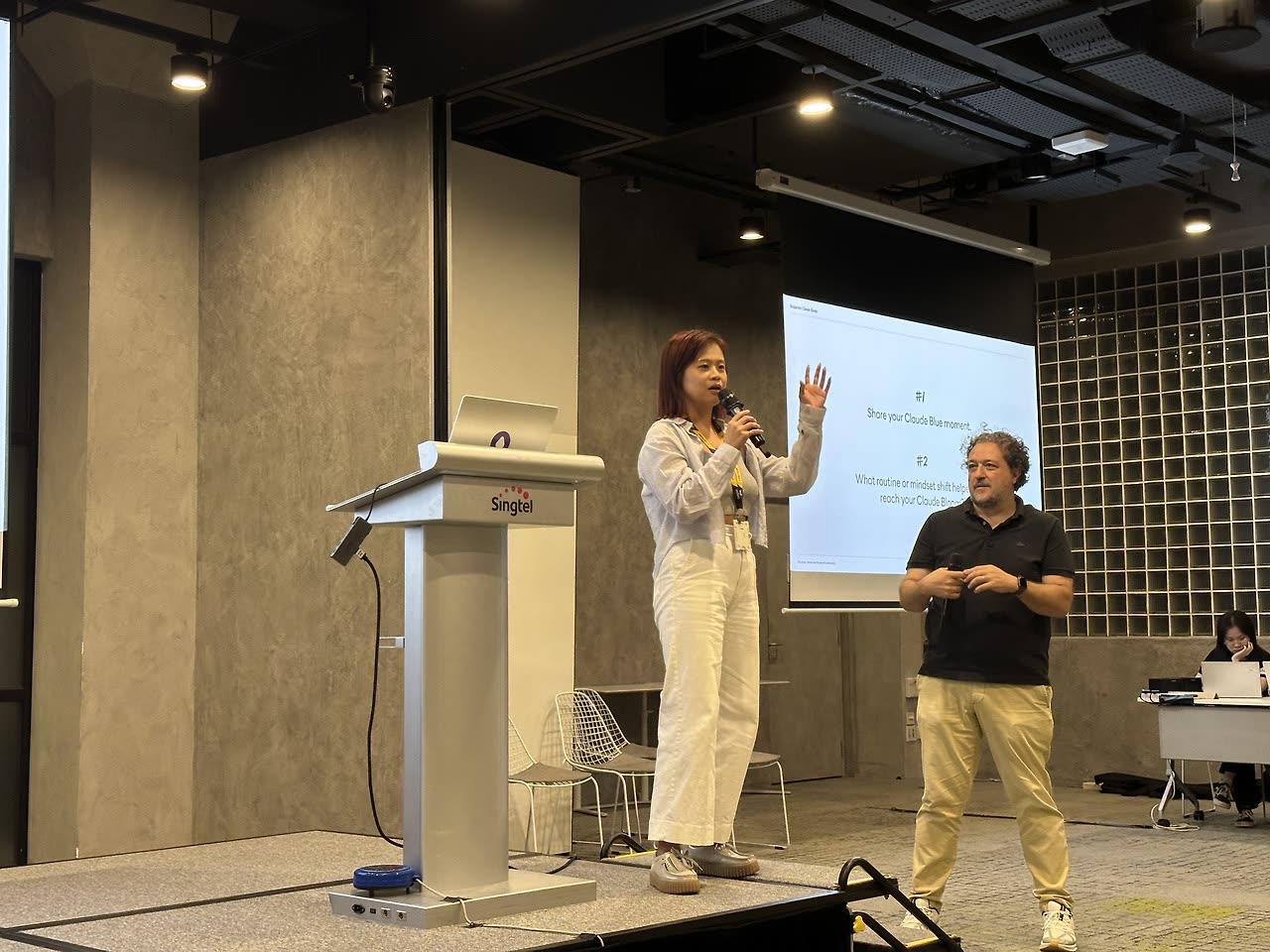
On stage, the organizers started with how this community began. It started with one software company's anxiety: what if AI swallows our software, what if users just build it themselves without our tools? Continuing coffee chats with people across industries, they heard from a friend, an AI engineer at Meta in Silicon Valley, that the more he used AI the more depressed he felt. Someone with a machine learning PhD and 20 years of experience was going through an identity crisis. They named that conversation Claude Blue, after the COVID blues, wrote it up on a blog, and the post spread further than anyone expected.
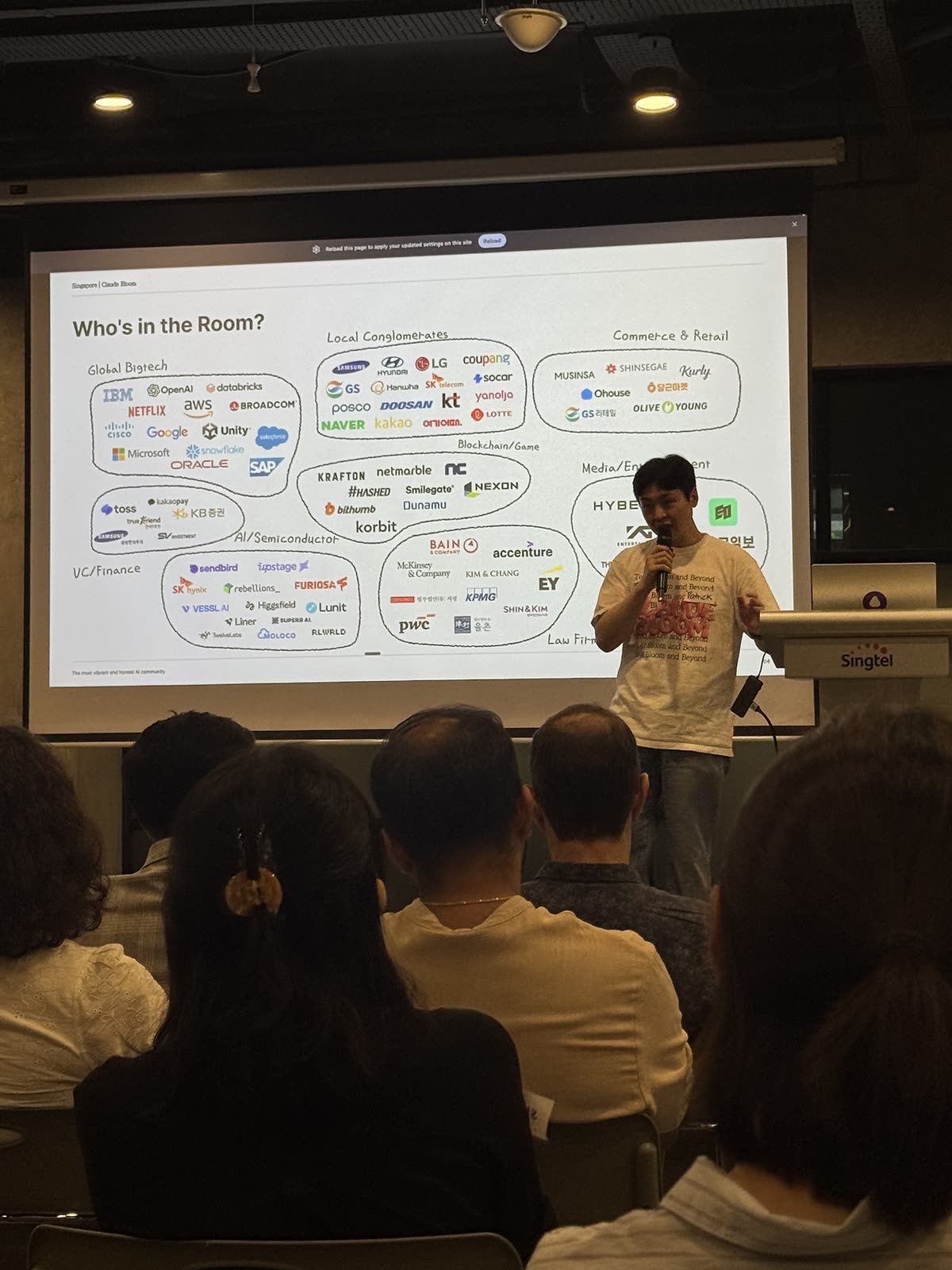
What came out of it is the arc from AI excitement through blue to bloom. Using AI at first is exciting; using it more brings FOMO, job anxiety, and an identity crisis, and turns blue. Since nobody wants to stay there, they added Bloom, meaning to flower. The barrier to AI events, long the preserve of developers, dropped because the subject was human, and it grew into a community drawing large corporations along with law firms, financial institutions, and government agencies, reaching 6,000 cumulative signups.
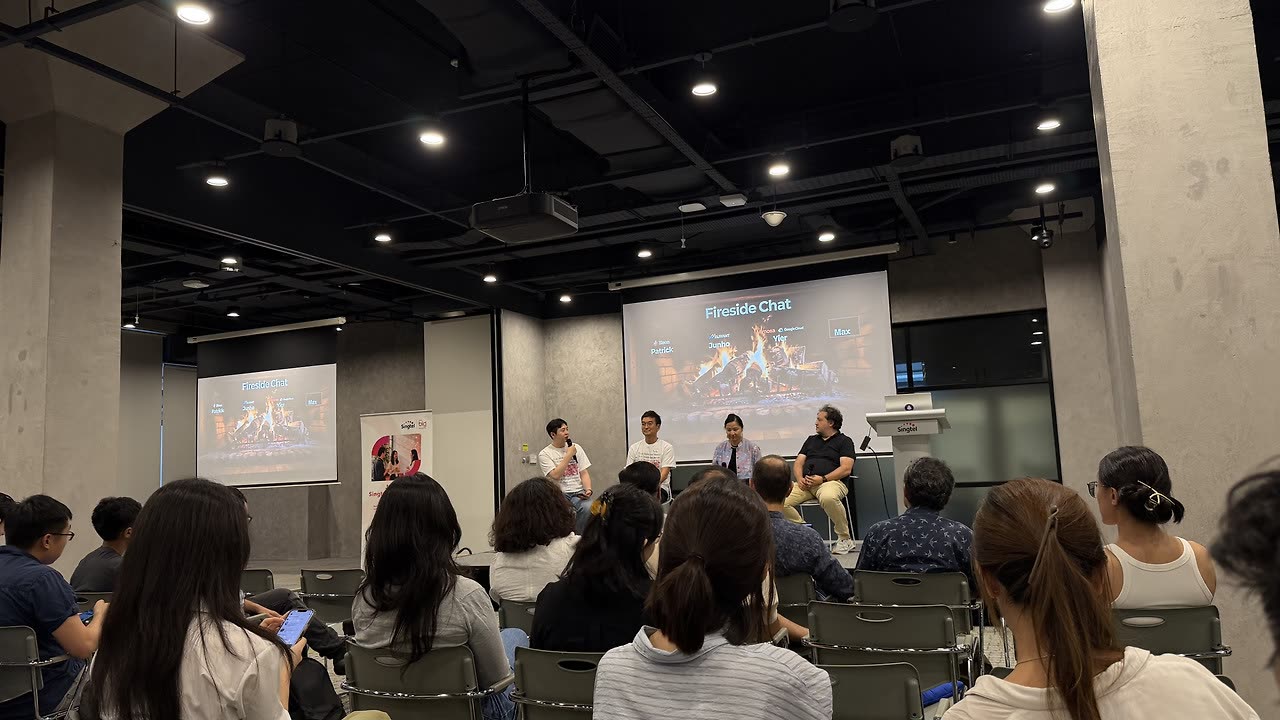
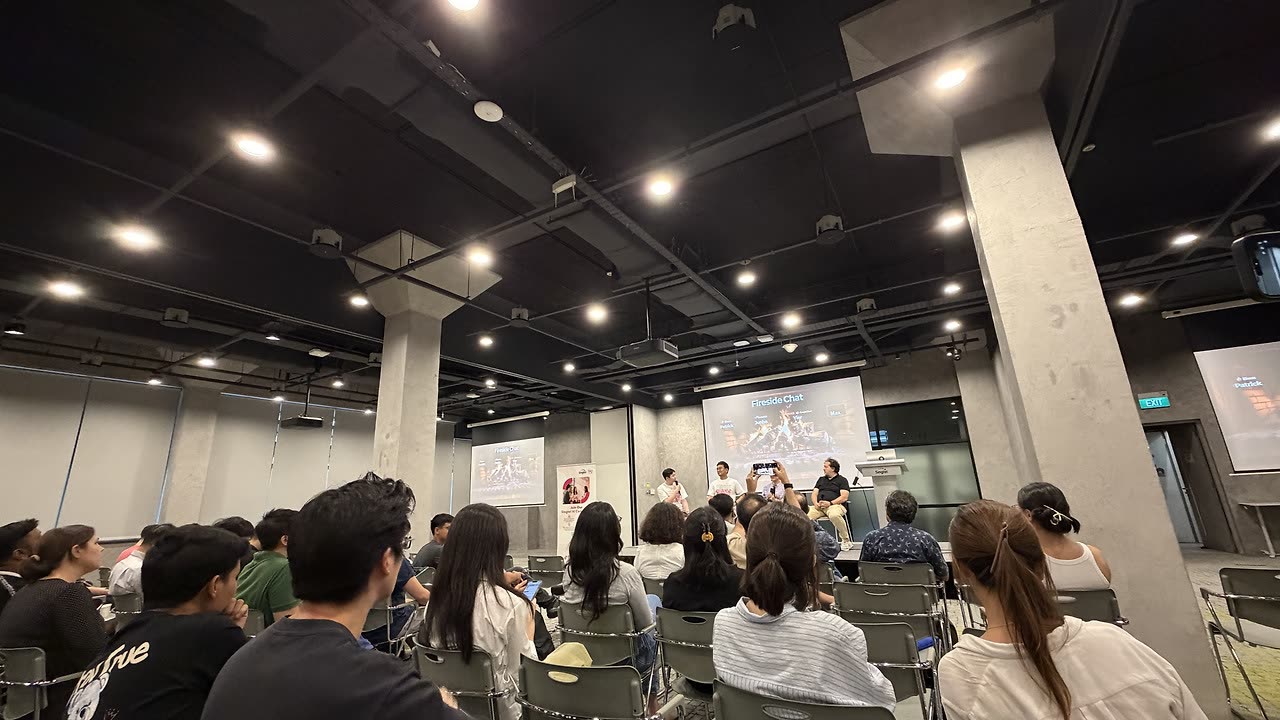
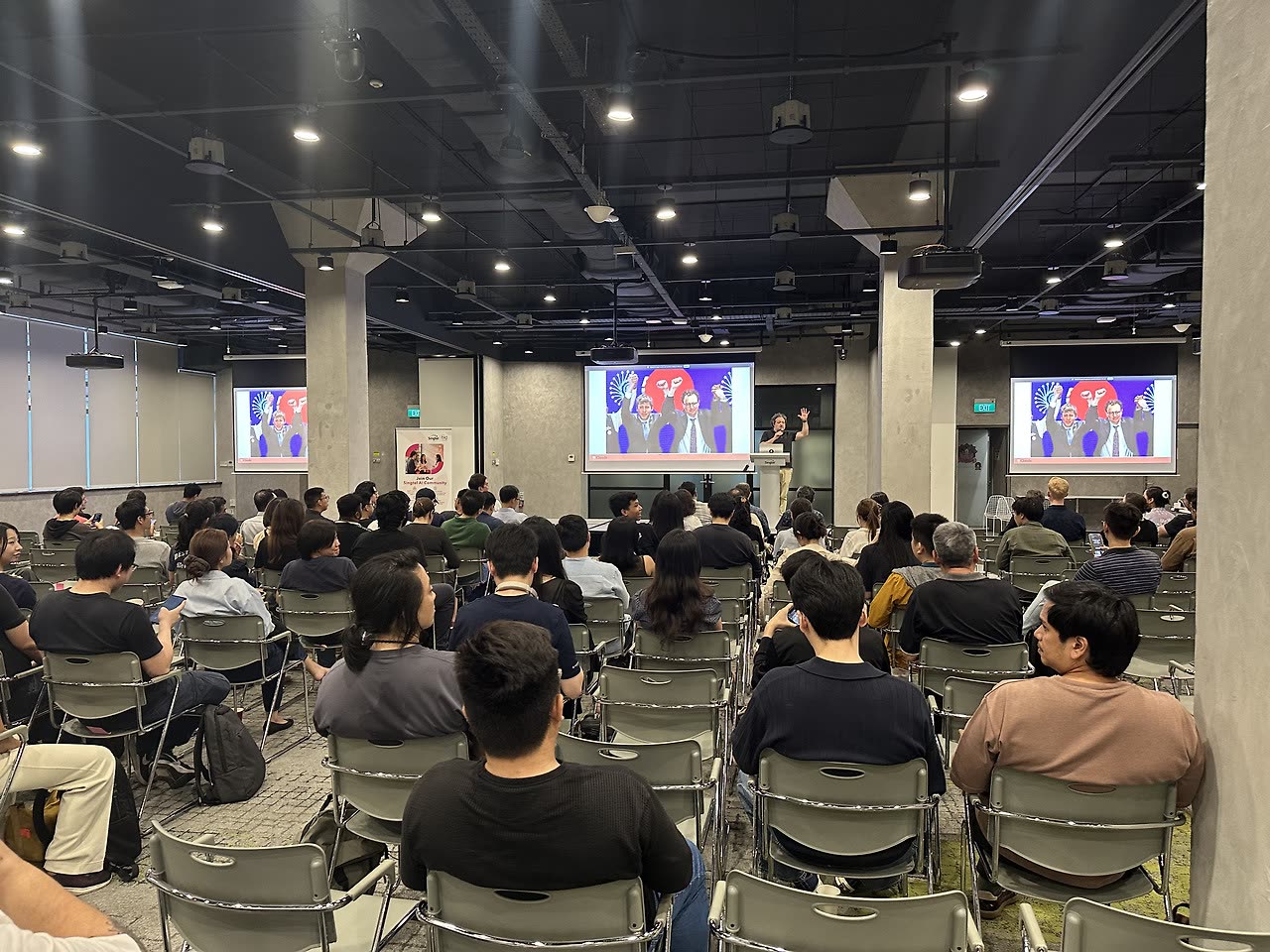
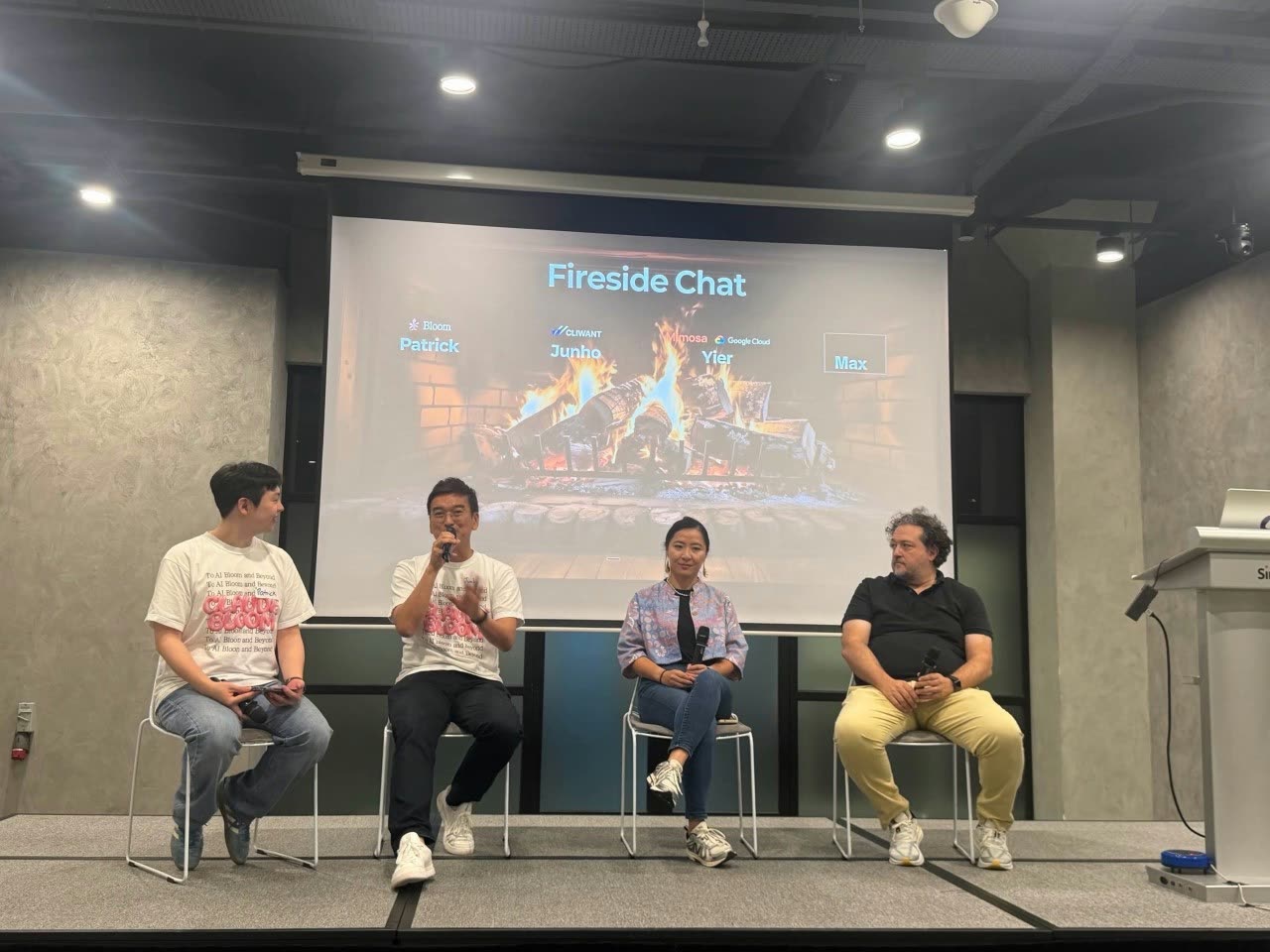
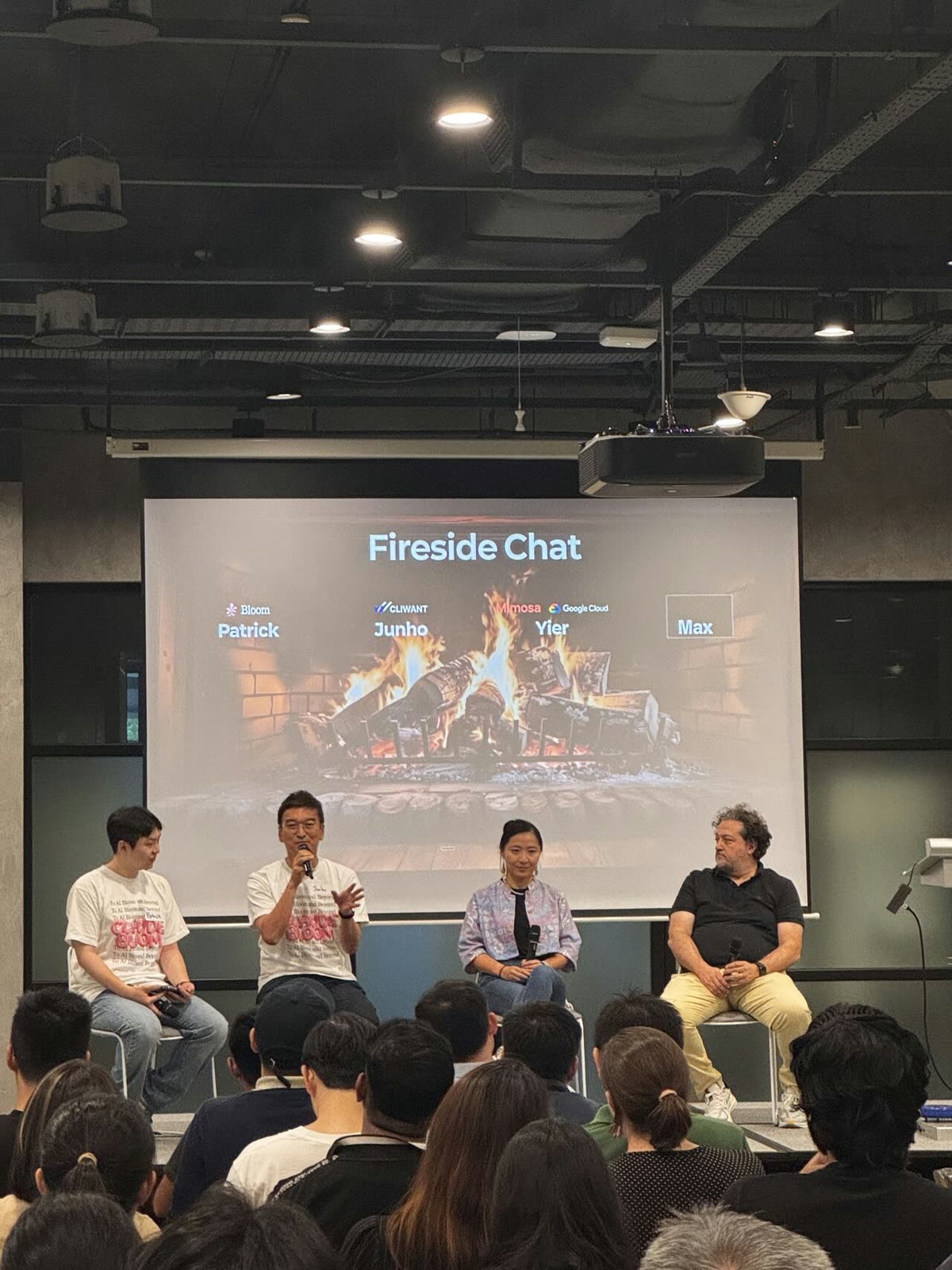
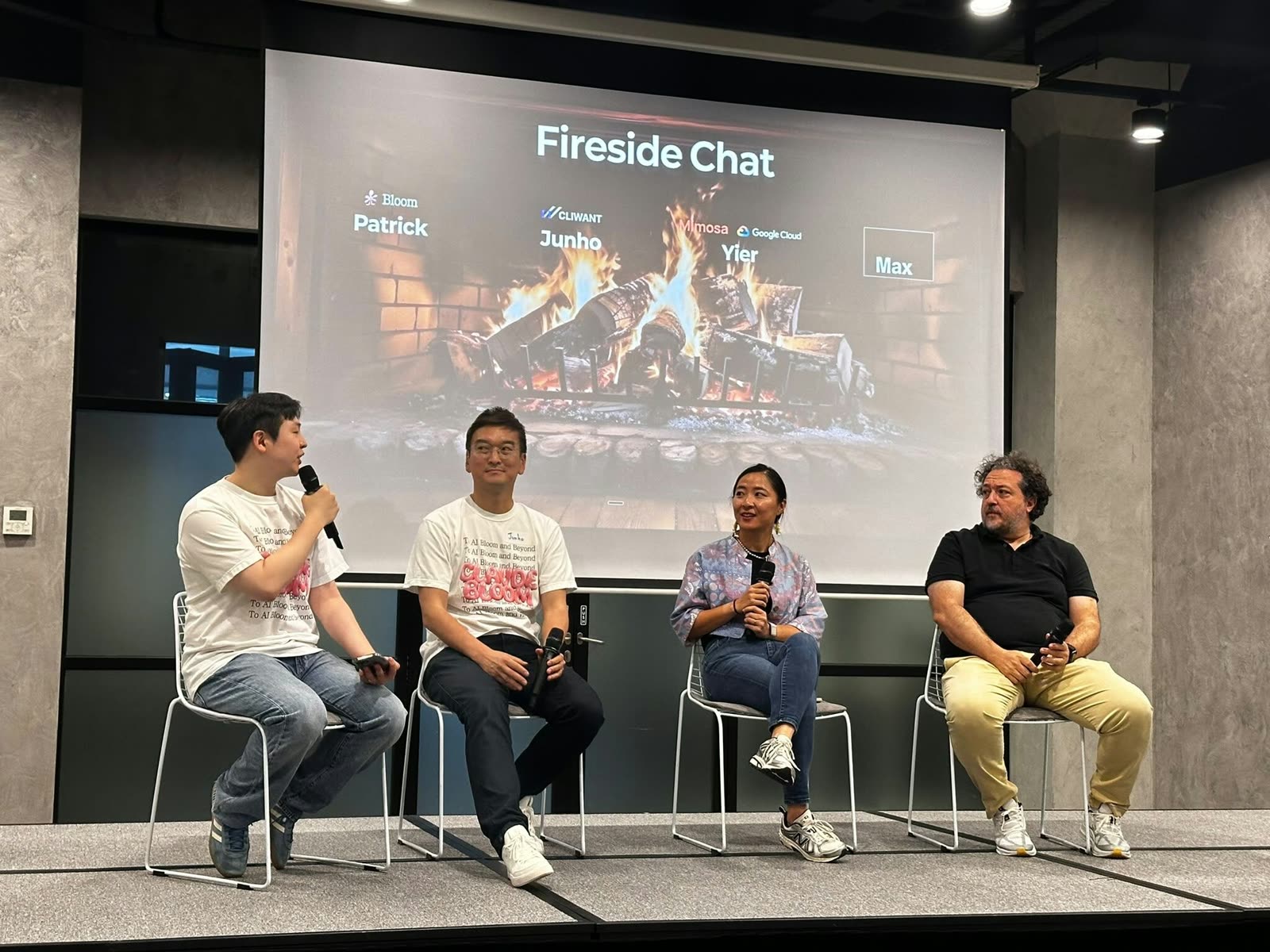
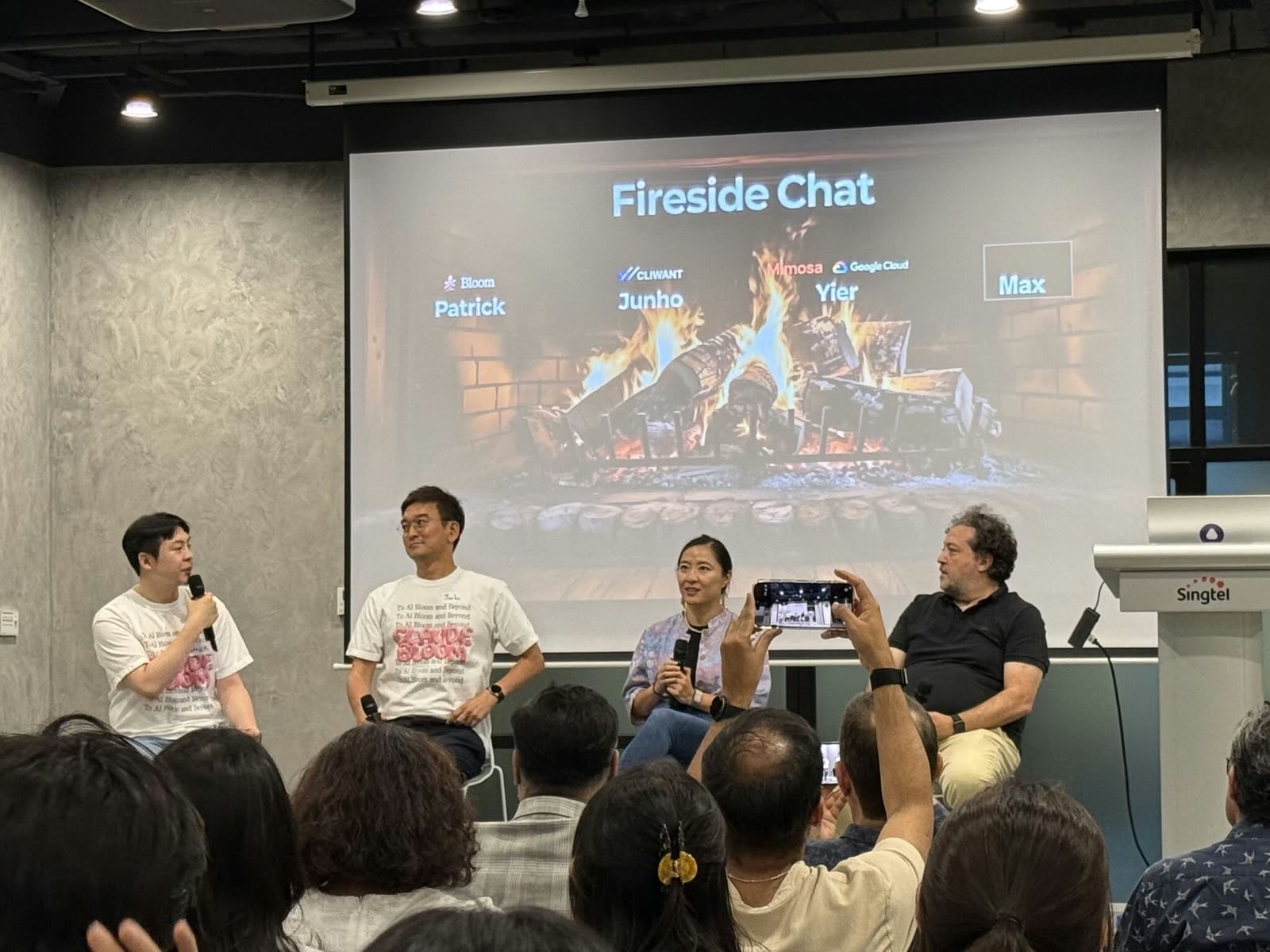
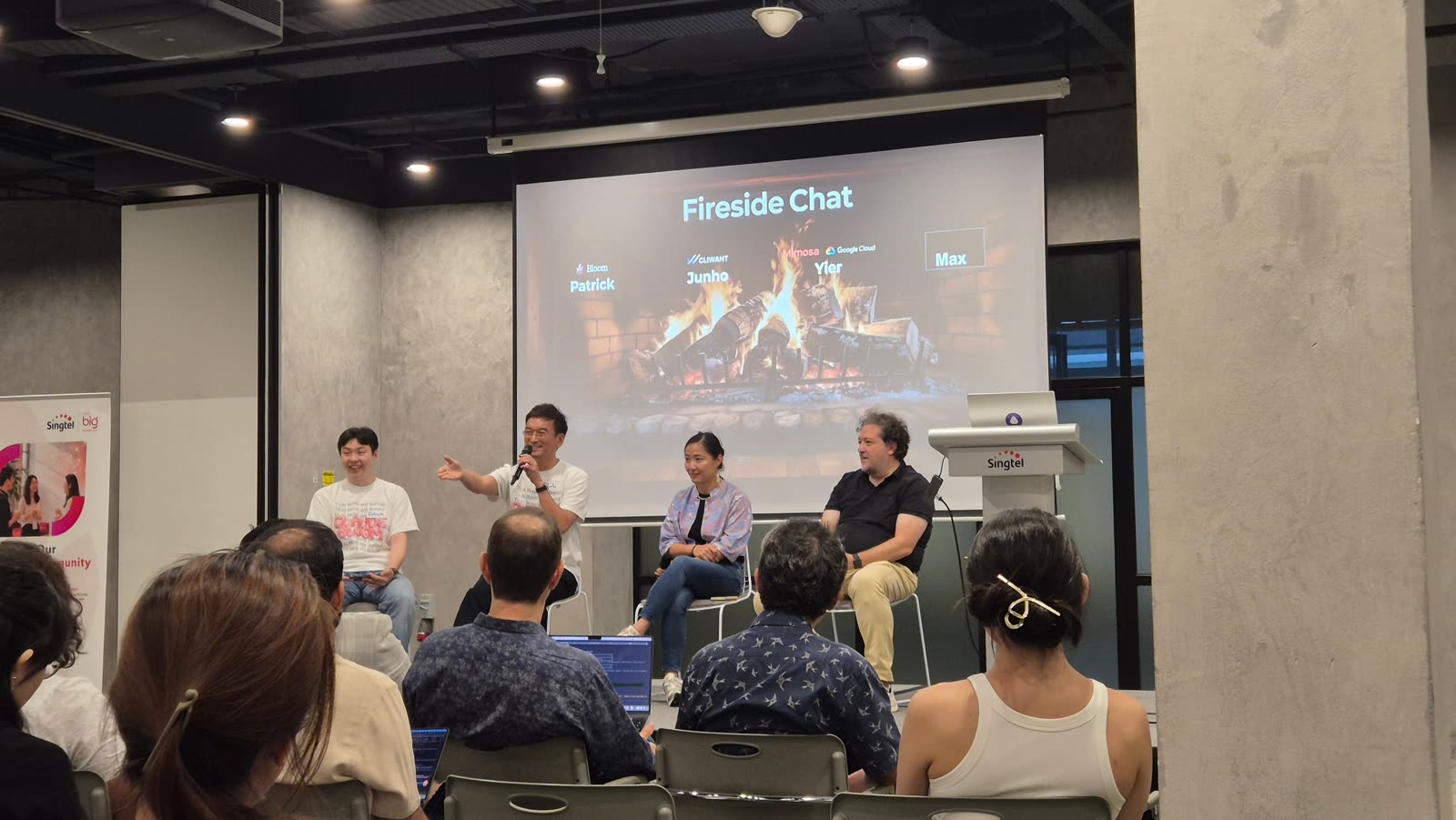
The highlight of the fireside was Cliwant CEO Cho Jun-ho. He spent more than ten years in the bidding industry in Singapore, realized the industry had not changed at all in fifteen years, and founded an AI solution for government bidding. Early this year he kept asking himself what business is safe from AI, and the answer was none, which is what made him blue. Then he changed the question to what business can actually grow because of AI, and with the same reality in front of him the perspective shifted and answers started appearing. His answer was redesigning the business model. They dropped SaaS subscriptions for a revenue share model that pays only when the customer wins, which only became possible because of AI. Saying that he is Bloom-ing today, in progress, got nods around the room.
The story of how he came to believe in being there in person landed too. Before founding the company, on a bid for a shopping mall in Orchard, he could not work out why systems integration appeared in the RFP, so he went to the site, and every small display in every bathroom was switched off. The answer was outside the document, not in it, and although they were the only foreign company and quoted the highest price, they won because they knew the customer's hidden need.
The story that circulated most was about his ten-year-old son. Telling a son deep into games that if he was the best at them he should try making one, the boy made ten games with Claude in a few hours. The real insight came after the first one, when his son said dad, my friends say this isn't fun at all. The boy told the AI he wanted a 3D game, took feedback from his friends, and fixed it and fixed it again. AI collapsed the cost of building entirely, and AI does not know what users actually want or where it hurts. His son, the gamer, knows. What lasts is empathy.
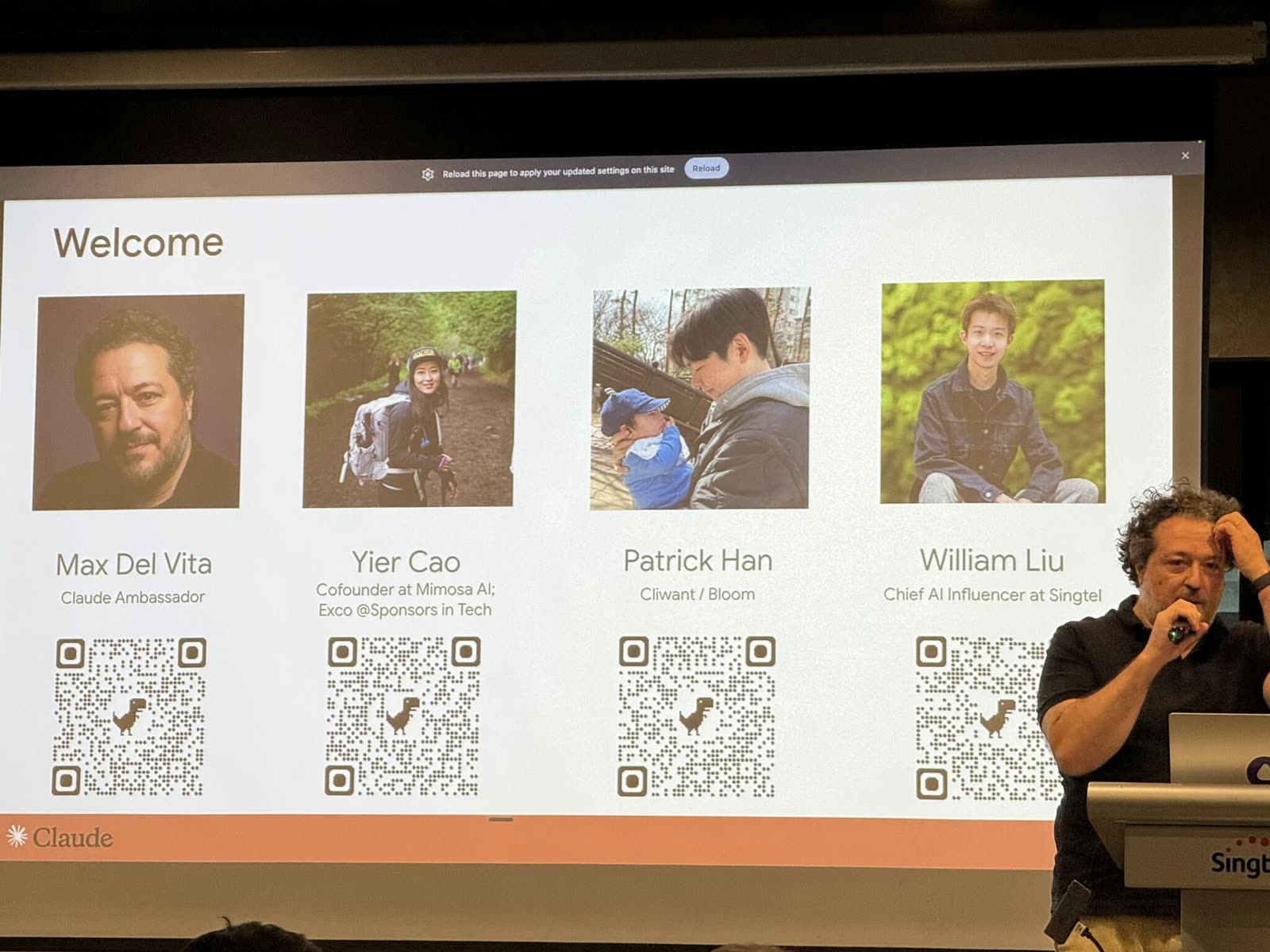
Yier Cao, an AI architect at Google Cloud, said she has passed through every stage over the past year. Coding with AI was exciting at first, and she soon realized the excitement came from a place of deep ignorance, and the more she built the more anxious she got about what she did not know. She has since made peace with the fact that becoming expert in every tool is impossible, and learns one project at a time. She compared a career to an exploration game where the map only opens as you clear quests in the dark. Value compounds where domains cross, and AI opened the map far faster. Everyone laughed at the meme about wasting your morning if you have not hit your Claude limit by noon, and she added that not token maxxing is not a sin.
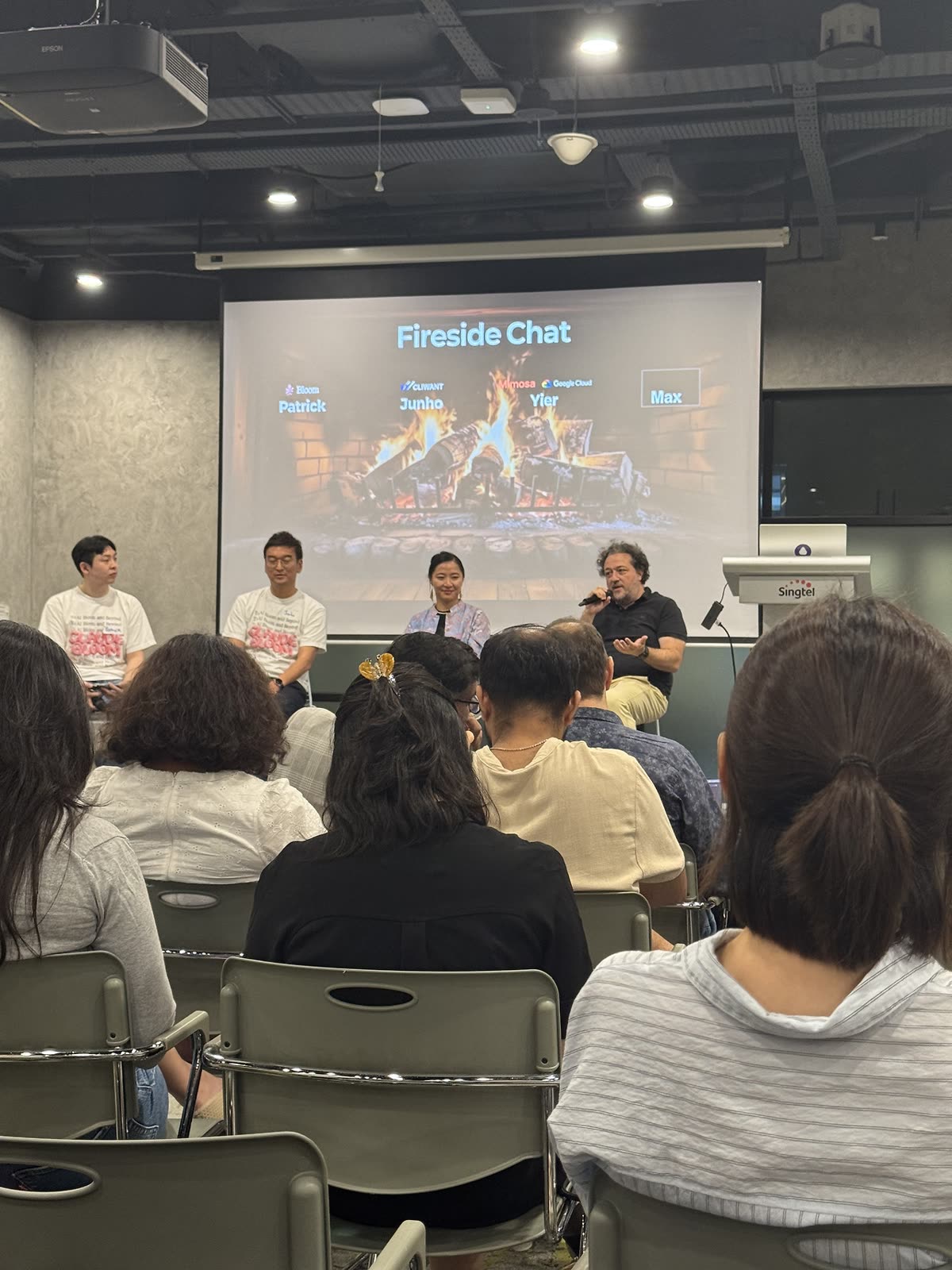
Max, the Singapore ambassador and founder of an AI native startup, said his team of three does what would have taken fifteen people a few years ago. On the name Claude Blue, he said a feeling he had carried a long time finally had a name: the pressure to always be efficient, and the endless input. He told a friend once that this is the new drug, and said that even as a builder of 27 years it is genuinely hard to keep up without feeling FOMO.
That fatigue shows up in the data. In a recent survey of tech workers, productivity clearly rose with AI and burnout rose along with it, from 45 percent to 56 percent. Yier said interacting with AI every day is fairly stressful and can be lonely, and that simply meeting someone with a similar experience is support in itself. The line that became the symbol of the night came from Max: even with 1,500 signups, Anthropic will never run an online event, because they want people meeting face to face.
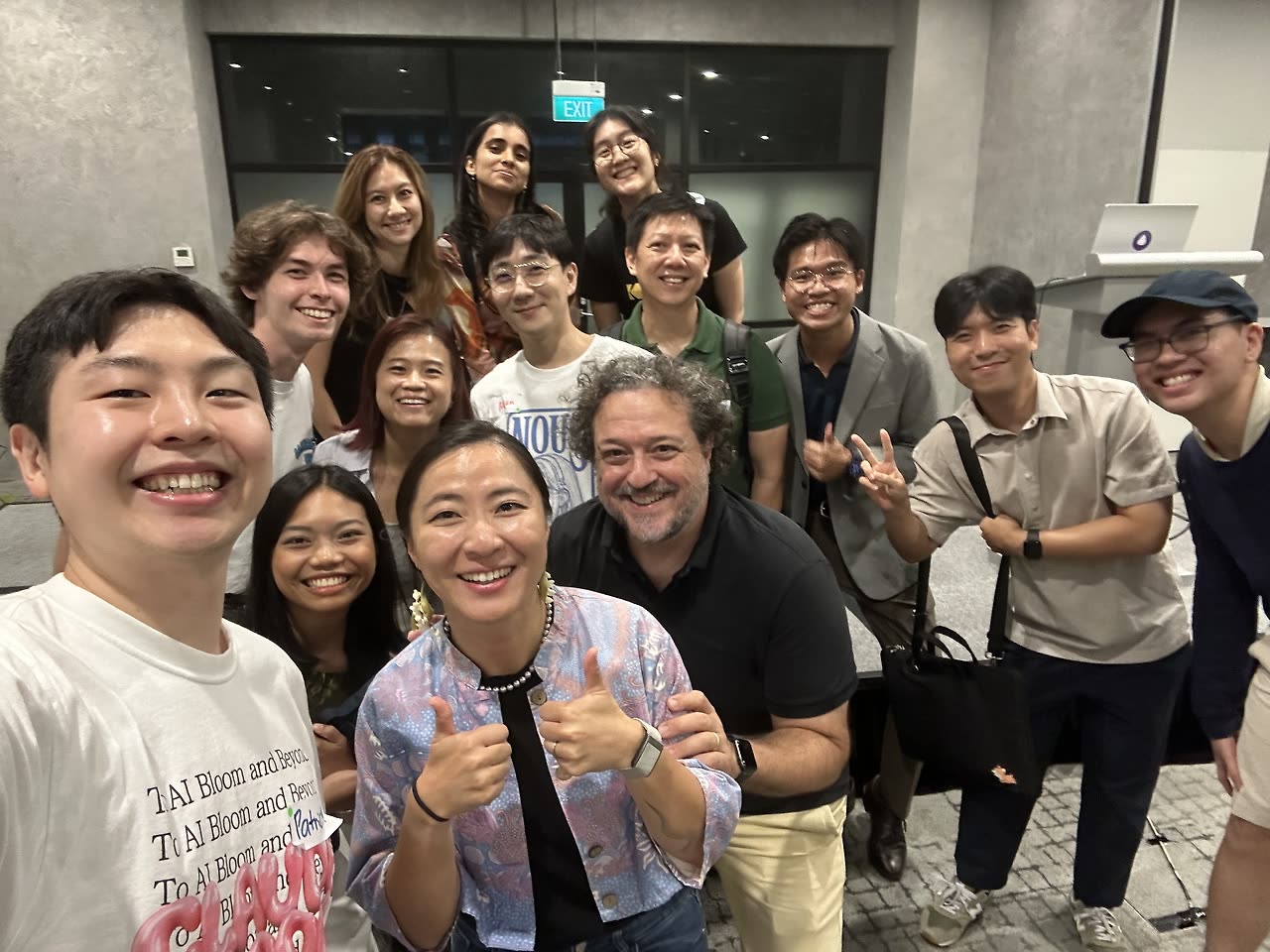
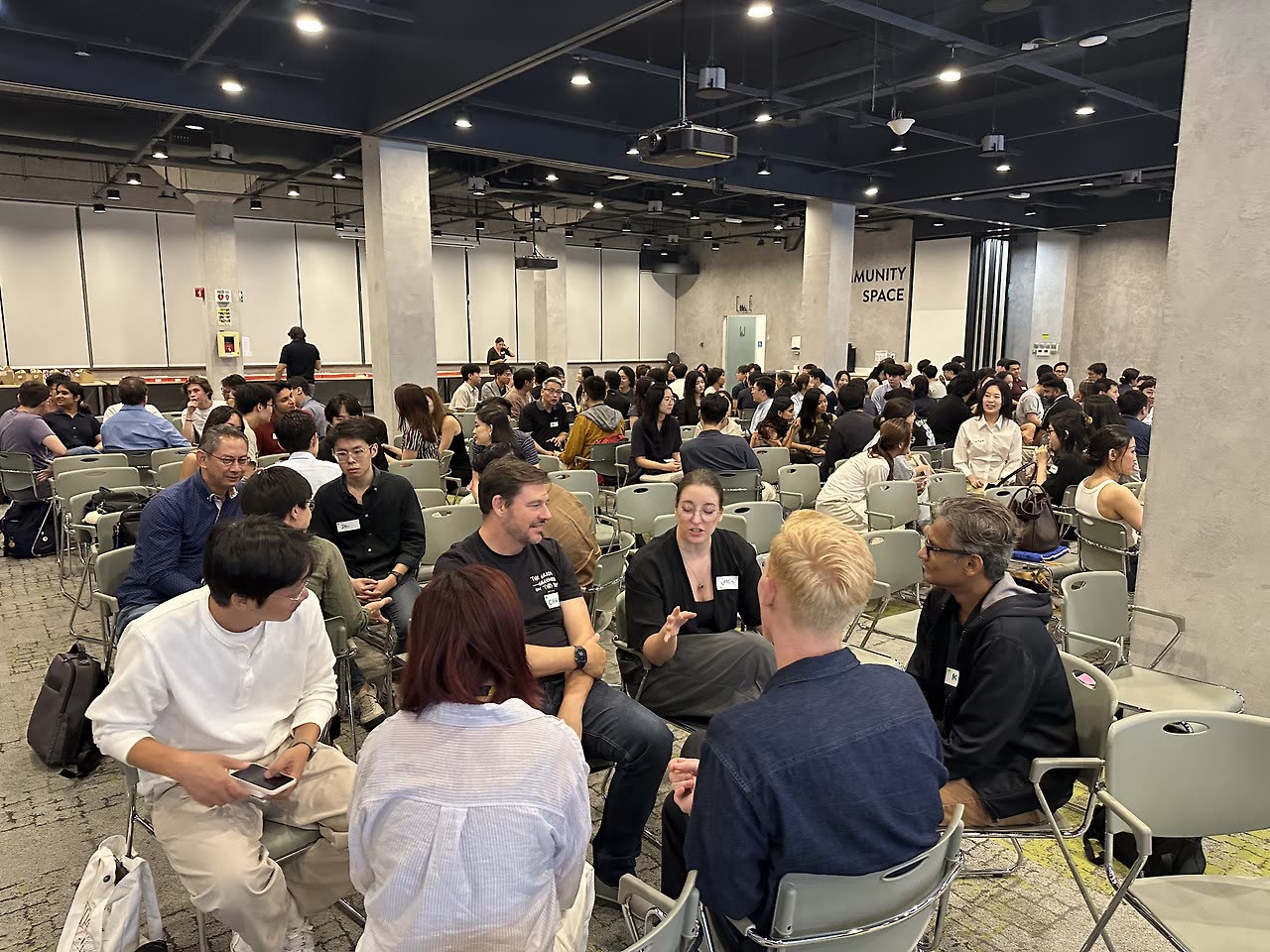
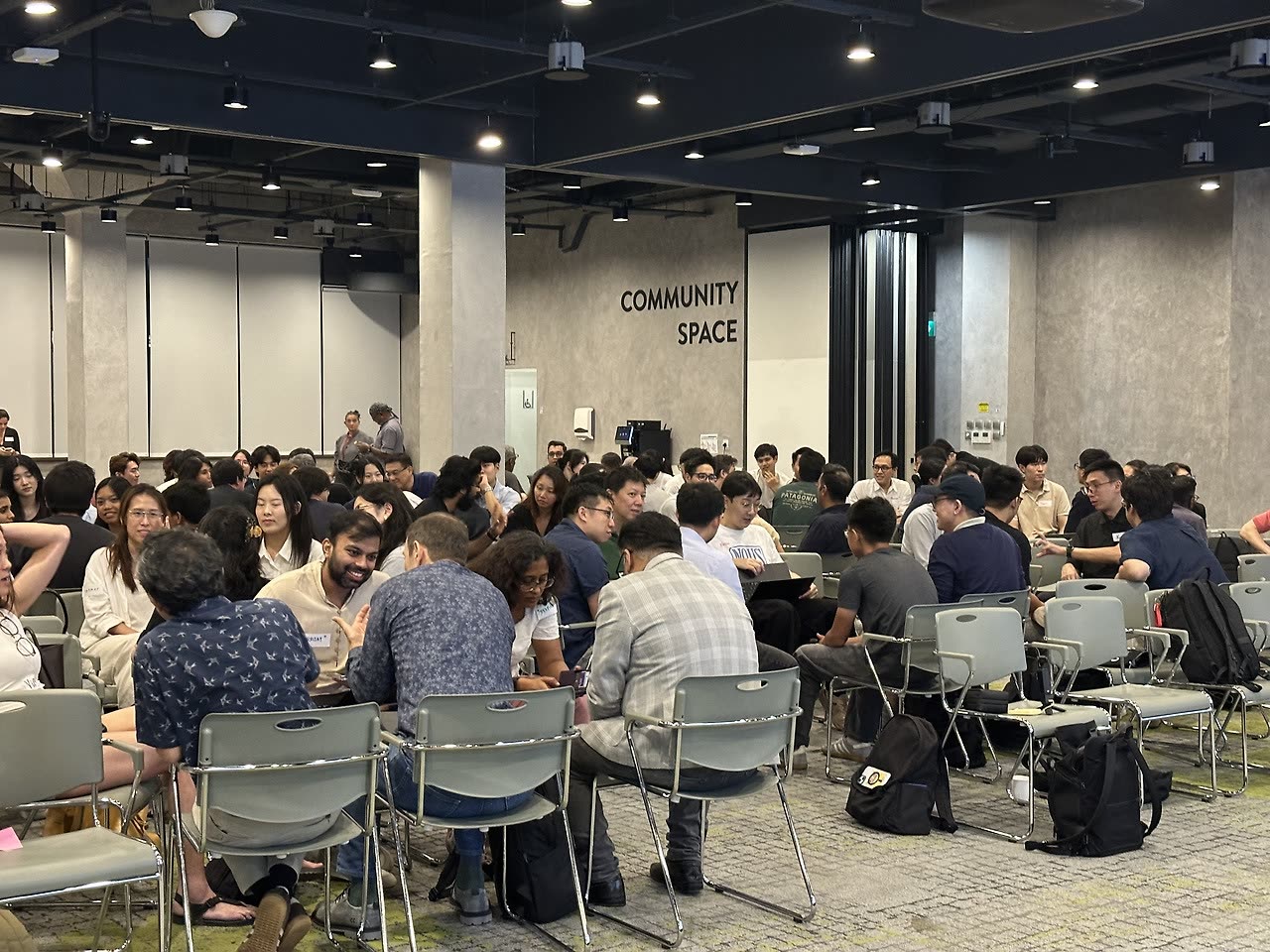
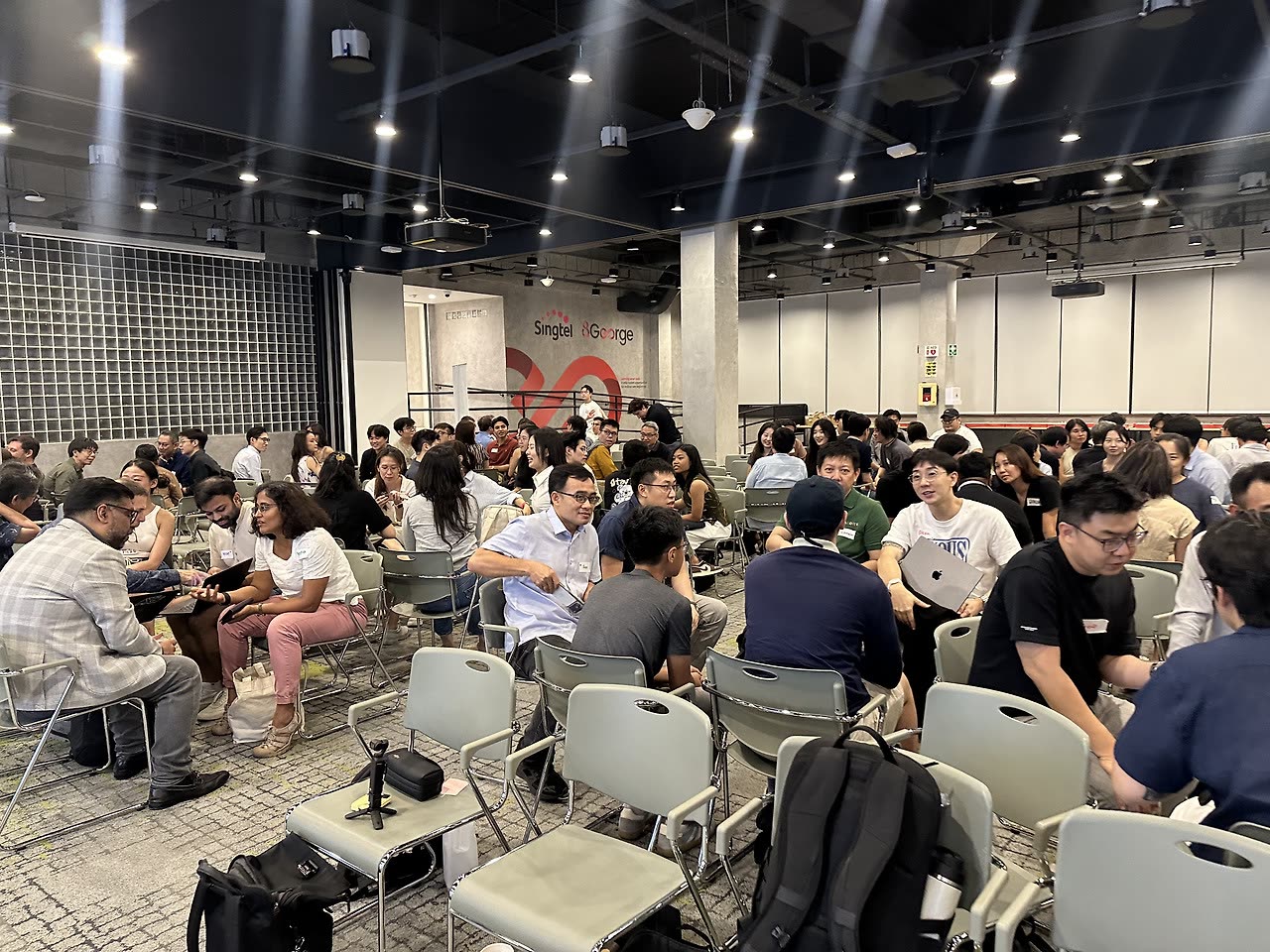
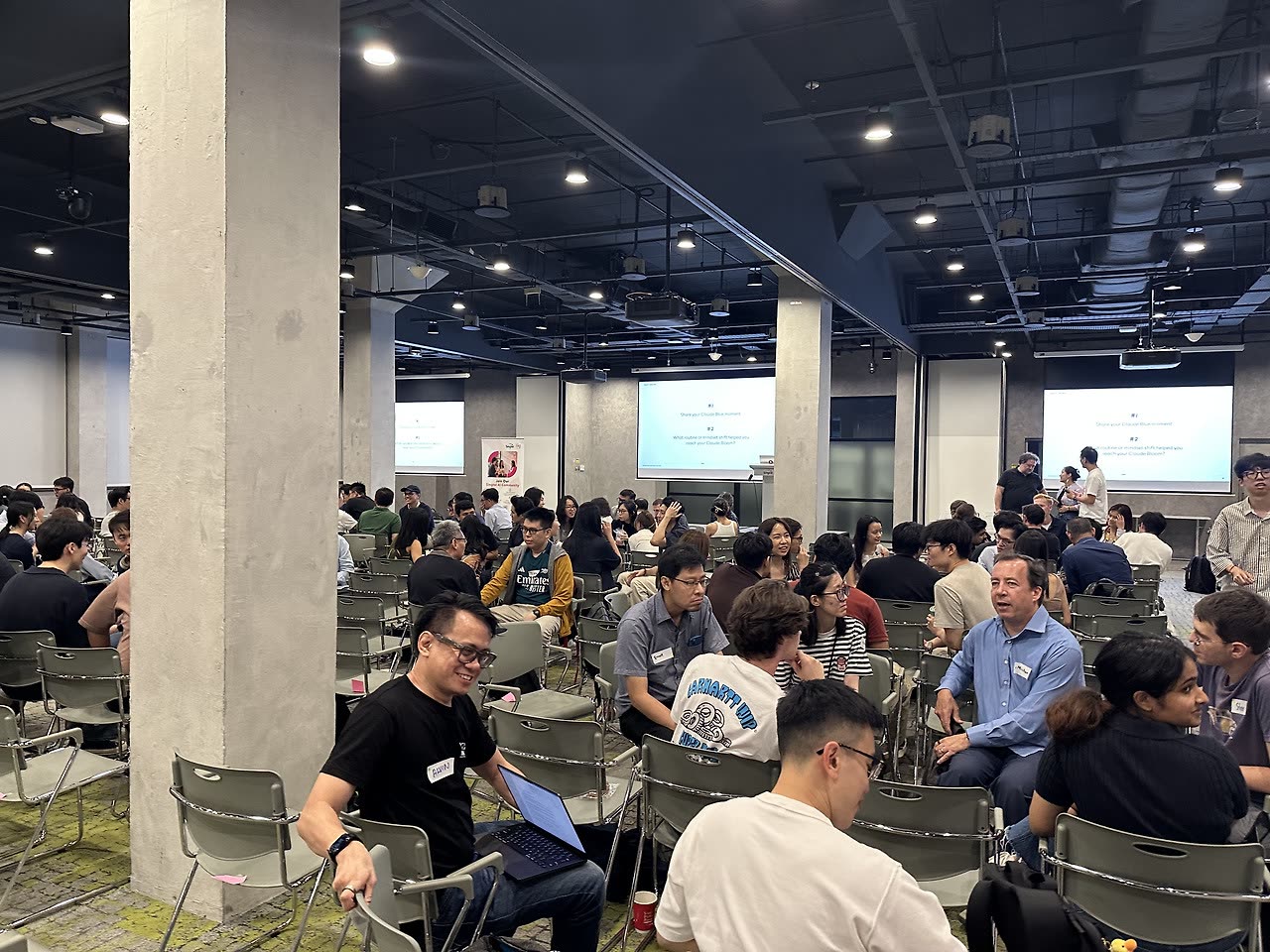
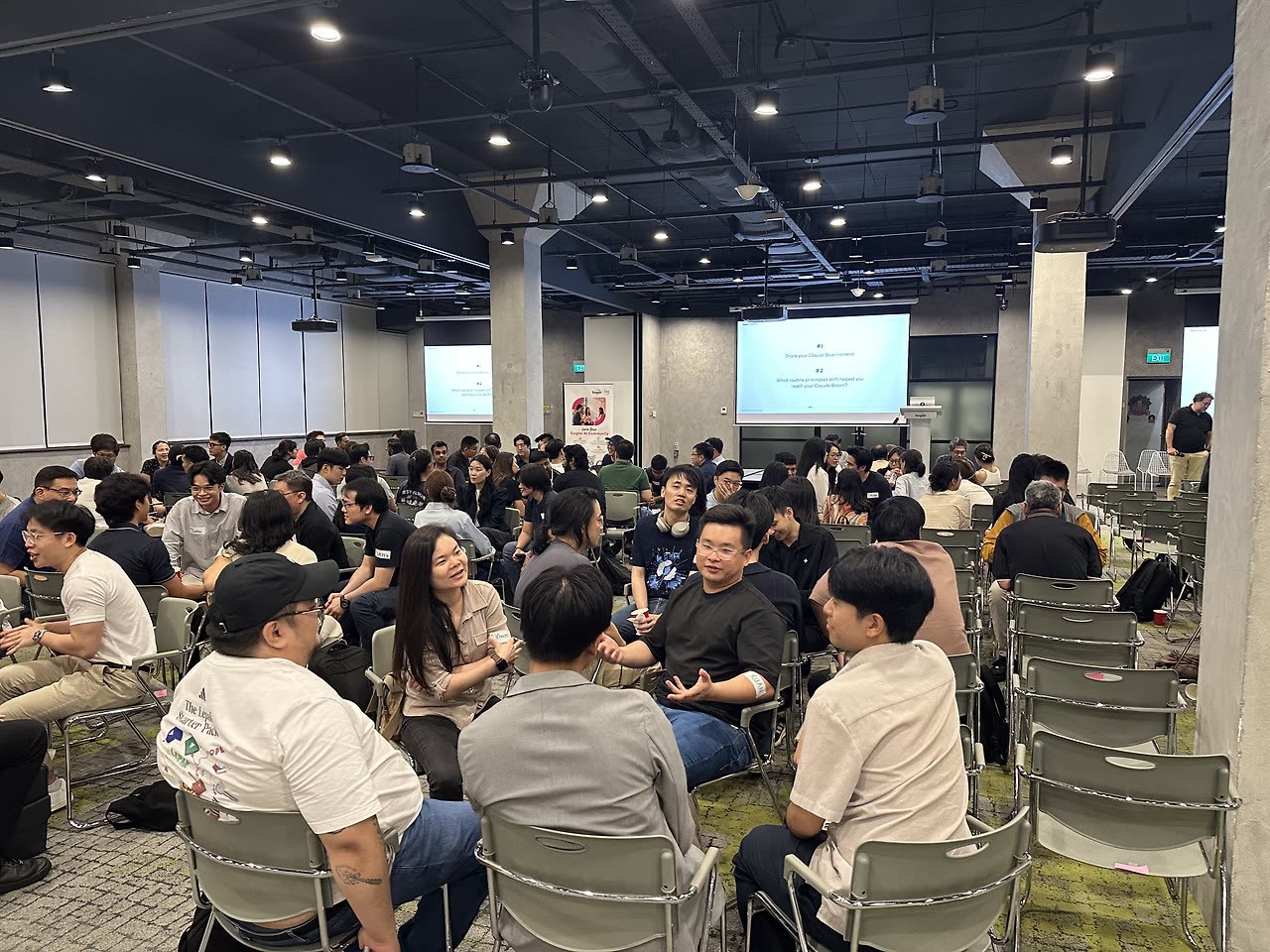
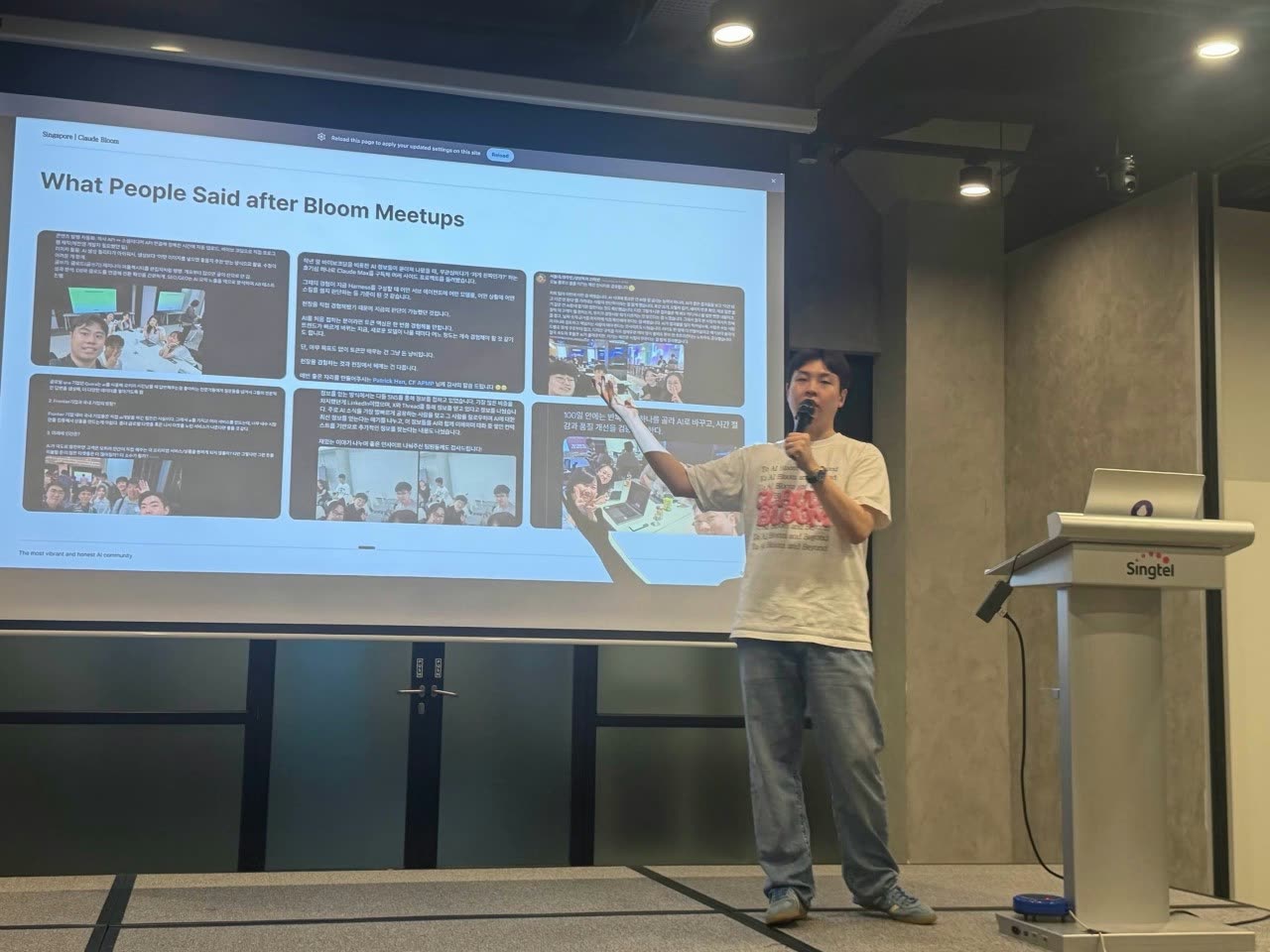
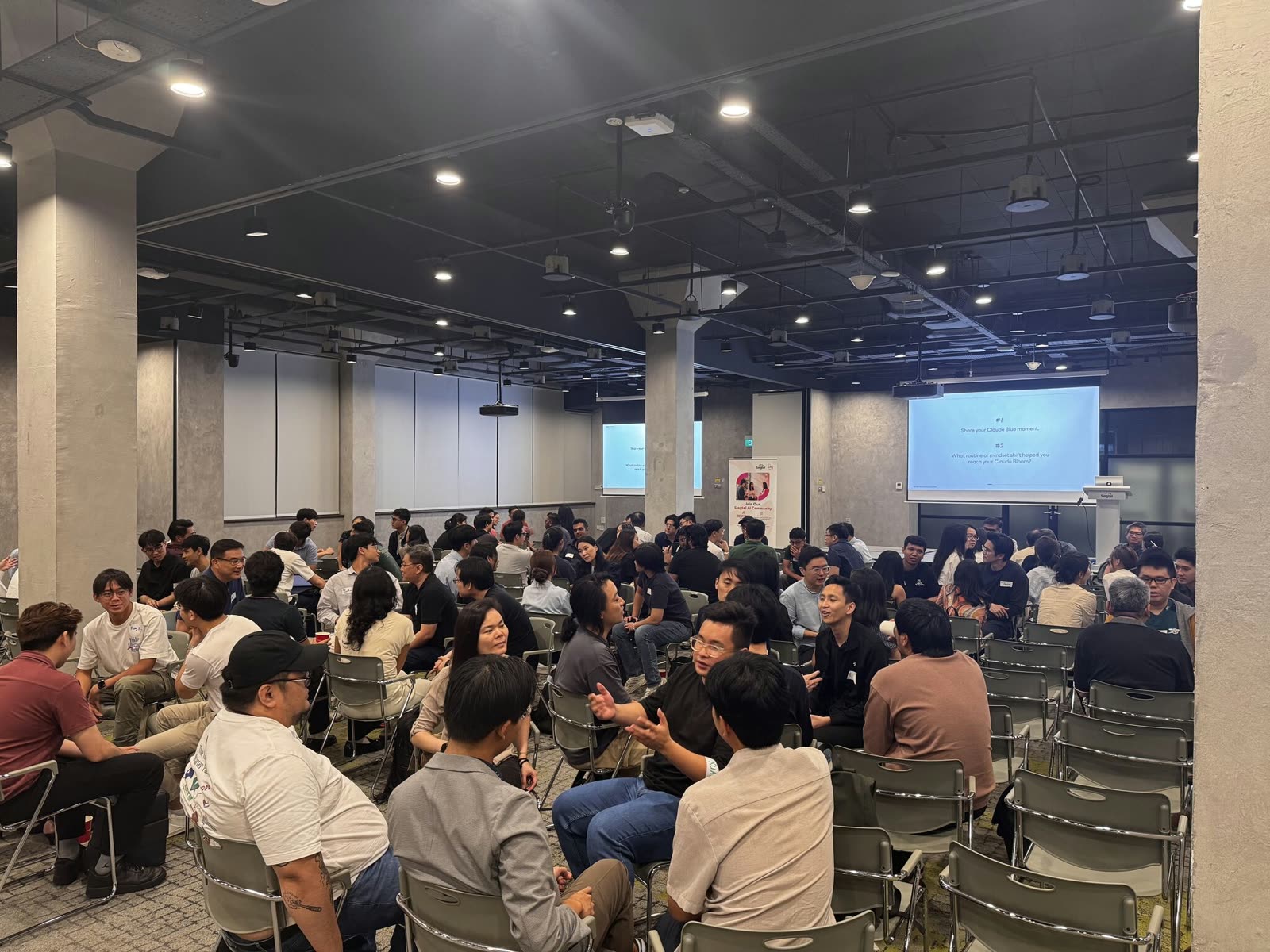
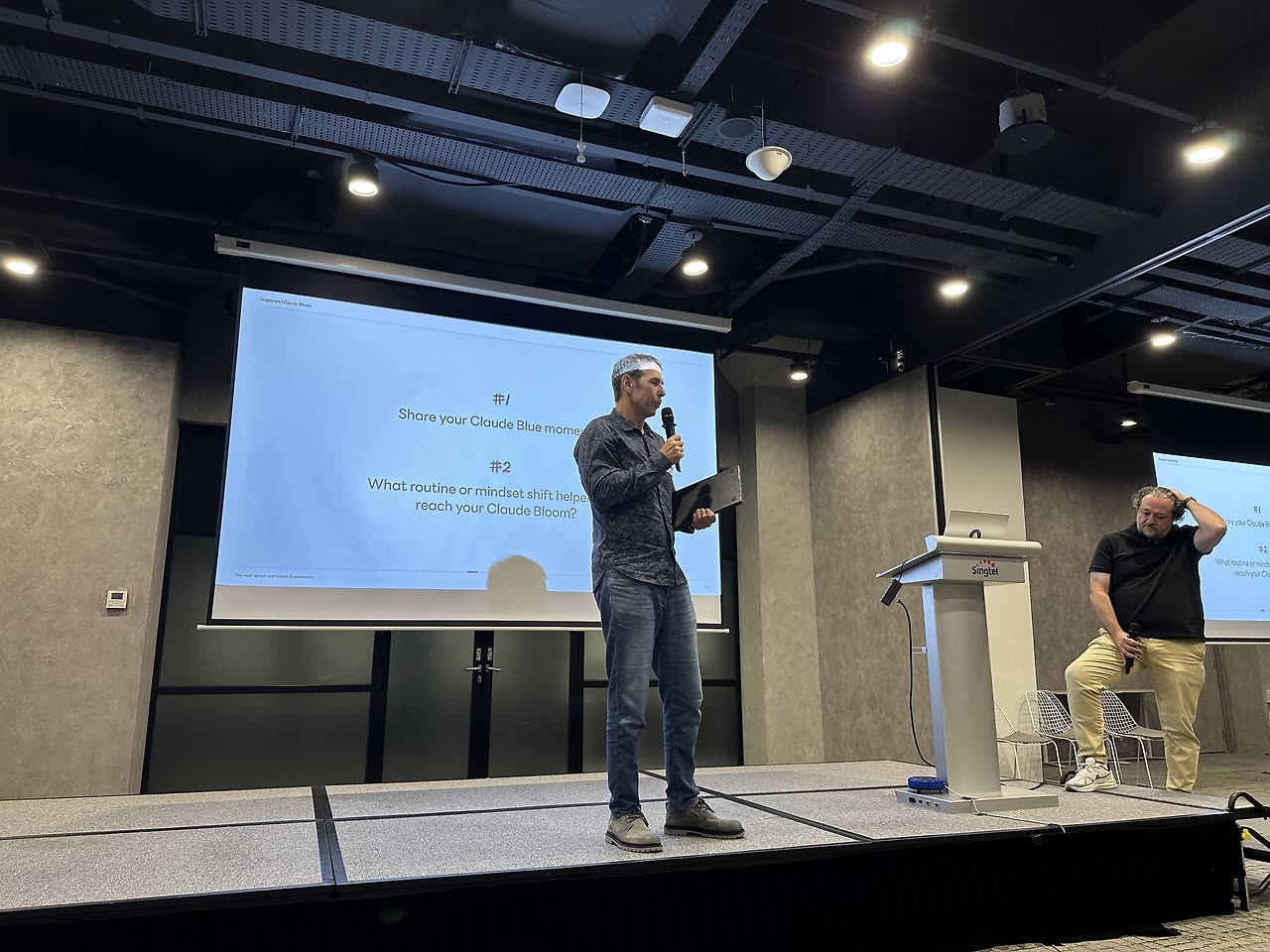
The main course was the breakouts. People formed spontaneous groups of eight with whoever was in front of and behind them and shared their Claude Blue moment and their route to bloom. One veteran had felt FOMO on Twitter every day over new frameworks until burnout arrived five months in, and made peace with it by simplifying to exactly two options per layer of the stack. Someone leading AI adoption at a bank said the pressure of a baseline that keeps moving is the same in any organization, and that their bloom is finding a purpose. One CTO confessed to running agents on a laptop through the entire fireside and brought the house down by saying people call it bloom and he calls it AI-induced psychosis.
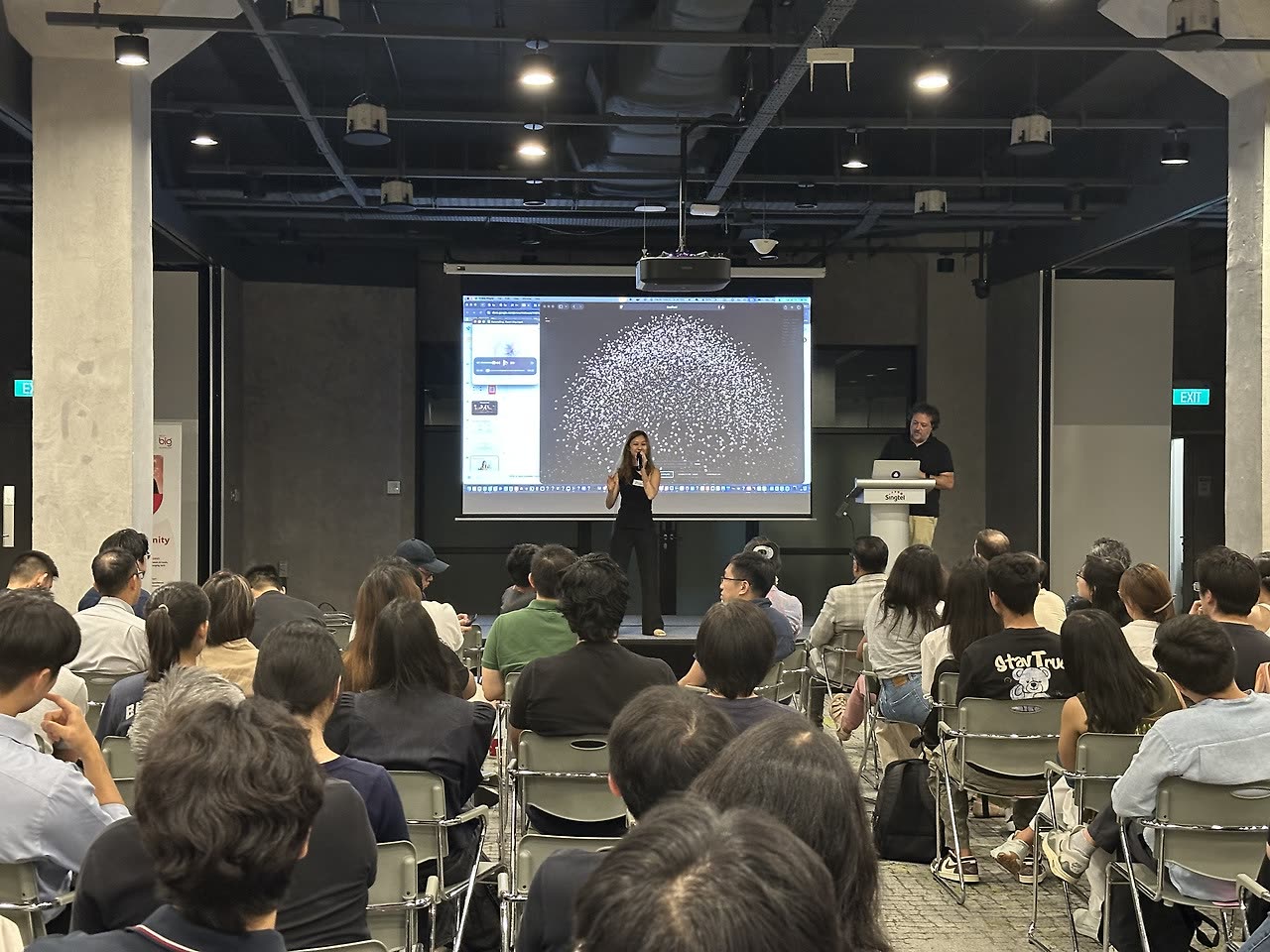
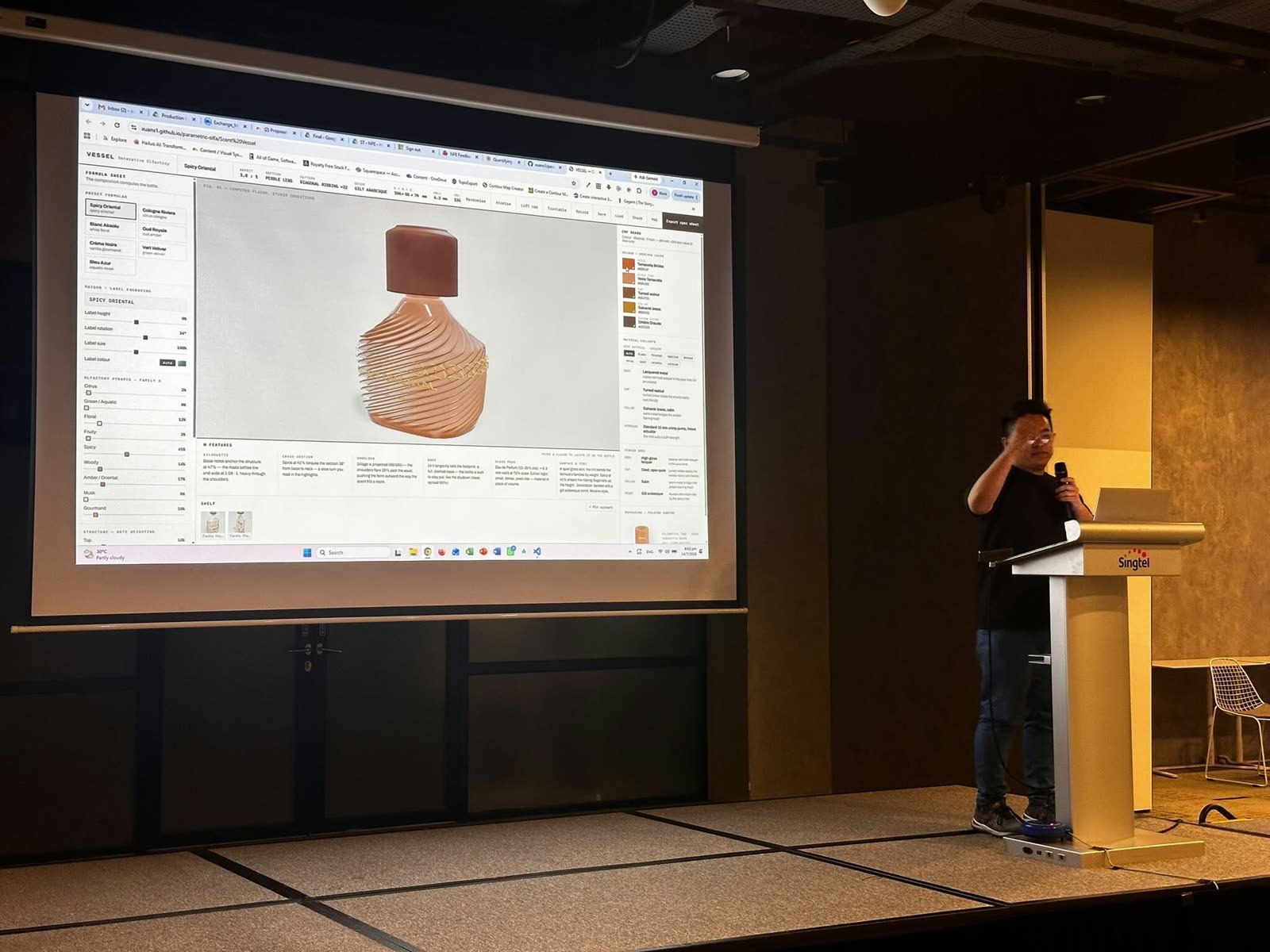
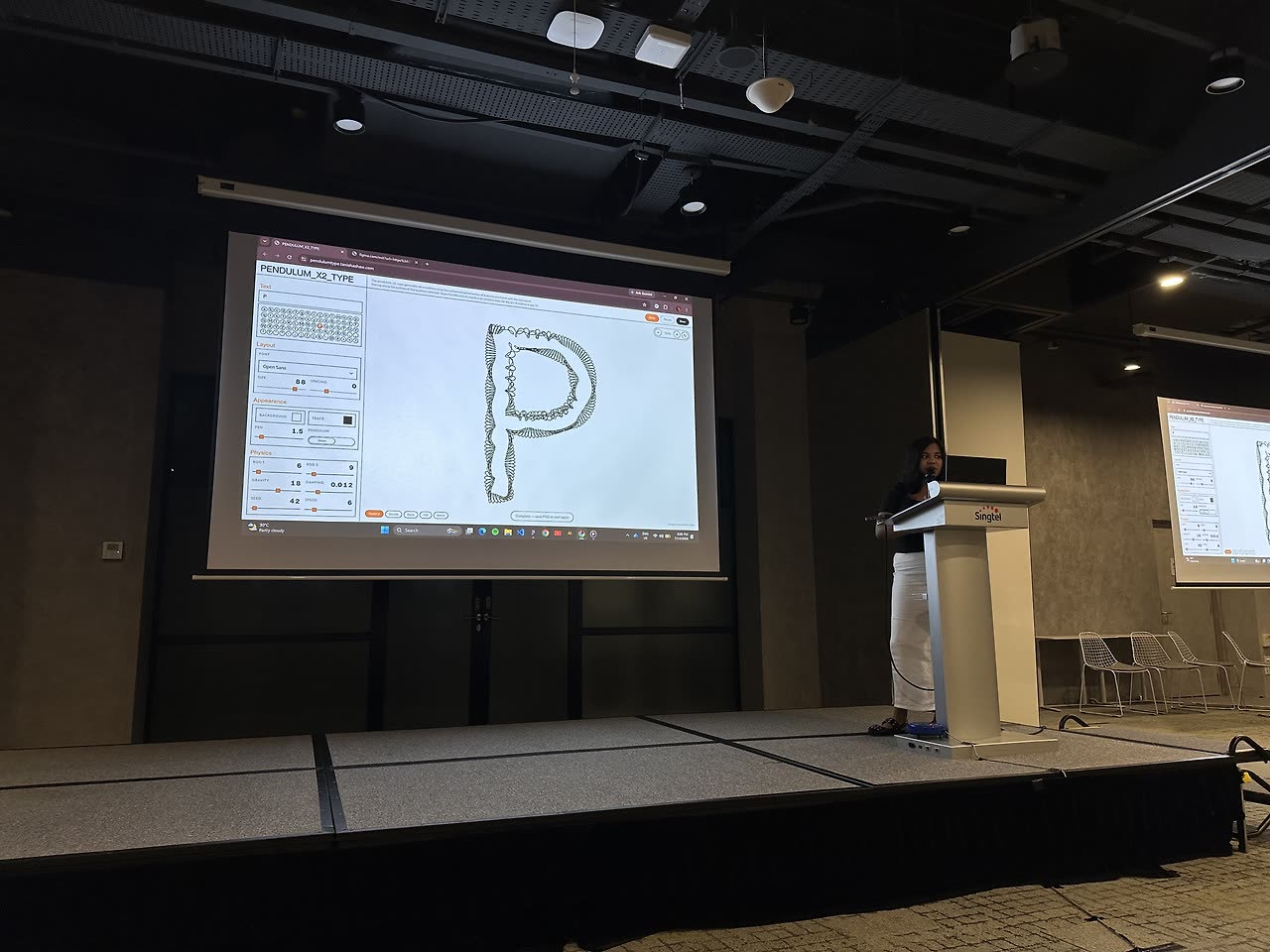
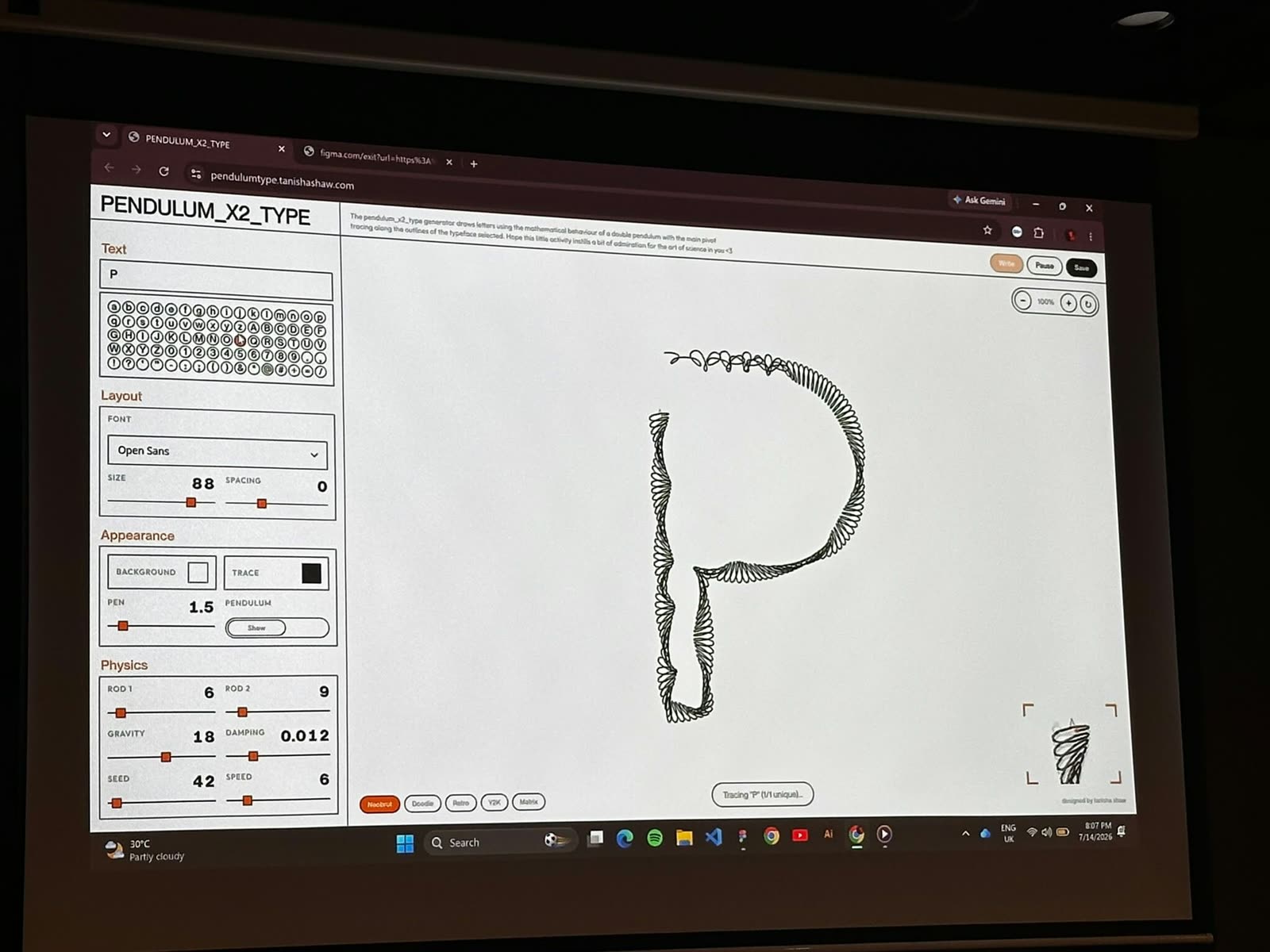
What brought the heat back down was a meditation session from Keziah, an EY consultant and mindfulness coach. Knowing nothing about coding or particle physics, she built The Cave with Claude Code and Gemini from five years of meditation scripts and an attitude, and spoke about the muscle of presence, saying rumination and worry are ways of living somewhere other than here. The community demos that followed had the same spirit: a quiet invite-only social platform that does not manufacture rage or FOMO to drive engagement, a perfume bottle generator that makes anyone a perfumer, and Pendulum Type, which writes letters through the chaos of a double pendulum. The closing stage announced Bloom Seoul, a 1,000-person global conference in Korea at the end of October.
Read the full write-upGallery
Next event