First in San Francisco means first in the world
What was discussed

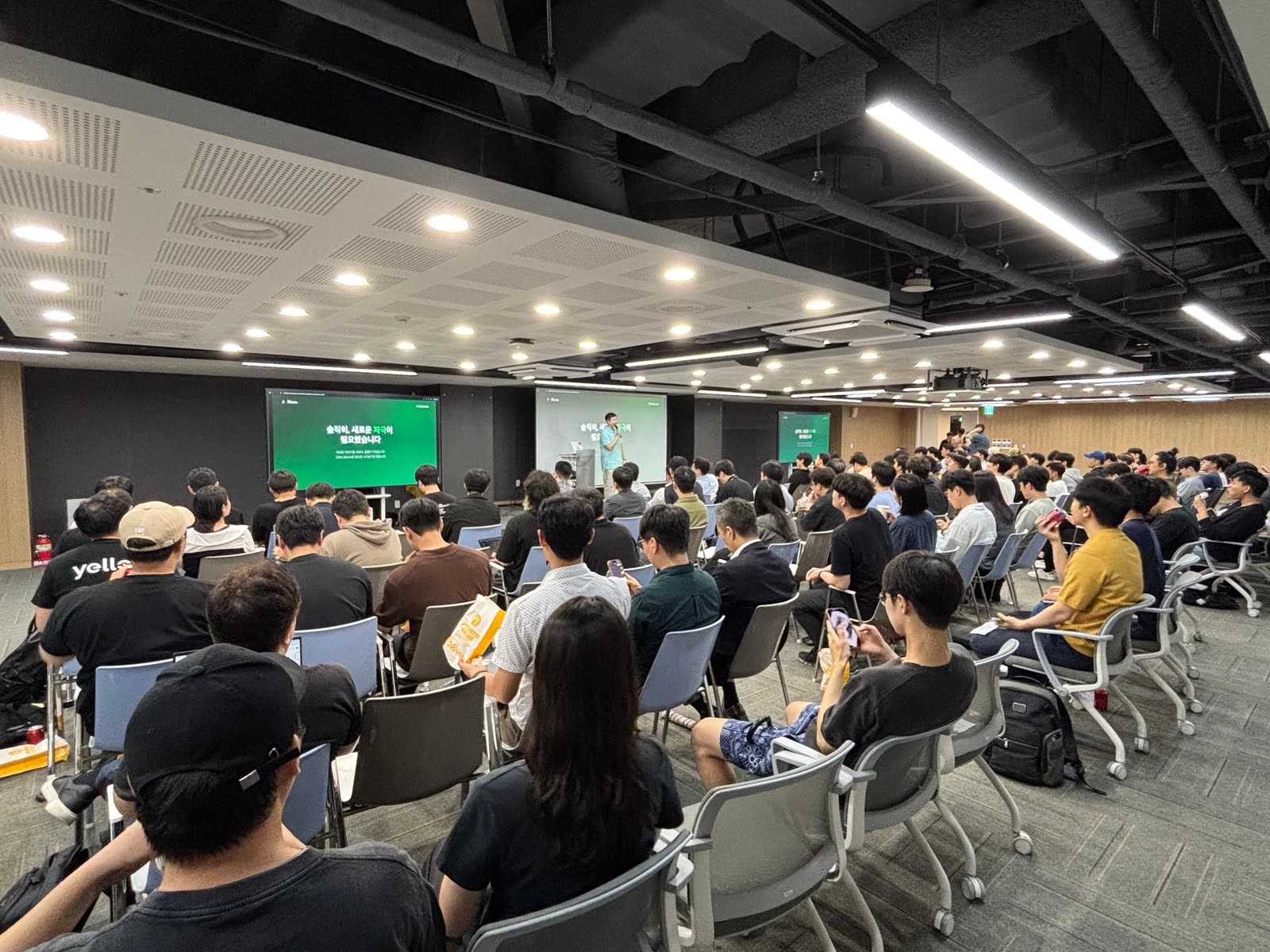
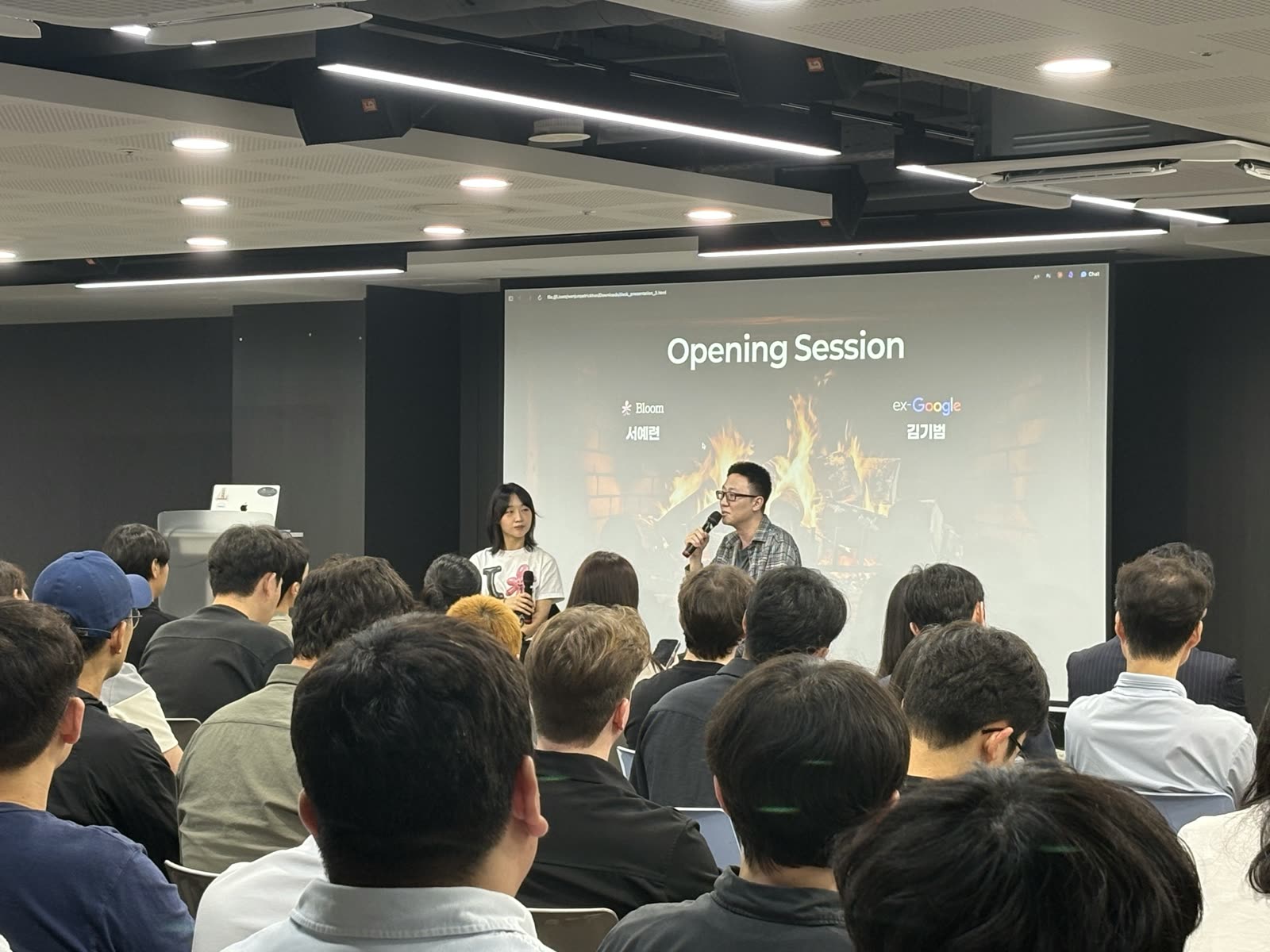
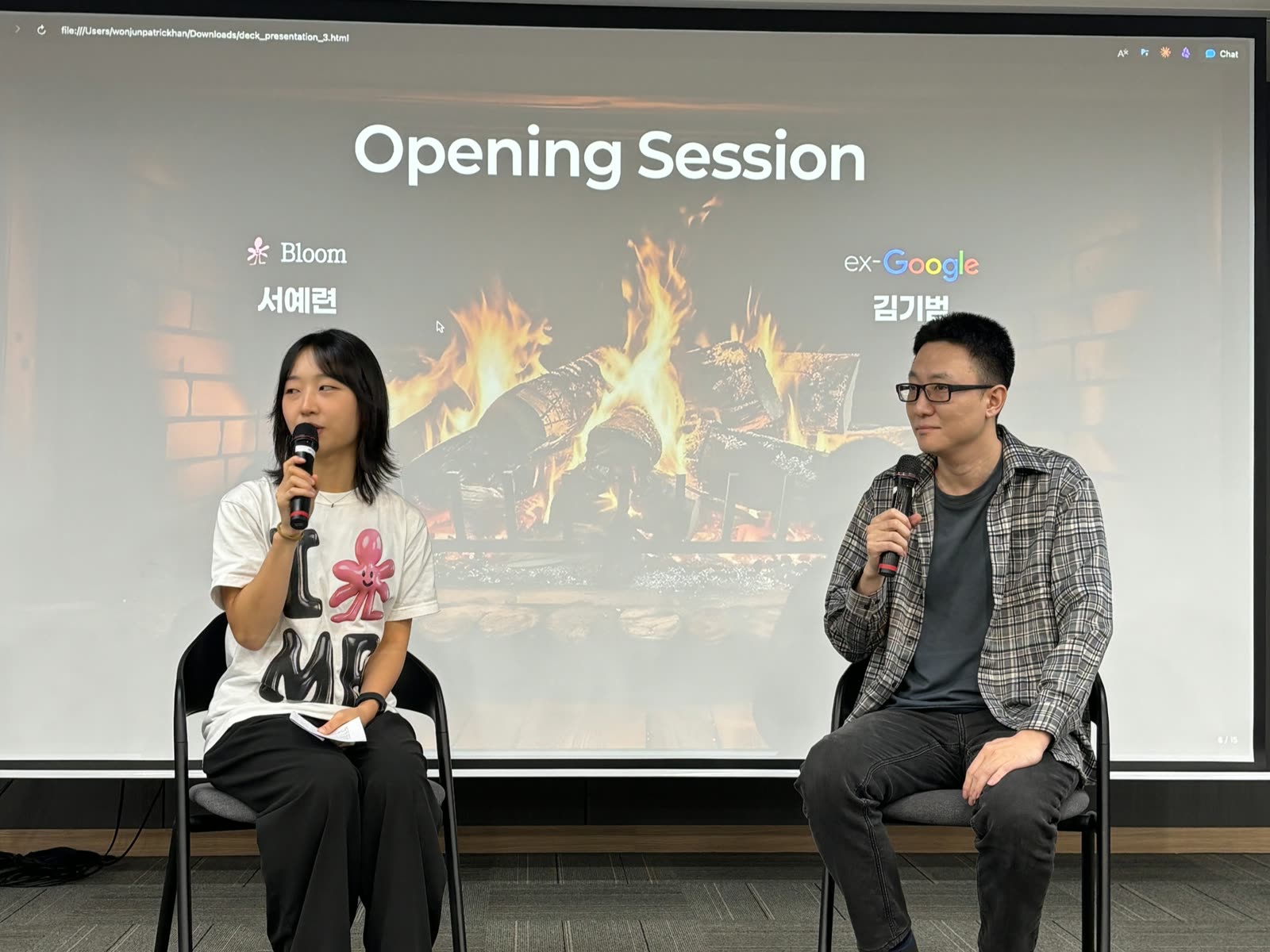
The opening session belonged to Kim Ki-beom and his case for 10x thinking. After nine years at Google across the Chrome, Search, TensorFlow, and Ads teams, his conclusion was that what separates Silicon Valley from Korea is not the caliber of the people but the way they think. He offered two examples: the time the USB-C team reported that they had made charging several times faster, and Larry Page asked why it wasn't 100 times faster; and the decision to build Chrome at a moment when Internet Explorer held more than 90 percent of the market.
Aiming for 10x, he argued, is actually the easier path. There is less competition, and the rules of the market change entirely. Target 10 percent revenue growth and you end up polishing the product you already have; target 10x and you are forced to find a fundamentally different strategy. Goals like that are also what attract the best people.
For developers hoping to work in the US, he made a strong case for contributing to open source. You get code reviews from world-class engineers before you ever submit an application, your skills improve quickly in the process, and a network forms on its own. He described someone who started contributing in college, became a maintainer, and was hired through a referral without ever applying. On his own career, he spoke about both regrets and rewards. The two years he spent maintaining existing code on Chrome felt like a loss, while the nine months as a PM on the Search team, which he had worried would hurt his career, turned out to be worth far more. What stays with you in the end, he said, is not the money or the team or the company but yourself. That line stuck with the room.
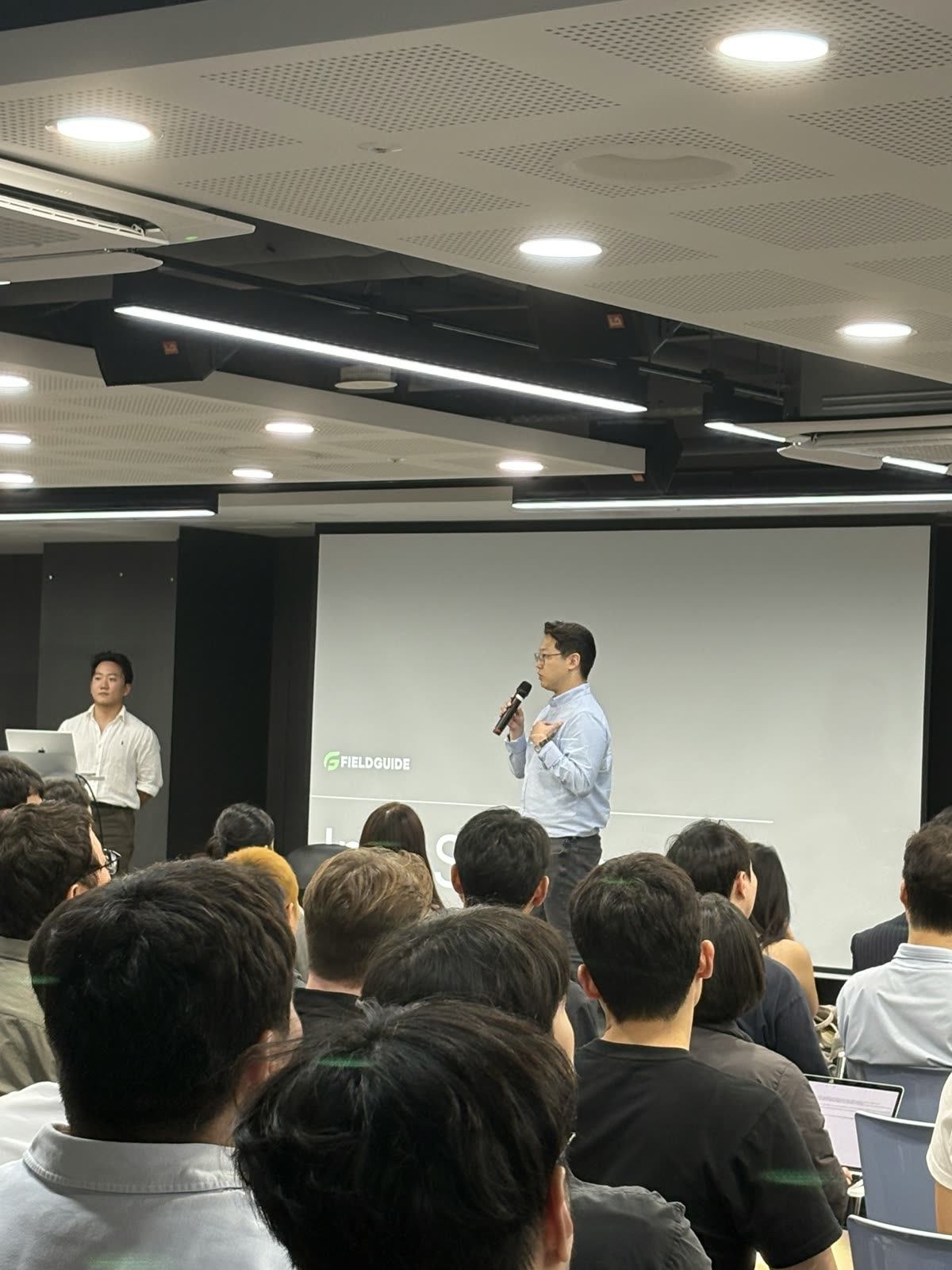
Jin opened by pointing out that most people have no idea what auditing actually involves. And yet it is a $3 trillion market. Demand keeps climbing while the supply of qualified auditors keeps shrinking fast, and competing products still run on interfaces that look like Windows 95. Fieldguide is the only cloud-native, AI-native platform in the space, with domain-tuned models and agents that work alongside auditors. More than 50 of the top 100 accounting firms in the US are customers, including the Big Four.
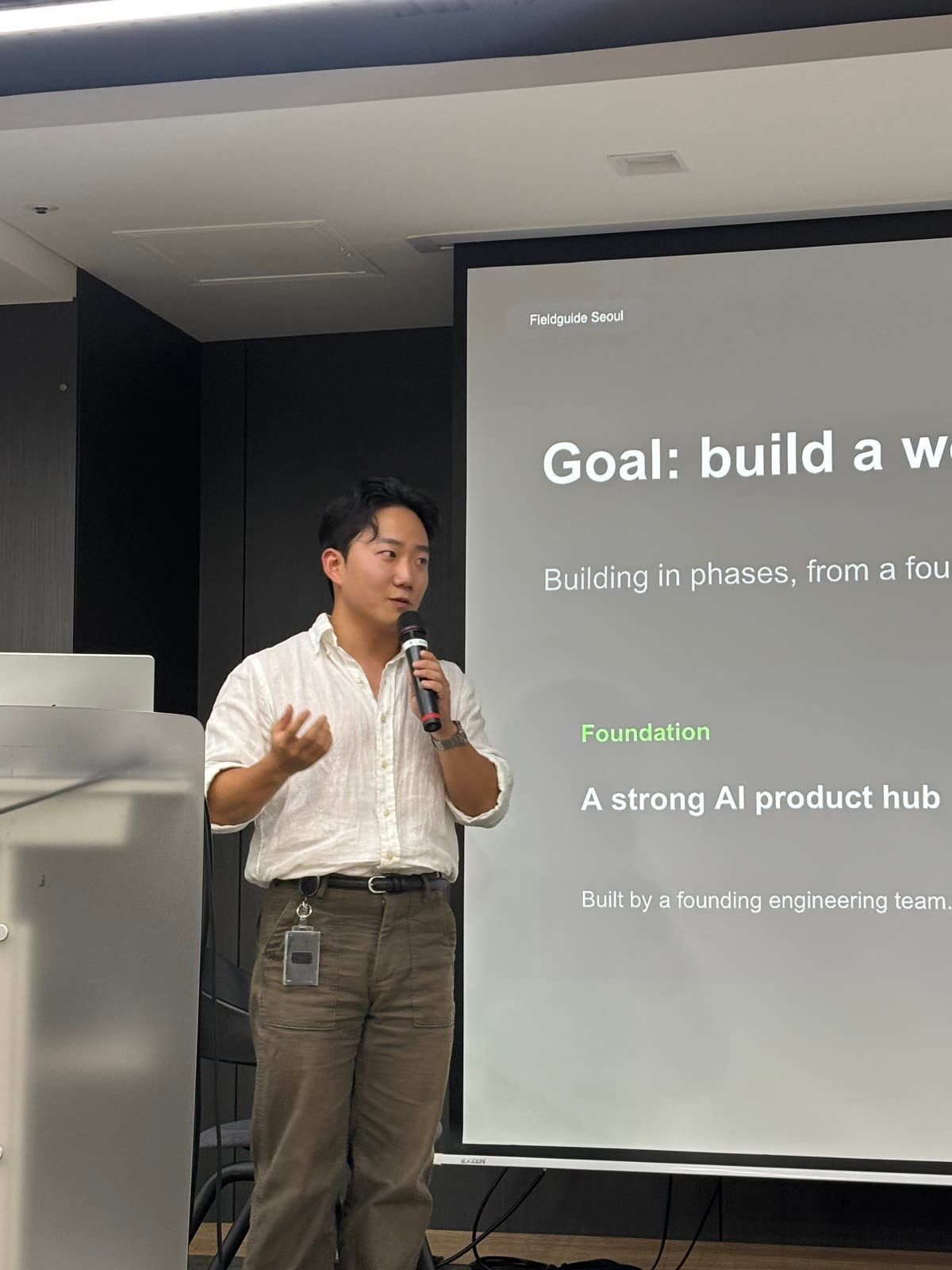
Jang Jun-su was clear about what the Seoul team is. It is not a support office working tickets from headquarters; it is Fieldguide's global AI product hub. The office opened in Yeouido in May and still has two people. The plan runs in three stages: first, build a founding team of six engineers and prove the results; next, add product designers and owners so the team can own work end to end; and eventually become the Asia-Pacific hub, expanding into Canada, Europe, Singapore, and Australia. In hiring, he said, they look less at years of experience or titles and more at whether someone sees things through and obsesses over hard problems.
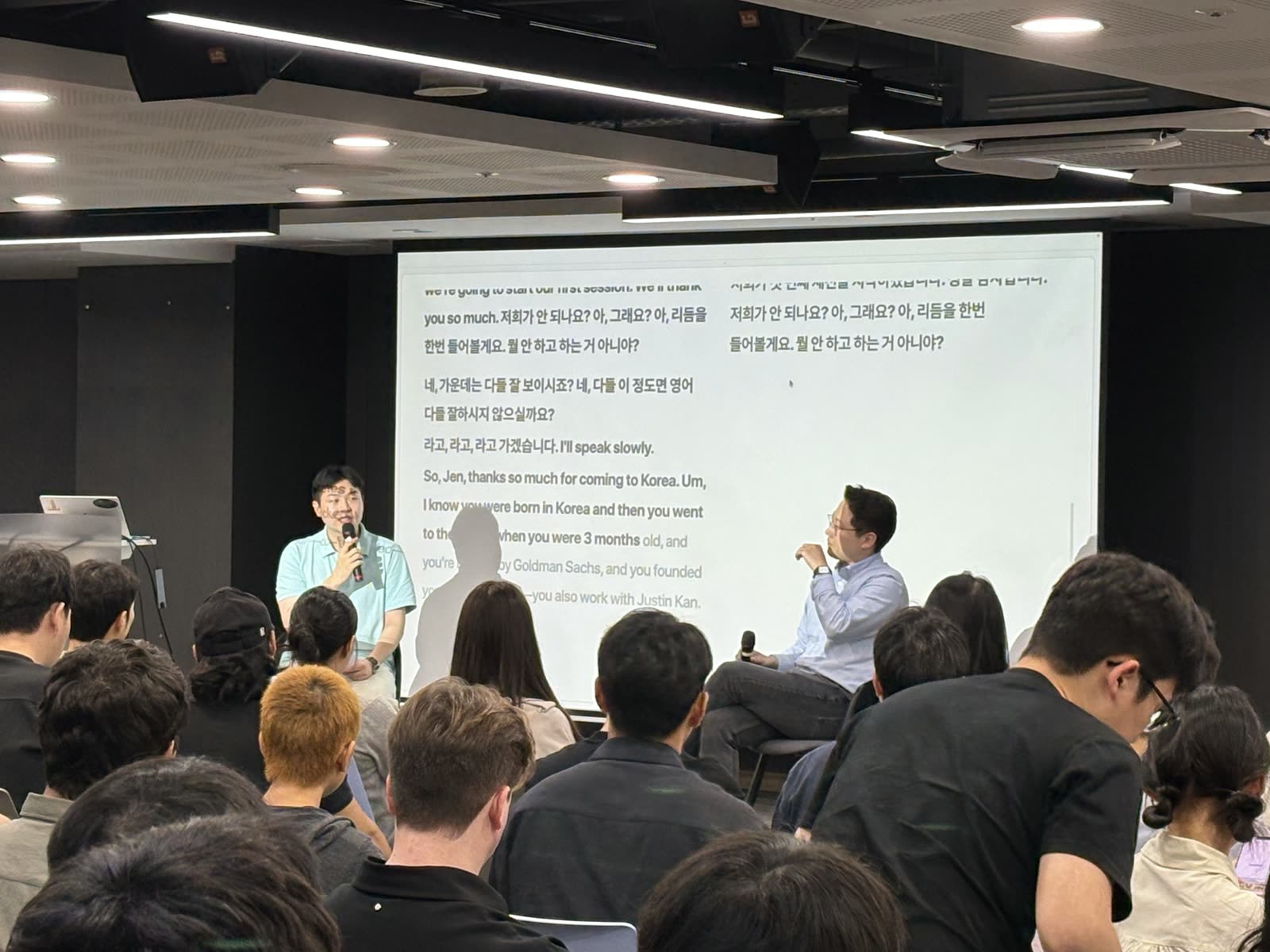
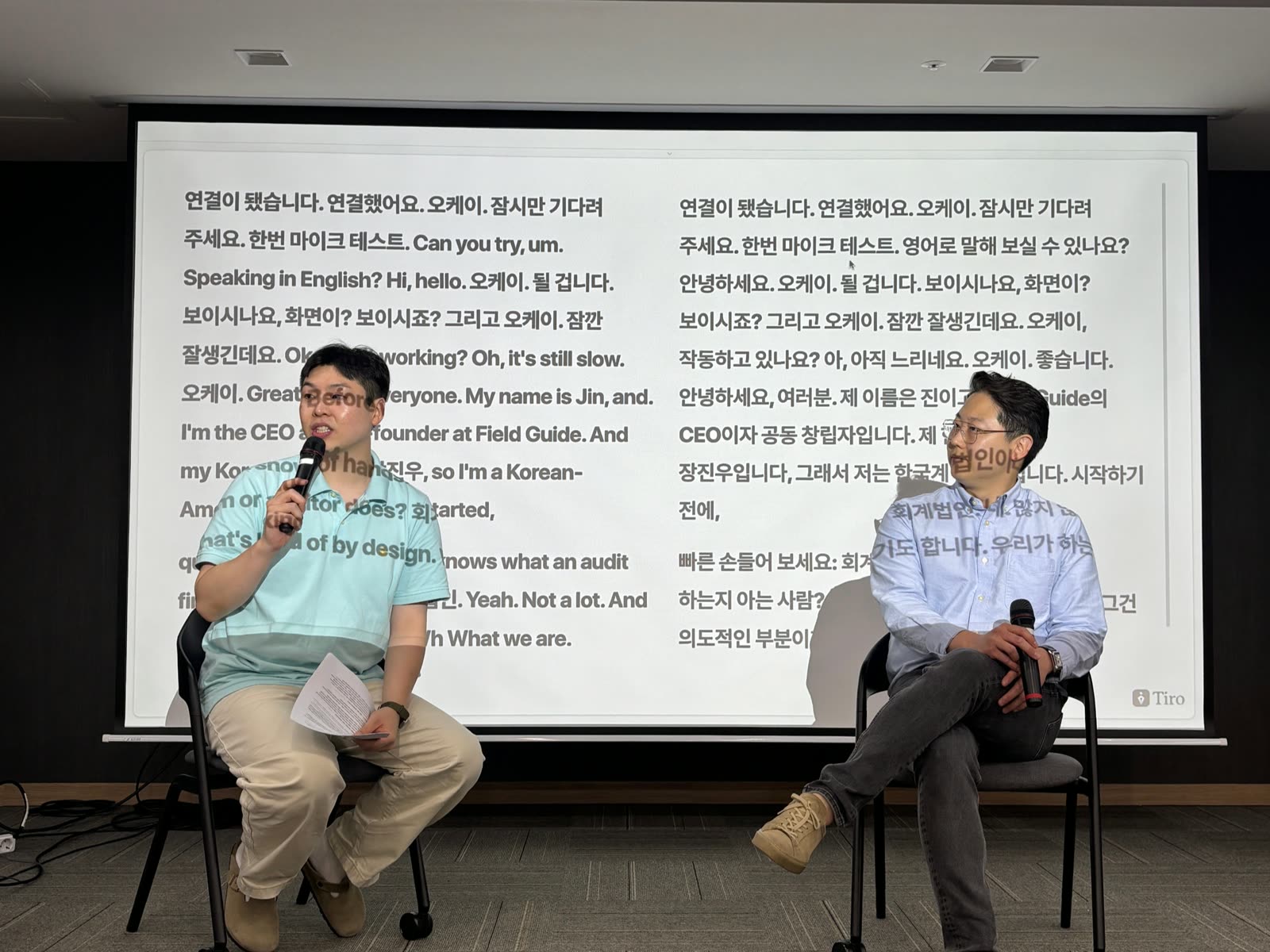
The fireside chat turned to failure. Jin had served as chief of staff at Atrium, the legal AI startup founded by Twitch co-founder Justin Kan, and the company eventually shut down. He called the experience an MBA in what not to do. The problem was the reason it started in the first place: it came out of comparison and ego rather than mission, and when the product failed to find its market and things got hard, the founder was not in the room. People join because they are betting on a founder's vision, he said, and if that founder disappears once the pain starts, the whole thing collapses.
On the SaaS-is-dead talk that comes up often in Korea, he offered a different reading. The problem is not the subscription model but misaligned incentives. Fieldguide prices against customer outcomes rather than seat count, because the economics of the audit industry come down to hours per engagement in a business short on people. That means the fewer people a customer needs and the more efficient they get, the better Fieldguide does. He saw the same logic behind why Anthropic and OpenAI do well on seat-based pricing: the value scales with it.
Why Goldman Sachs invested was interesting too. In an old industry like accounting, a brand with history functions as trust, and Goldman had spent years studying the sector, going deeper than most venture firms. His phrasing was that they didn't convince Goldman, Goldman convinced them. On entering the US, he was blunt: there is no alternative to putting headquarters in San Francisco. Treat the largest market as secondary and your results will be secondary too, and building a company comes down to density. You can't even avoid investors in the cafes, he said.
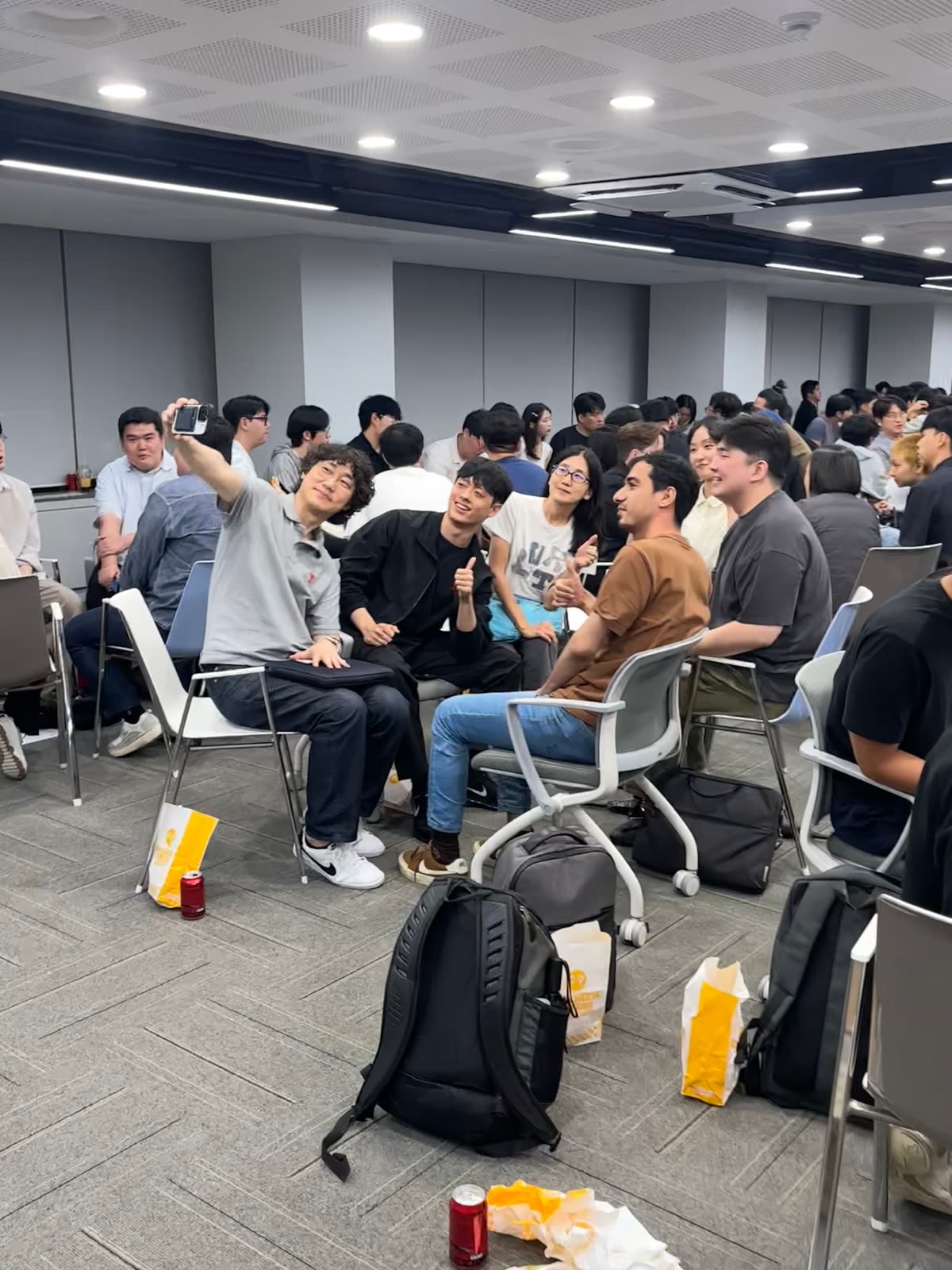
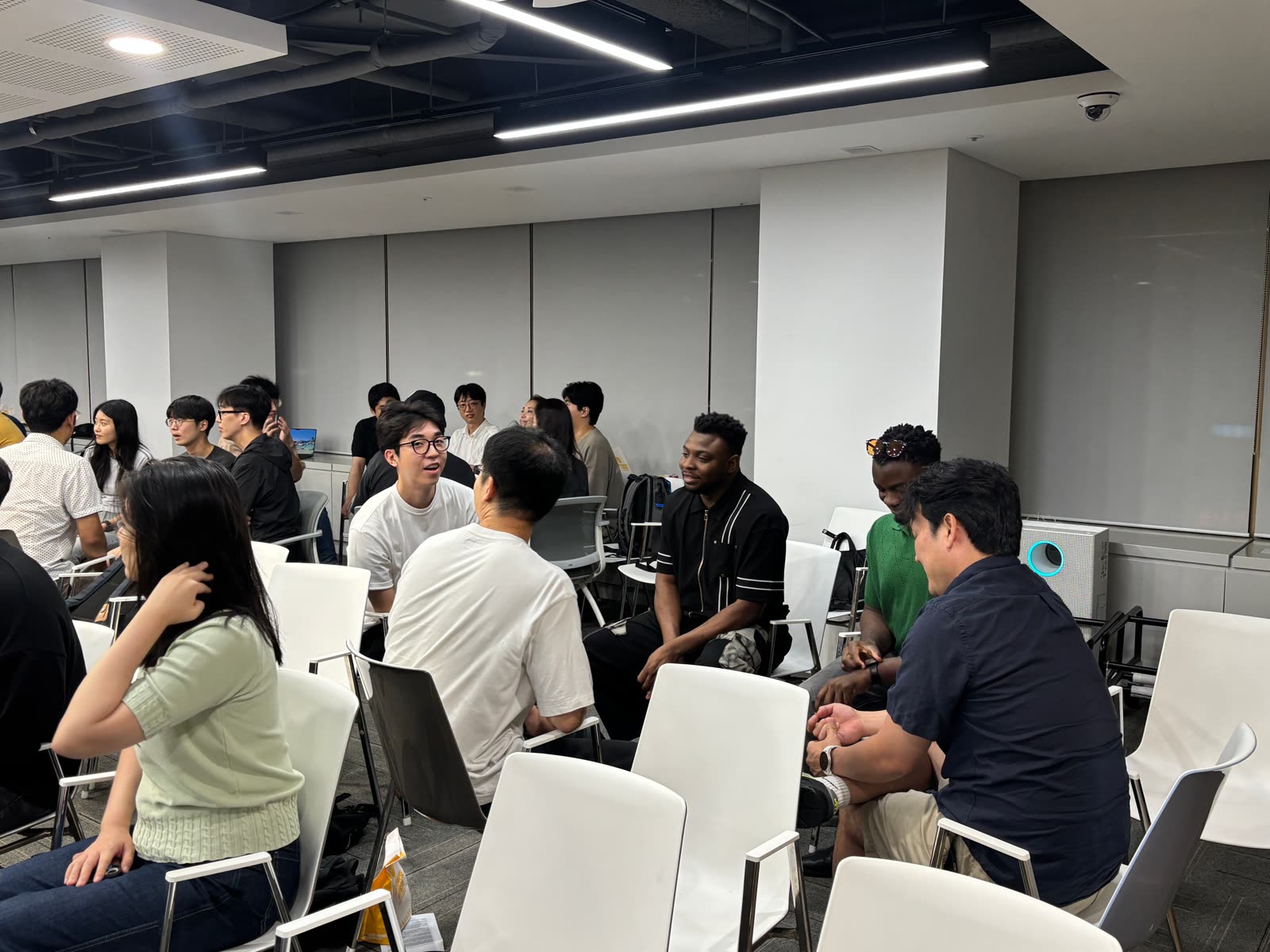
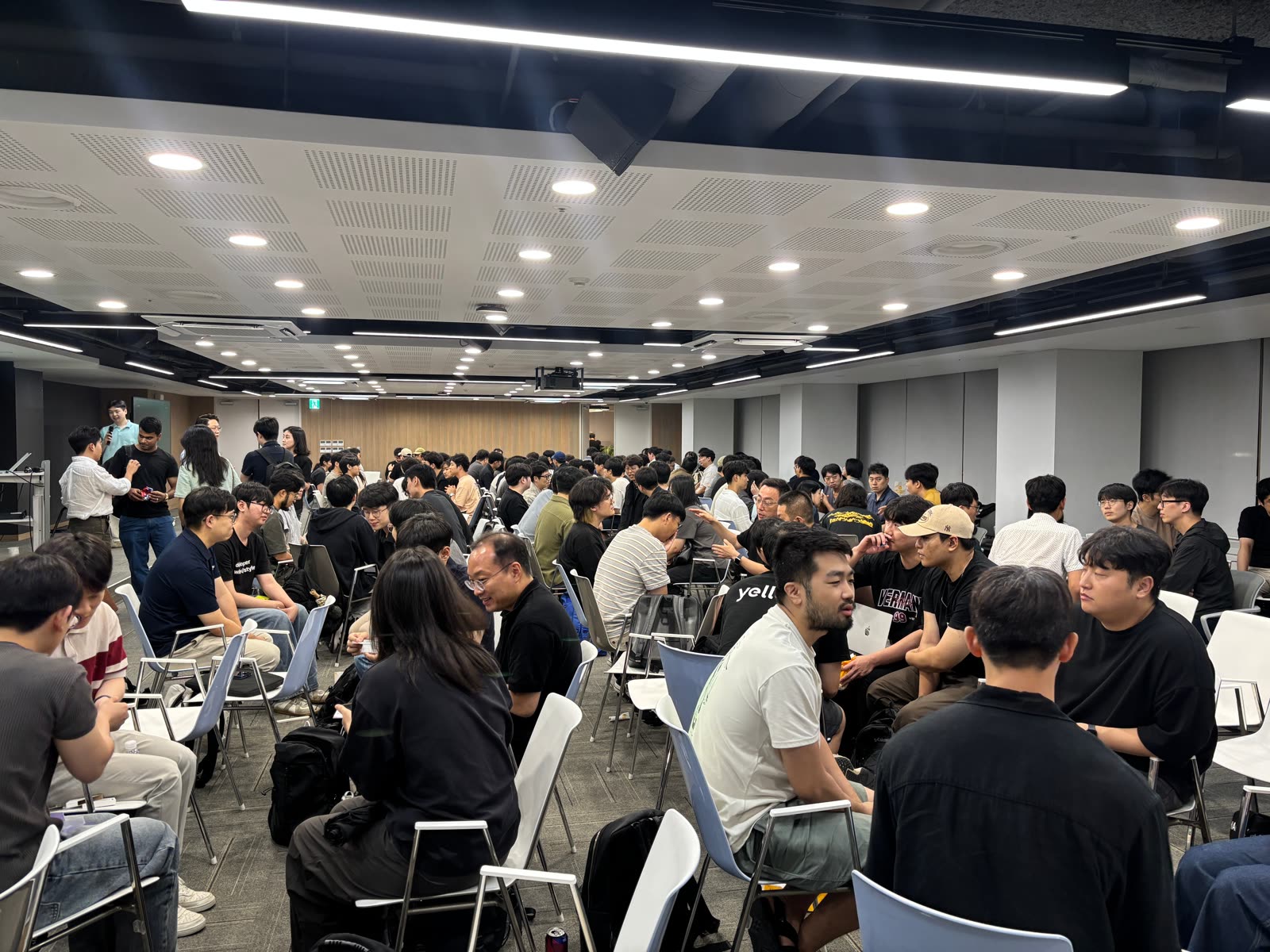
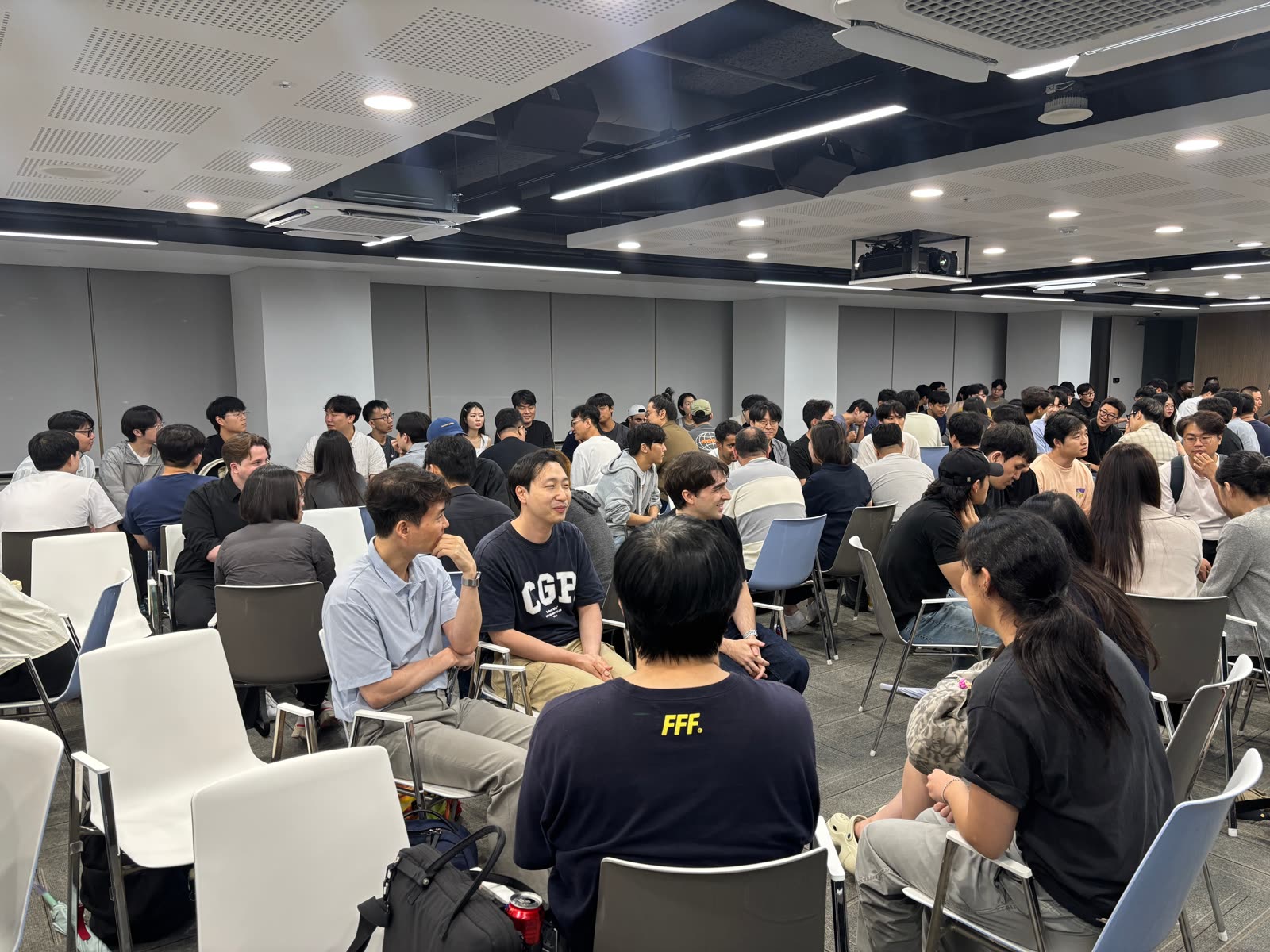
The roundtables gathered up the areas AI still hasn't reached. Complex but structured work like content, construction, and insurance claims came up, along with long-cycle work like video editing, chemistry, and financial research. There were also stories about implementing two-way simultaneous interpretation over analog phone lines, CAD automation, smart glasses, and smart farming. One conclusion was shared across the tables: the good opportunities come not from trends but from friction you have felt yourself.
Read the full write-upEvent video
Gallery
Next event