Could AI really automate even that?
What was discussed

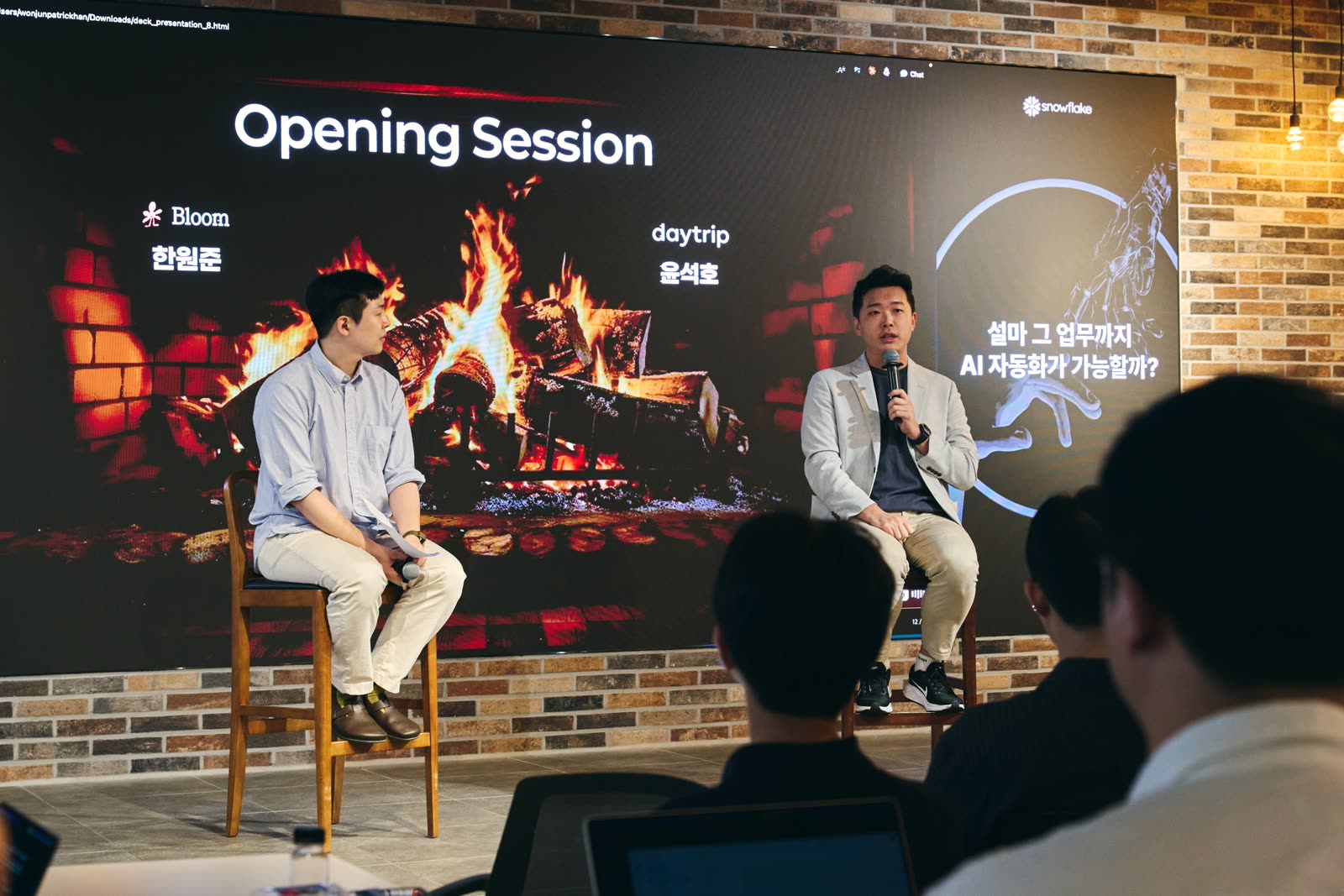
Yoon Seok-ho introduced himself as a content curator rather than a founder. Daytrip started from the observation that taste has no standard. People know intuitively what looks good and where they want to go, but there was no systematic way to find those places. Before the pandemic, he built a format that bundled five to ten Seongsu-dong spots into cards with white text on top. The format you now see everywhere on Instagram started there.
Trust, he said, comes from what you leave out. He turns down roughly 70% of the ad proposals that come in. Post one mediocre place and the unfollows start immediately, and the trust lost that way costs more than the ad fee. He watches saves and shares rather than likes. A save carries close to four times the weight of a like, and content that makes people file a place away for later outlasts content about where to go right now. He also noted that the first 10 minutes after posting determine 80% of a post's performance.
As AI came in, the team shrank sharply from twenty people. Five years of posts, follower reactions, and regional and seasonal patterns are now handled by AI. The turning point was realizing that an editor's individual instinct, which accounts they follow and which trends they catch first, could be turned into data. The team got smaller while the coverage got wider, and the US channel reached 280,000 followers in a year and a half. He was candid about the limits too. You can predict what a Korean visitor in New York will like, but the tastes of local Americans or Japanese visitors are hard to model until the data accumulates.
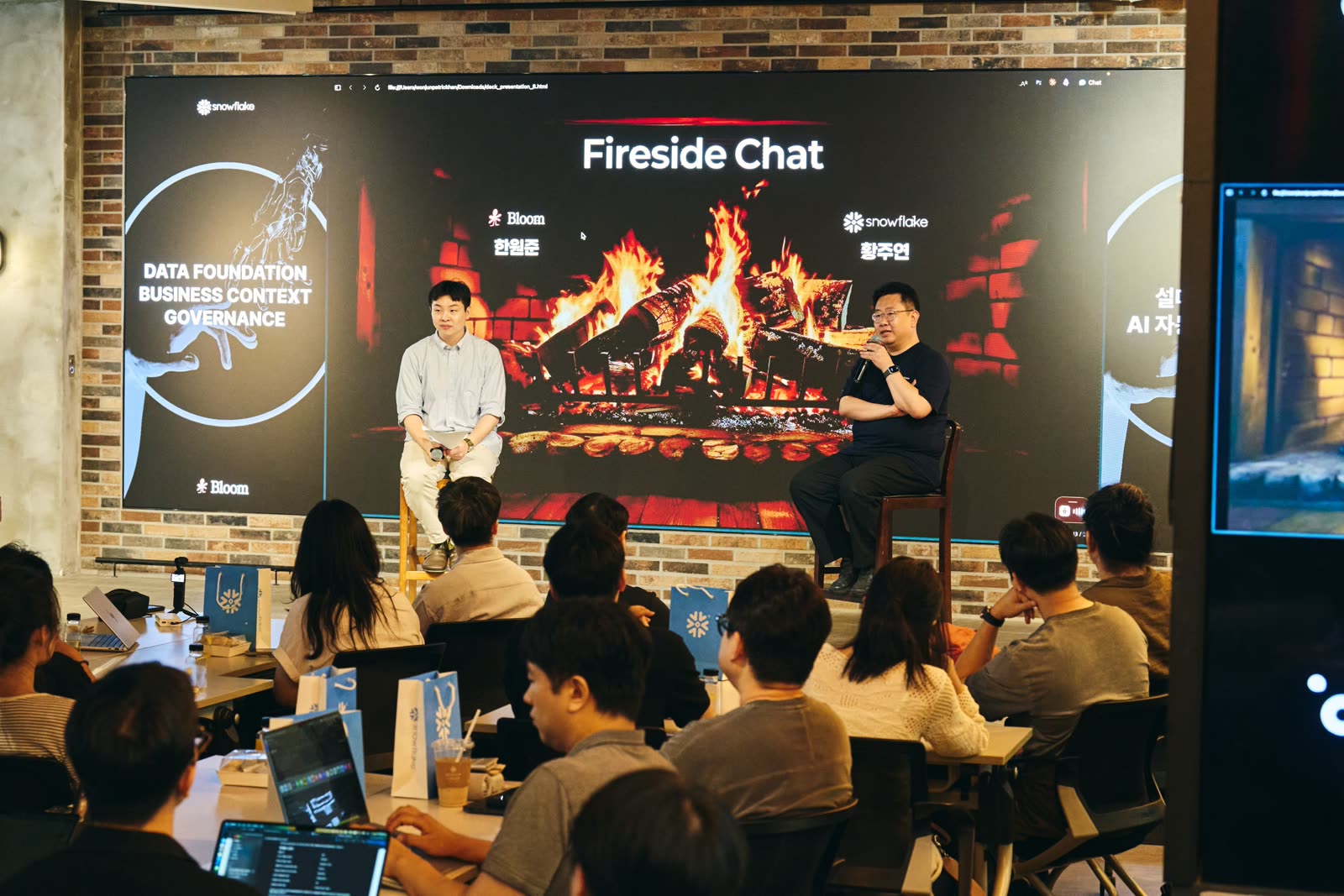
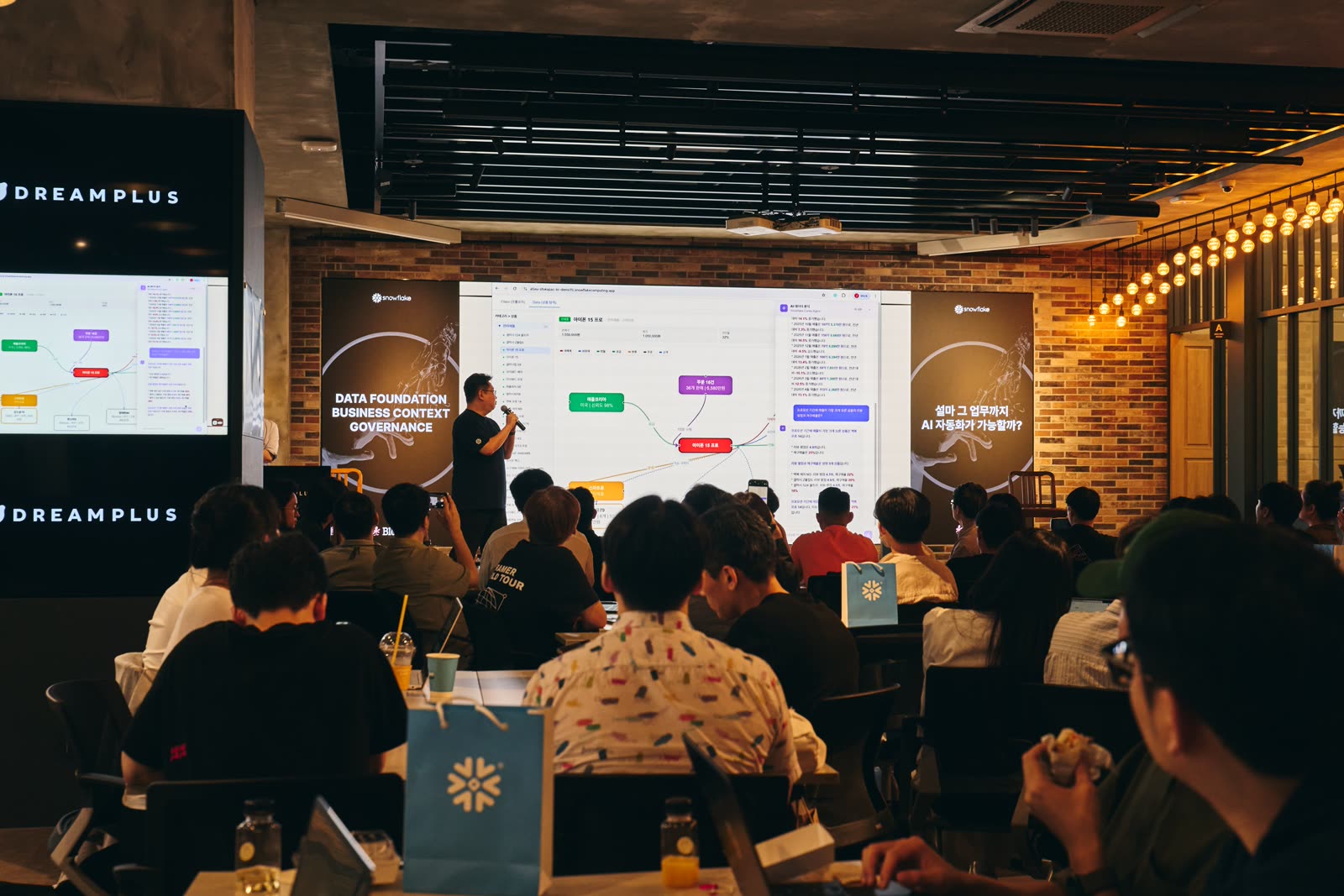
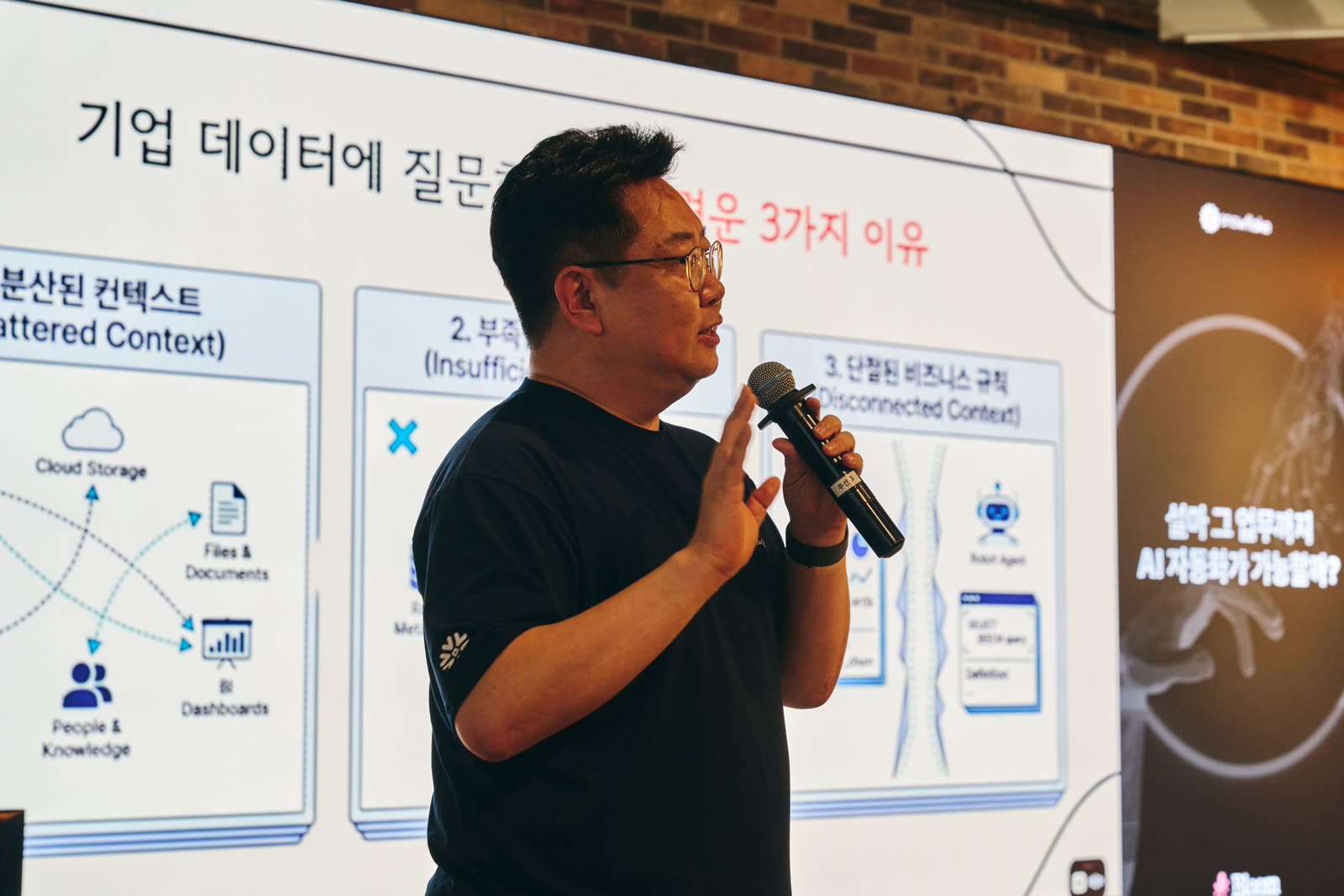
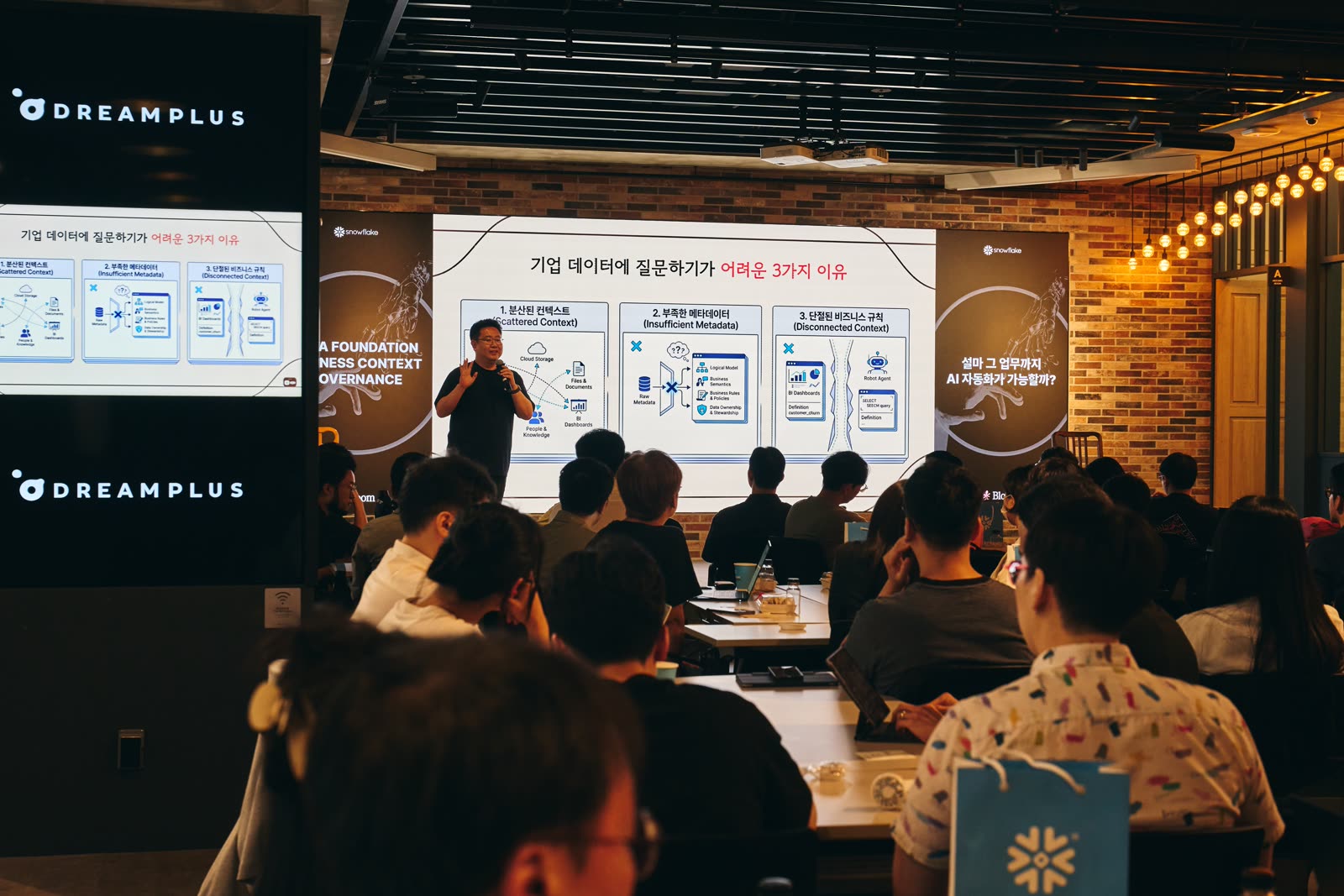
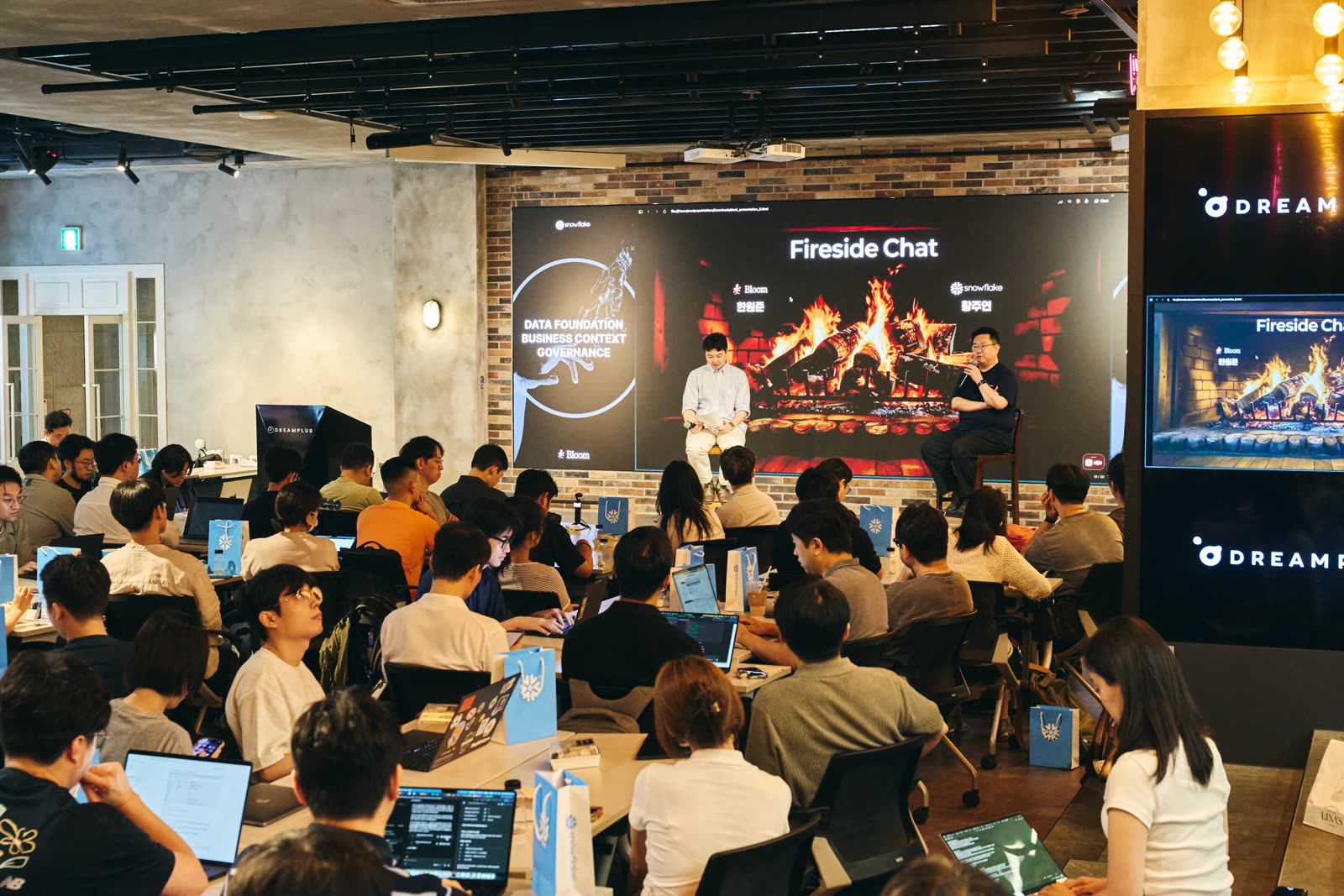
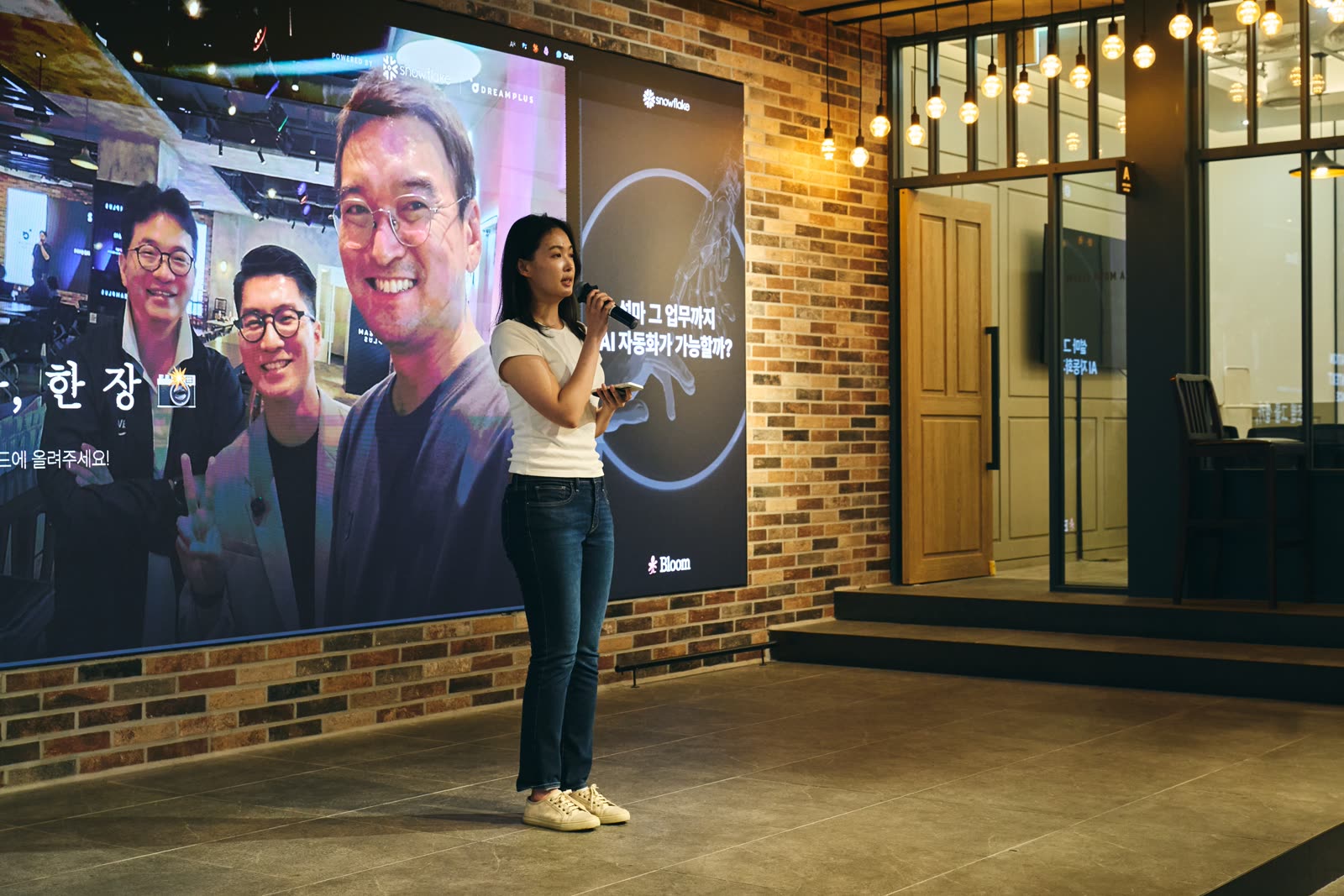
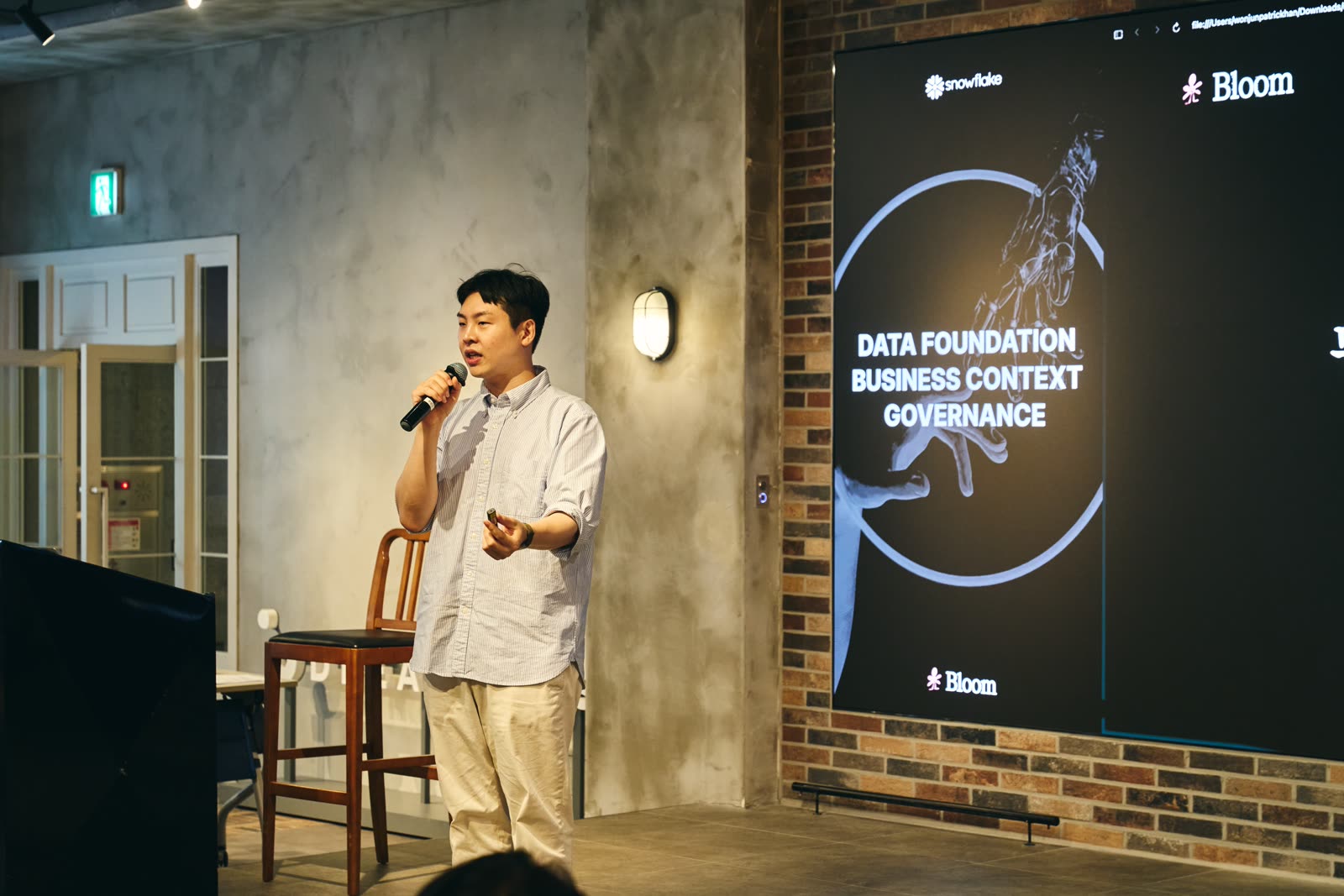
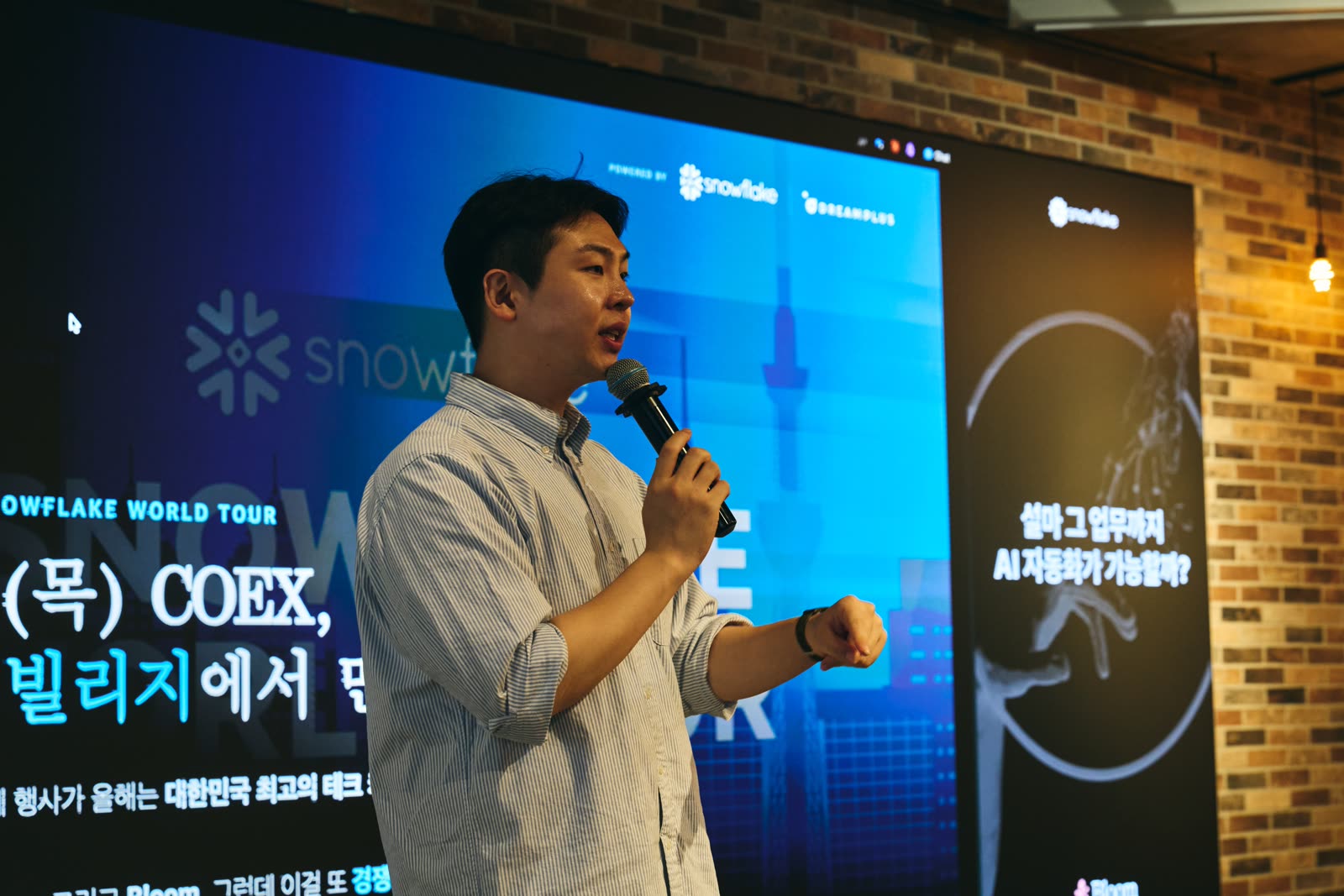
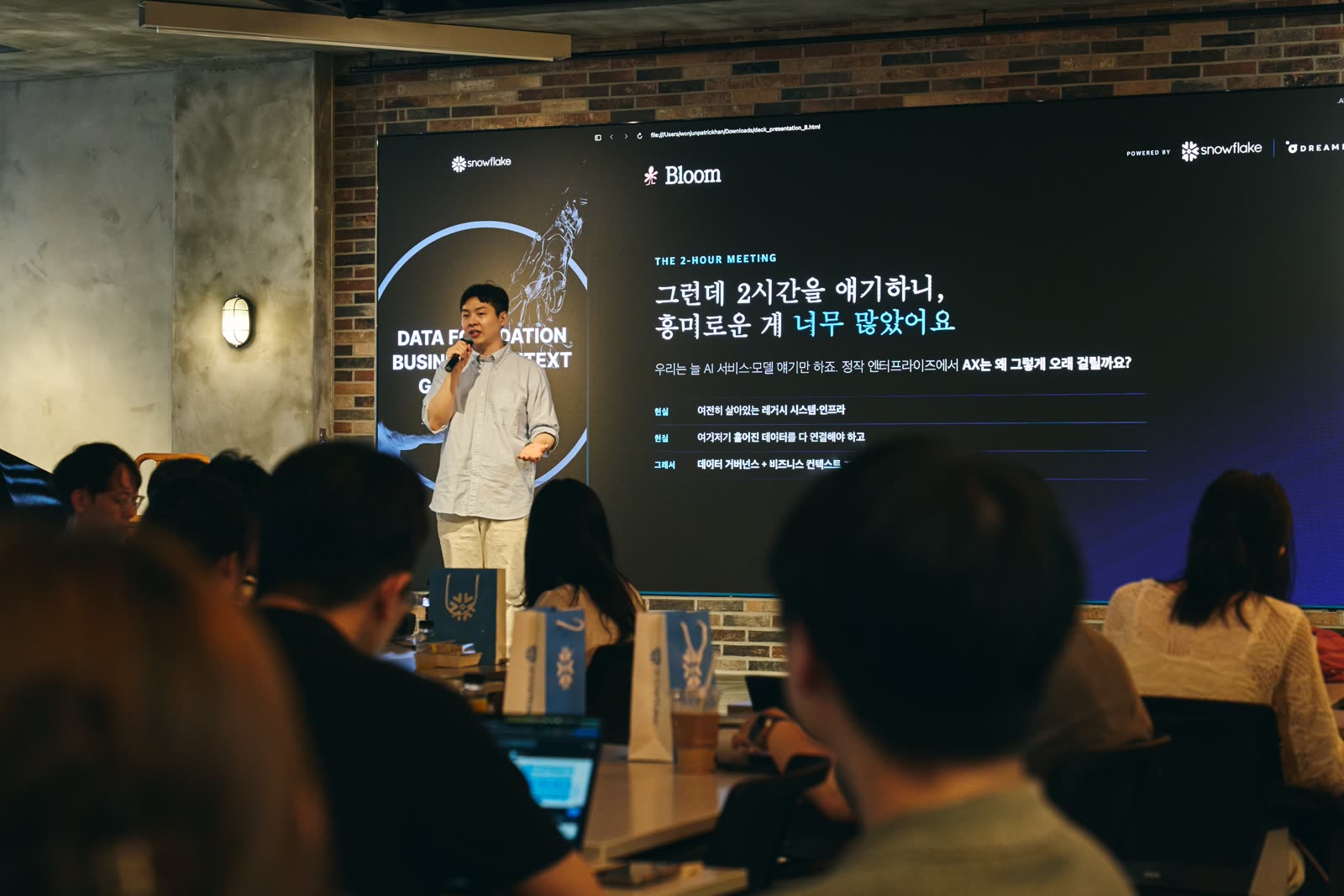
Hwang Ju-yeon opened by distinguishing a solution engineer from a salesperson. Instead of walking through product specs, the job is to get in the car with the customer and build something together. She named three reasons AI stalls inside enterprises: nobody knows where the data is, columns with identical names mean different things, and even once you find and define them, there is nothing telling the AI how to stitch them together.
The second problem was the biggest. Whether a revenue figure includes taxes and returns, and whether the fiscal year starts in January or July, changes the answer. A product code lives in the database as a number, but users search for it by its Korean name, its English spelling, or a typo. So before you attach AI, she said, you need a layer that aligns meaning. Beyond that, if you do not spell out the relationships connecting promotions, products, revenue, and reviews, the AI will return wrong answers to any question that has to hop across several steps.
The real bottleneck, she said, is organizational rather than technical. Systems built four or five years ago are already legacy, the people who designed them have left, and those who remain do not know why it was built that way. So instead of relying on what the customer can explain, she works backward from the queries left behind in dashboards and workbooks, builds a quick prototype, and shares it with the working teams first before taking it up the chain.
The Amorepacific case was concrete. The project started two years ago, not as a data warehouse migration but as preparation for using AI, and today agents actually run in marketing, sales, and revenue analysis. Early on, though, they struggled by trying to handle 1,000 tables at once. Narrowing to the 100 most-used tables and splitting those into five groups of twenty-three, each with its own agent, unblocked it. Start narrow, then widen was the lesson.
That flips the usual order. Rather than accumulating data first, you have to define the goal first. Saying you want to use AI to grow revenue is like picking lottery numbers. Be specific, such as verifying that a purchase order came in correctly or checking whether a product complies with regional regulations, and the data you need falls out of that. Over the next two to three years, she expects no all-purpose agent that does everything, but a growing number of function-specific agents that connect to each other.
The closing story stuck with people. An older CFO had been writing strategic ideas by hand in a notebook, and once those notes were moved into digital form and given structure, they became an agent as they were. Context that has been organized becomes an agent; context that has not just sits there. In the end, the two sessions arrived at the same place. The limits of AI come not from the technology but from whether you have put your data in order.
Read the full write-upEvent video
Gallery




























Next event