Silicon Valley AI trends you won't find on X
What was discussed

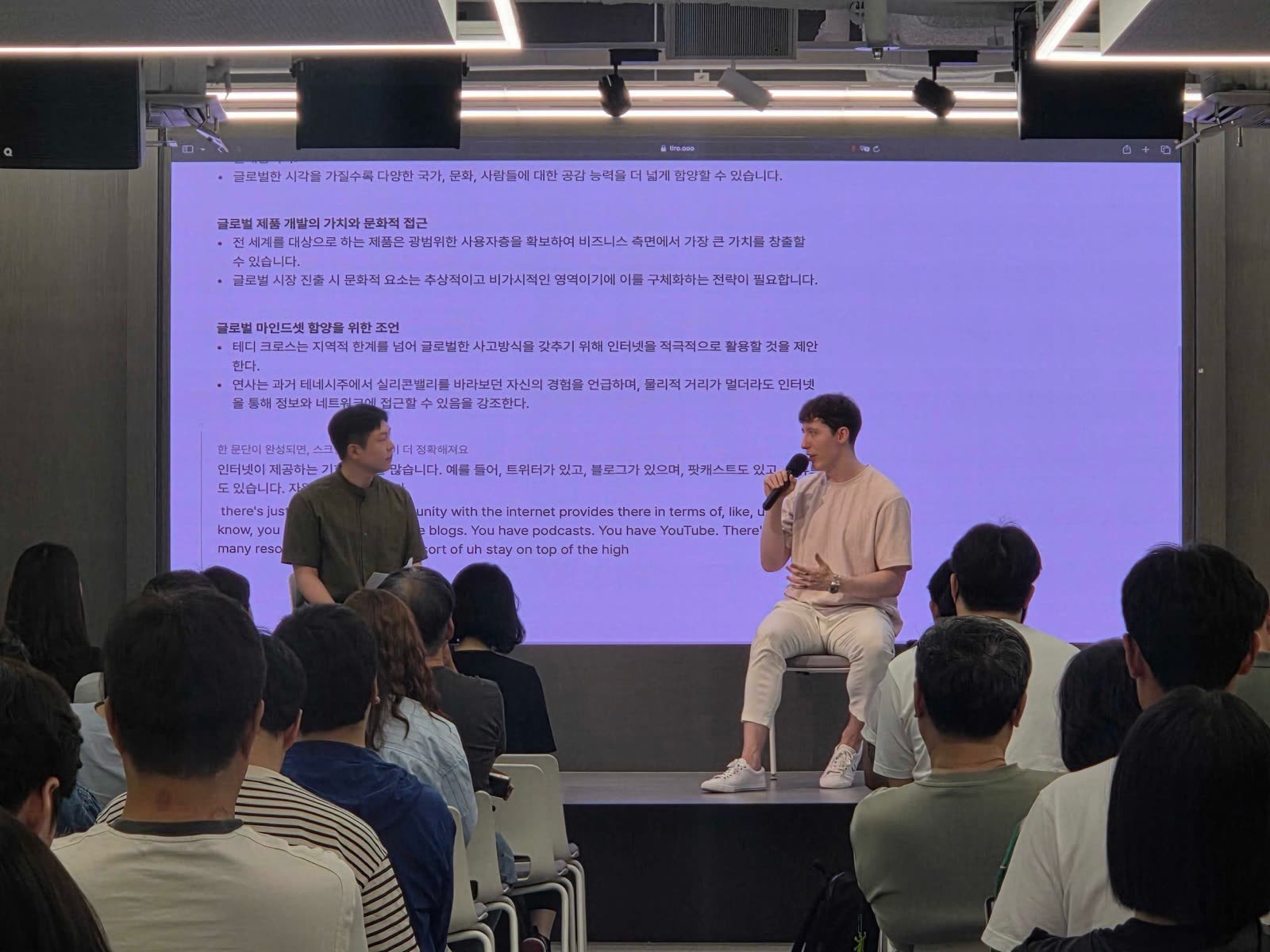
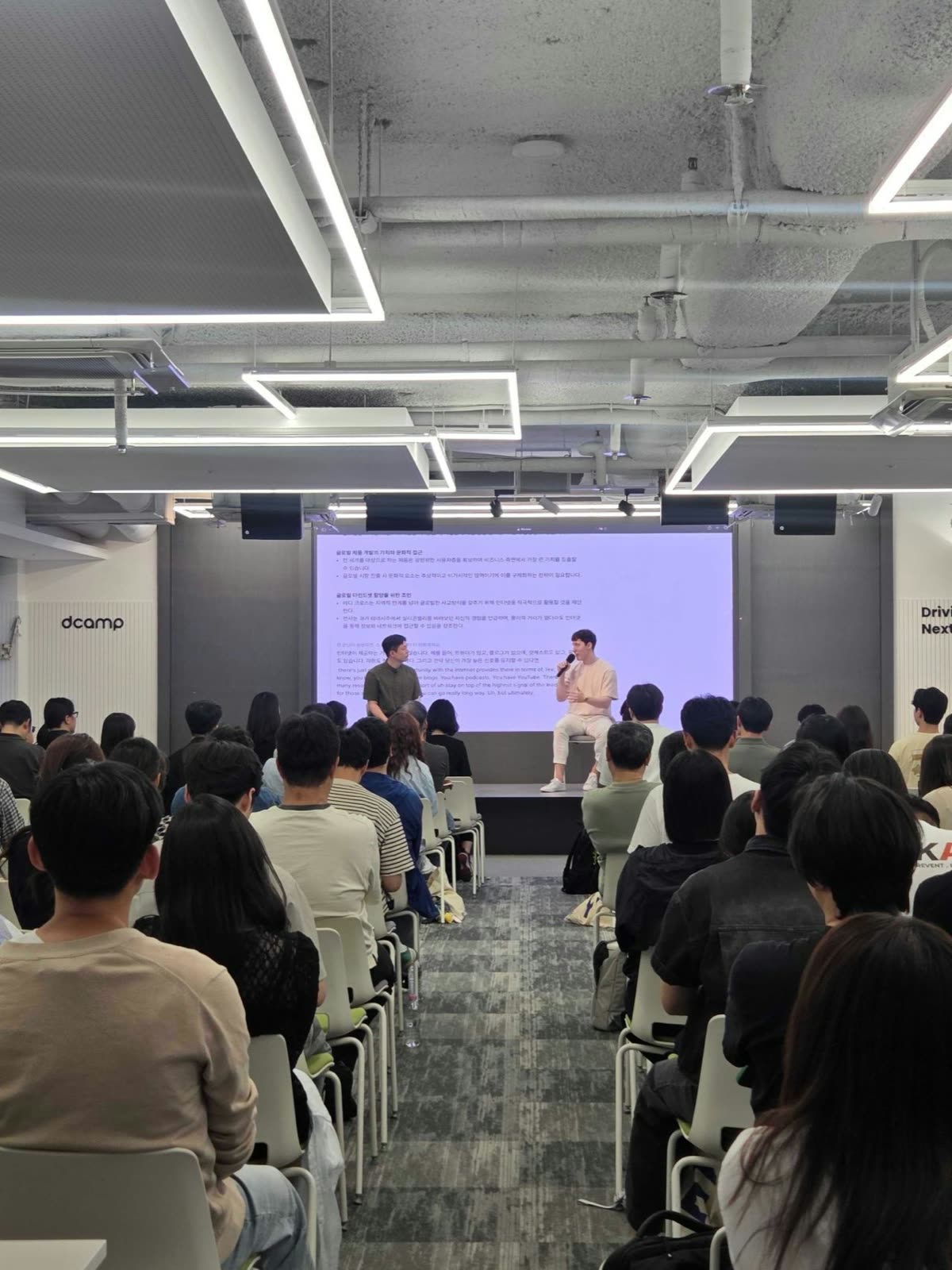
The speaker was Teddy Cross, co-founder of Playco, a global gaming unicorn valued around a trillion won that has raised 230 billion won cumulatively from Sequoia and others. His biggest message for the community was about where insight comes from. Whether in Silicon Valley or Seoul, real insight does not come out of a conference hall. Content was already oversaturated before AI and large-scale networking does not do much; the real thing comes from rough conversations among friends in a small coffee shop, before any of it goes online.
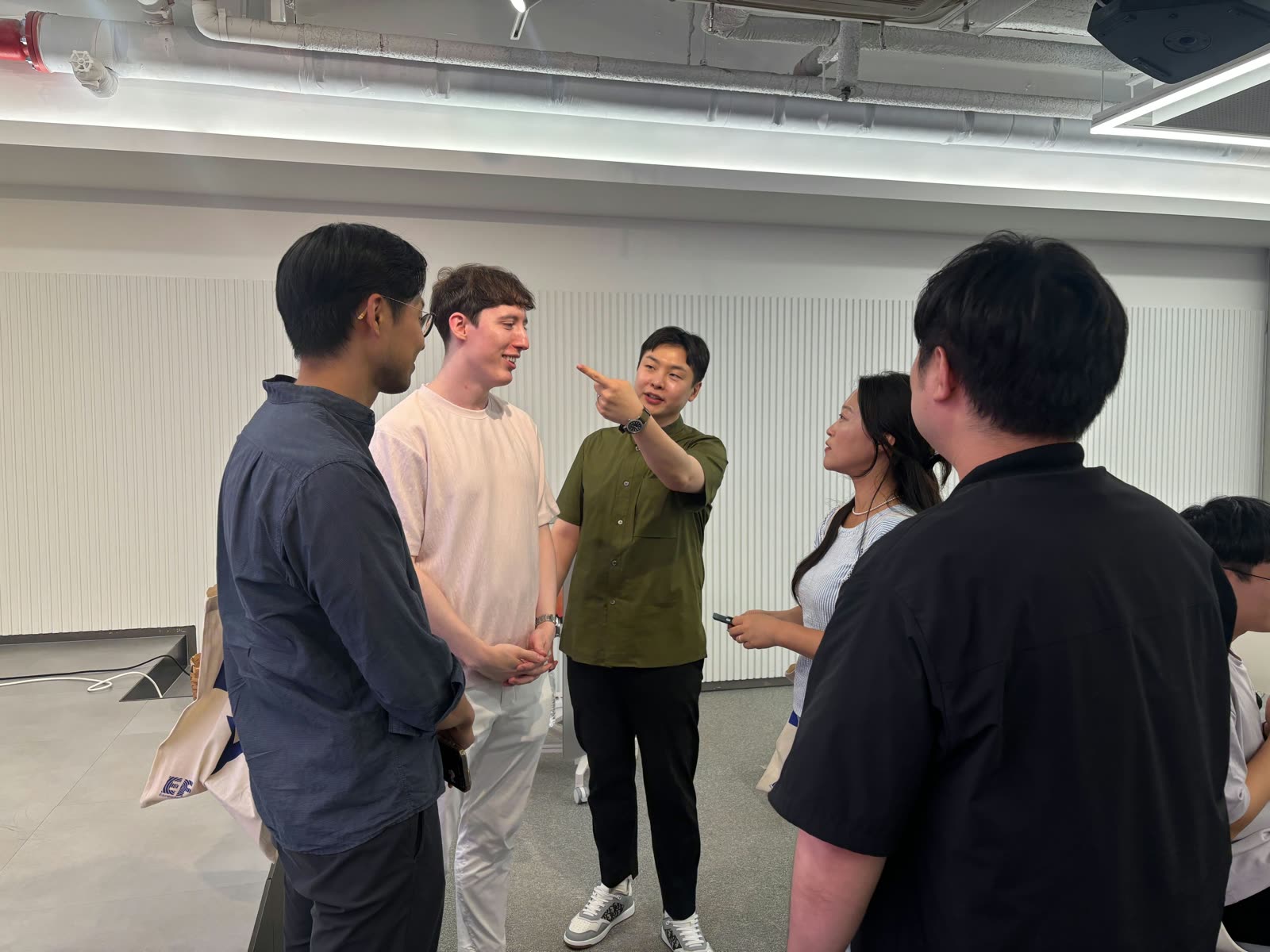
Oh Jae-kyung, EF's country manager for Korea and the evening's sponsor, pointed in the same direction. The online learning division of this 60-year-old language education company was named to the Times list of the 100 most influential companies alongside Nvidia and Anthropic. Not because they suddenly built technology, but because they brought sixty years of language education and global experience to AI. Language now starts everyone from the same line, he said, so it is no longer an edge you hold by speaking some English but a tool for meeting someone and creating a new opportunity.
Teddy said he is hiring product engineers worldwide right now, and that hiring has changed completely in the last six months. Nobody codes anymore, so testing engineers on coding is over. Coding has become a very small part of the job, and the time now goes into defining the product, writing specs, doing research, talking to customers, building, shipping, and testing. So he looks for people who take something end to end, not people who only code.
What does he evaluate, then? Product taste, which is the hardest thing to test. The best signal is what someone has built before, ideally on their own, which means a portfolio. Before AI you had to join a company to build anything; now you can make a website with AI in five minutes, so there is no excuse for not having one.
He had strong views on management too. Hands-off management is over; engineering managers now code with AI, and big tech is cutting middle management. So you build smaller teams, and the individuals on those teams do far more on both output and scope. The people who are good at this are often not the people who were thriving before AI.
A day at Playco starts with the question of how to become more AI native, and that question never stops. One definition is that everything is AI first: when a problem or task comes up, you go to AI first, and when everyone does it consistently the difference is large. The transition happened team by team. The art team has been AI native for three years; the engineering team tried new models every week and switched the moment they got good enough. On articles claiming AI does not translate into revenue, he was blunt: if that is your experience, you are doing it wrong. The art team produces 20 times the content, or 10 times the content at twice the quality.
What he called most important was zero friction. Playco gives what amounts to an unlimited budget so nobody has to worry about AI subscriptions, tools, or token costs, and hands out virtual credit cards when expensing is awkward. Making the friction of switching to AI and trying new tools zero is the single most important way to become an AI-first company. He did call a leaderboard of who burns the most tokens a terrible idea, because it invites people to burn tokens without doing any work just to climb it.
The interesting part is that he uses AI for almost everything and never for writing. The reason is authenticity. Anyone who has done marketing long enough knows authenticity is king. UGC, social, every channel that reaches people is about authenticity, and the moment you let AI speak for you that is destroyed and it is no longer you. He added that if you edit AI writing carefully enough that it does not sound like AI, you have effectively written it yourself.
He also said the way we communicate with AI is all writing. Speech gets transcribed into text, and writing is the highest-fidelity way a human expresses themselves, so losing that ability means losing a human sense. He avoids AI in writing not because he worries about grammar but to stay human as much as he can. Asked how to stay connected to the frontier, his answer had the same shape: use the best tools strategically, and understand that listening is not enough, you have to build and share with people.
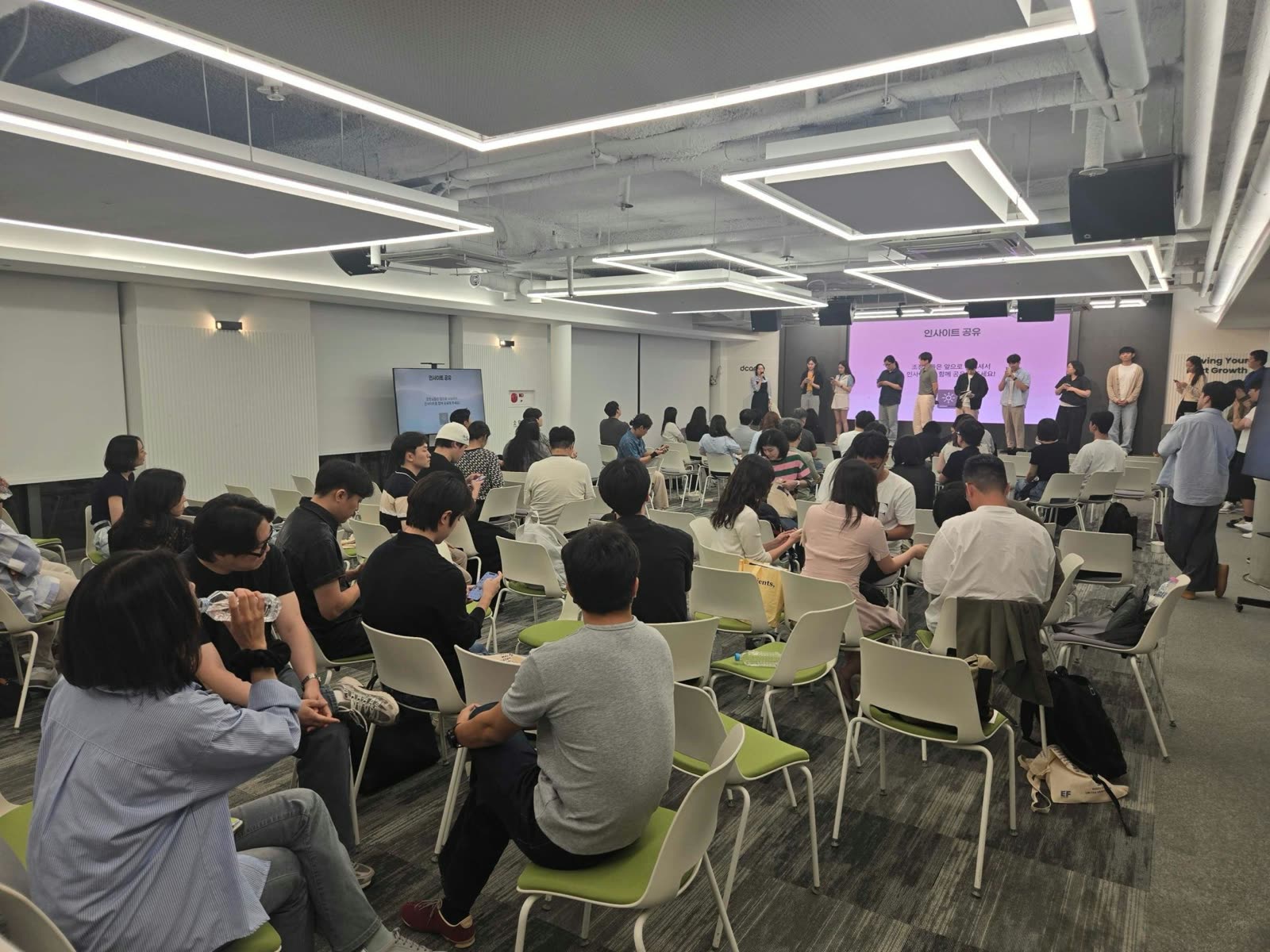
After the fireside, tables discussed which AI trends people are following and how they gather and internalize that information. What repeated most was the shift from the prompt era to the workflow era. Whoever used AI well used to be whoever wrote good prompts; now, with the same model, what separates results is data structure, production process, and pipeline design. Someone observed that writing ability has leveled up across models while differences in system design and architecture remain clear. Harness engineering, likening AI to a dog's leash, came up at several tables.
Gathering information was a shared problem. There is so much content that people save things and open them later wondering what this even was, and material from three months ago goes stale fast. One participant offered a primitive but reliable method: the more you use AI the more you can lose the function of thinking, so write down what you actually understood and share it with people. The table of aspiring founders landed somewhere memorable too. Thinking about which problem to solve with AI eventually forces you offline, to ask users in the field what the problem actually is, which lands exactly where Teddy did in saying build it yourself and immerse yourself.
Read the full write-upEvent video
Gallery




Next event