AI has turned intelligence into a commodity
What was discussed
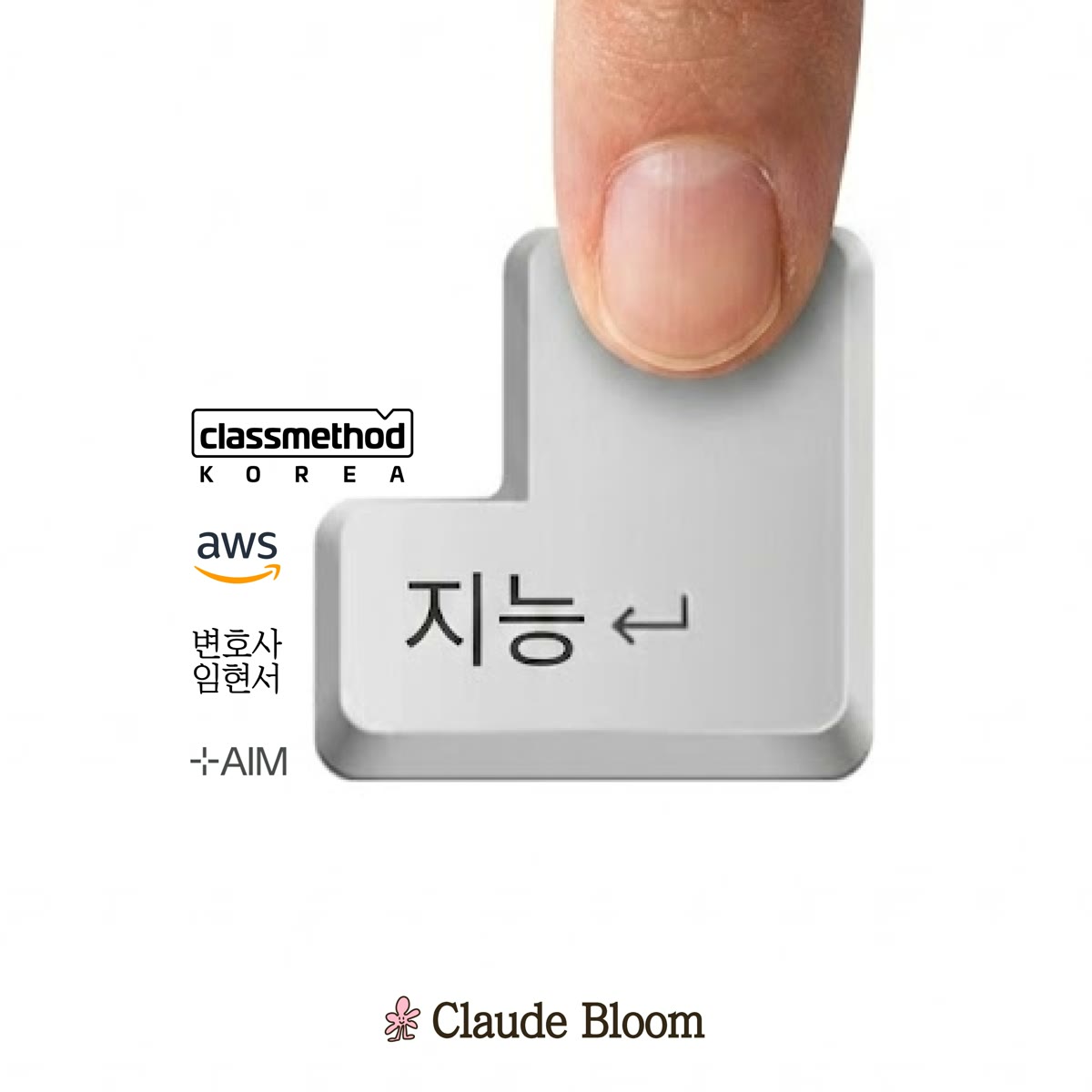
The theme running under the whole evening was that intelligence does not matter as much in the age of AI. A high IQ, knowing a lot, a long career: AI has already started replacing all of it, and building one open source project that goes viral now counts for more than a good resume. So what is left? The insight and sense to recognize a market, ideas, and above all the ability to execute on them quickly.
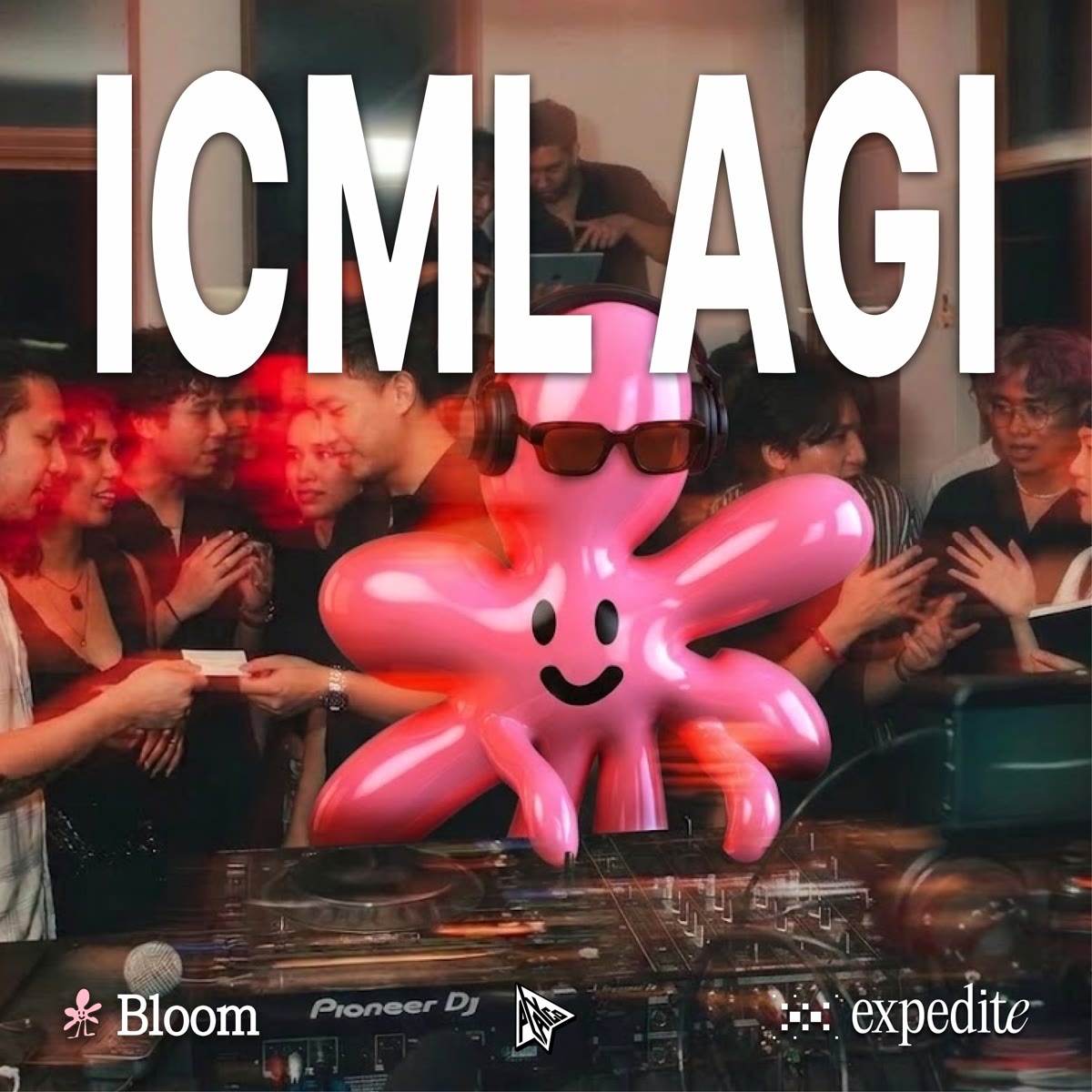
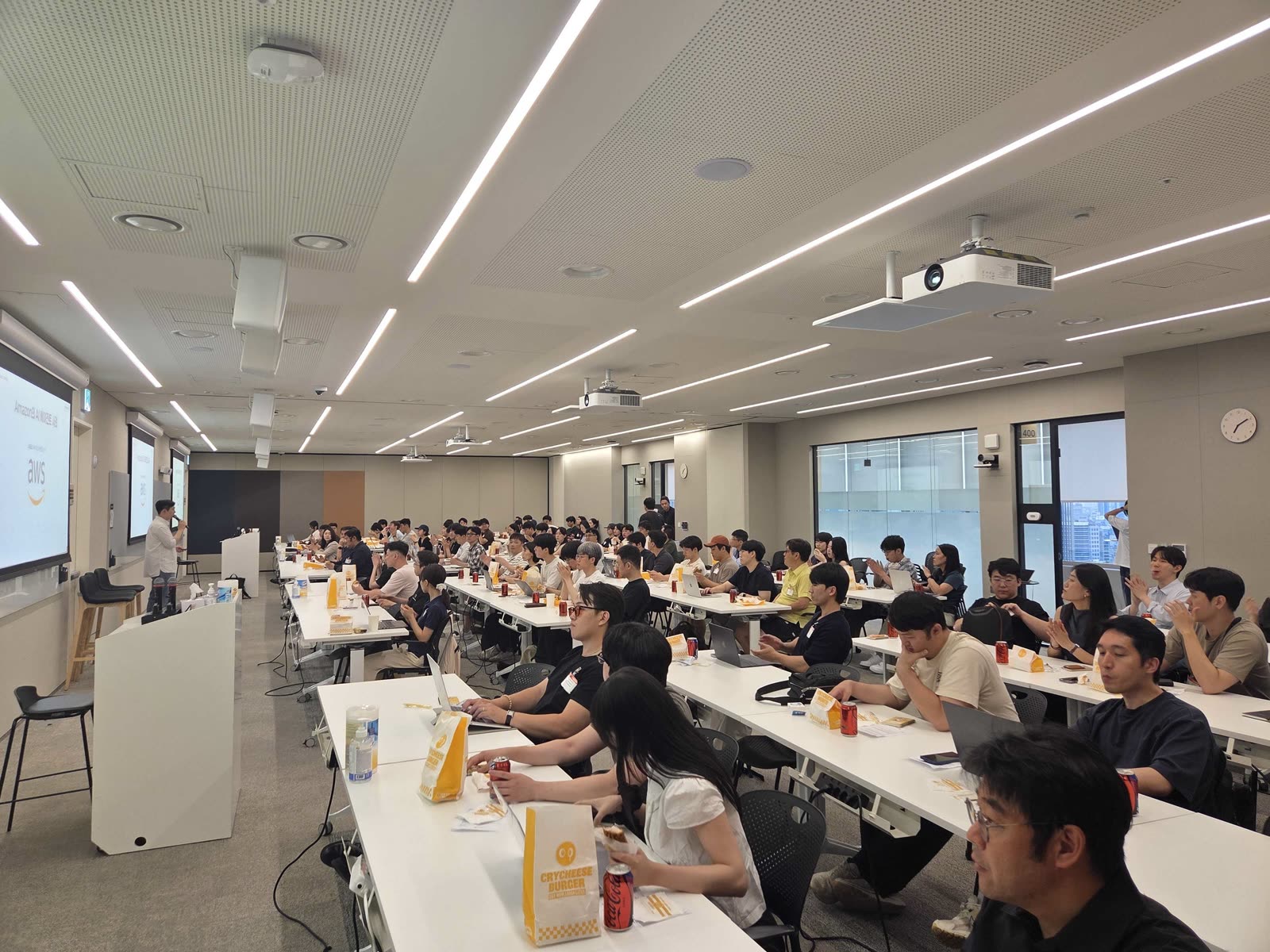
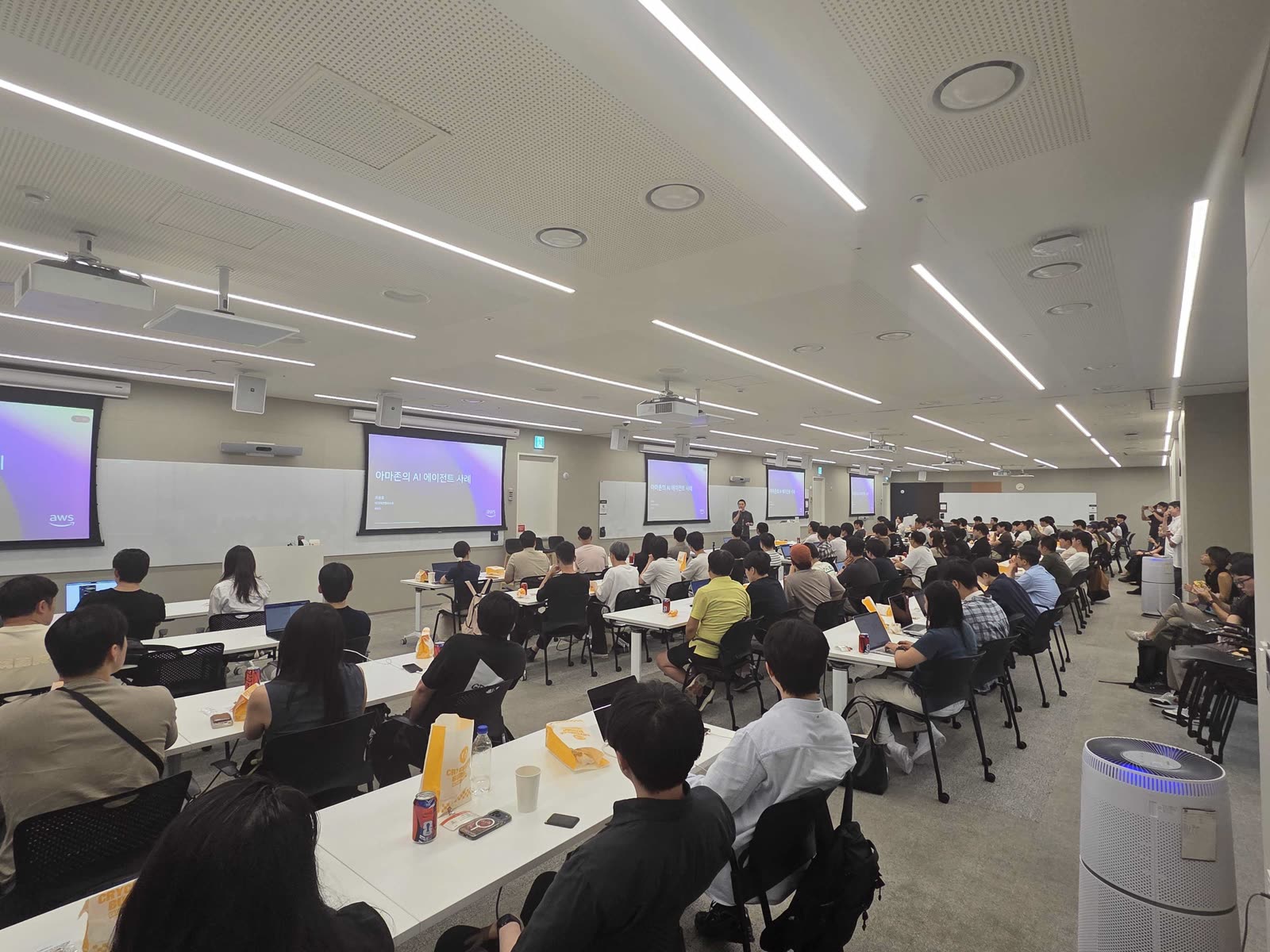
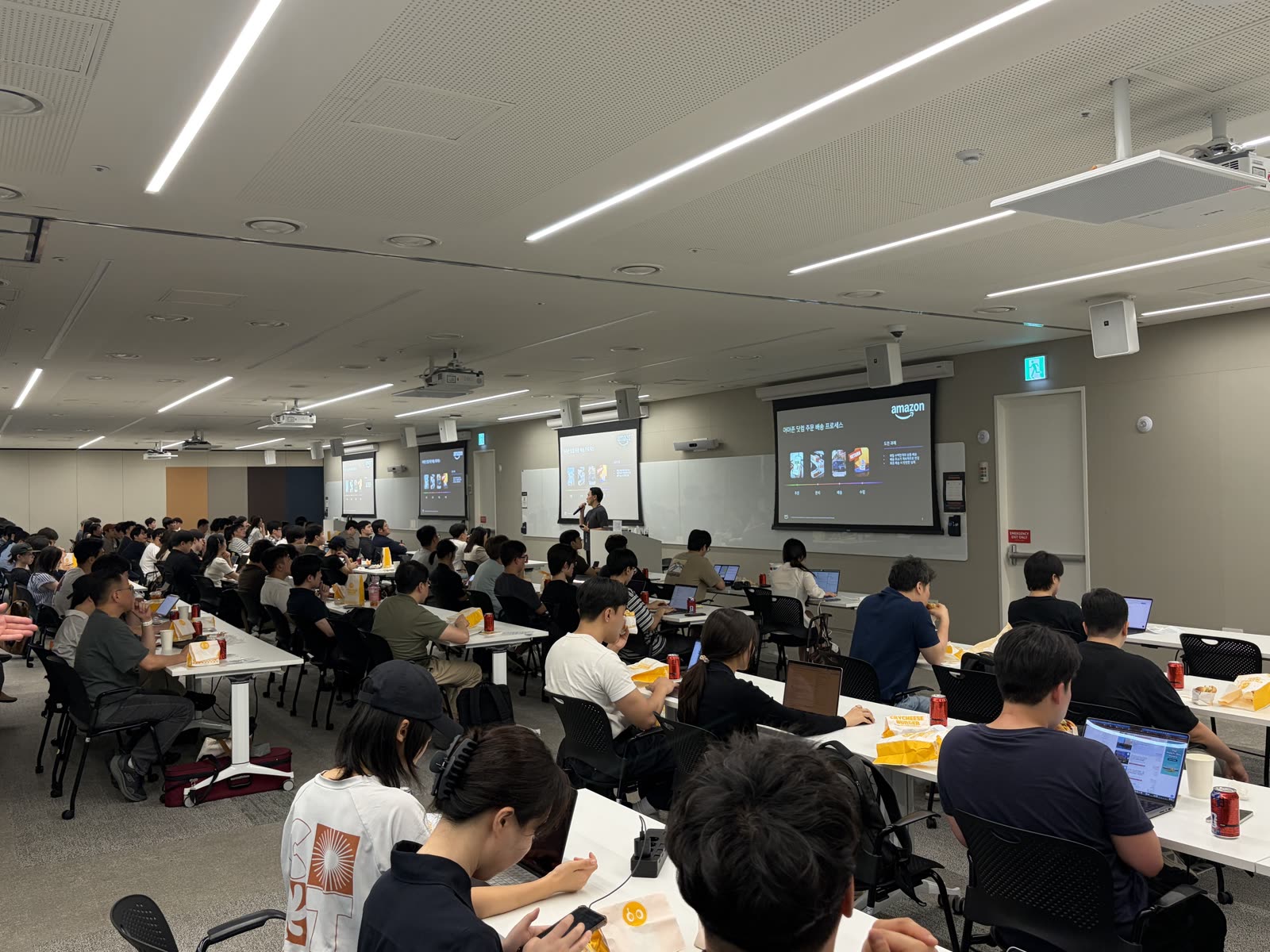
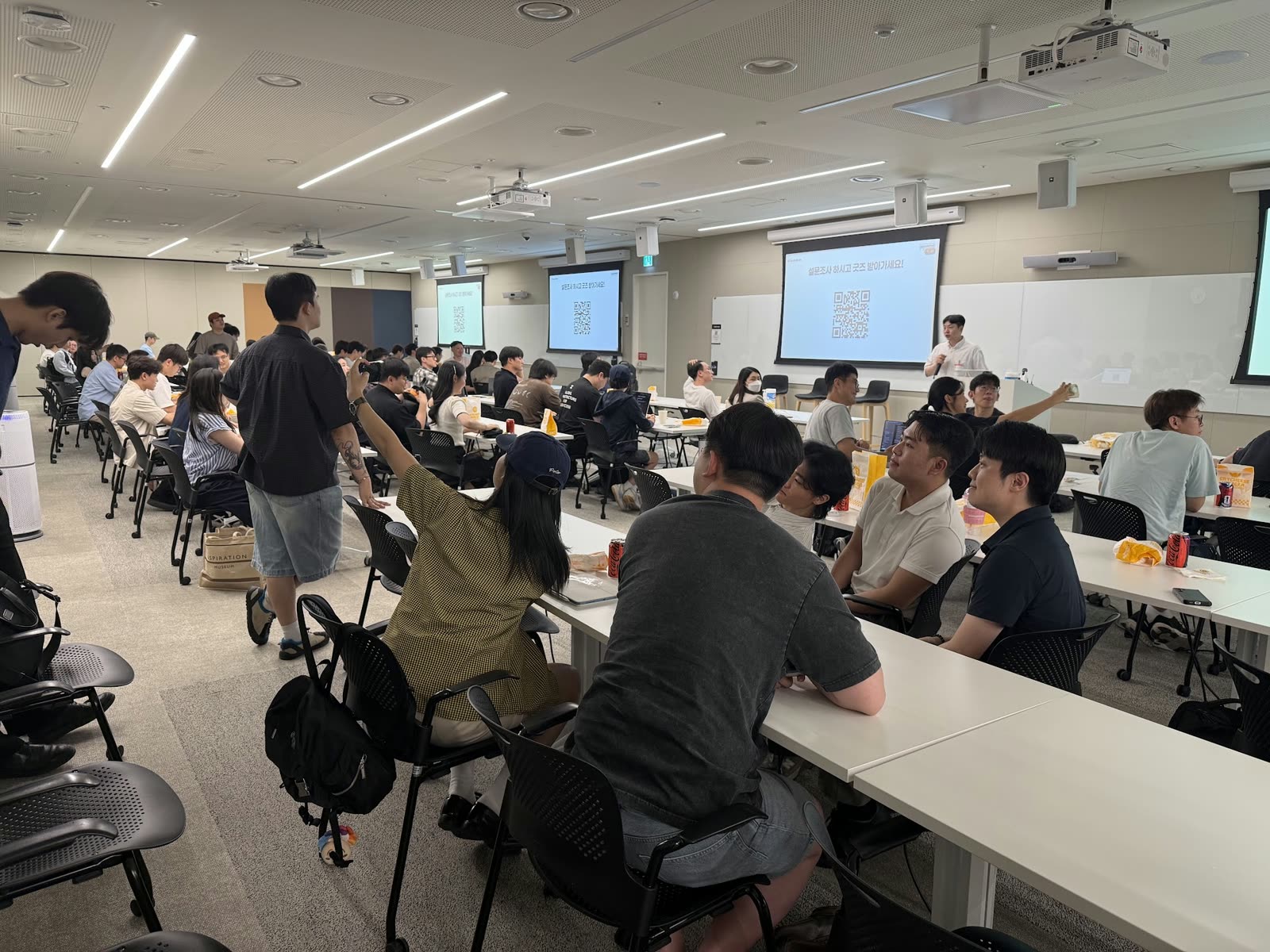
The problem is organizations. A solo builder or small startup can execute like that; a large organization struggles because of internal process and approval chains. That is why people keep saying people are the bottleneck. Security risk grows with the organization, and agents work fine for one person while running them at the organizational level leaves plenty of holes. So this event focused past using AI well individually and onto building workflows that actually run in real work. More than 150 people showed up and we had to open the adjoining space.
The first session was AWS tech evangelist Choi Yong-ho on Amazon's AI agents, with delivery as the lead example. At the same address, some places take a package at the door, others at the security desk, and offices cannot receive anything after business hours. People used to note those variables and handle them by hand. Having agents search internal databases first and pull public address data and business hours when they come up empty cut the initial delivery failure rate by 74 percent.
His core point was not to stop at a single agent. Reuse requires a platform. Amazon stacks each team's agents on an internal platform called Agent Z, which held 23,000 of them as of May, and search usually turns up one already built, cutting developer workload substantially. For the coding tool Kiro, he pointed to spec-based work as the strength. A prompt like build me a shopping mall leaves AI making a great many decisions on your behalf and the result easily misses; produce a document first, let a person correct it and get aligned, and then start work, and both the result and token efficiency improve.
There was a process innovation case too. A Bedrock framework estimated at 30 developers over 18 months was completed by six developers in 76 days with stack-based tooling, and deployed to production. The interesting part is that for the first few weeks they barely felt any productivity gain. Productivity rose dramatically only once they realized that using AI was not enough and the work process itself had to change. Three lessons came out of it: results were better when they gave the agent a goal rather than issuing tasks one at a time, when multiple agents collaborated rather than ping-ponging with one, and when runs lasted hours rather than seconds.
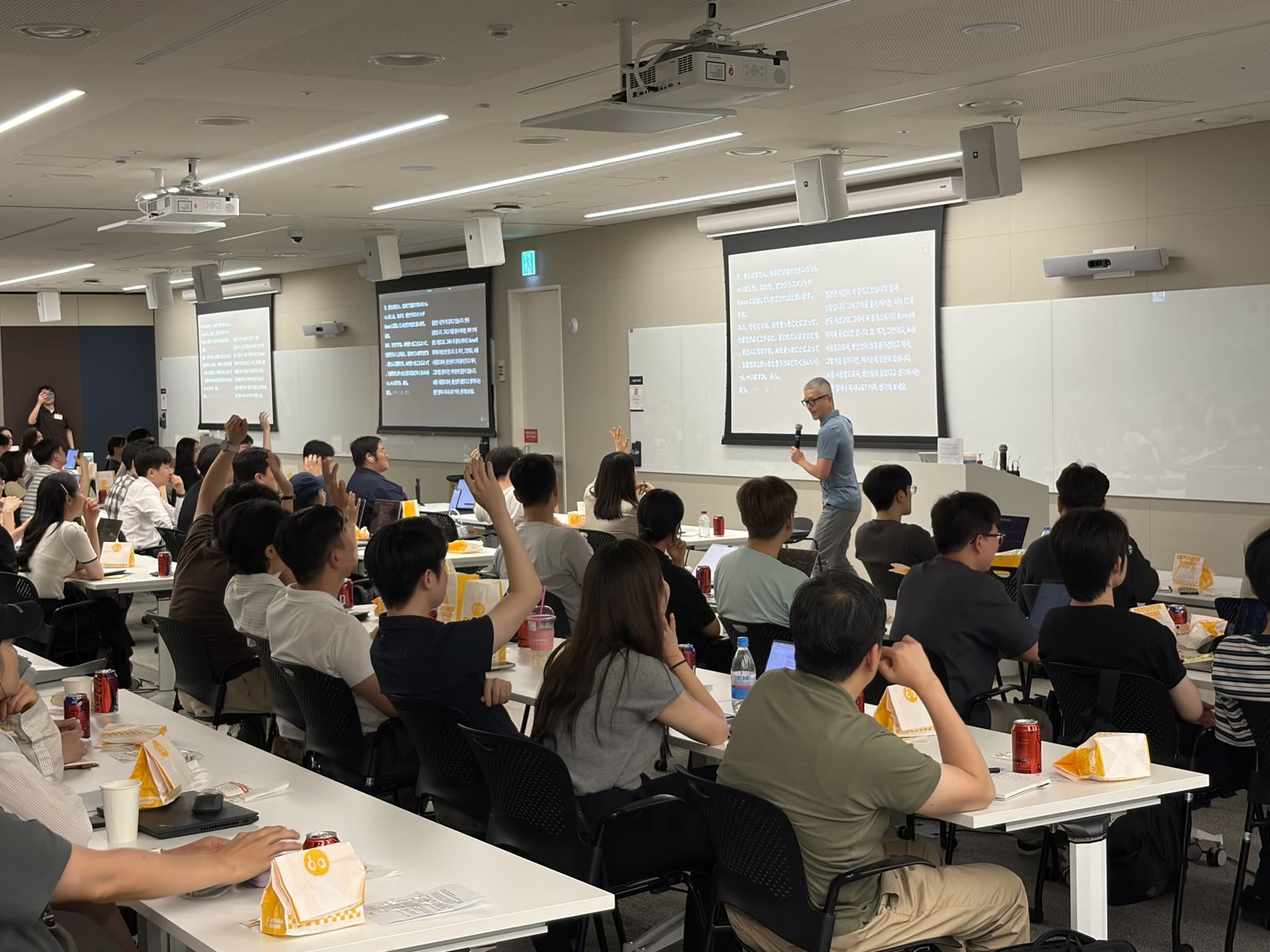
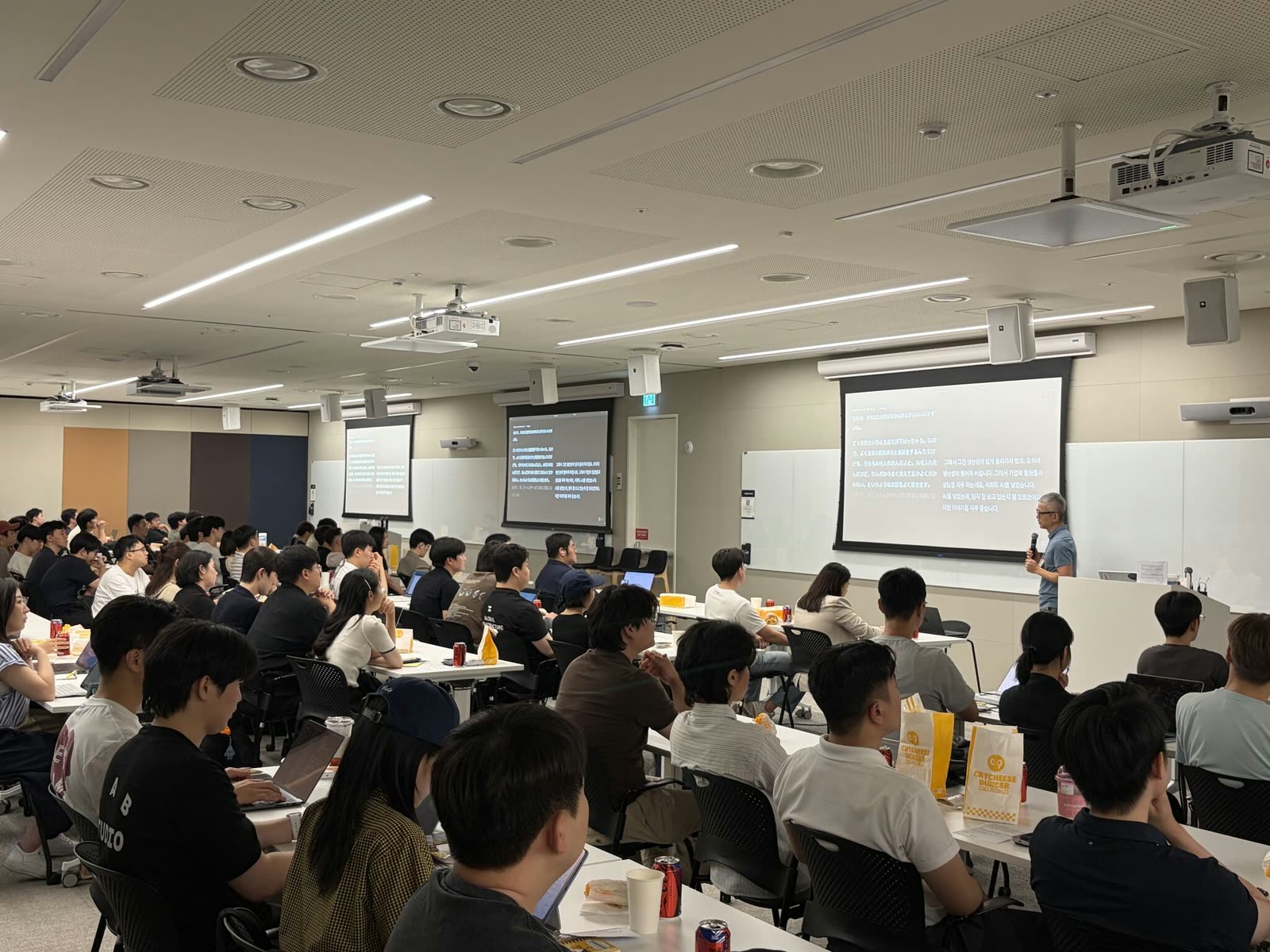
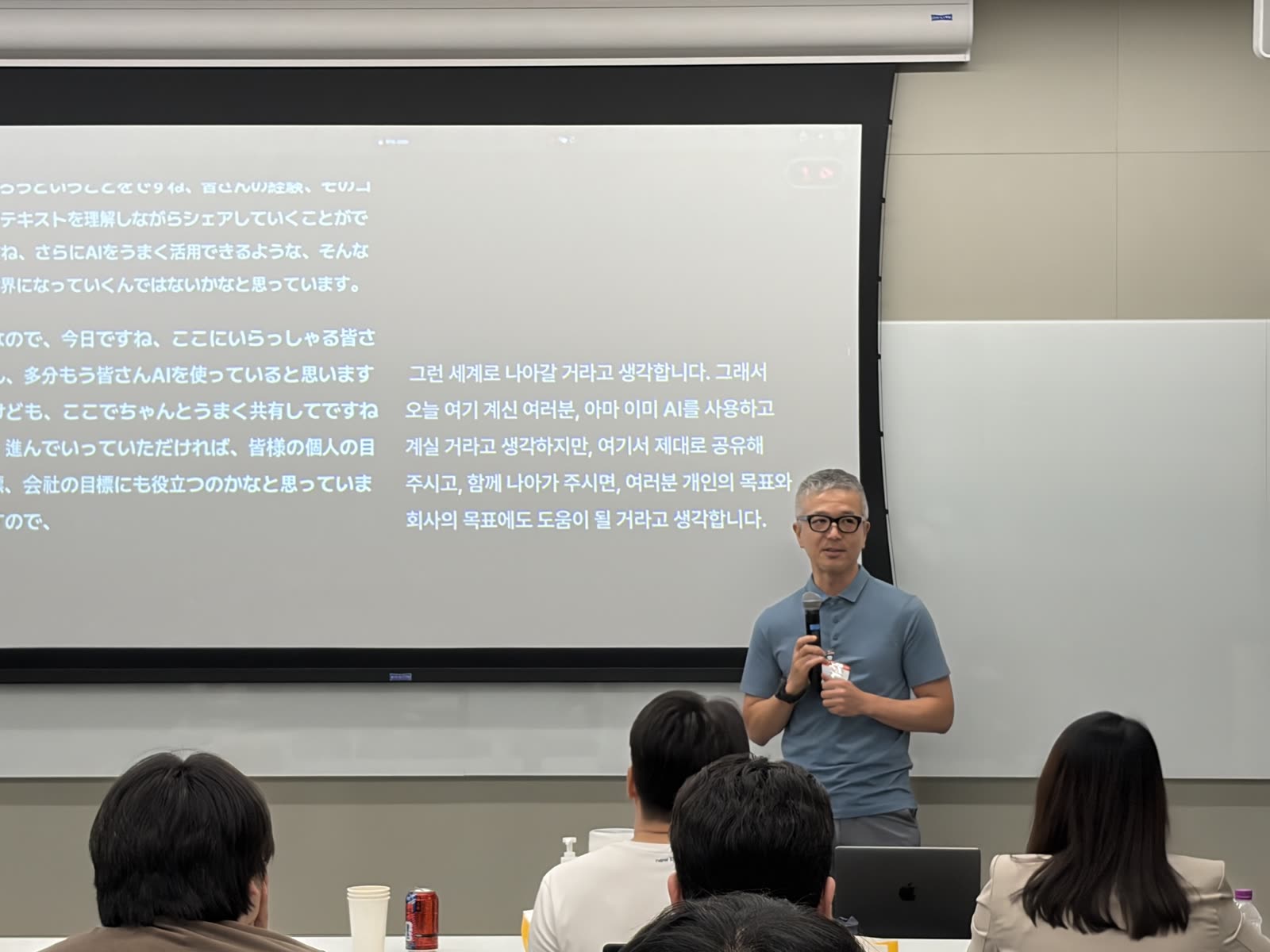
The second session was Omori Akimasa, an executive officer at Classmethod's Japan headquarters, an AWS premier partner in Japan who also oversees the Korean and Malaysian entities. The session ran in Japanese with live interpretation. His read on the region: Malaysia and Thailand are still a step short of adoption, slowed by cost and security concerns, and Japan is adopting gradually. Demand is especially high for reverse engineering, feeding spaghetti legacy systems nobody understands to AI to have them documented.
His warning was about work slop: material AI produces in volume, looking good, that you cannot make sense of when you read it. Interpreting and correcting it takes an average of two hours a day, so productivity falls instead. That is why he emphasized understanding context. The higher-context the society, the more answers drift when you ask without understanding the context. The biggest problem he sees at companies is ideas pouring out with nobody executing, and he says constantly that it is fine to start small as long as you execute and produce a result.
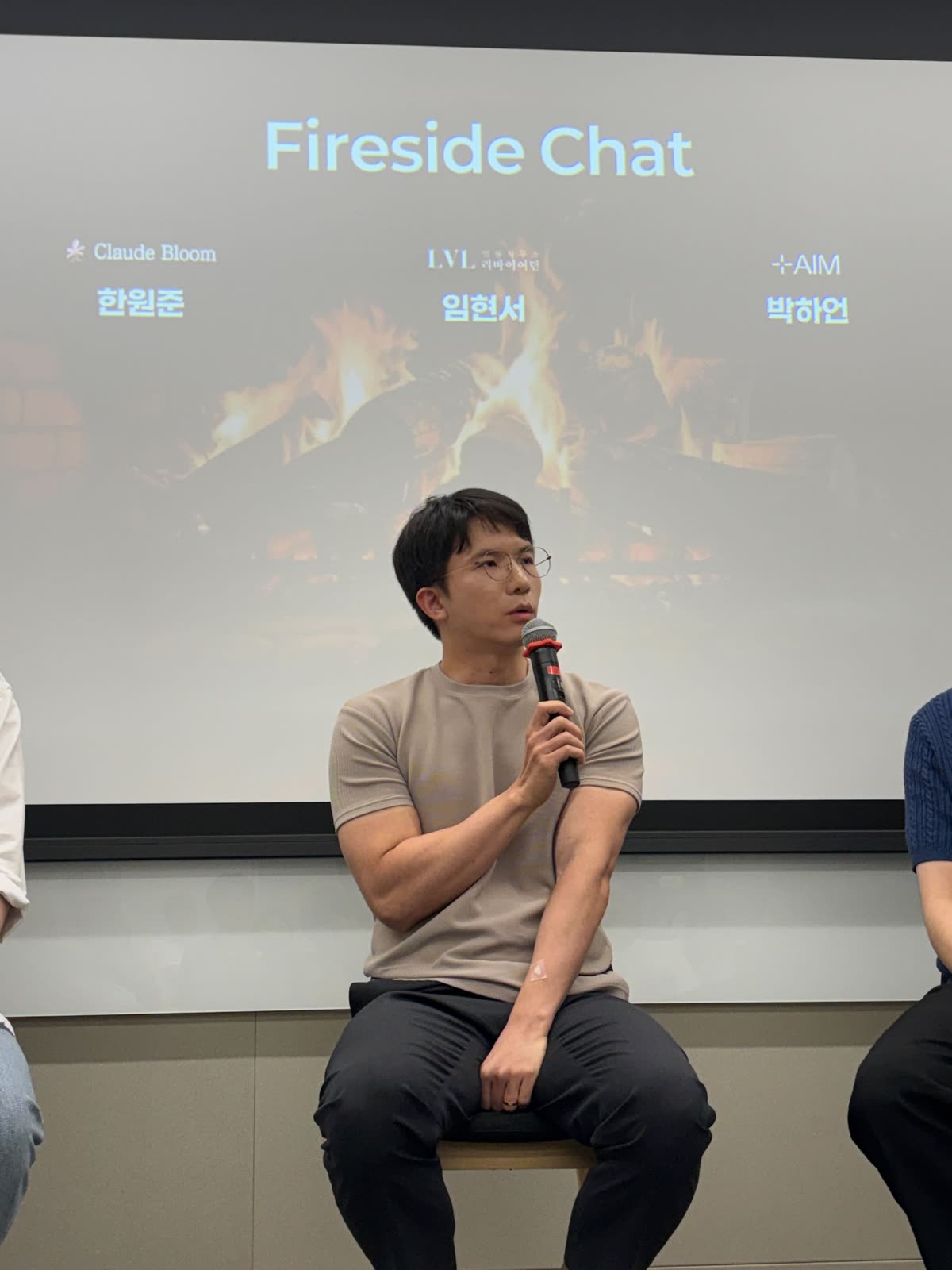
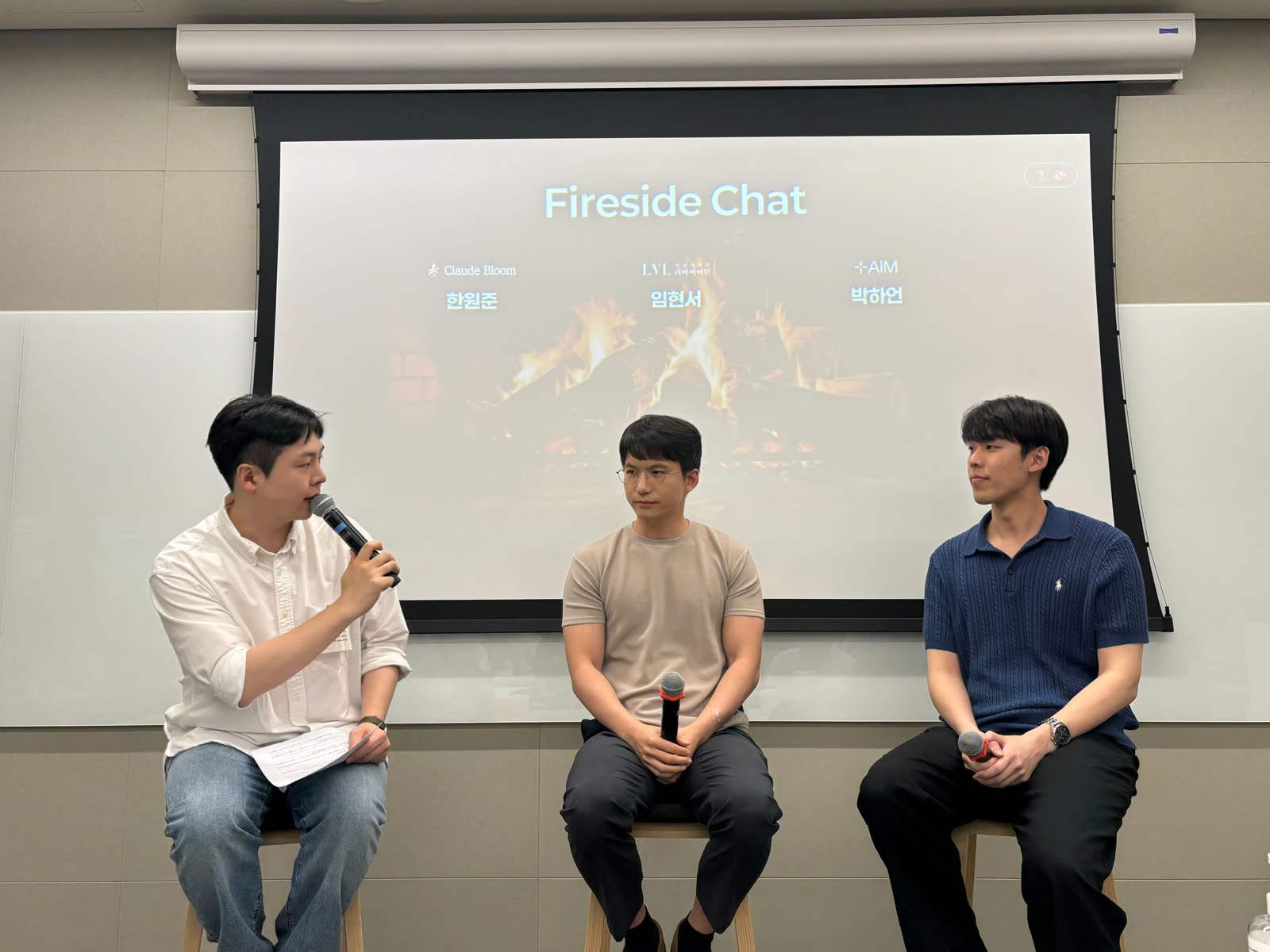
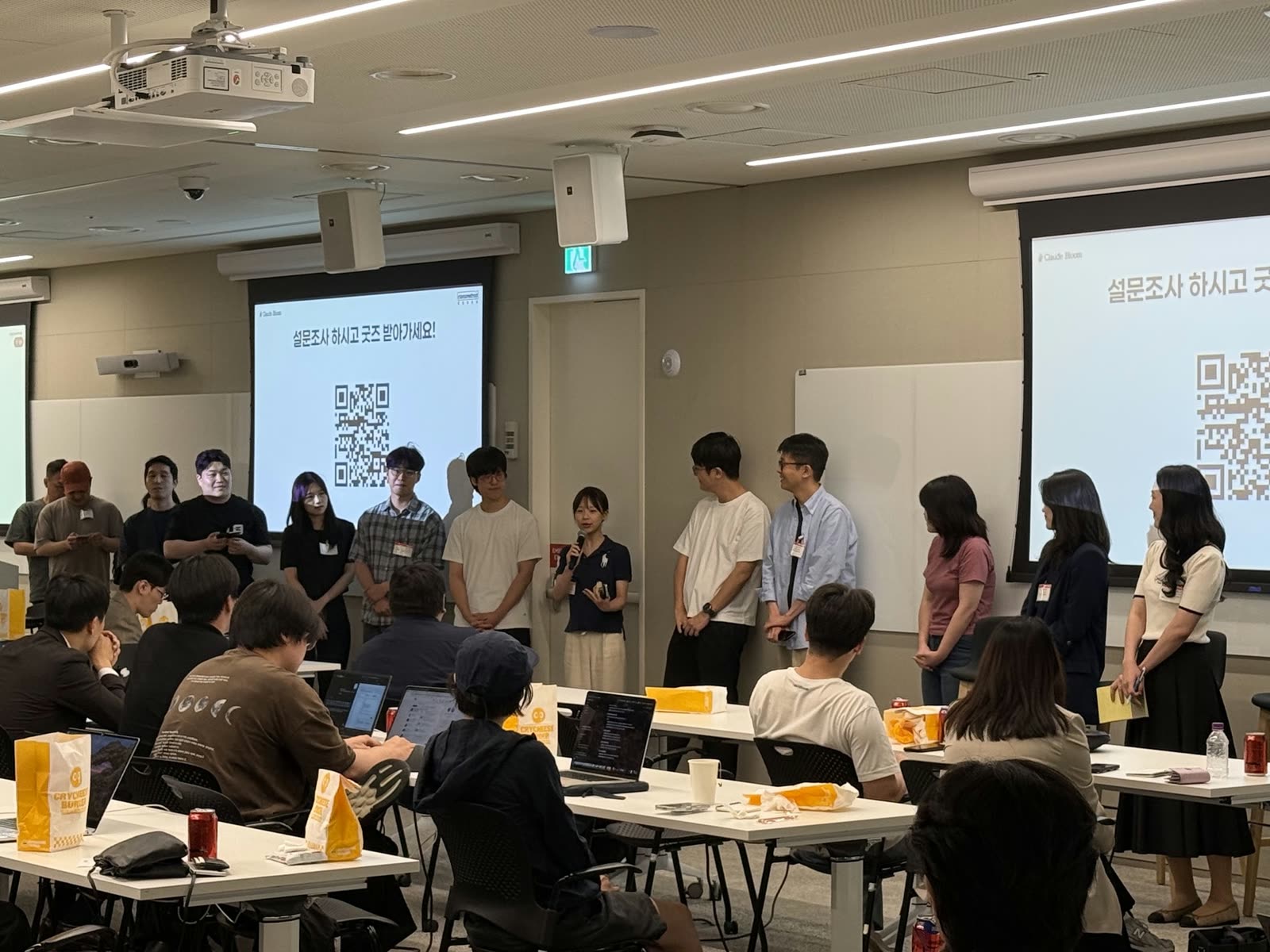
The fireside at the center of the evening brought together Lim Hyun-seo, an attorney specializing in insolvency, and Park Ha-eon, CTO and co-founder of the AI security and safety startup AIM Intelligence. Lim said he handles roughly 2.5 times the work he did a year and a half ago and now sleeps through nearly every night he used to spend awake. The strength of AI he named was replacing emotional labor: pleading, asking favors, the work that is unpleasant to do. He considers AI better than more than 90 percent of lawyers at general reasoning, while noting that Korea does not publish court decisions, which weakens the combination with domain knowledge.
Park's company works both sides of AI security, attack and defense. They offer a red team solution that automatically diagnoses risk when a client builds an AI service, and a guardrail solution that blocks vulnerabilities. They work with global big tech to test models before release, checking, for instance, whether a model will produce instructions for making biological weapons. The case that stuck was NASA's official chatbot connected to the Parker Solar Probe: it produced dangerous statements with no filters or guards, and when they reported it, NASA shut the service down and sent a letter of acknowledgment. As models got better, he warned, so did hacking, and ordinary people can now perform expert-level attacks, which is why government regulation is not strange.
On the future of the legal profession, Lim believes the collapse of the advisory market has already started. Time-based advisory work is hard to justify, and if AI with strong reasoning and a good grasp of the rules finds the answer, advisory lawyers acting as search proxies are no longer needed. What remains is consulting and strategy, and experiential expertise that no amount of searching produces, like registering an overseas fund, which only a company that has been through it knows. His view on AI judges has changed too. Standards for reasonable doubt vary person to person, and if that intelligence can be kept more uniform, he asks why you would leave it to a judge with individual variance.
He described the state of copyright as a free-for-all. Purely AI-generated work is not granted creativity while human involvement is, and verifying that is difficult. In one case a picture was obviously AI-made and the person claimed to have drawn it, and when asked for evidence the answer was that it had six fingers, which the other side accepted. On who survives in the age of AI, Lim named the diligent person who keeps clicking, and Park named someone with the ability to take responsibility and verify. It will be a while before AI takes responsibility, and the eye for verification only develops through a lot of time in a domain.
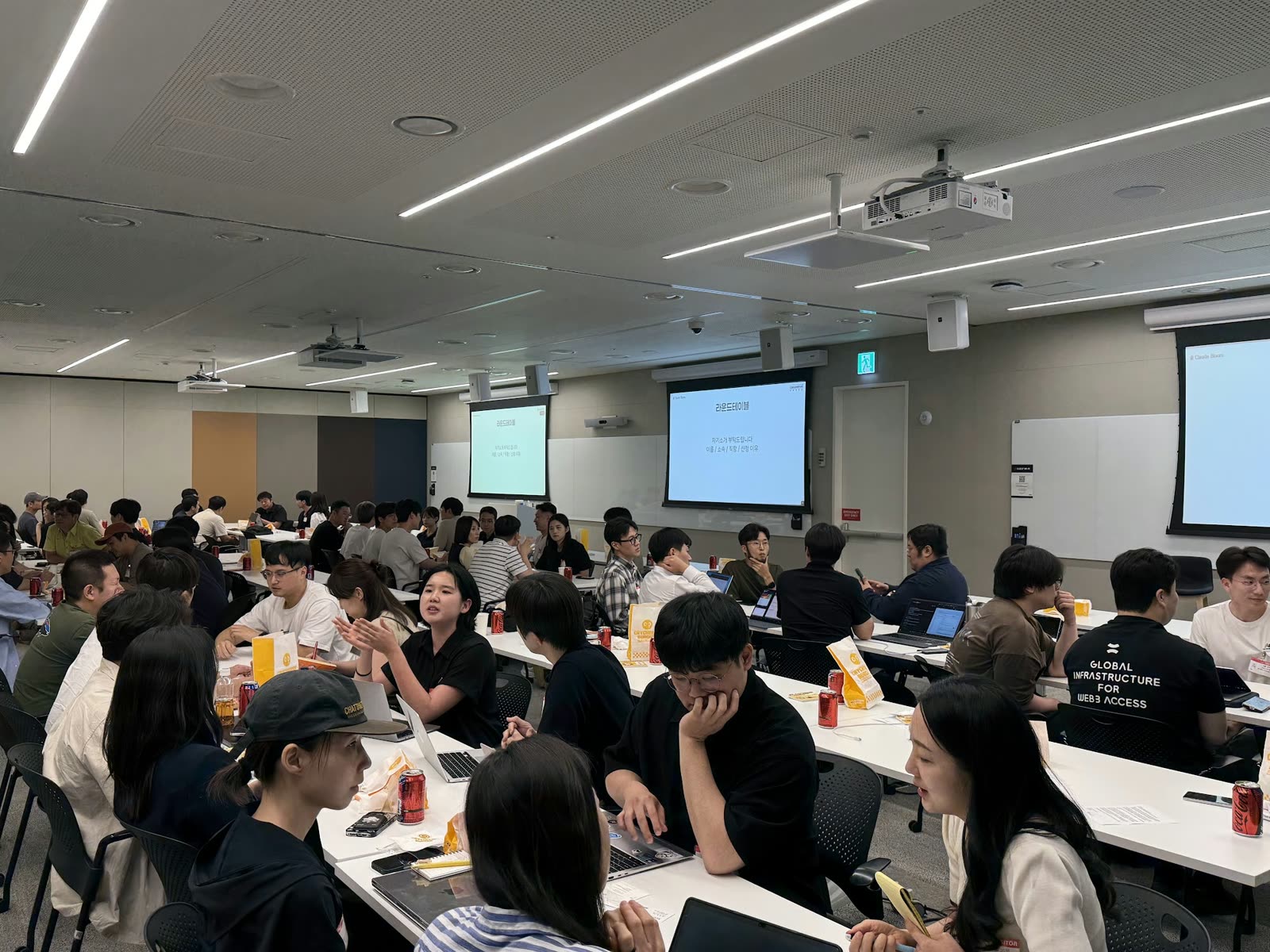
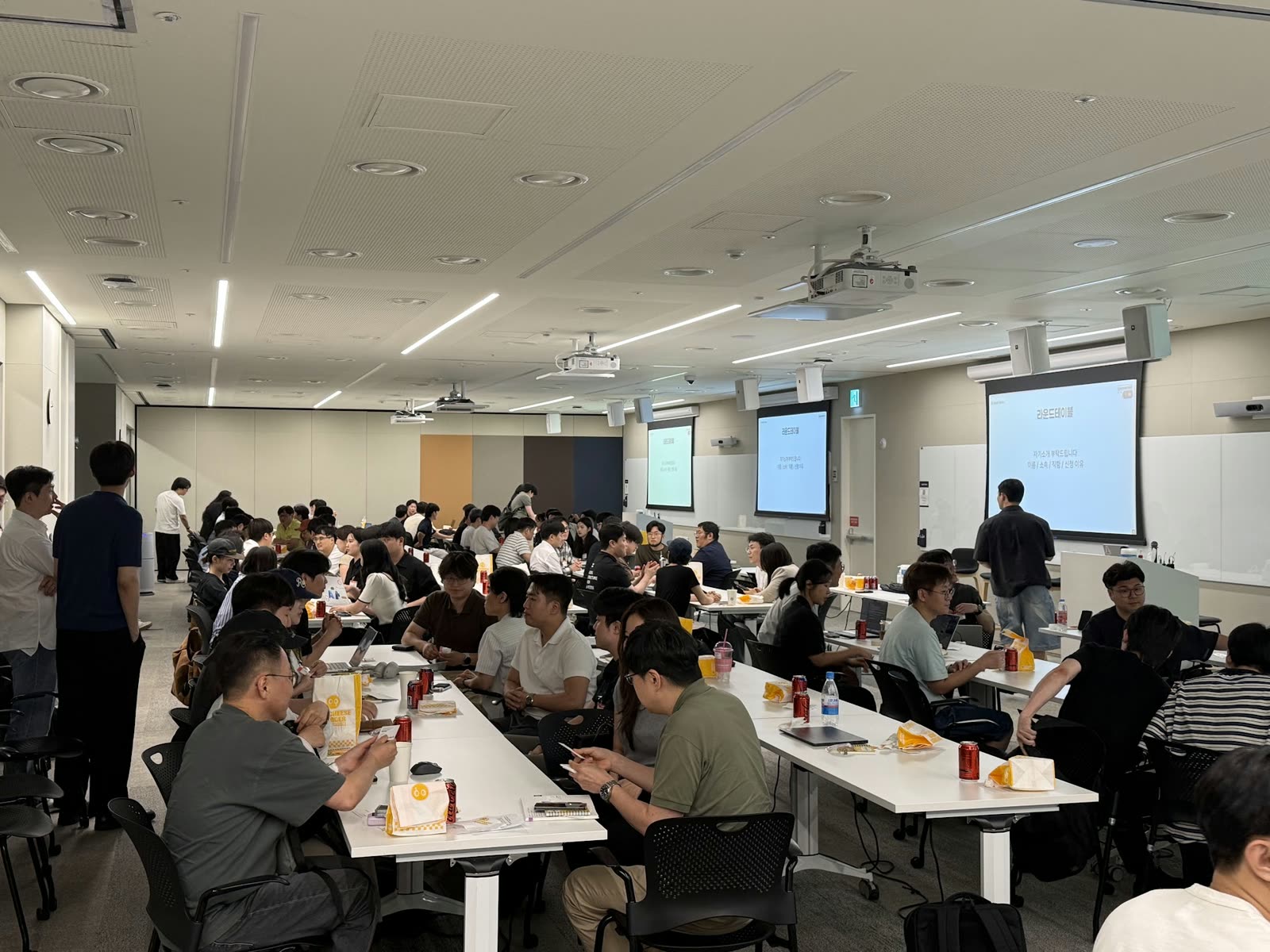
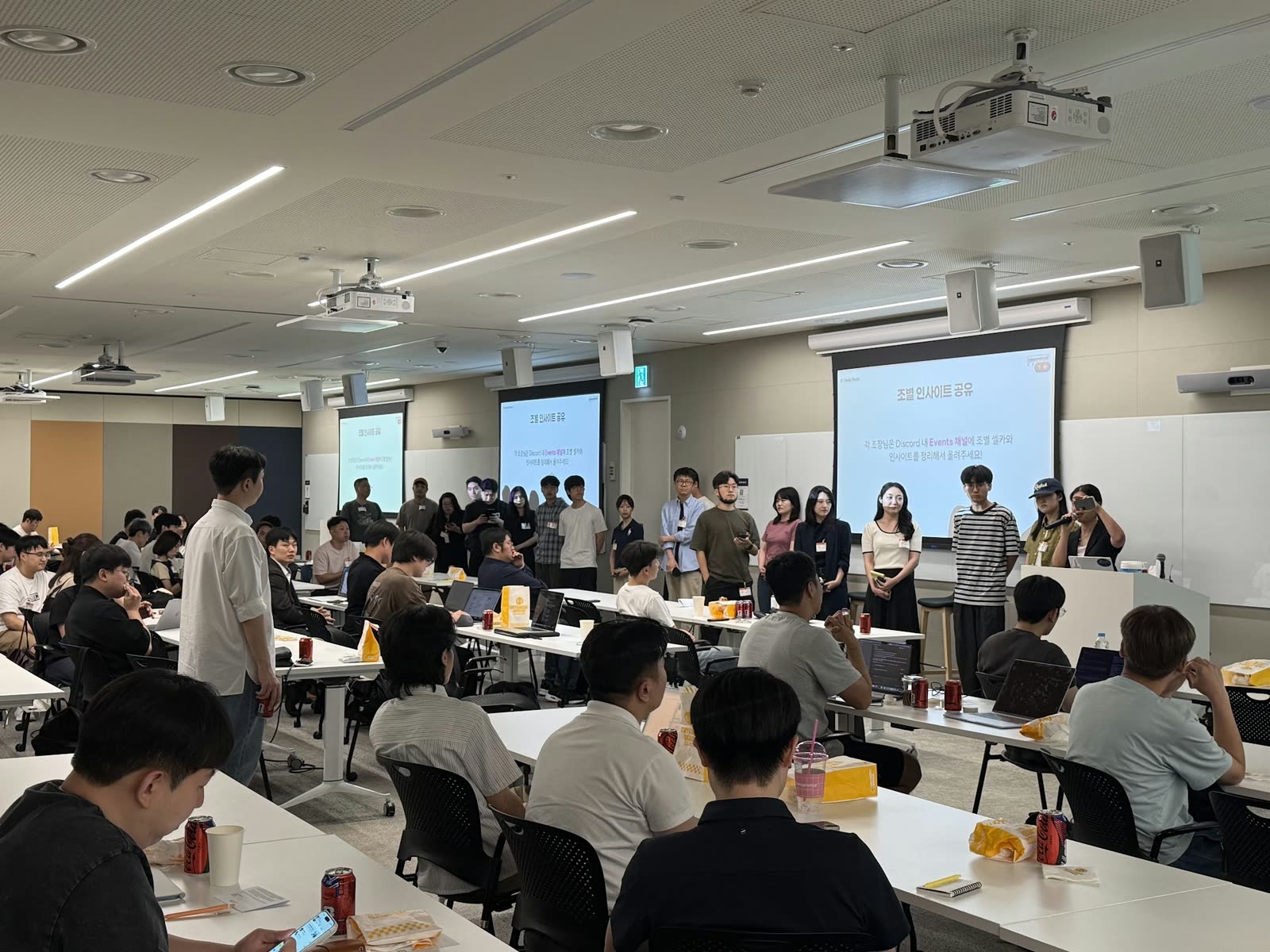
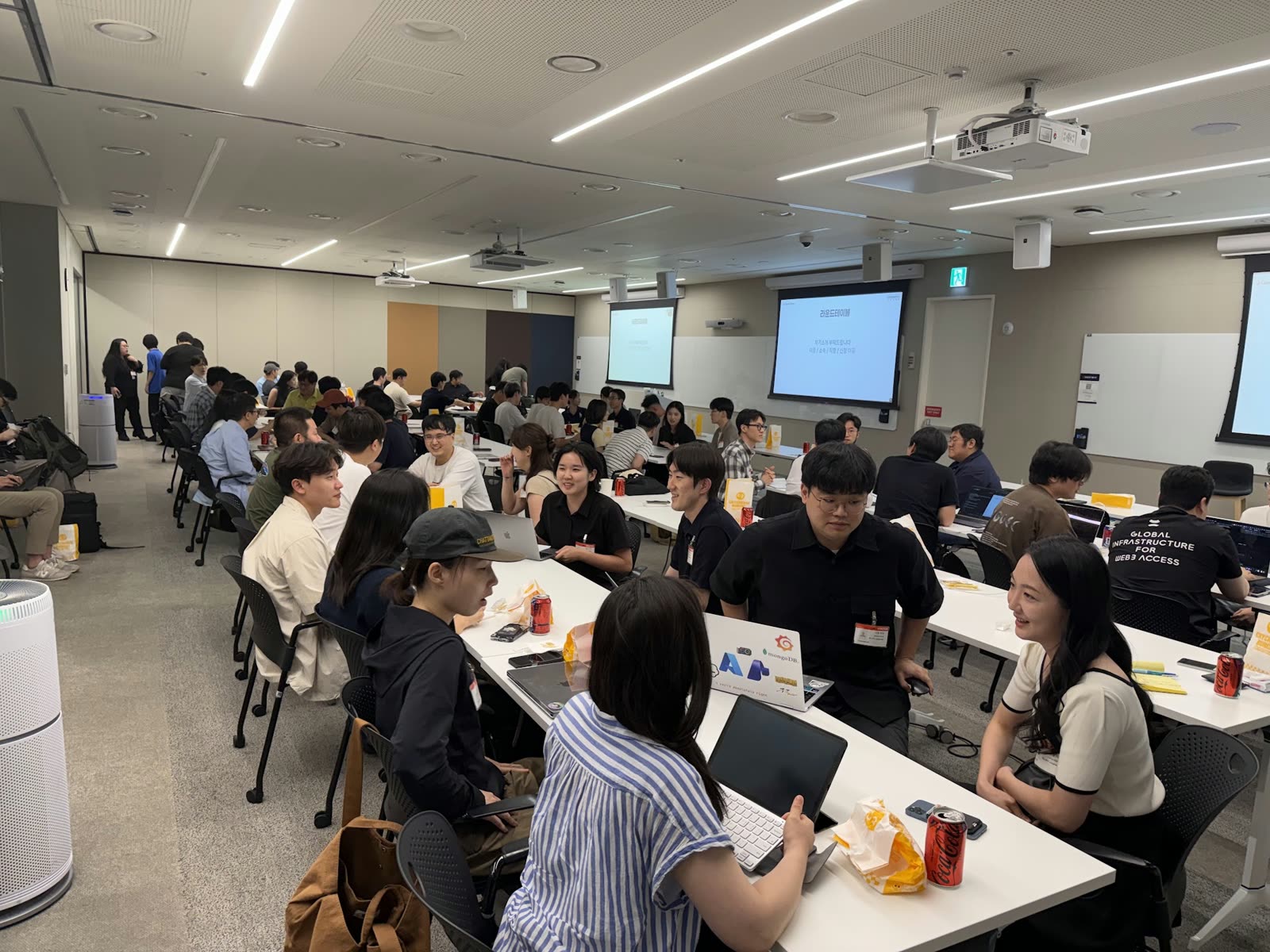
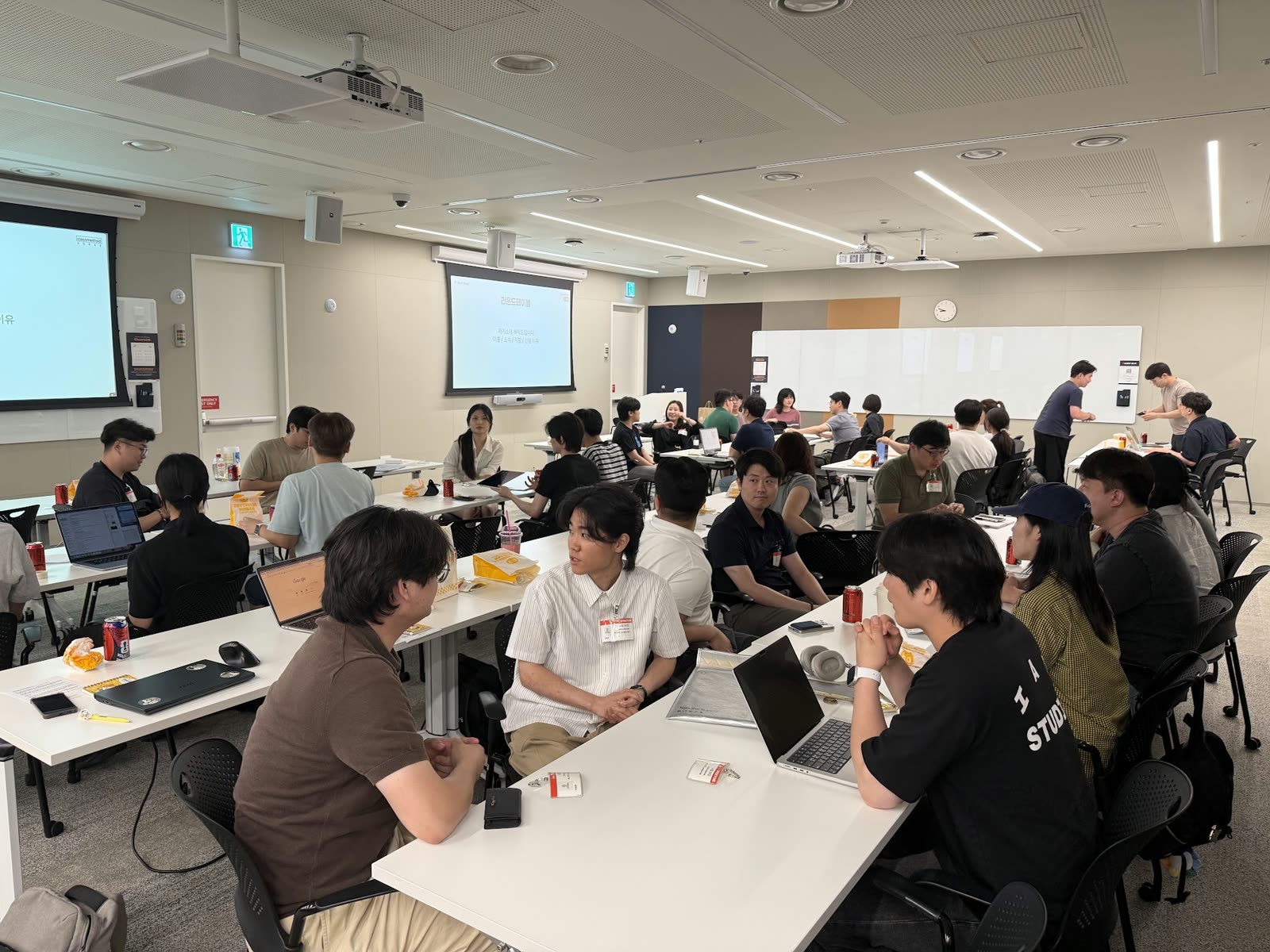
At the four-person roundtables afterward, what came up most was generalists and specialists. The image that stuck was that generalists have the advantage now because AI fills the empty spaces, and once those spaces are filled, specialists take over from there. What tables shared about their own AI use split into automation, life coaching, and doing the previously impossible. Automation ranged from code review and documentation to having persona agents review hundreds of Jira tickets. For the previously impossible, the ones that stayed with us were a Korean interlinear Bible built with Claude Code, and a meal plan made for a family member going through illness.
Read the full write-upGallery

Next event