AI Growth Marketing
What was discussed
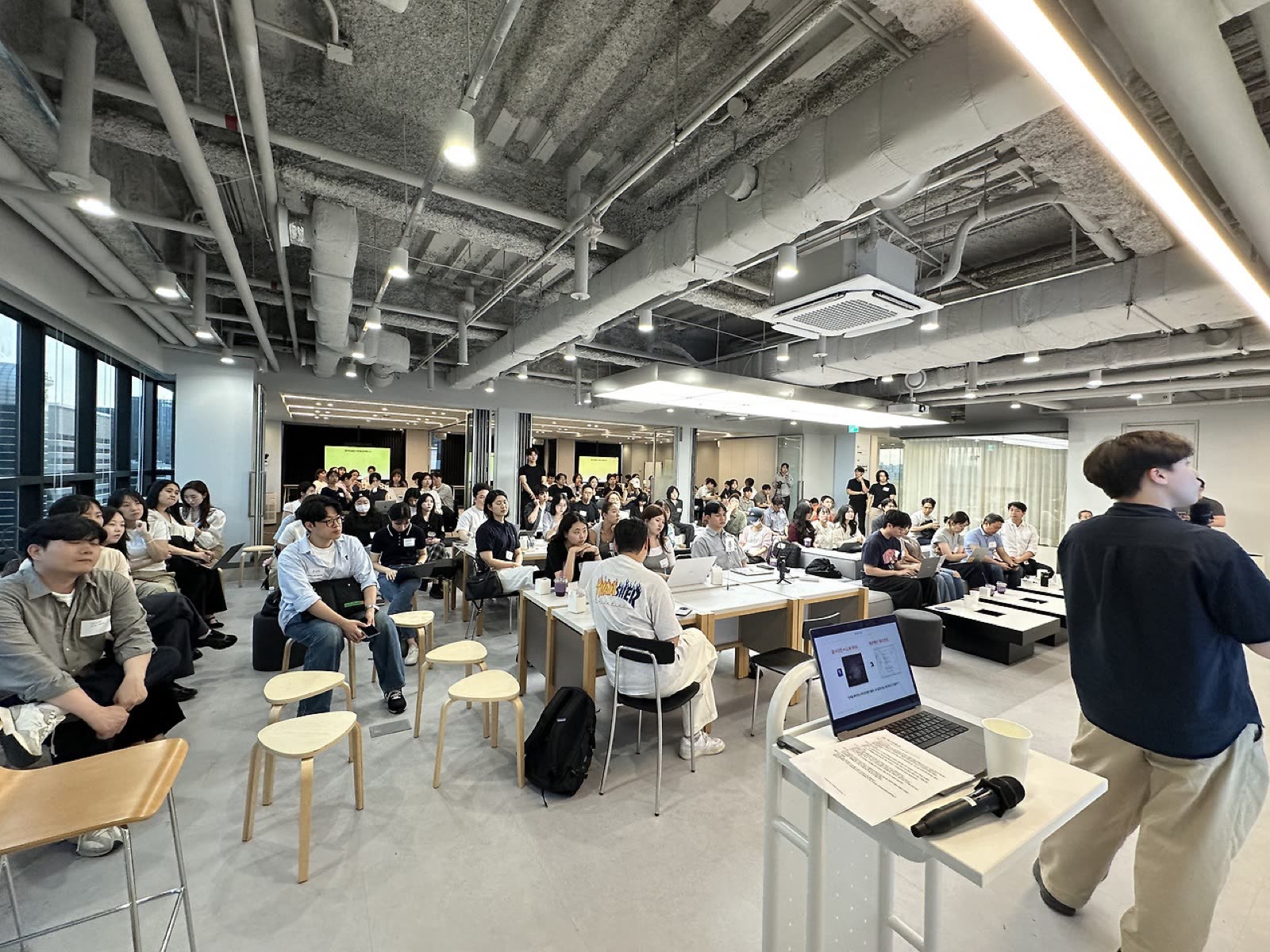
Bloom, AB180, and Respond Marketing put this one together at AB180's Seolleung office. The previous session, on sales roles, started from whether AI can replace people. The marketing session started from the opposite end: there is so much AI can do in marketing, so how far can it actually extend?
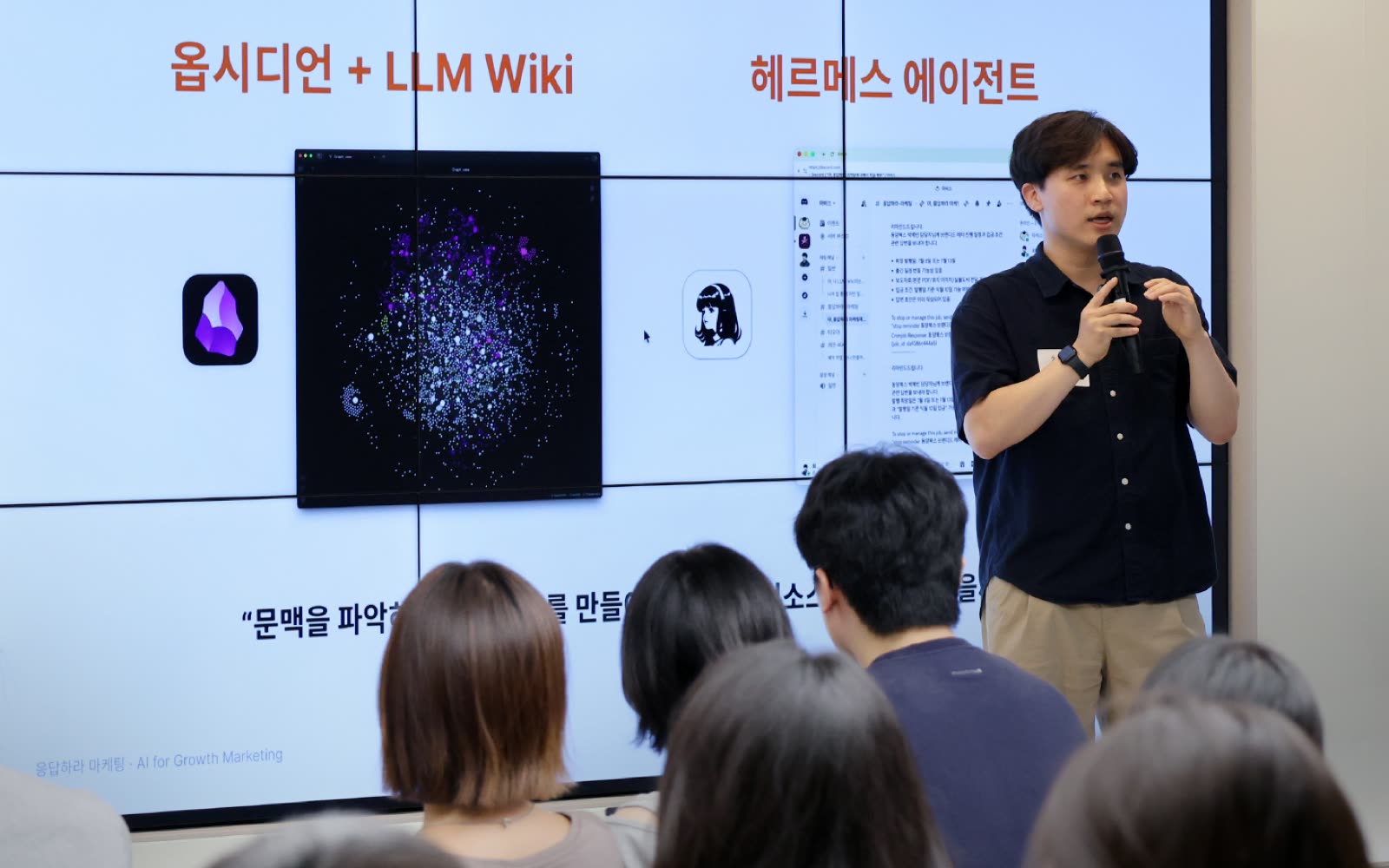
Choi Je-him of Respond Marketing opened by framing marketing as a field where AI struggles to give the right answer. After winning first place at OpenAI's Codex skillathon he got a lot of speaking requests and turned most of them down, because whatever feature you demo is obsolete in a week. So instead of demos he chose to share which problems he solved at work and how, and titled the talk So, what's the problem? It is the question an executive at his first job asked five times over whenever someone reported an issue.
To make the point he put a question to the room: of the five winners at the Claude Code hackathon, how many were non-developers? All five, and first place went to a doctor. A developer building a medical dashboard has to learn medicine first; the doctor already had the volume of data and the tacit knowledge that clinical work builds, and could go straight at the problem. Domain knowledge is the real edge in the age of AI.
He organized his own use of AI into three buckets: vibe coding, automation, and skills. Turn spreadsheet work into a tool, automate the recurring work, and make a skill out of repetitive work where the same input has to produce the same output. Store cashback inquiries, paid three months after a contract, used to mean searching business names in Excel one at a time; now you type the store name and a tool shows every promotion for it. Competitor monitoring, which used to mean screenshotting Instagram every Monday and compiling metrics by hand, became a crawler that pulls posts and engagement metrics and emails them over. The point was to spend less time on operations and more on planning. The skill that won the Codex skillathon takes T-order transaction data and generates a web report to send to store owners. It was not flashy; being immediately usable at work is what resonated.
He was honest about the limits. AI-generated images still do not meet the in-house designers' bar, so they are hard to post to the company's own social accounts as they are. Automated work does not vanish either; it needs maintenance every time the rules change. That is why they apply AI first to areas like government grant program content, where information matters and image dependency is low.
The fireside was with AB180 CEO Nam Sung-pil, and his path was worth hearing. He had planned to study French philosophy, decided during military service to do something more practical, and discovered marketing at a Google keyword marketing competition he entered on a whim. Researching keywords in five languages and grinding on landing page quality scores, he finished unofficially first in Korea. His conviction that performance marketing rewards effort with room to improve was formed then.
AB180's product Airbridge did not start out as what it is now. It began as a search engine, pivoted to a deep link tool at customers' request, and pivoted again into ad attribution analytics. Its first paying customers were Baemin and eBay Korea, which meant tracking 30 million devices and building big data capability fast. To make data collection reliable on older devices, they went around the Yongsan electronics market buying handsets that had never had their OS updated. AB180 went on to become one of only seven MMP partners worldwide and the only one headquartered in Asia.
What happens to SaaS in an era where AI agents build and customize software themselves? Nam's read is that SaaS does not die, it diverges. The essence of software is producing an outcome, and that splits into evolving into an agent that produces outcomes and becoming the infrastructure those agents use. His analogy was a robot kitchen. A robot making fried food still needs a fryer, and having it mount the fryer itself would be inefficient. Instead the fryer signals the robot when cooking finishes and the handle takes a shape a robot can grip. That interface is a CLI or MCP.
His framing of AI marketing was practical. Growth hacking is about small input producing large output, and what people expect from AI marketing runs on the same psychology. The gap, though, opens up through whoever learns faster and uses it more relentlessly. The same game D2C commerce companies played in the early days of Facebook ads, grinding on creative, copy, and hooks to push a technical advantage as far as it would go, is being played on AI now.
He described his own company as serious about AI, starting with himself spending 90 percent of his working hours with it. They rebuilt the company website, originally made in Webflow, entirely with AI, and the design team and marketers learning Codex together have shipped more than a thousand pull requests cumulatively. An internal agent connected to their knowledge sources, Slack, GitHub, and Jira handles 400 to 500 queries a day.
Two principles came out of the trial and error: clarity, and turning work into organizational assets. AI does poorly when the requirements are not clear, so throw your first thinking at it and let the AI interview you until it is clear. On assets, if everyone builds their own skills you eventually hit a ceiling on synergy, so go past individual productivity, find the common ground across those skills, productize it into something the organization can trust, and keep developing it. Whether it stops at you being good at it or becomes an organizational asset is the difference in companies that do AX well.
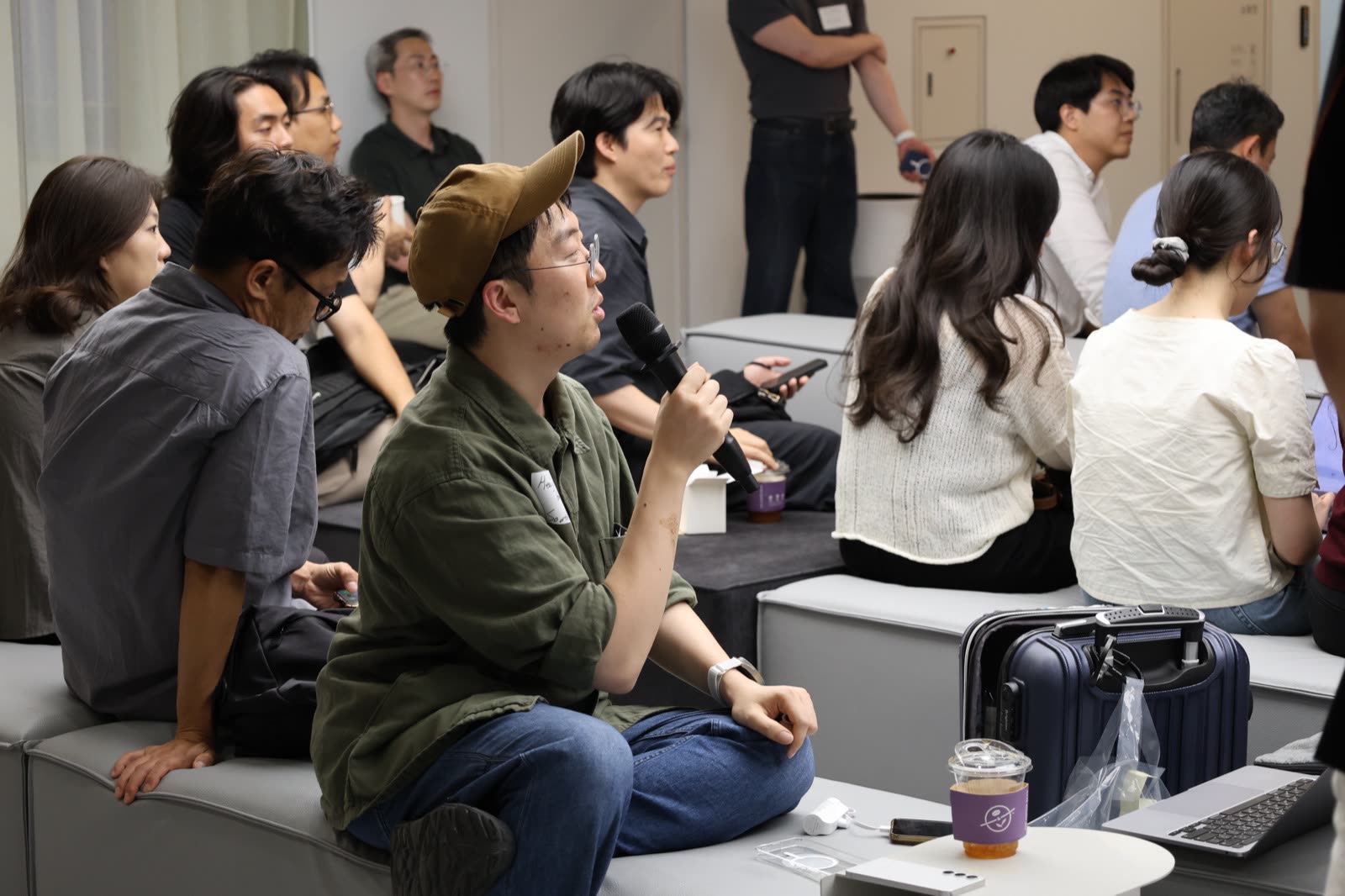
The conclusion that repeated most across the roundtables was that marketing in the age of AI is decided by problem definition and insight rather than execution. Several tables observed that marketers are shifting from people who execute to people who design operations and automation, closer to orchestrators moving across brand, performance, operations, and product. Since AI helps with data and execution while human emotion is what produces a purchase, one table named the person who understands people, rather than the person who uses AI well, as the talent who will stand out.
Some observed that large corporates are surprisingly passive with AI agents while startups are more aggressive. On the other side sat a note of caution: general-purpose LLMs still fall short of the substance of marketing, and AI today is less small input, large output than large input, better output. You can delegate work you could do yourself, but you cannot get something finished by assigning what you cannot do, so people who know things more deeply will stand out.
Read the full write-upEvent video
Gallery









Next event