Knowledge work is already over in America
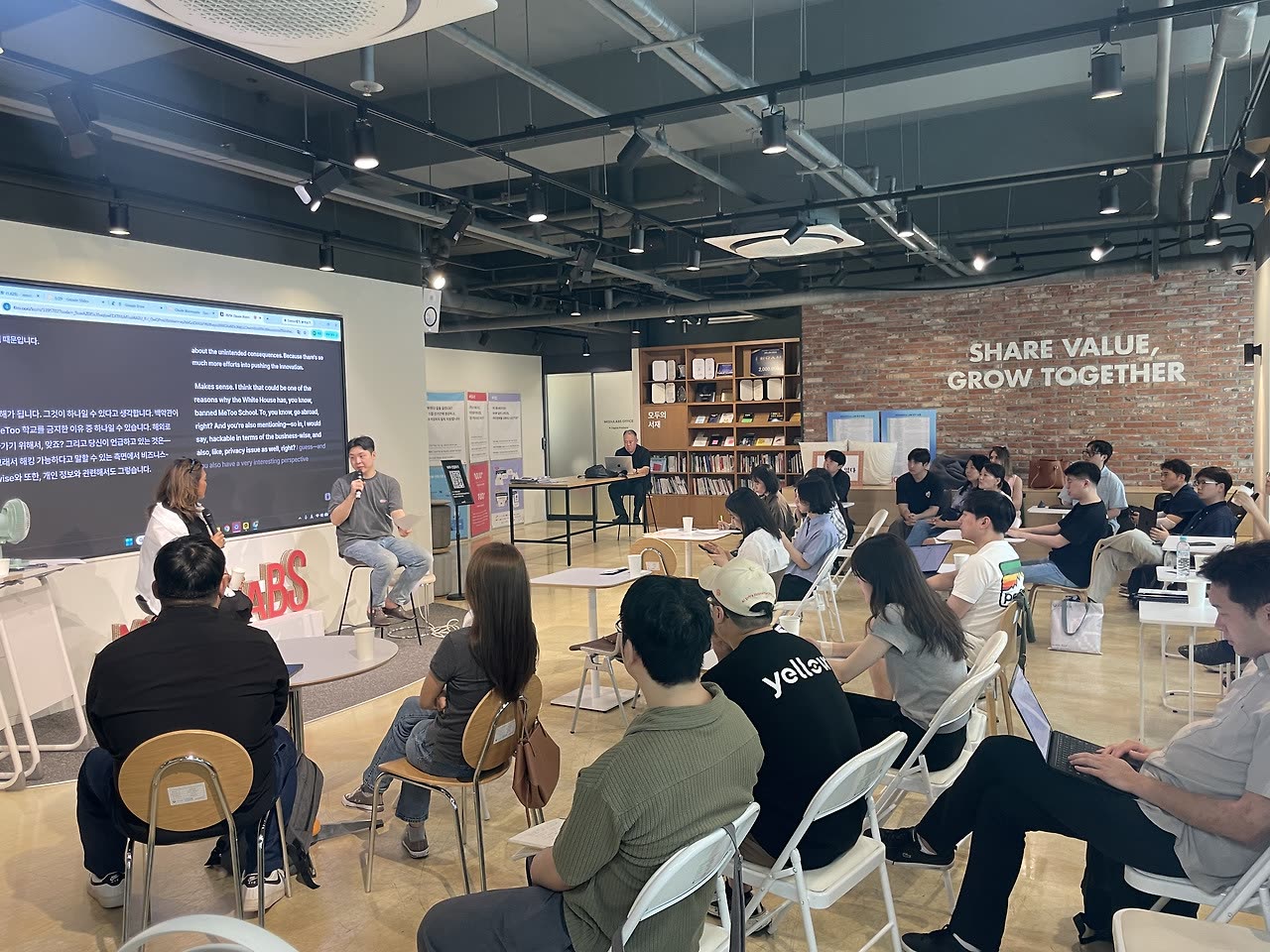
What was discussed
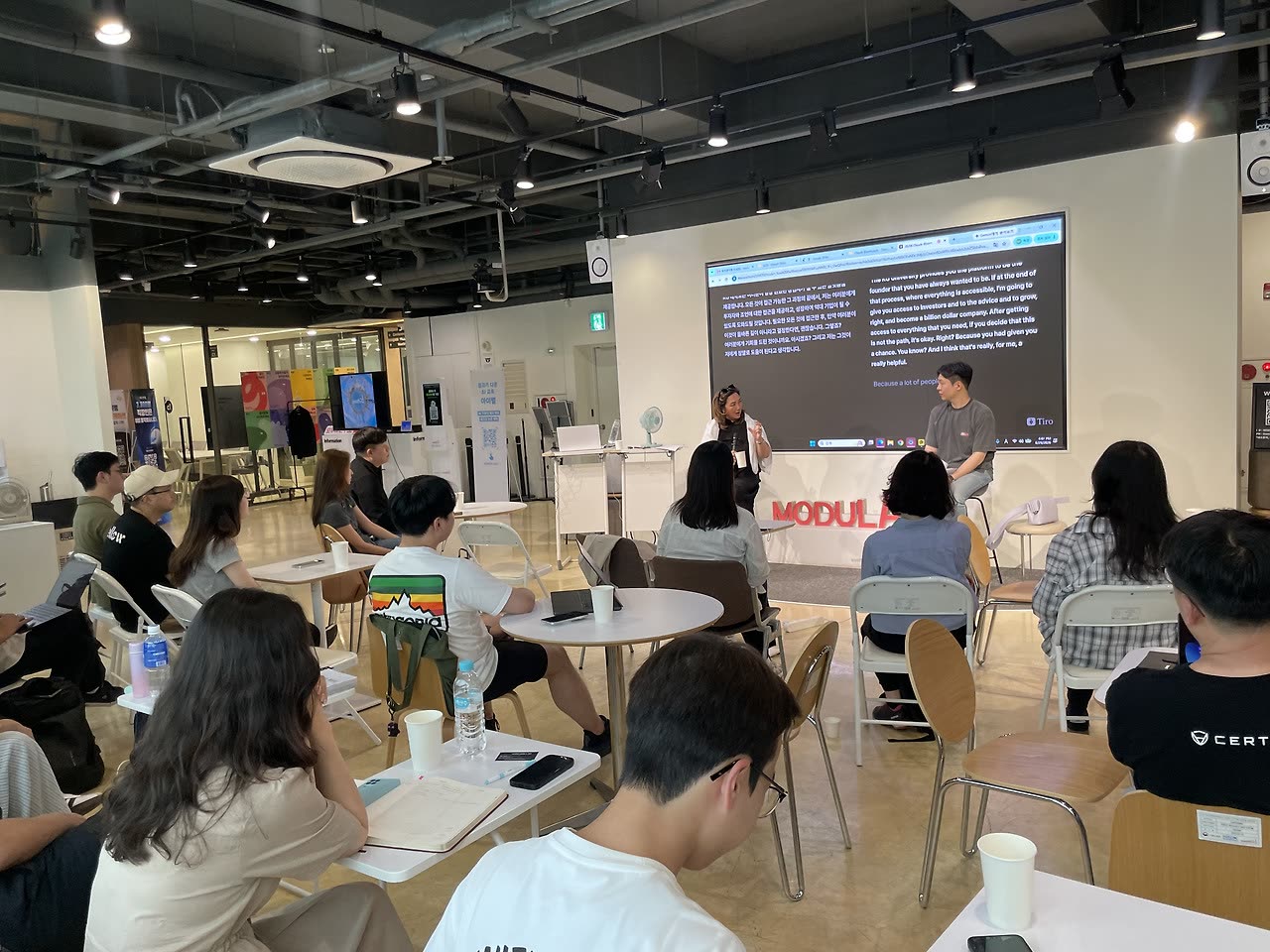
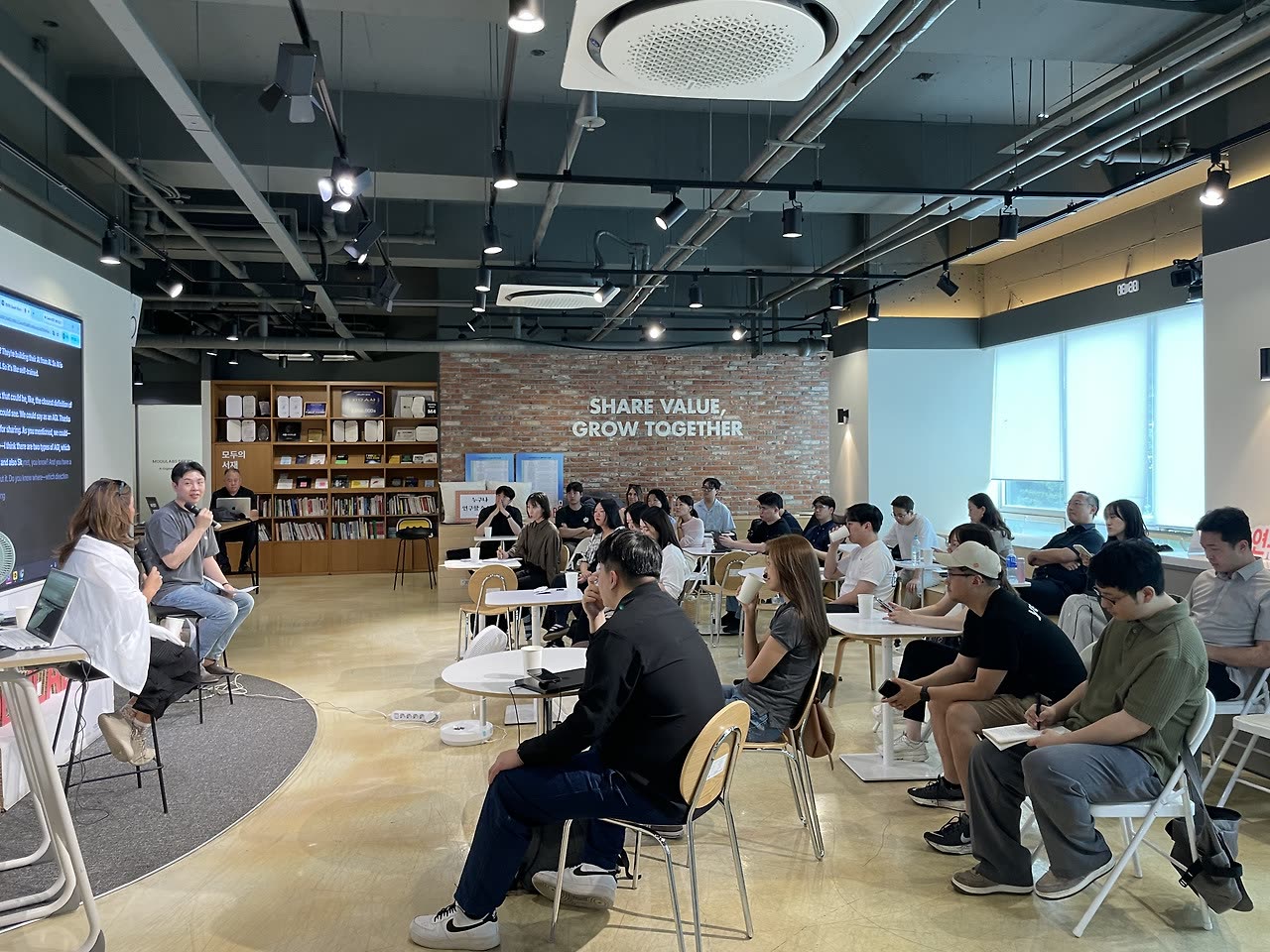
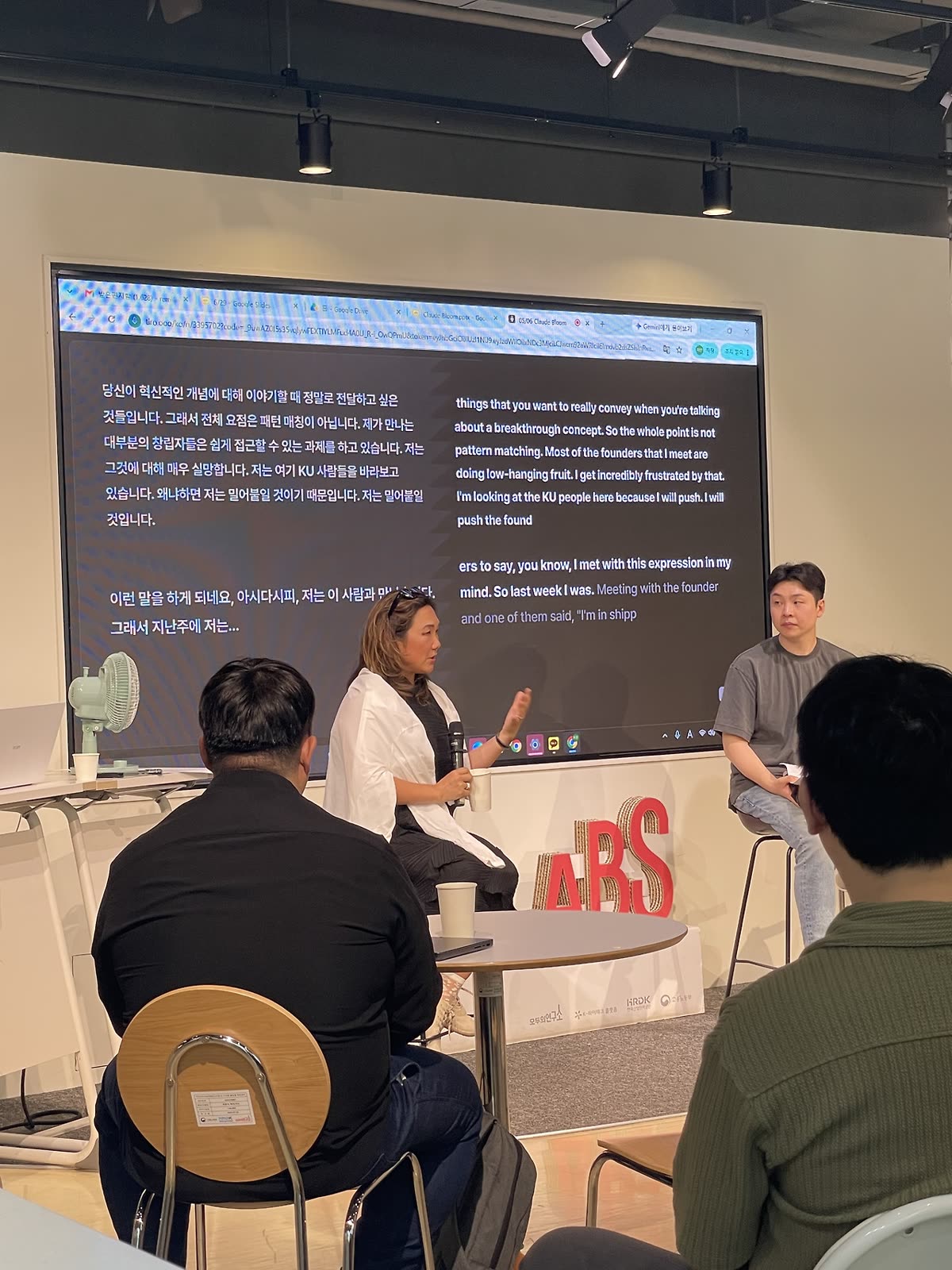
The speaker was Jeewon Kim Serrato, a Korean American lawyer based in San Francisco. She emigrated at twelve, completed her undergraduate degree and law school at Berkeley, and has worked on data privacy and digital transformation in the US for 21 years. She led the data privacy practice at the Department of Homeland Security for eight years, served as chief privacy officer at a financial institution with four trillion dollars in assets, and advised Meta, eBay, Sony, and Citibank on data strategy.
Her reason for leaving a partnership at a large law firm this February was simple. She had reached forty-seven without ever doing zero to one. She had sat in the advisor's chair thousands of times and had never once been the founder. She now runs an AI-native financial services startup she built herself in San Francisco, aimed at the American middle class.
Her company started in a moment last spring. Looking at legal tech AI built to assist lawyers, she had the immediate sense that every lawyer would lose their job and that her own was not safe either. Four friends lost jobs in that stretch. eBay let go of 600 people, Intuit around 1,000, and Meta and Google keep cutting. Some of it uses AI as cover, and either way people are out.
Citing occupational research from OpenAI and Anthropic, she said the top 40 to 60 occupations can already be performed by AI. Accountants, lawyers, even doctors: any work that takes data in, processes and analyzes it, and produces a recommendation. Even she, who considers herself one of the best lawyers with 20 years behind her, cannot compete with an AI drawing on the world's knowledge, and she expects knowledge workers to become unnecessary within two to five years. Her prescription came down to two options: keep pivoting and adapting, or own your own company and your own path.
She called herself a Silicon Valley insider. Most of her Berkeley classmates are founders or VCs, and she has worked on AI since advising on autonomous vehicles fifteen years ago. AI is not new, she said; what changed is that now everyone uses it, not only the largest companies in the world. She compared Silicon Valley to a canary in a coal mine, sensing change a few years ahead of everywhere else. The cultural gap was the interesting part. Pessimism about AI runs deep in Silicon Valley right now and the US is the most skeptical country about it, while Korea is the most positive in the world.
Her read on where the money goes was unsentimental. Eighty percent of global venture capital sits in Silicon Valley, and eighty percent of that money goes back to Silicon Valley founders. With a solid founder story and idea, a sketch on a napkin can bring term sheets. She also noted that this bubble is bigger and faster than the dot-com one. AI technology has already become political, she said. Federal and state AI policy diverge completely, and privacy and AI regulation are led by blue states like California and New York.
Asked about timing for entering the US and raising money, she said now, today. That said, this window may close within one to two years and has already started closing. So get into communities and reach out to everyone you can, down to distant relatives, to build connections. Her view on market size was just as direct: California alone is bigger than Korea, and the US has fifty of those.
What she stressed most was having a local guide. She told a small story about not knowing you need indoor slippers at a hotel gym in Busan, despite coming to Korea every year. The reverse holds: a Korean founder in Silicon Valley will run into something baffling every day. A co-founder or a local friend who understands the culture is the real condition for success.
She also advised looking at other hubs, since Silicon Valley is too crowded for fundraising. Her alternative was New Mexico: second-largest sovereign wealth fund in the US thanks to oil, three national laboratories, deep tech territory. Ninety percent of Silicon Valley money goes to Stanford MBAs building B2B SaaS, so a team working on robotics, physical AI, energy infrastructure, or logistics may be a better match for Albuquerque.
Korea's homogeneity cuts both ways, she said. She has heard the criticism that group decisions stay with safe bets and never take enough risk. But she wanted to propose the opposite, turning that collective thinking and sense of community into a strength. Unless you are moving to Silicon Valley, you are better off building a community that grows together where you already stand. She described meeting fifteen young founders in Busan and suggesting that instead of each starting a company, the fifteen of them build one, and brainstorming how their different capabilities would combine.
She pointed out the difference in how people communicate. American pitch decks open with the conclusion, why we win, because backgrounds vary so widely that people will not get it unless you say it outright. A homogeneous population, by contrast, shares context that goes unspoken, so the conclusion comes later. On a global stage, leading with the conclusion is worth practicing deliberately. The name she chose, The K University, came out of asking what she could do differently as a Korean American rather than as a privacy expert.
The core concept of The K University is breakthrough. She introduced Pattern Breakers, the book US VCs have commonly read and adopted as shared language over the past two years, and framed the conditions for a breakthrough as inflections and insights. An inflection is a large external change like AI, social media, or geopolitics; the insight is what only that founder has to catch the change with. What frustrated her were founders taking the easy path instead of what only they could bring to the table.
She drew a clean line between unicorns and lifestyle businesses. VCs do not invest in a lifestyle business making three million won a month, and a unicorn is a company that can grow to a billion dollars across a hundred countries. If your company will not get that large, of course VCs do not pick up the phone, so rather than reading silence as failure, understand that you are not their target. She closed with what she learned from the world's largest companies: business is ultimately selling happiness, and if you can frame the mission as how this increases happiness, money and customers follow. Noting that Korea's success was built on communities that terraced rice paddies by helping each other, she said you succeed only when you see the founder next to you as someone growing in the same direction rather than a rival for the same capital.
Read the full write-upGallery
Next event