A sedative for the age of AI FOMO
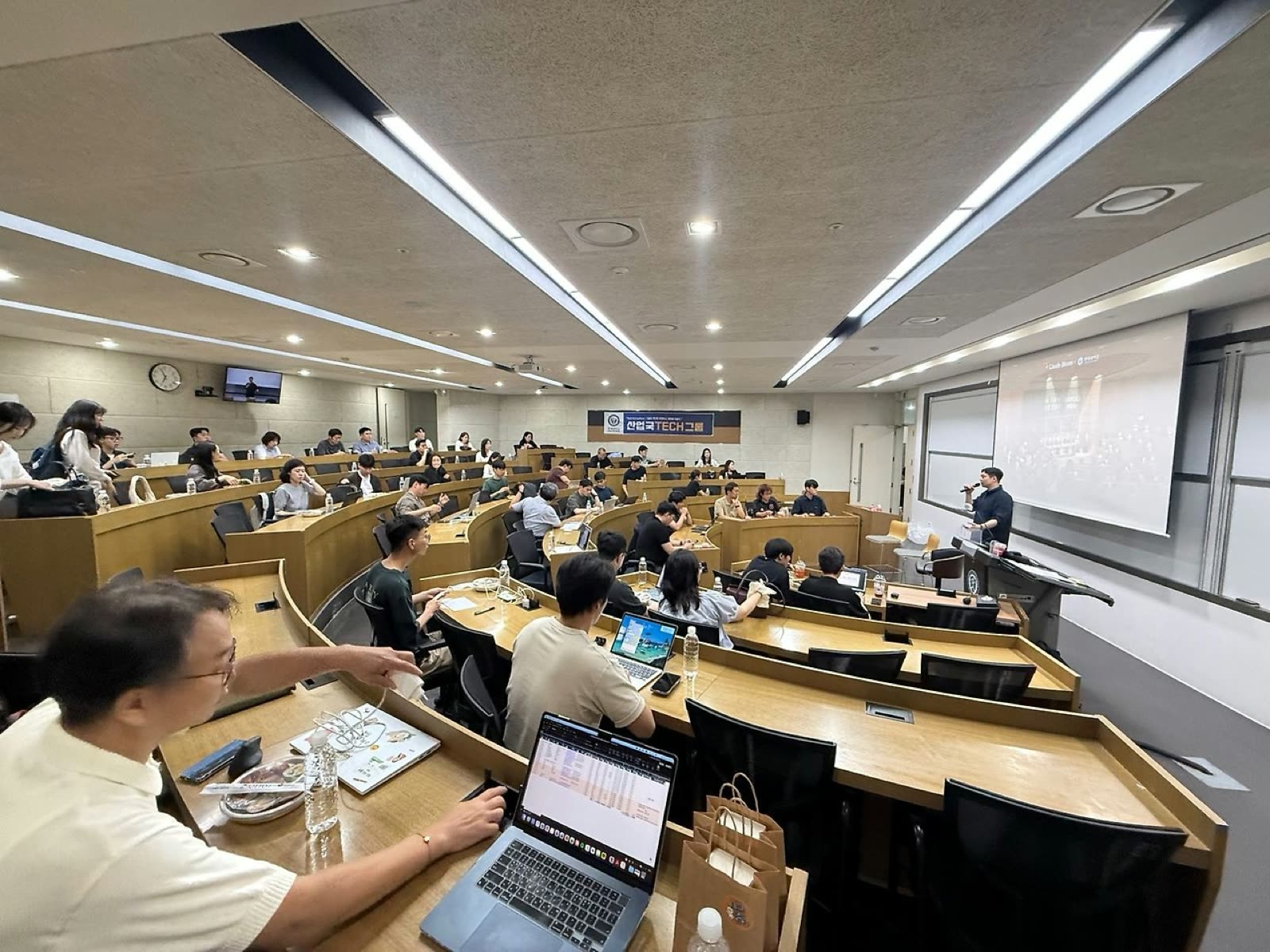
What was discussed

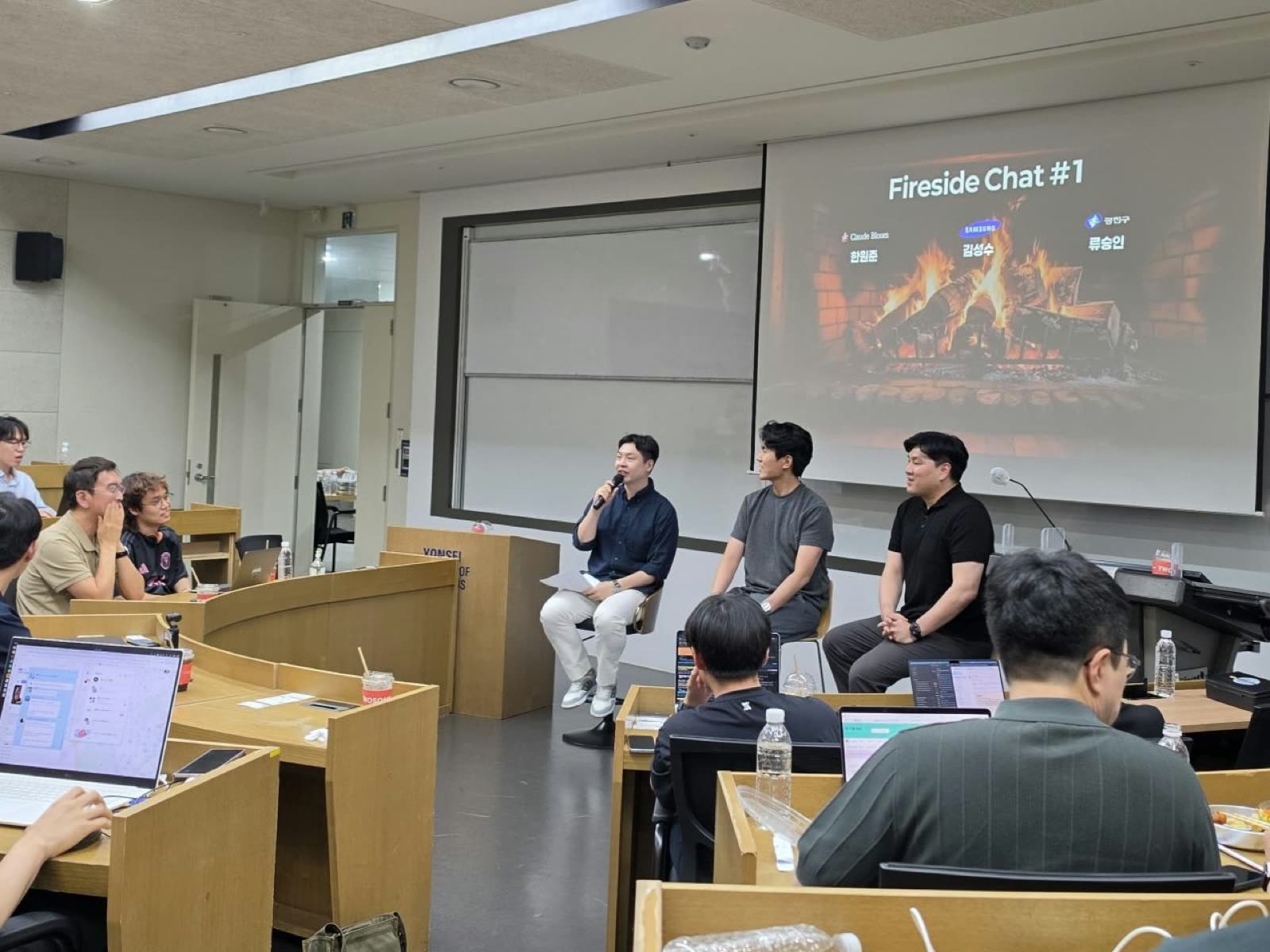
The first session paired Kim Sung-soo of Samsung Electronics with Ryu Seung-in, a civil servant at Gwangjin District Office, on how to bring AI into a conservative organization. Kim runs 100 GPUs directly in Samsung's LSI division. With 7,000 eligible users and 4,000 actual ones, properly supporting them would take 300, and he runs it on 100. On top of that he built an environment that runs Claude Code on those in-house GPUs, changing the install binary's endpoint to an internal domain and putting LiteLLM in as middleware so it talks to their own GPUs, keeping confidential code from leaving.
AWS is also a competitor, so confidential code cannot go to Bedrock either, which means two tracks: confidential work on in-house GPUs and everything else on Bedrock. LSI is a hardware design division working in an RTL language that has never been made public, and general-purpose models cannot write that code. Instead they train on their vast internal documentation through RAG and run their own agents.
Getting there was a fight. Executives wanted GPUs given only to a handful of specialists; Kim argued that the real benefit comes when people with domain knowledge use them, and they clashed for months. He sent four company-wide emails and made enemies doing it. When Claude Code alone made the agent development targets executives had set meaningless, the people whose performance metrics collapsed became enemies too. Even so, LSI is a non-memory division running on half the headcount, so the appetite for AI is strong, and introductory training sessions fill within a minute.
Ryu's approach was different. In his own words, he never broke through anything; he quietly did what nobody asked him to. After being reprimanded when AI answered a legal question wrong, he dug in until he arrived at MCP, and vibe coded a connection to the public API of the National Law Information Center to build a legal MCP. When he posted it on Threads, lawyers, accountants, and public servants started using it, and it was presented as an innovation case by the National AI Committee. Internally the reaction was why would you build that, and it was only recognized once it was attached to an internal AI service that gave people an environment to use it. For the district newsletter, editing 50 to 100 Hangul files one at a time became eight minutes of document parsing.
Both of them described the same way out of FOMO. There are no AI experts, and someone with their own domain knowledge who uses AI even moderately well is far stronger. Rather than racing, start by asking your own fundamental problem well.
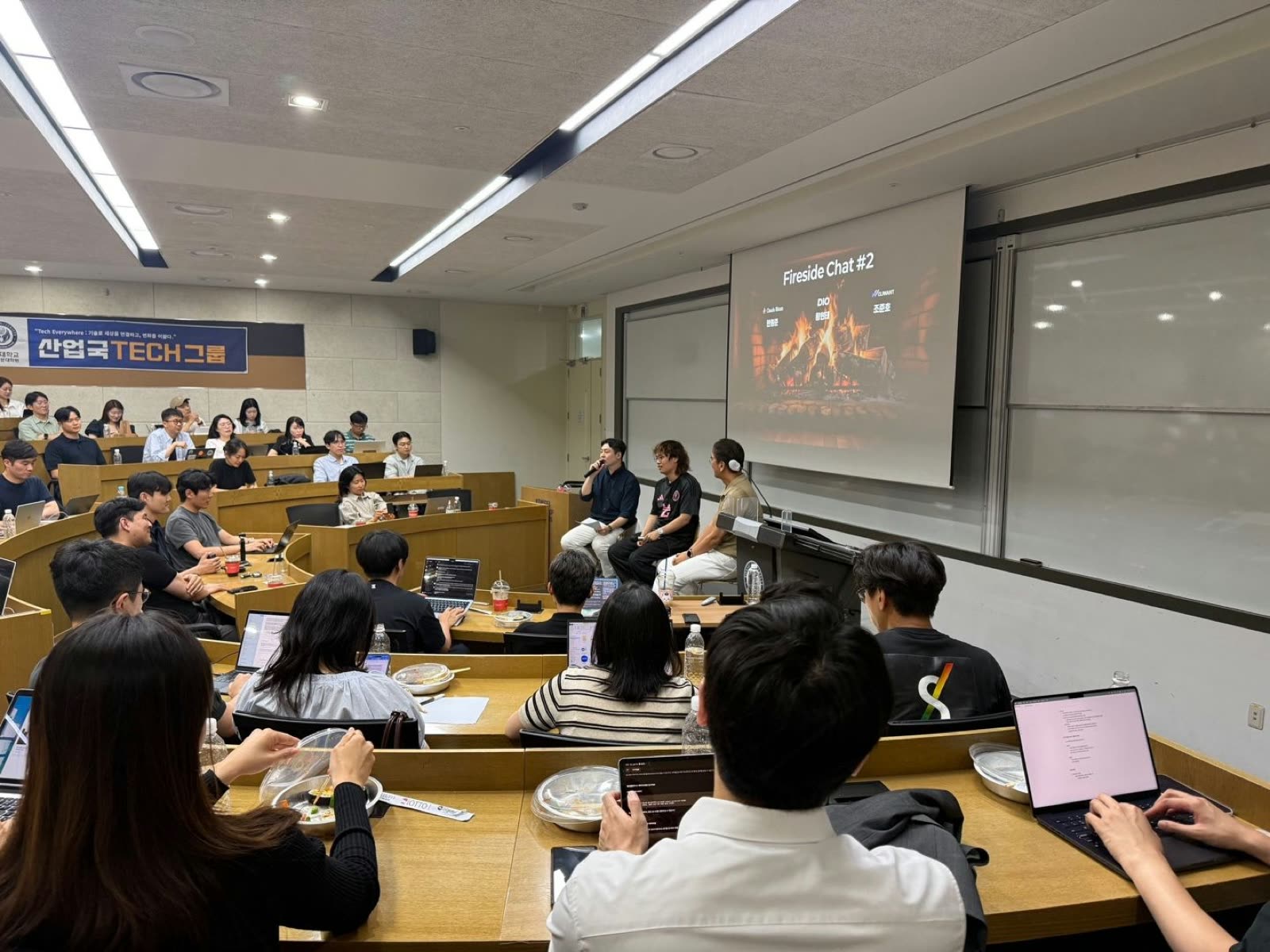
In the second session, SpaceY CEO Hwang Hyun-tae said he came out of B2B SaaS feeling he had been sold something. He changed his frame from building good software to finding a business whose capability AI raises. The concept he brought was FDE, forward deployed engineer: going into the client, hearing the problem directly, and engineering alongside them. Work that took ten people takes one in the age of AI, so the pressure a single person carries grows accordingly and the blue sets in. SpaceY is therefore reorganizing into teams of two or three with different characters, a foreman, an engineer, a communicator. Everyone uses the AI technology well, and the real problem is the team structure and mental hedging that comes after.
Senior and junior roles have inverted too. Seniors who hold the company's tacit knowledge organize context and teach it to AI, while juniors run sixteen sessions in parallel and generate speed through sheer volume of output.
Cliwant CEO Cho Jun-ho's confession connected to the earlier proposal session. They rolled AI out company-wide early this year and carved out Thursday afternoons for experimentation, and revenue was the same. Using AI well and the company doing well are completely separate things. A startup enters by disrupting an existing industry with an innovative method, and it does not have to be a product, so he took the request customers kept repeating, just do all of it for us, and changed direction toward consulting that compresses the bidding process with AI to the point of producing a hundred proposals a day.
The end picture matters too. The way Elon Musk set multi-planetary life as the vision and the team follows it, without an end picture you cannot reach the next stage no matter how well you use AI. Asked by an audience member whether startup products become unnecessary once large companies build everything internally, he said yes, and added that the era of competing on a single product is over; value now comes from going end to end and solving the whole customer journey at once.
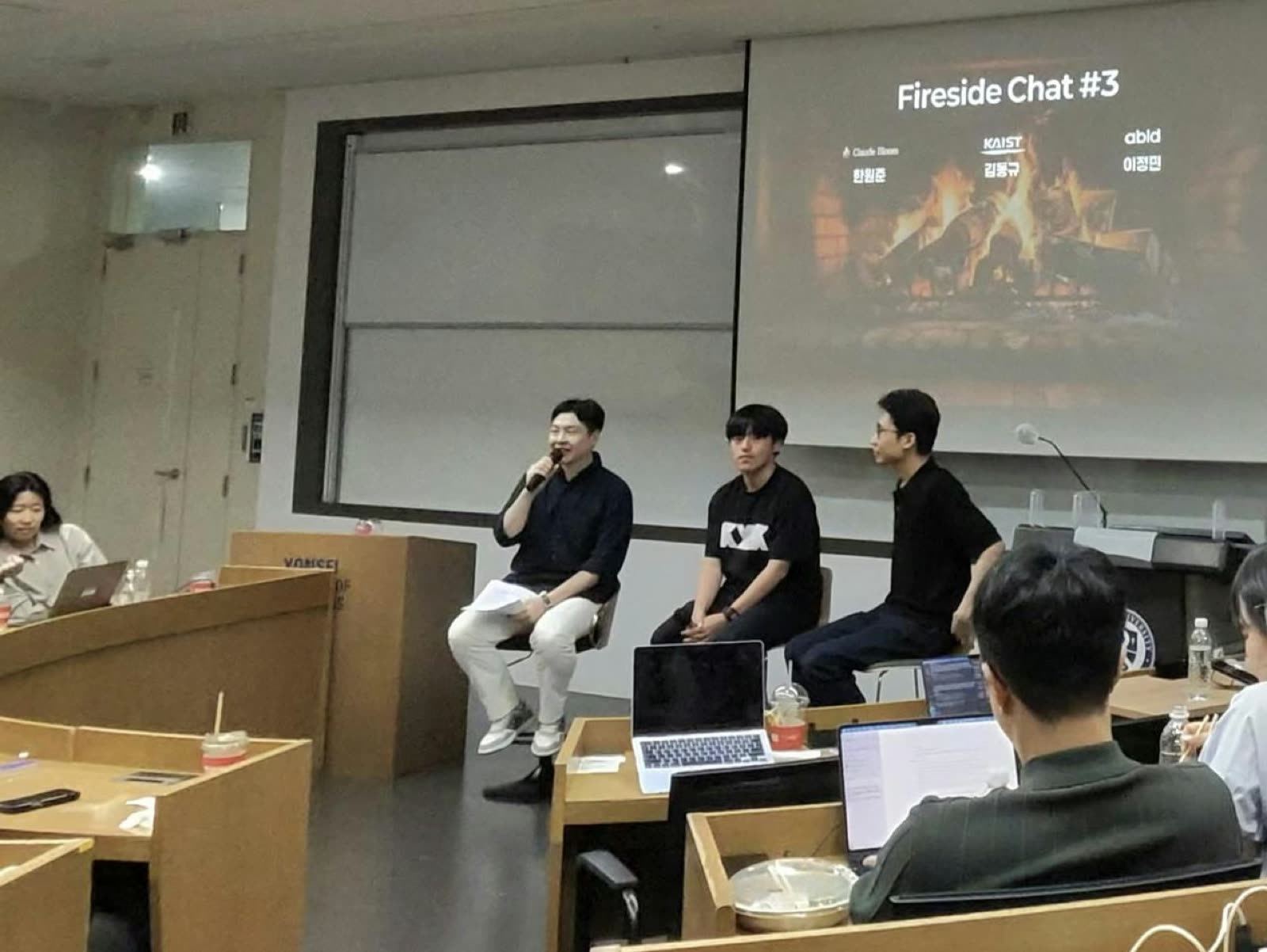
The third session was two solo builders. Kim Dong-kyu, an undergraduate researcher at KAIST, built K-Skill, a collection of 90 agent skills for Korean users, and it has 5,600 GitHub stars. He values a GitHub star at ten to fifty times a YouTube subscriber. His current strategy is not filling a piece out to 90 points but shipping at 80 and fixing it on feedback once it is out. His line was that people with nothing to lose are the most frightening. If you are already open there is nothing to break into, and anyone trying to copy ends up dependent on you. Open source in second place can play a game the closed-source leader cannot.
Lee Jung-min came through an investment firm and startups and has been a solo builder since this year, running experiments on what works from the premise that most software collapses. He was candid about the limits: get sick and the day's work stops, and while a deck can be produced in a click, taking one to an executive briefing or a large event is a different matter entirely. What he is focused on now is private equity AI rollup, where a fund with control raises productivity with AI to raise enterprise value. There were no domestic cases and one has now been confirmed. The moat he emphasized for a solo builder was a channel. If you cannot build a channel, do not be a solo builder, and if explaining your service is hard, explain yourself first. He was building a camera app on stage throughout his talk, and said he would ship it as soon as he finished.
At the end, the two split on token maxxing. Kim was in favor: you have to use the best model to its limit to see where you can make things efficient. Taste the ceiling and you know what to cut, and it is cheap right now so try it fast. Lee was conditionally in favor. Without intent and setup, spending tokens builds nothing, and subscribing to every model and running them mercilessly with no sense of direction means spending money and watching a monitor. Token maxxing to learn what a model can do is right; burning through with no direction is something else. In the end the two were saying the same thing.
Read the full write-upEvent video
Gallery

Next event