Telling the real ones from 30,000 fake Elon Musks
What was discussed
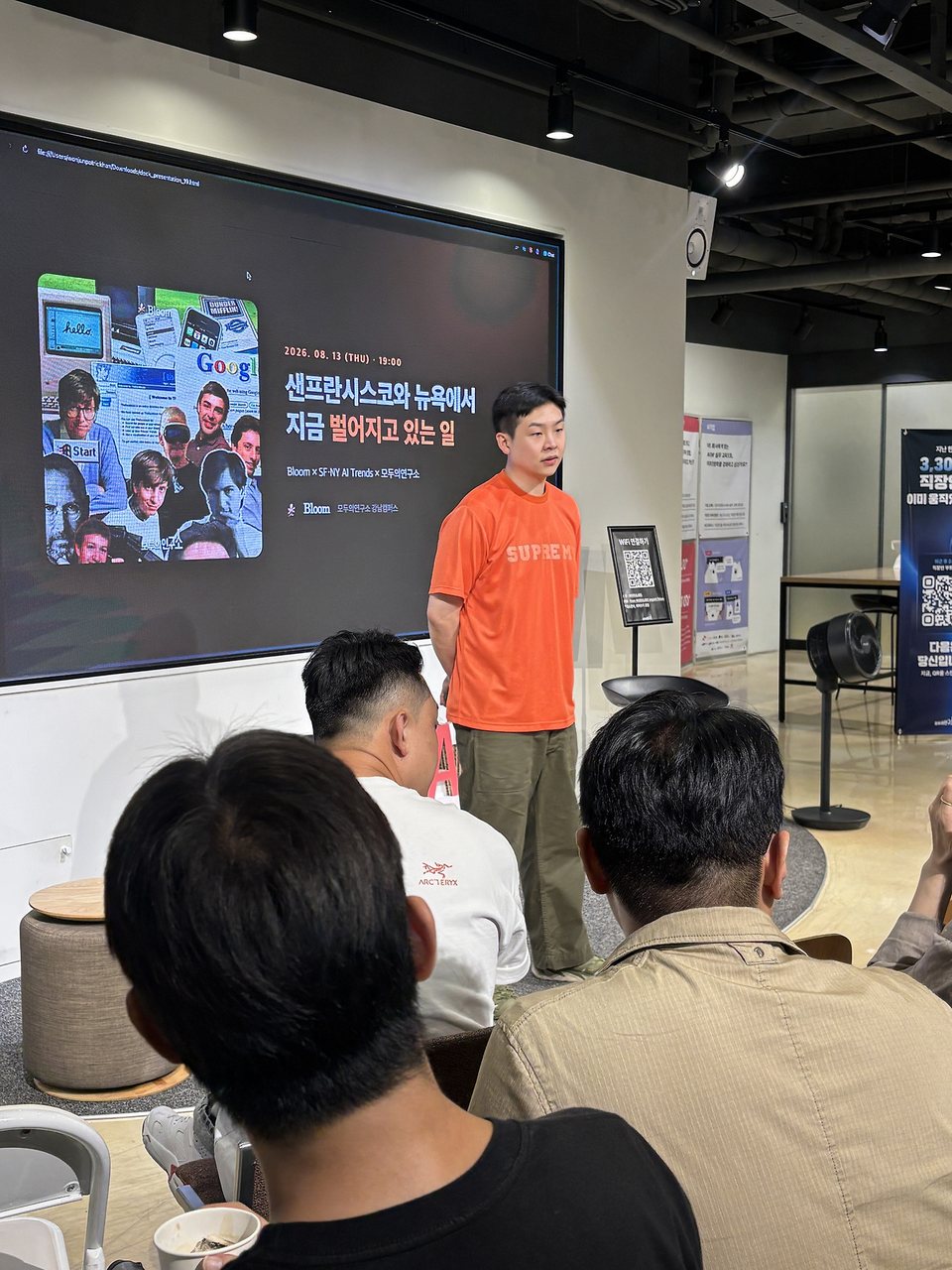
This one ran without a corporate partner, with two community members as speakers. One had spent 50 days across San Francisco, New York, and LA while building a social media automation service in Korea; the other was born and raised in the US, came through Wall Street and a law firm, and now works as a career coach. Opposite backgrounds, and yet the two sessions arrived at the same conclusion.
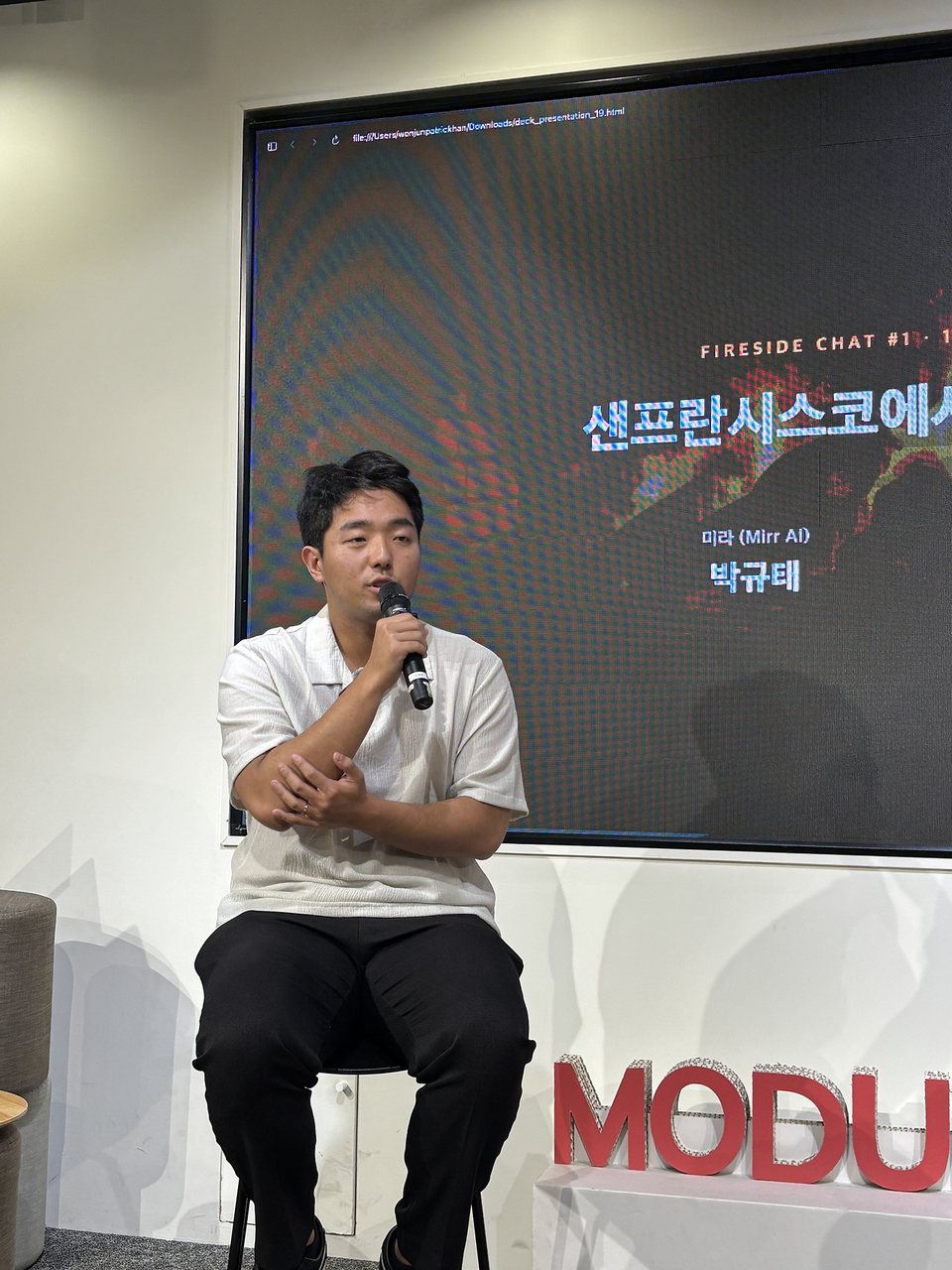
The first session was Park Kyu-tae, who builds Mirr AI. It is a social media marketing solution for small businesses, an AI agent that handles Instagram from planning through production and management. Two people build it, and monthly revenue peaks at 40 to 50 million won. His LinkedIn calls it a toy project, so we asked why. He still does not have answers to what workflow customers use it in, who customers consider the competition, and why his team is the one that can do this well. Until those answers come, he said, it stays a toy project no matter the revenue.
The biggest reason for going to the US was that global software has never come out of Korea. There are a few well-known solutions in his domain here, and outside the country nobody has heard of them. He figured his own product was headed for the same fate as a domestic-only tool, and he wanted to see that for himself before deciding, so he booked a ticket in the middle of a meal.
What struck him there was the talent density of the offline community. Fewer than ten companies do his domain seriously in Korea; there are two thousand of them there. Whatever meeting you walk into, at least one person has already been through the problem you are stuck on. He told a story about a passenger across from him on a train asking for the wifi password, who turned out to be the founder of a startup getting a lot of attention right now.
Asked to define Silicon Valley, he said it is 30,000 people who want to look like Elon Musk gathered in one place. One percent are the real thing and 99 percent are not, but put those people together and you get an interesting ecosystem. He did not only say flattering things. Most people he met were meeting investors with inflated metrics, and he found the showmanship excessive.
He took the same business to both cities and got opposite advice. San Francisco's tone was that his dream was too small, that being number one in content marketing AI hardly counted. New York's tone was that if his customers were in Korea, he might as well raise in Korea. He felt founder blue while there too. X and LinkedIn read like Instagram stories, so everyone you meet seems to be doing well, which cannot be true statistically. He pulled himself out of it in a day.
We asked what the hottest topic in San Francisco is right now. Sessions on getting the most out of Claude Code or Codex run almost weekly, and what stuck with him was token maxxing. How do you evaluate an employee who uses AI well, and what happens when token costs exceed labor costs, get their own sessions. Plenty of companies here are still discussing whether to use AI at all.
He had practical advice too. Ten to fifteen meetups go up on Luma every day, so sign up before the waitlist closes you out, and go to vertical meetups that overlap with your domain. The surprise was his answer on what matters most in networking: listening, not speaking. When non-native speakers from several countries mix, comprehension gets much harder, and you need to catch at least seventy percent to fill in the rest.
Asked about moats in software, he said he spends hours on that question these days. His company is small and already has five or six copycat products in Korea alone, and however good a product is, he could not be sure it would hold once overwhelming money arrived. What he concluded in the Valley was that nobody has a moat. So he is moving away from a software-only business toward something with capex in it, and toward a business that necessarily involves people.
The second session was Celina Lee. She was born in LA, went to elementary school in Korea, and grew up back in California. She studied management engineering at MIT and started her career at a Wall Street investment bank, then switched to law school within two years. Work hard here for five or ten years and you become your current boss, and when she asked whether that was the future she wanted to draw, the answer was no.
At her New York law firm, she once worked a private equity deal without sleep for a week and then put together the bill, which came to a million dollars for that week. That was when it struck her that this is an industry selling trust. A firm puts its reputation and a partner's name behind the signature, and that trust is what the hourly rate is priced on. She now works at a legal AI startup and coaches clients across 20 cities. Of every industry she has worked in, law was the most conservative, and law is now using AI heavily, with firms actively hiring people who help lawyers use it well. She mentioned data showing first-year associate hiring fell for the first time since 2014, which has the industry talking.
An audience question about mindset during a career wobble drew the answer that stayed with the room longest. In ten years of coaching she has not met a single person without a moment of defeat; they just do not post it on LinkedIn. She knows someone is going through a genuinely hard stretch while their feed looks glamorous, and most people, without that context, conclude they are the only one struggling. So in group coaching she assigns a rejection challenge as homework and gives a prize to whoever collects the most rejections. You need the muscle for rejection to keep taking swings, and one of them can work out.
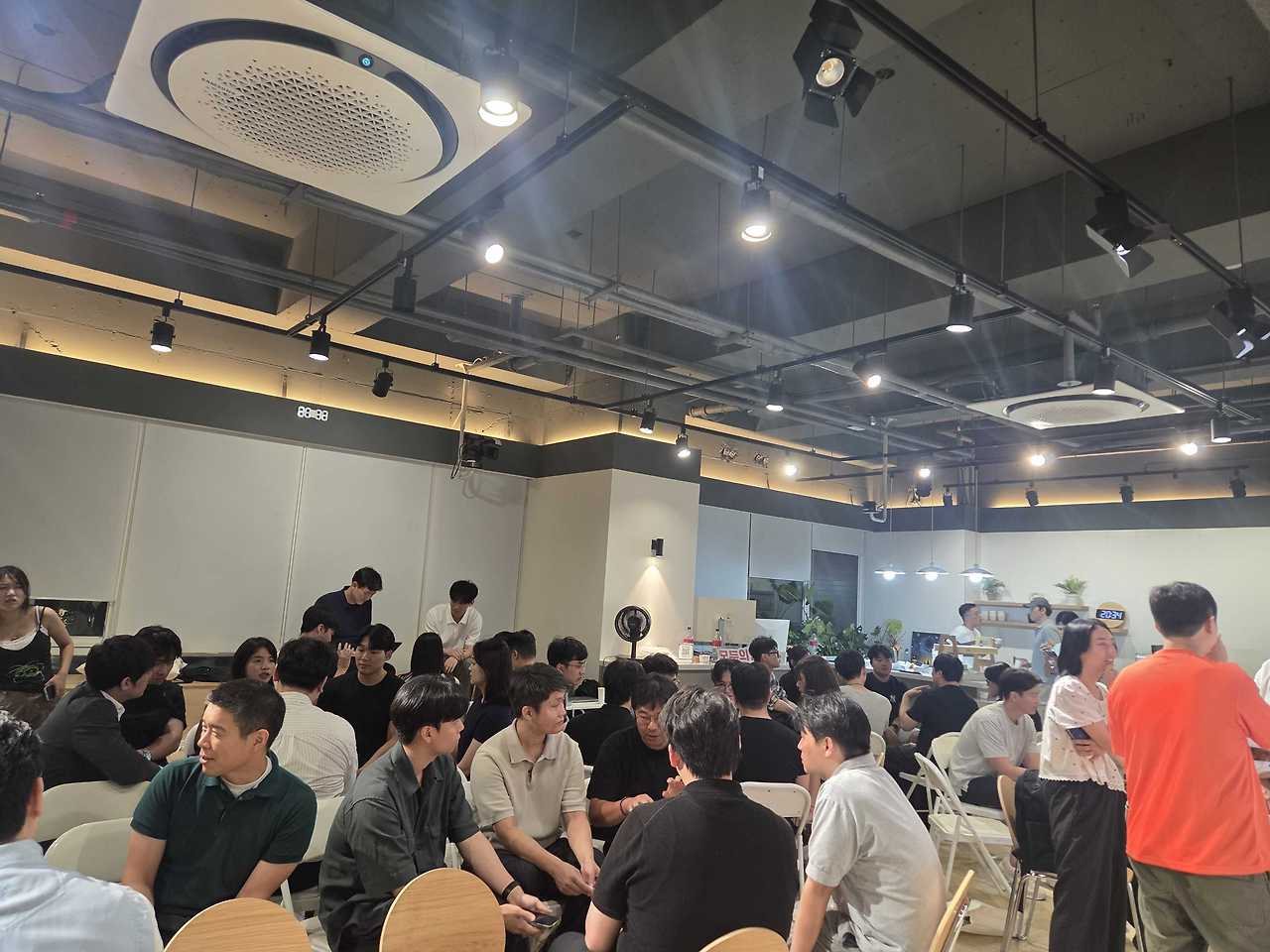
The last hour was roundtables. We asked what people know they should do but have not done, and what they would do with one more hour in the day, and eight tables came up to share. One person meditates to get out from under the dopamine of vibe coding. One has already booked an October ticket to San Francisco to ride a Waymo. One gets a daily token cap at work that also shows up on weekends, so they end up working weekends. The last table made a fitting close: the thing they knew they should do and had not was quit, and having seen some traction on a side project, they expect to resign at the end of this month.
Read the full write-upEvent video
Gallery




Next event