KEEPKWAN, AI creator
What was discussed
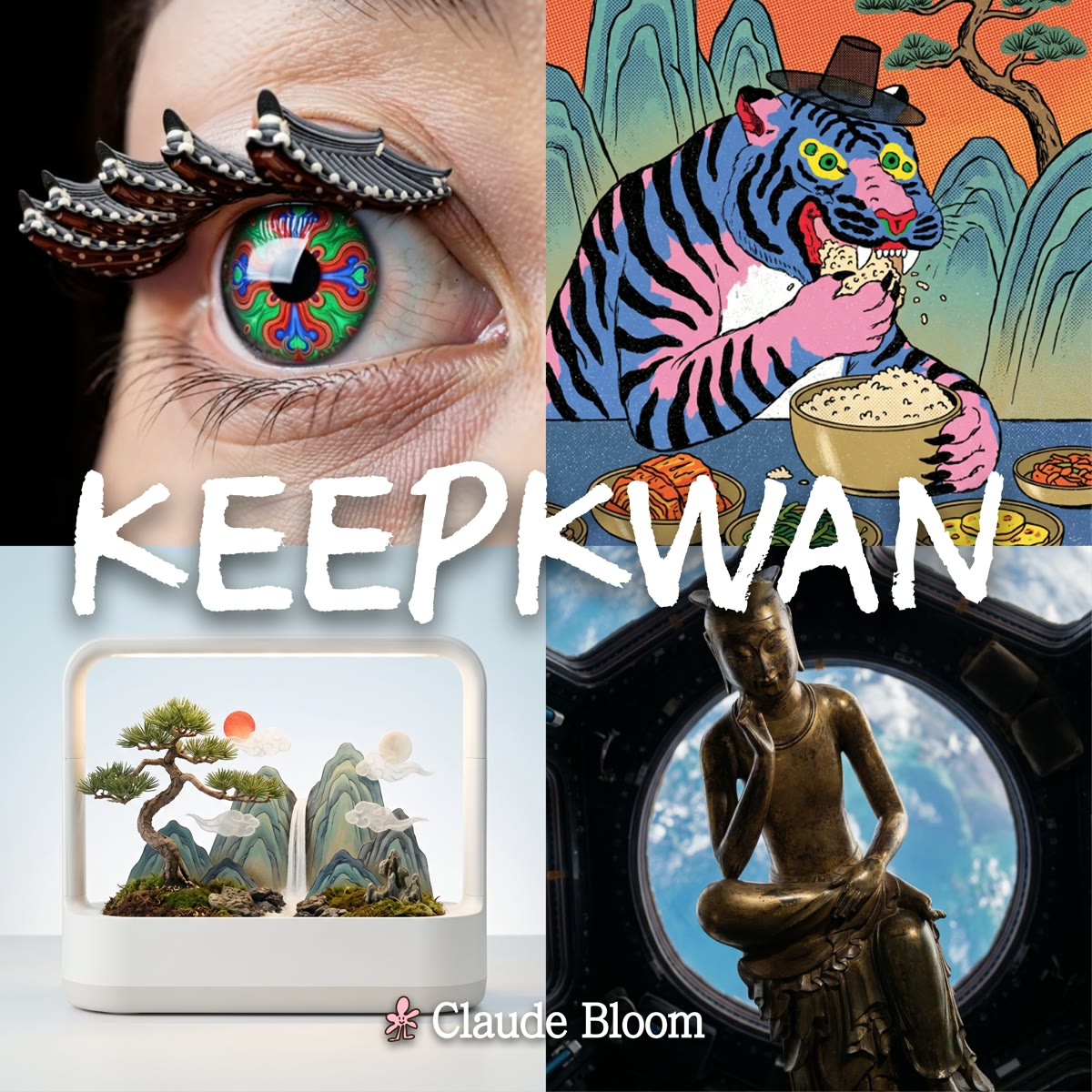
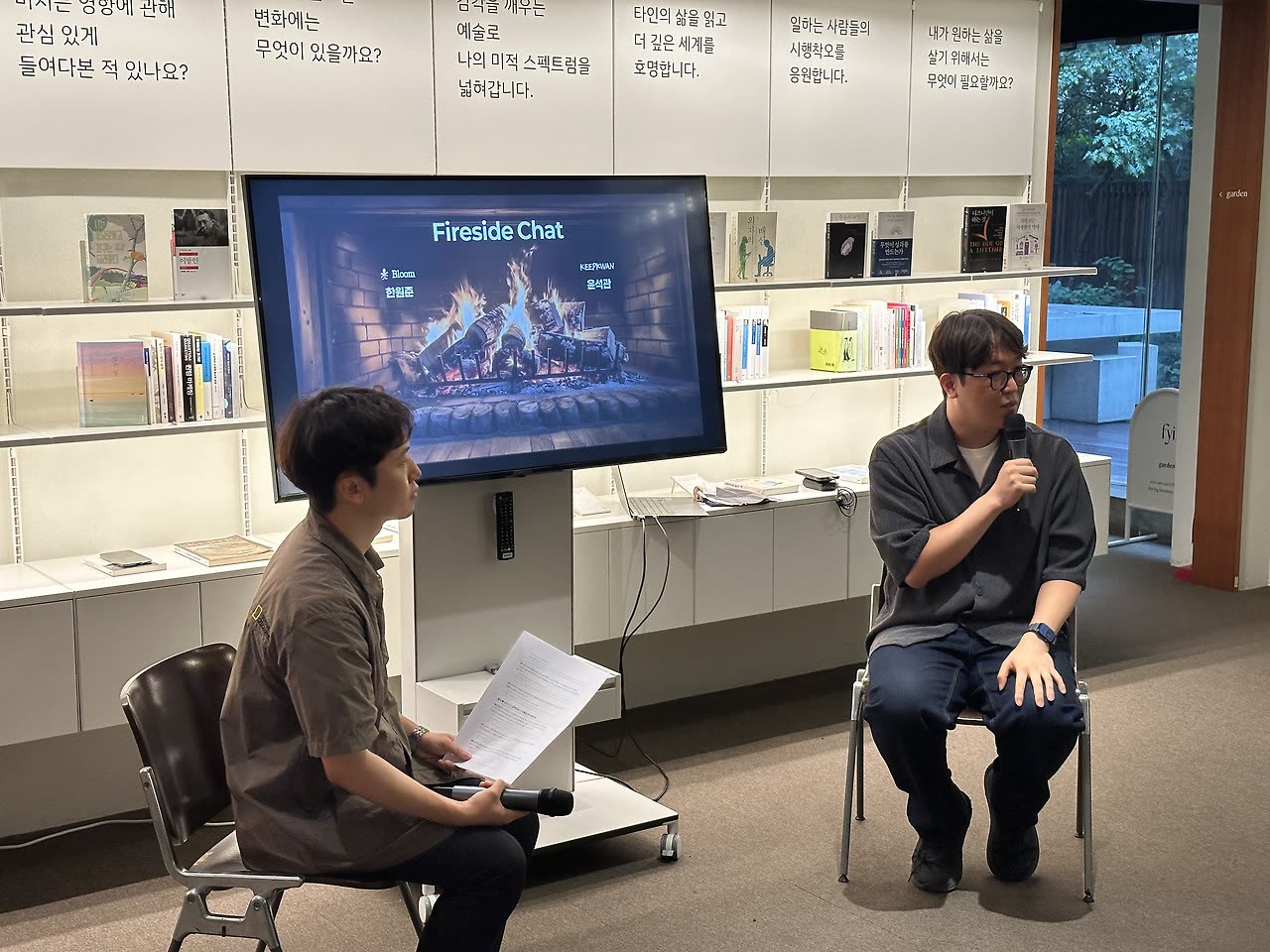
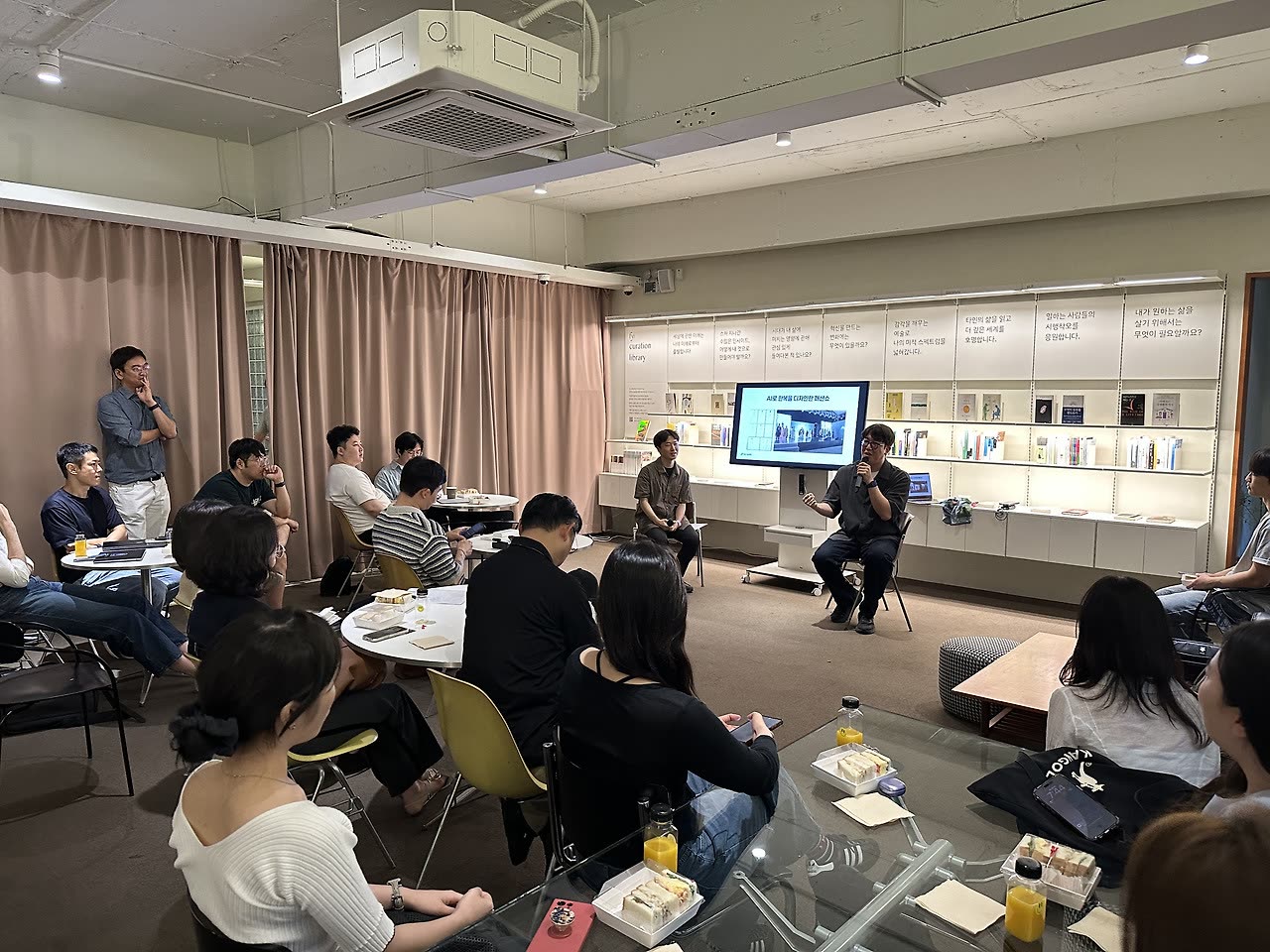
The speaker was KeepKwan, an AI creator who has collaborated with Disney, the Ministry of Foreign Affairs, the Korea Heritage Service, and CJ. Even the origin of the name was striking. After twelve years writing long-range strategy on SM C&C's business strategy team, he encountered AI in 2021, and found it compelling and also frightening, wondering whether it would one day consume him. So he put Keep in front of his name, Yoon Seok-kwan, meaning he wanted to keep himself, and became KeepKwan. He carries the name like a statement of intent.
The moment AI felt like his own field came while researching what the company would live on in five or ten years. Before trying to convince anyone, he decided to find out what this thing actually was, and started working after hours and on weekends. He took a classical Chinese novel he had written in high school and turned the text into images. This was the Midjourney beta, so the results were crude. Still, the fact that text produced something with color in it hit him hard, and that was when he became certain it would be a serious weapon in the content business.
He did not set out to quit. He thought he might be able to do something with it as a new business inside the company, and once he started it was so enjoyable, and watching things come together one by one taught him what freedom felt like. He decided to leave the company he had spent twelve years at, but not right away. He gave himself a year and a test: pass it, and he would resign.
The test ran along two tracks, educator and artist. He had studied business and worked in numbers and slide decks, and still thought of himself as an artist, and he wanted to go beyond knowing AI well to teaching people how to keep themselves human with it. As an artist: open an exhibition under my own name. As an educator: build an offline class and run it if enough people sign up. He set staged goals and cleared them one at a time. Fitting for someone from a strategy team, he designed even his own resignation as a test.
Asked the biggest advantage of three or four years of freelancing, the answer was freedom, and the biggest disadvantage was also freedom. With the structure gone you work weekends and small hours, so freedom over your time can disappear instead. Turning what you make into a business was another thing entirely. It is the same point behind the line going around startups lately: do not use AI, make money with AI.
His first collaboration was with Disney. He had started his life as an artist on X, posting work and showing in a lot of exhibitions abroad, and the opportunity came out of that. He said he constantly looks back at why people came to know him, and the answer he found was story. They must have seen work held together by a clear story, a clear concept, a clear world. He builds content that puts Korean tradition at the center and mixes other elements into it, branding himself so that Korean tradition brings him to mind. That is why his classes start with finding the world inside you before you touch AI.
Even the subject of Korean tradition came from everyday life. On a business trip to New York he passed a store selling hanbok, and under the hanbok in the window it said Chinese kimono. If he did not know his own tradition well, he thought, how much less would someone from elsewhere, and he decided to make content about it. Then he tried generating hanbok with AI and found that AI does not recognize hanbok as hanbok either, producing kimono or Qing dynasty clothing instead. So he started studying, teaching it and learning himself, and he still checks the historical accuracy of everything he makes.
That is why he sketches before turning AI on. Not which tool to use, but what came into his head, drawn on paper first, and then the research inside it, how a garment ties, which traditional patterns apply. He teaches the same way: the first six weeks of a sixteen-week university semester run on nothing but paper and pencil. Everyone is thinking about where the prompt is and what to make, which leaves no room to pull out what is already in them.
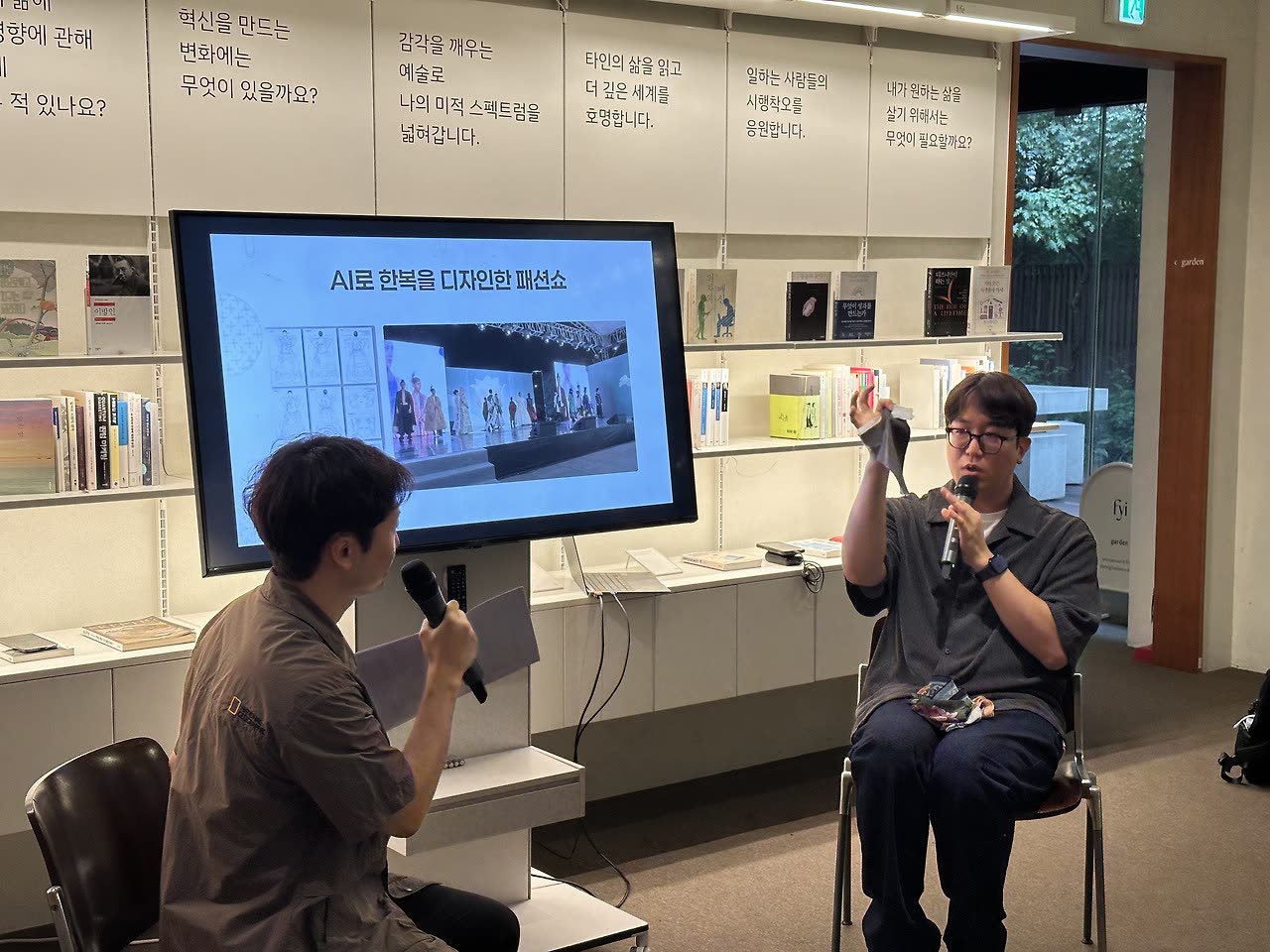
He treats himself as a company and sets KPIs every year. His long-range plan was to go beyond images and video into physical work. Last year's theme was wearing, moving stage by stage from photo shoots to fabric to silk screen, until he made a wearable hanbok based on the old letterforms in the Hunminjeongeum Haerye, and in November he ran a runway of AI-designed clothing at Gwanghwamun Square. One piece photographs the dancheong patterns from Geunjeongjeon at Gyeongbokgung and swaps the traditional five colors for neon, so black fabric reveals neon as the weather warms. This year's theme is scent, next year's is eating, and the ultimate goal is to create a flavor that did not exist.
He also feels the boundaries between job functions dissolving. With no relevant degree and no engineering background, he taught AI creative work to a large company's HR organization, and the HR team turned out to be so interested in content production that their final project was content for HR. Work that once meant asking the marketing team for help now gets handled in-house. What he left the room with stuck too: everyone treats AI as a tool that generates things, and for him AI generates time. When eight hours of work collapses into minutes, the hours left over go into learning something else, and he studies ceramics and bonsai so as not to lose the feel in his hands.
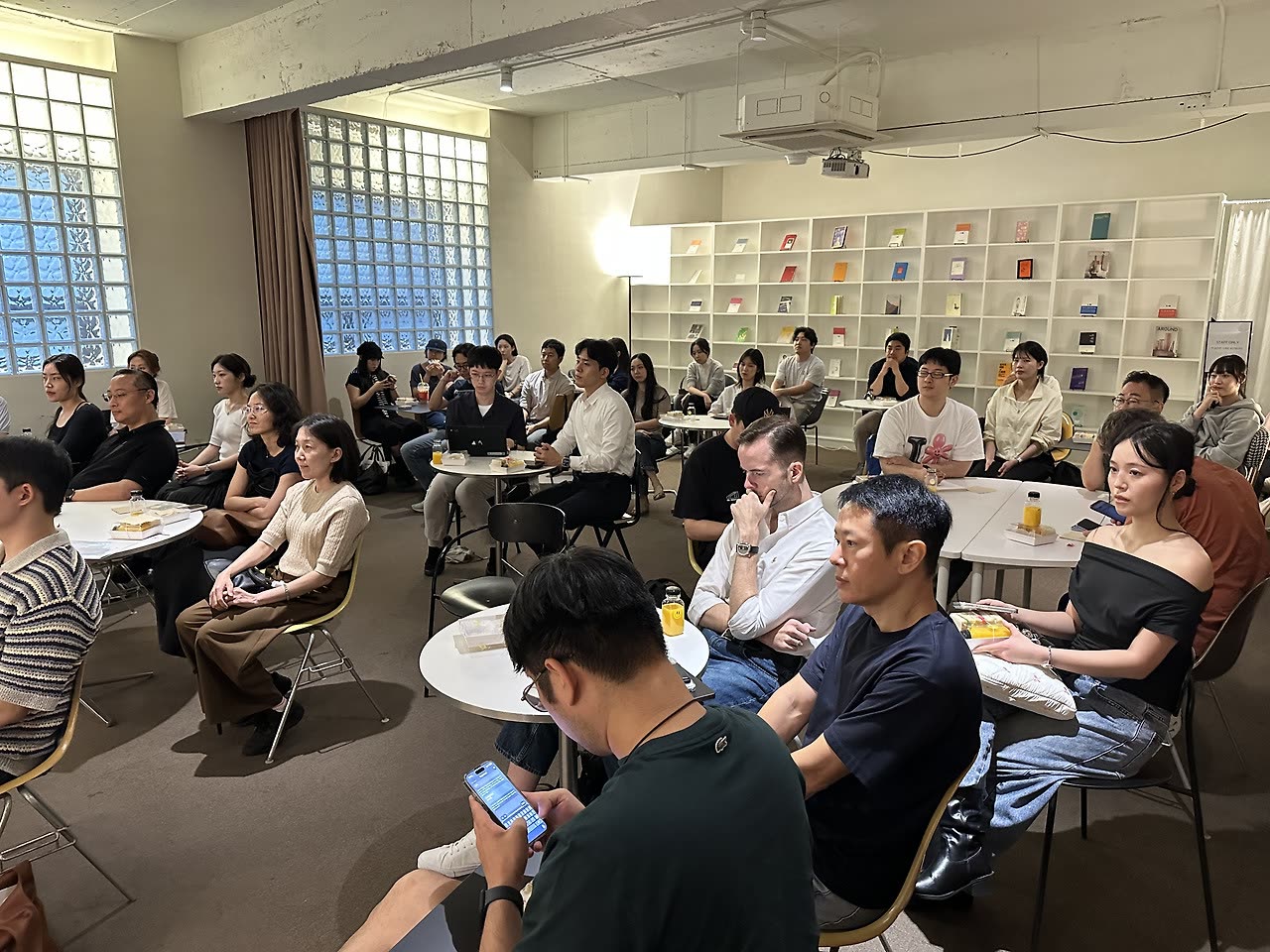
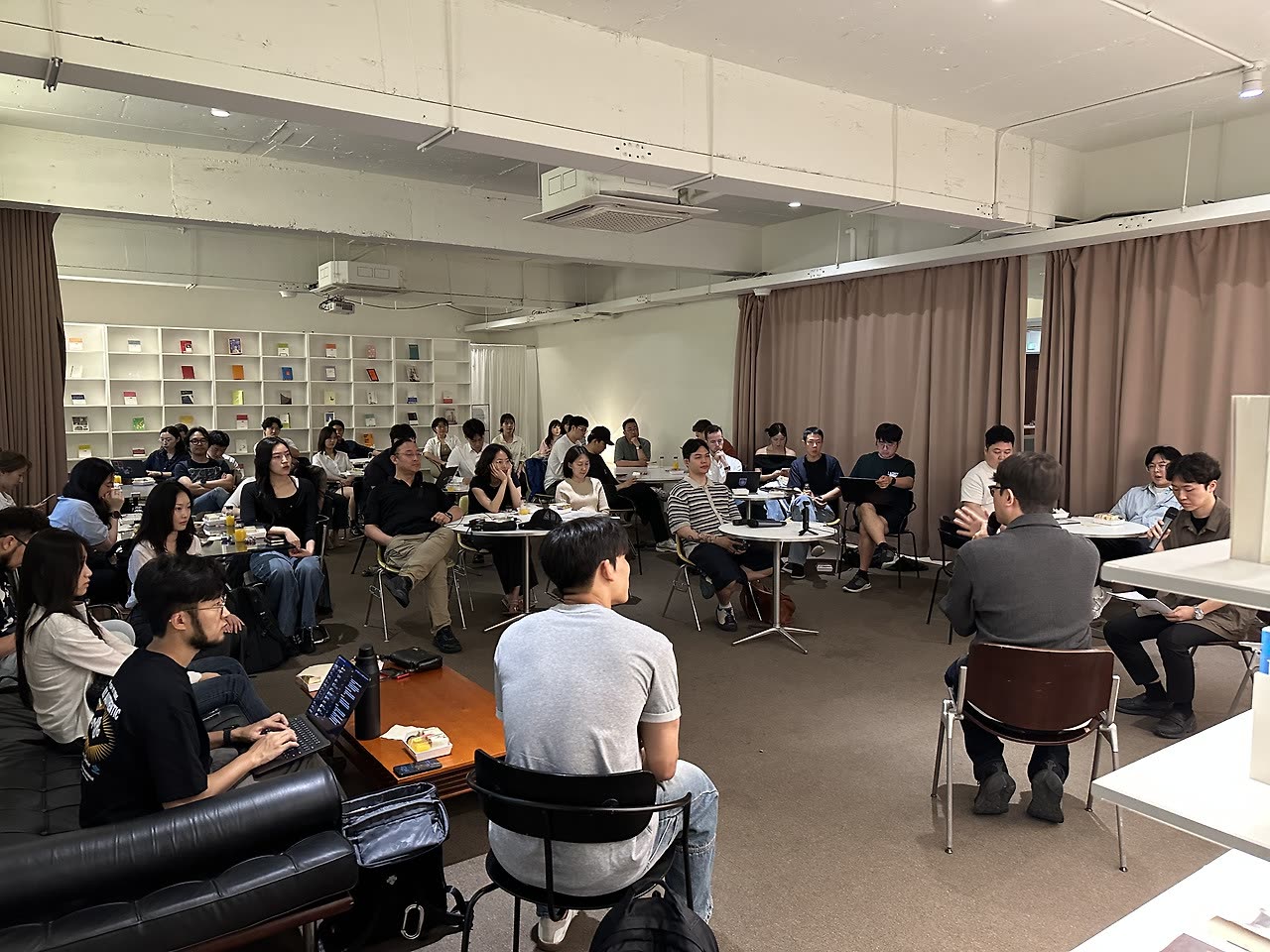
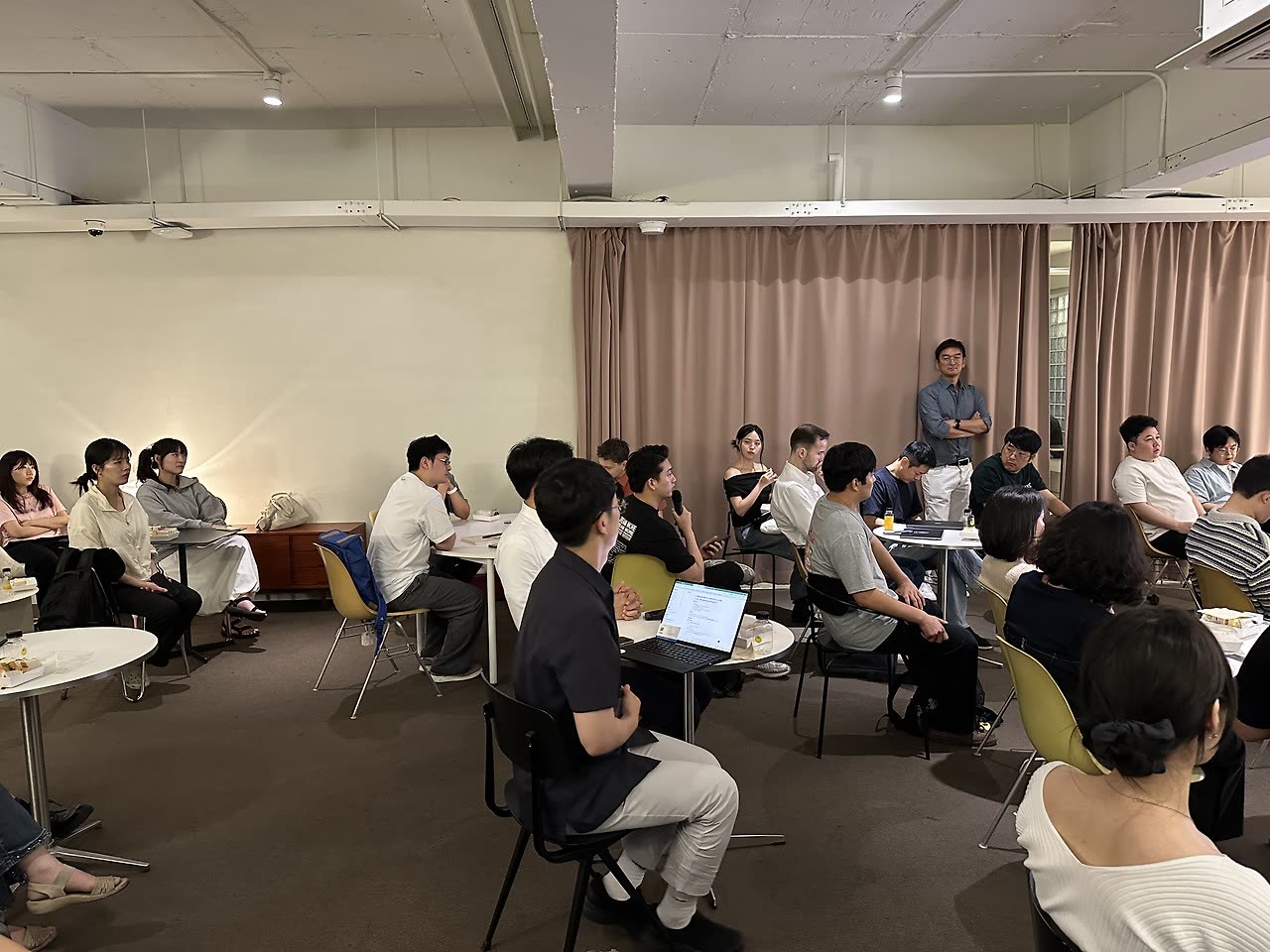
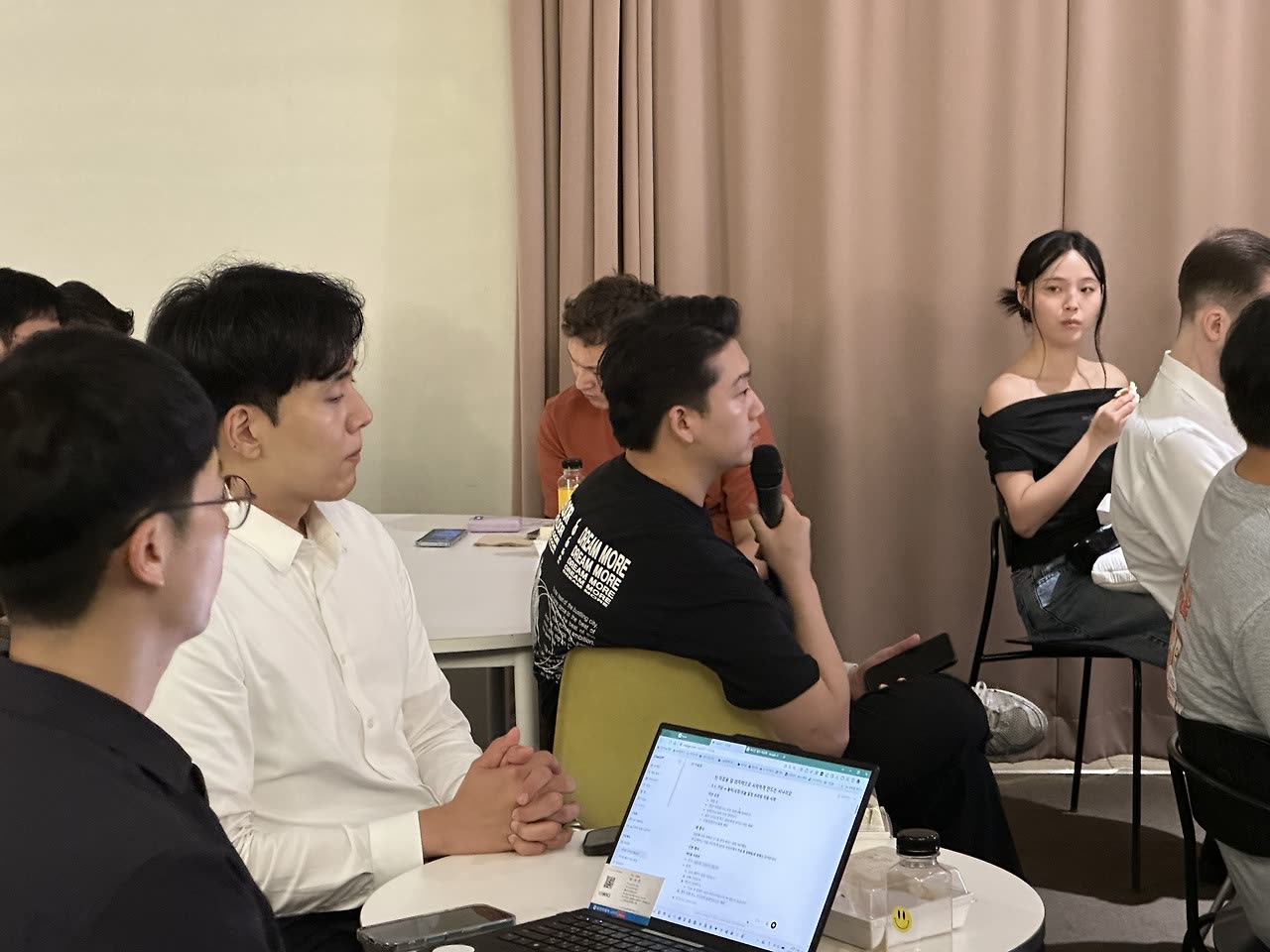
The breakout tables took up the question of what makes you write off an AI-generated piece immediately. Tables converged on similar answers, and the most common was a clumsy imitation of reality. Use AI to make something that does not exist and it reads as creation; fail while trying to mimic reality and you fall into the uncanny valley. Consistency loomed large too. Plenty of people said the first draft looks plausible and by the second or third revision the face and the substance are gone, so they go back to Photoshop. Broken Korean fonts and shipping a piece without fixing a single wrong number also came up. Interestingly, many felt that looking AI-generated is no longer much of a problem in itself.
The thing that makes work yours turned out to be coming back to the person. People talked about how adding one photo they took or one drawing they made creates trust, about deleting all the off-the-shelf skills from GitHub and getting the best results once they built their own, about training the model on their own way of speaking to keep some humanity in it. One table said 30 percent of the work on AI output still belongs to a person, in checking it and building the storyline. The line that stayed with us was that nothing ends with one click; it takes three thousand clicks ground down. As KeepKwan put it, it is not a portfolio but a storyfolio, and what lasts is the person building the story.
Read the full write-upEvent video
Gallery
Next event