When AI starts acting, what should people and companies focus on?
What was discussed

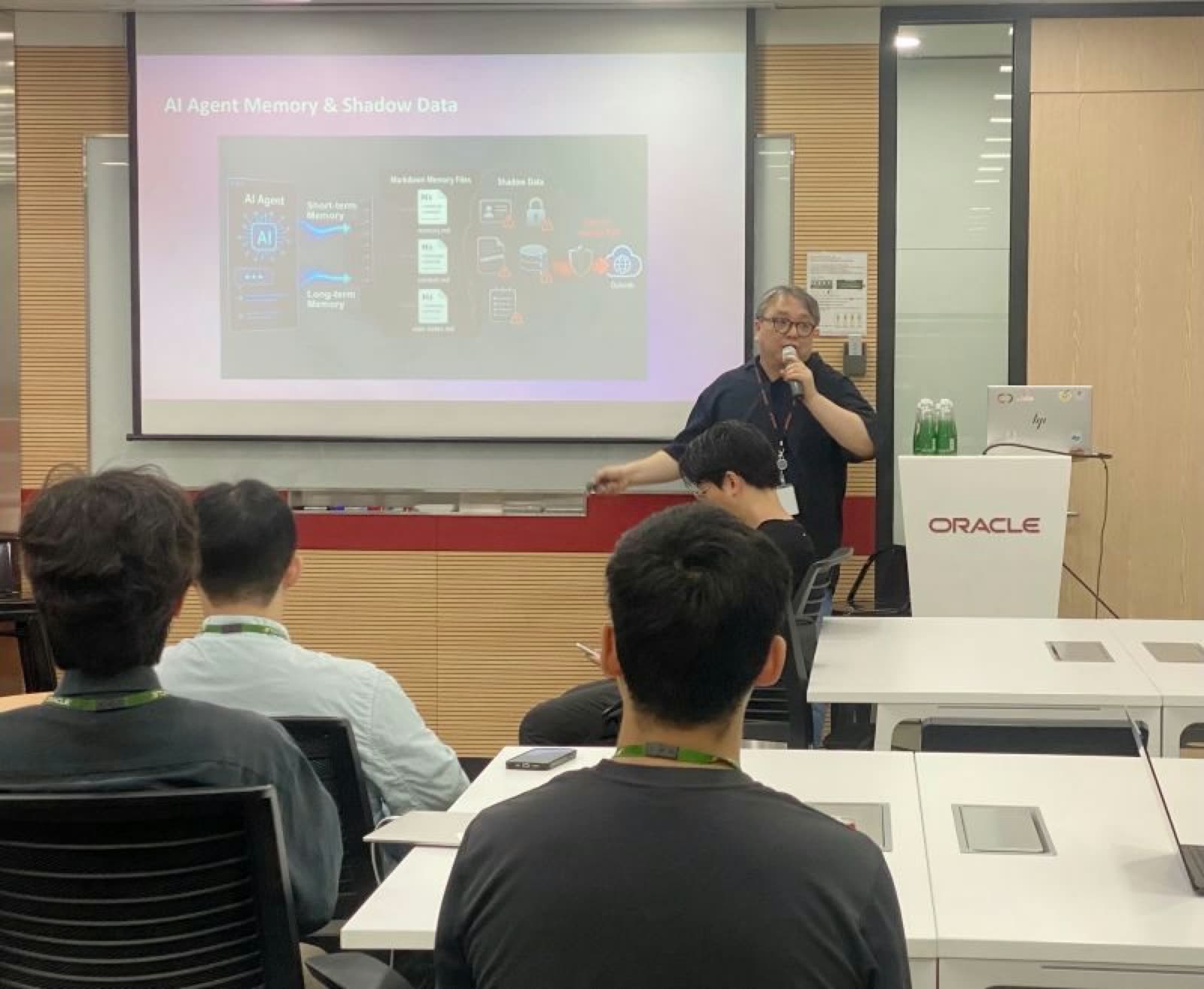
There was a reason Oracle, a company that sells databases, made AI agent memory its keynote topic. Use Claude Code or run multiple agents and memory files accumulate locally to hold working context. Those files contain more than people expect: API keys, passwords, and internal information if you have connected Gmail or company systems. Data like this, unmanaged and exposed to the outside, is what they call shadow data.
It does not matter much for an individual, and it changes the moment AI enters company work, because important company assets end up scattered across local files on someone's PC. Oracle's answer was simple: manage the memory agents use in Oracle DB. Install one package and it attaches to existing OpenAI or LangChain frameworks as is. Storing in the database rather than local files strengthens security, summarization and embedding save tokens, and transactions order the writes even when multiple agents record at once.
The governance point was interesting too. Companies that have adopted AI now send an engineer in once a month to review the past month of prompt usage and build whatever skills are needed. It works because all of those records live in the database. The more sophisticated AI gets, the more people lose track of what information ends up where, and that gap is the risk.
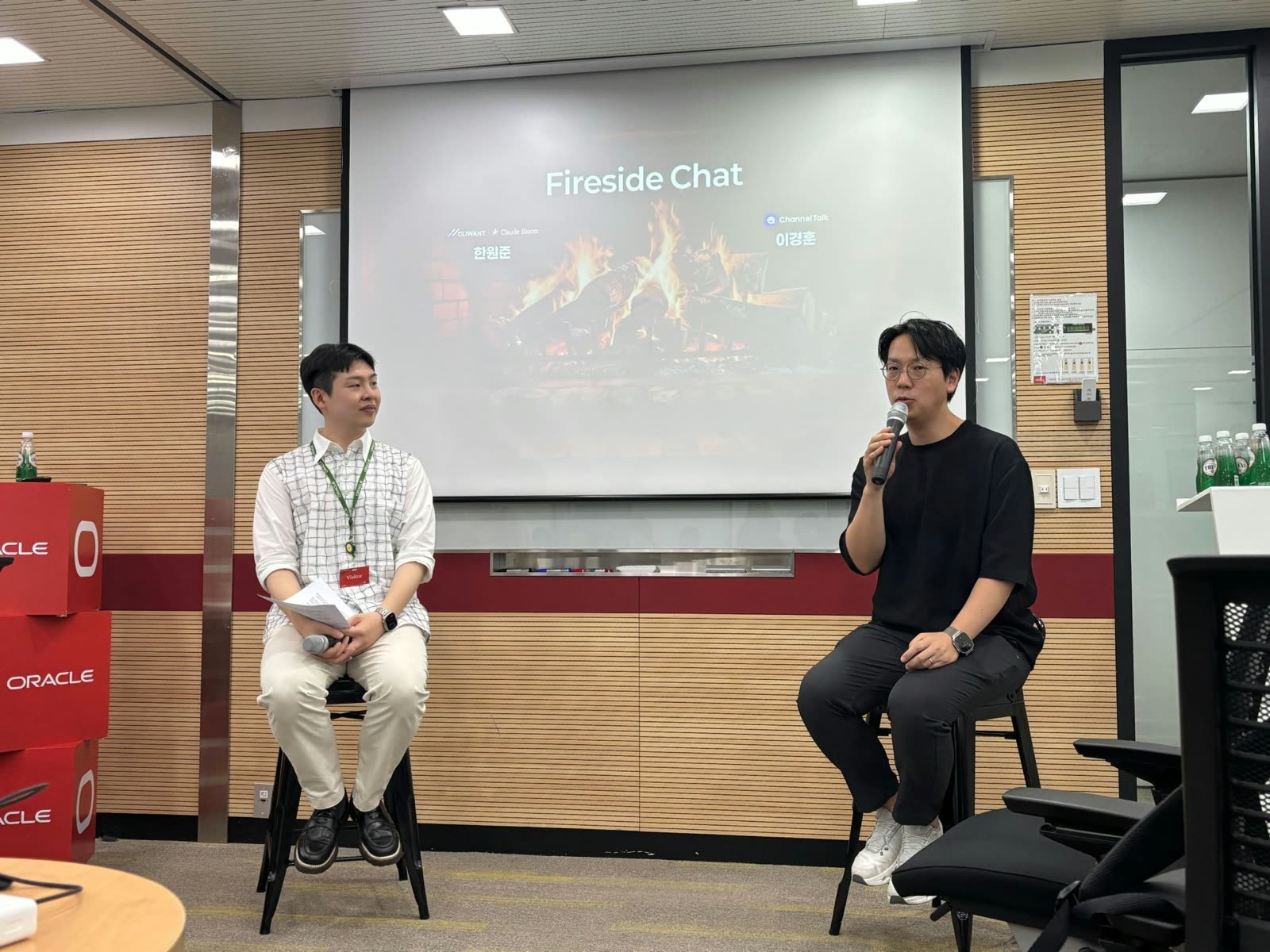
Channel Talk CAIO Lee Kyung-hoon spent seven or eight years as a VC before joining Channel Talk earlier this year, going straight into a company he had invested in. Trends kept turning over during his VC years. When blockchain rose everyone invested only in blockchain, then it was the metaverse, so when AI came along he read it the same way at first, figuring it would fade in two or three years. What broke that was something a founder in his portfolio said: AI will not replace people, but people who use AI well will replace people who do not. He started vibe coding through the night that day.
Choosing the customer support market came out of an investor's analysis. What LLMs do best is problems with answers and language-based work, and after coding, support fit those conditions best. Anyone can do it without a license, it has manuals, and it happens through conversation. On top of that, Korea's SaaS market tops out around 2 trillion won while the call center market is 10 trillion.
The first thing he did at Channel Talk was automate the sales team's meeting records. Four meetings a day, each taking 40 minutes from writing notes to entering them in Salesforce, became a recording tool plus an automated workflow that writes to Salesforce directly. Getting to unlimited tokens took stages. A dedicated AX team failed, because work piled onto it and it did not know the actual jobs. Putting one person who uses AI well on each team came next, and the atmosphere started shifting.
The real turning point was performance reviews. They added what impact you produced with AI last quarter as a review item and gave everyone in the company a personal Claude Code account, and from the next day team chat exploded with I built this. The requests that piled up led to unlimited tokens. The judgment was simple: an hour from someone who uses AI well is worth more, so letting them use more beats making them wait on a quota. Once it opened, non-developers came in around a million won a month and one developer hit 50 million, and the CTO confirmed the work matched. A barista at the company cafe built a tablet ordering system alone with Claude Code.
His own routine is one LinkedIn post a day, which takes an hour or two from research to writing. He went three weeks without writing after joining the startup and felt himself getting dumber. Handling only what was in front of him left no time to think more broadly, and if you do not think, the ability to think shrinks. He also said that shipping work that obviously came from AI actually lowers how you are judged. The more AI there is, the more valuable it becomes to summarize down to the essentials, so something short with only the substance left beats a long document that smells of AI.
Asked what humans should focus on in the age of AI, the answer was short: we are Homo sapiens, so we should focus on thinking. LLMs look omnipotent, and the illusion breaks quickly once you build agents yourself. The very existence of terms like context engineering and prompt engineering is evidence that LLMs do not handle it on their own, and setting guardrails, supplying context, and choosing direction still belong to people. The conclusion was that someone who uses AI well is simply someone who works well: someone who gives clear instructions and can review the result clearly.
He rejected the idea that office work is ending. More became possible after AI, not less. A large corporation can choose efficiency with AI; Channel Talk chose to grow instead. They are hiring more, they ran subway advertising, and they announced raises. One person who uses AI well does not reduce the work, it increases what the company can take on. The future Channel Talk is drawing is not selling tools but replacing the work people do, and some customers already have AI handling 80 percent of support. Replacing even 10 percent of a 10-trillion-won call center market is a trillion won.
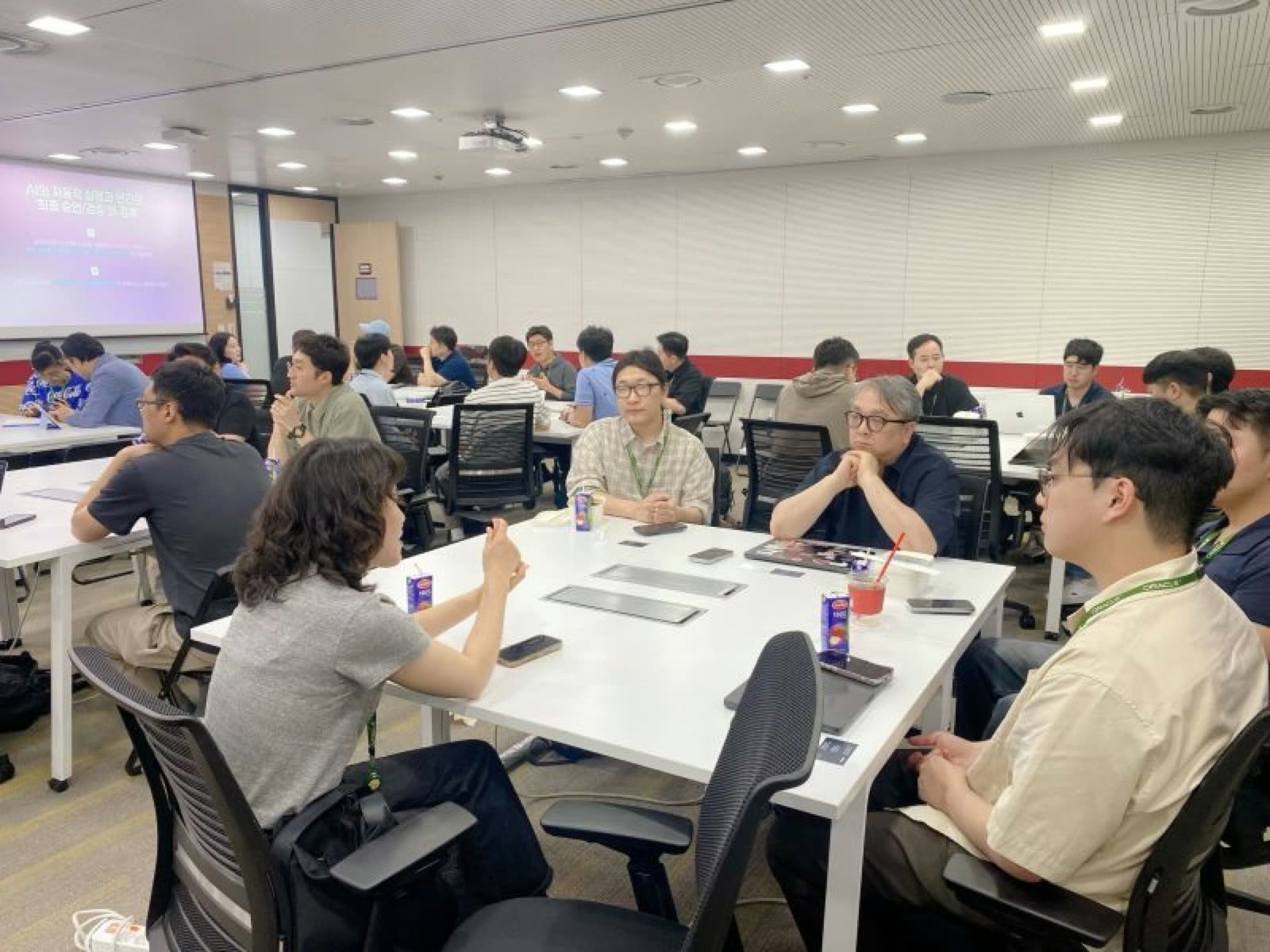
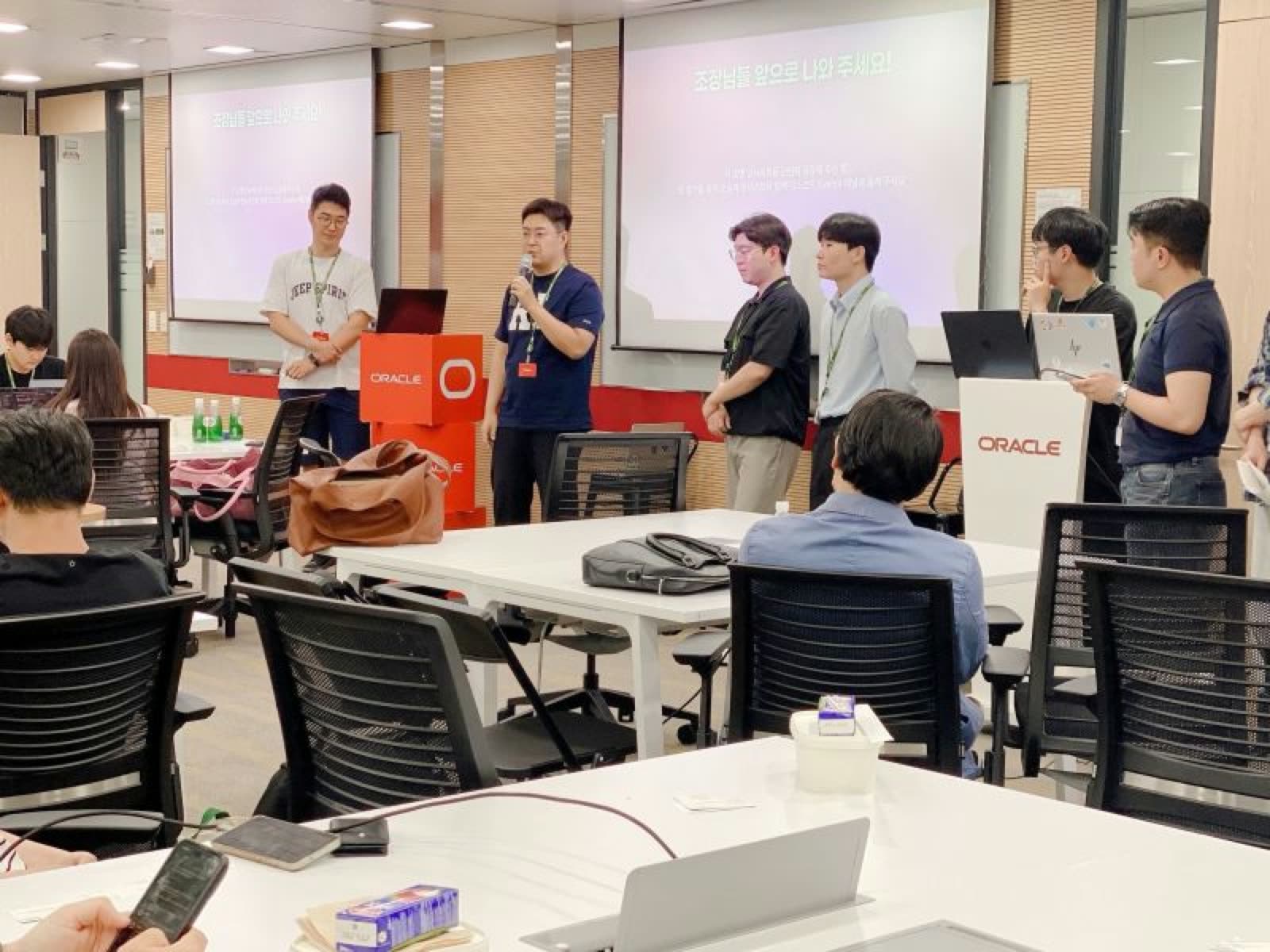
The first roundtable question was how far you can trust an AI agent's output. Nine tables spanning different industries and levels of experience reached remarkably the same conclusion: AI executes, humans make the final call, with only the degree of intervention differing. In finance a single error does serious damage so intervention runs high, while some teams hand the coding step over almost entirely. The criterion was one thing, how much responsibility a decision carries. Steps that carry no responsibility can go to AI; heavy decisions have to be made by a person.
They also shared what they actually use it for today. Automating gift certificate delivery, generating needs blueprints from recorded customer conversations, templating unstructured manufacturing data: everyone was already building something in their own workplace. One non-developer had built a photo-to-3D modeling app and demoed it to a client.
The last question was about educating the next generation, and a first-year data science student got applause. Education today is about finding the predetermined answer, which AI does better, and unlike a calculator or GPS, AI makes you delegate thinking itself, so the next generation may need to deliberately keep some distance from it and build the ability to think. Another table said the same thing differently: knowing how to speak, instruct, and delegate now matters more than knowing a particular language well, which puts natural language education ahead of coding education.
Read the full write-upEvent video
Gallery







Next event