
When your agent spends your money, who's liable?
What was discussed

Korea Blockchain Week brought a lot of overseas companies to Korea. Bloom isn't a blockchain community, but we'll work with anyone whose problem touches AI, and that's how we came to co-host Agentic Payments Onchain with Ripple, t54 and Tenity. We put it on because we wanted to spend as much time on the legal questions that come up when an AI agent pays on someone's behalf as on the technology that lets it pay on a blockchain. So we also set up a fireside chat with Next Securities, who join our events often.
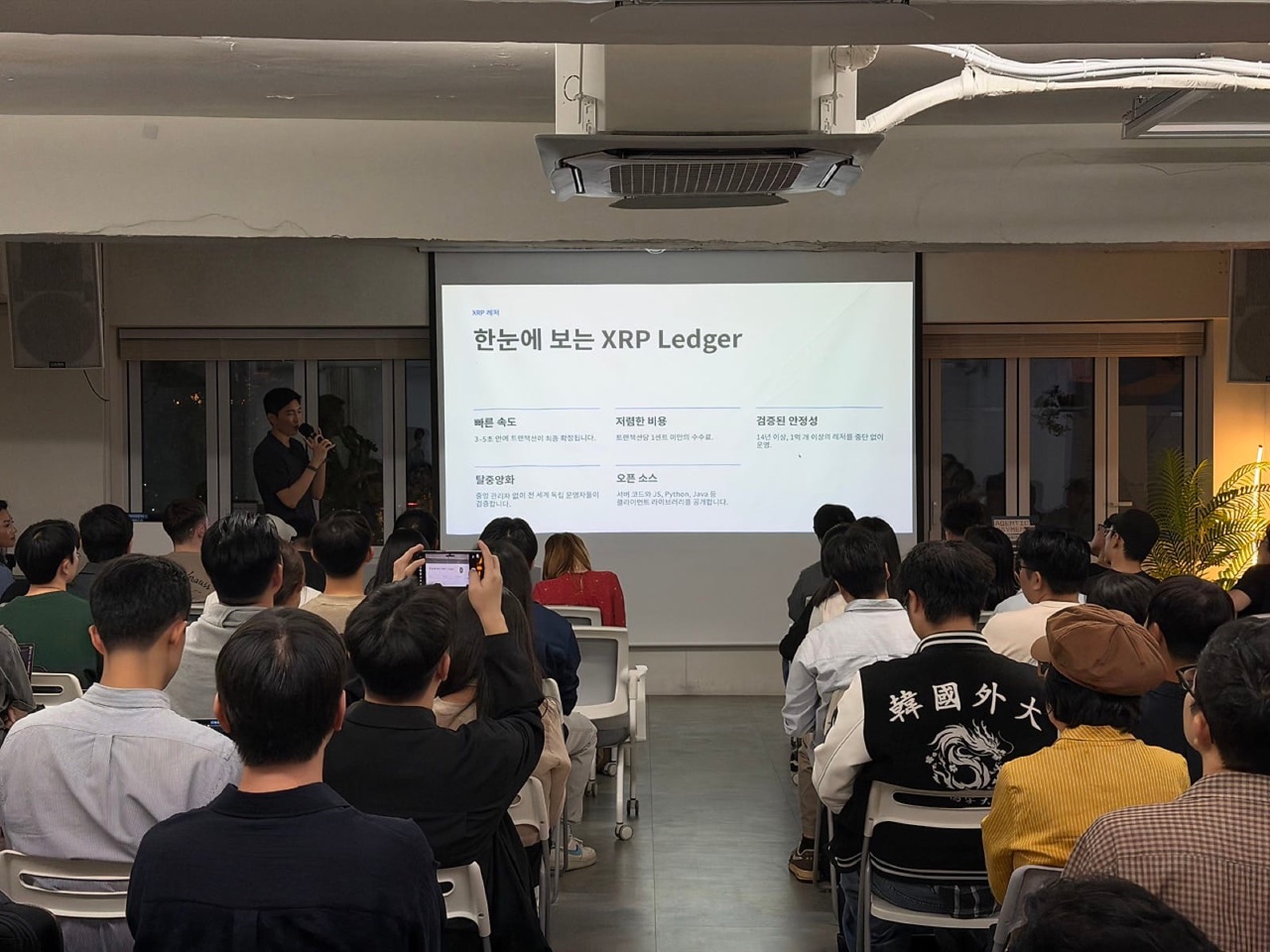
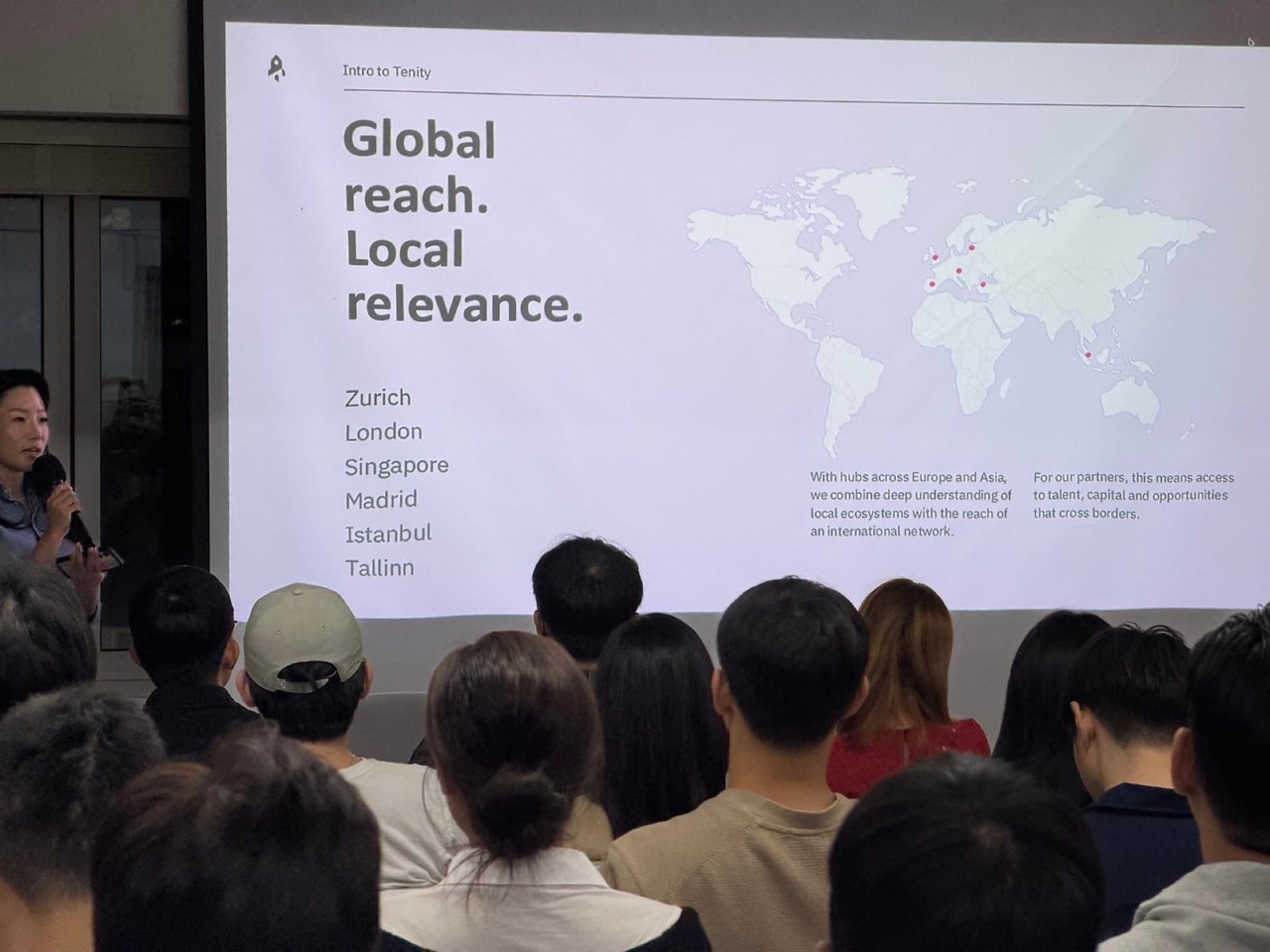
Joel Mun of Ripple walked through the XRP Ledger, which has been running for fourteen or fifteen years and has proven its speed, cost and stability along the way. It has no smart contracts. Payments, token issuance and the rest are built into the core, so a developer only has to connect and call the API. He'd checked that day and found 9 million x402 transactions on the ledger, and RLUSD, Ripple's stablecoin, is running about $2.3 billion in agent payments, though he added that it's still chasing its competitors. Bomin Kim of Tenity had flown in from Singapore that morning. The more agents transact for us, Kim said, the more trust between people matters, and finding good companies and matching them with the right partners is Tenity's part in that.
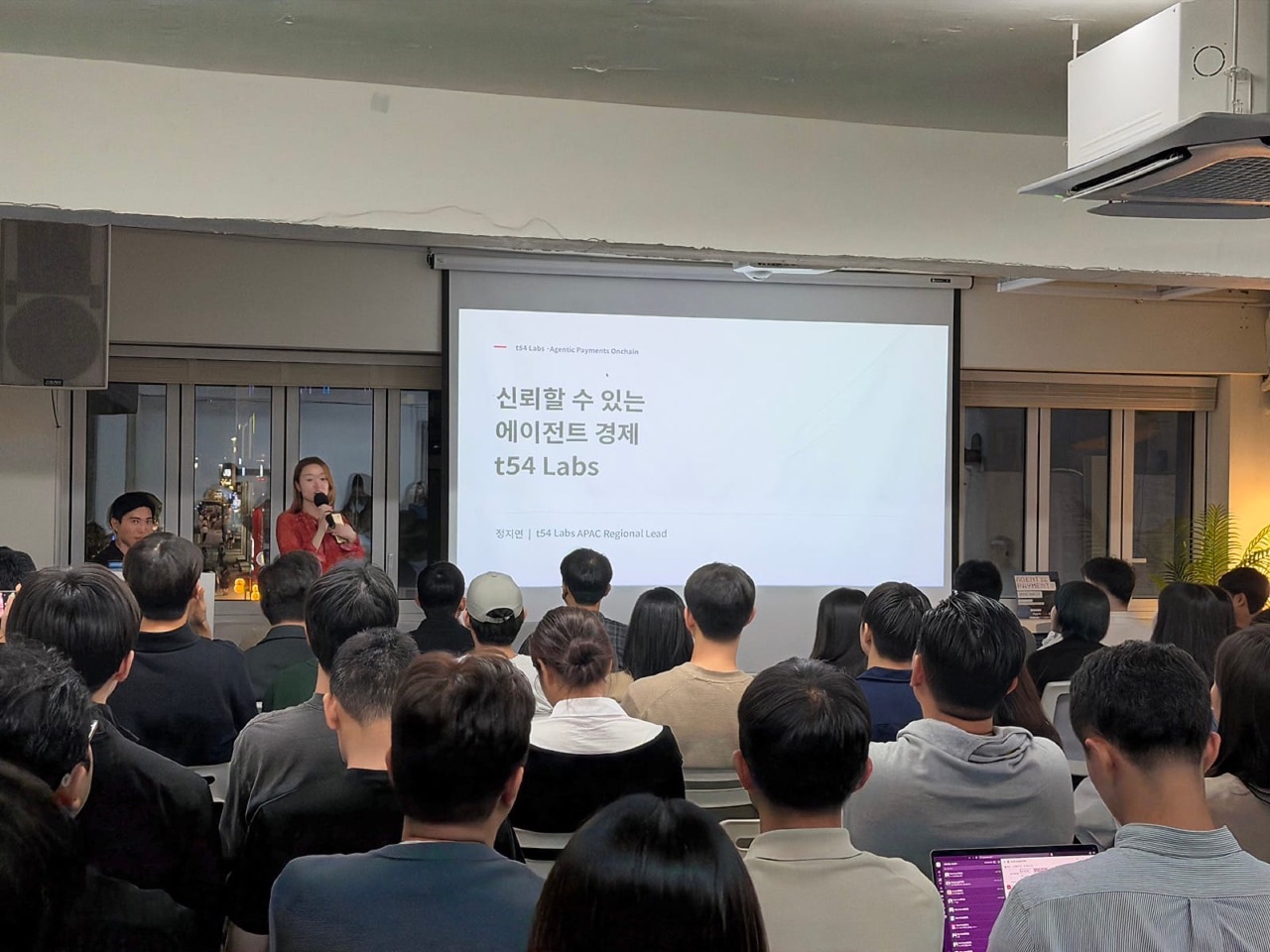
Claire Jung of t54 wanted one thing clear first. t54 talks about agent payments constantly, but it isn't a payments company. It builds the trust layer that manages risk between the financial system and service providers. Trustline, its institutional product, checks who owns an agent and what environment it runs in, then the scope the user delegated, then the evidence you'll need if there's a dispute later. Ask an agent for a $10 pair of golf shoes and it might spend $100, or $1,000. Chargebacks, where you go back to your card issuer after the fact and get the money returned, are coming to agent payments too, and nobody has decided yet what counts as evidence.
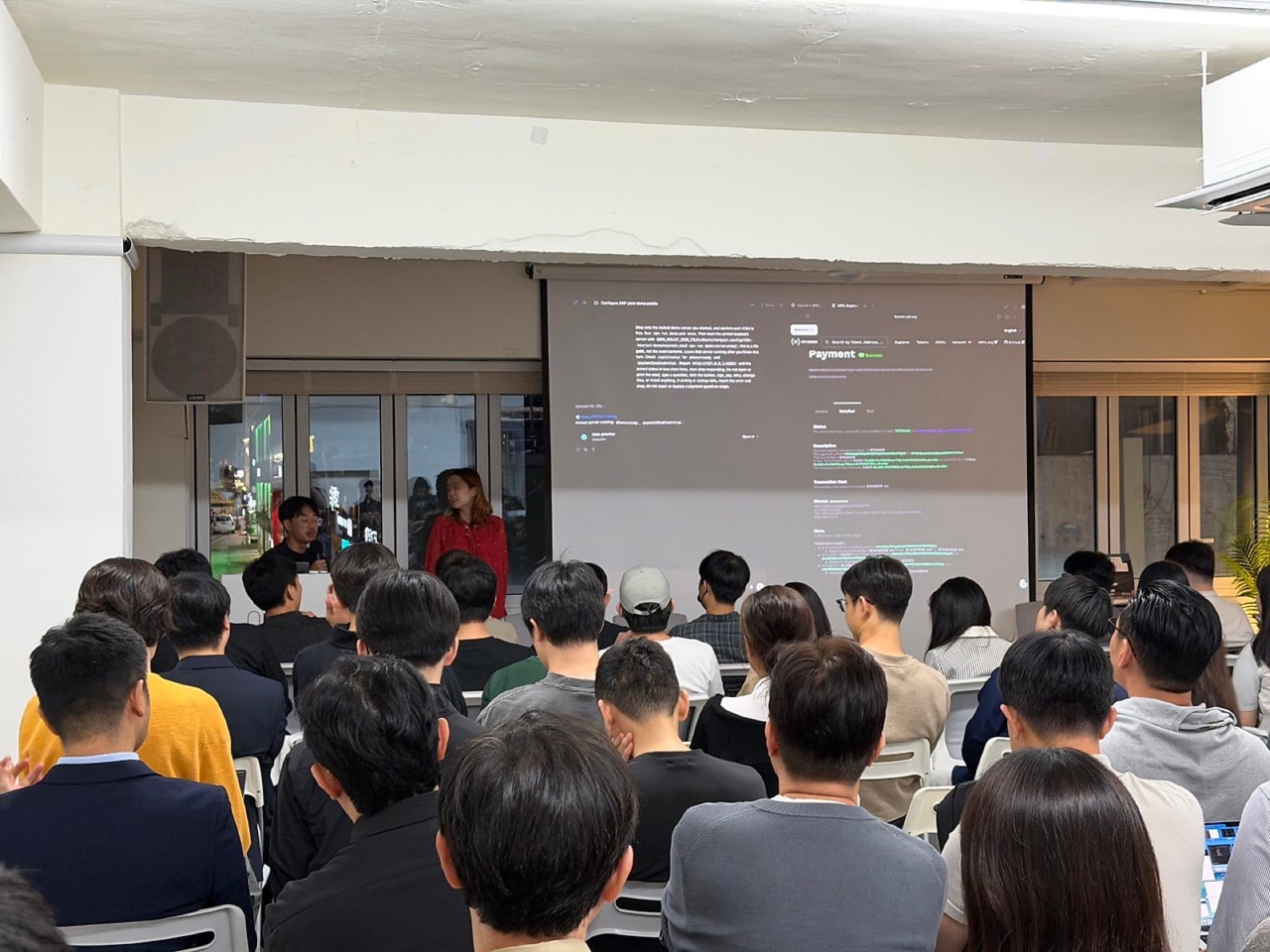
t54's founder Sergio Chan showed a real transaction end to end. Without writing a line of code, he gave Codex a few natural-language prompts and got a research agent that went to the XRPL AI Hub on its own, found paid inference services, picked a DeepSeek model and came back with an x402 quote. The 0.01 RLUSD spend limit he set was a ceiling rather than a price. Once he approved, the agent answered the question and settled the payment on XRP Ledger mainnet at the same time, and the explorer showed a memo carrying the invoice ID. Every wallet on the ledger has to hold 1 XRP in reserve, which is a natural barrier for an agent, and a credit account lets one reach the AI services without creating a wallet at all.
The clearest answer came when someone in the audience said the core idea still wasn't landing and asked for a plain explanation. Twitter is already full of complaints about agents booking the wrong flight and leaving the user with the cancellation fee. Lend someone your credit card, let them buy the wrong ticket, and you can file a dispute and the issuer eats the loss. The agent is a new participant in that flow, and nobody has defined its liability yet. So when t54 has approved and vouched for a transaction, t54 takes the issuer's role in a dispute and protects the buyer and the merchant at once. Mastercard saw the same gap, which is why it's working with them.
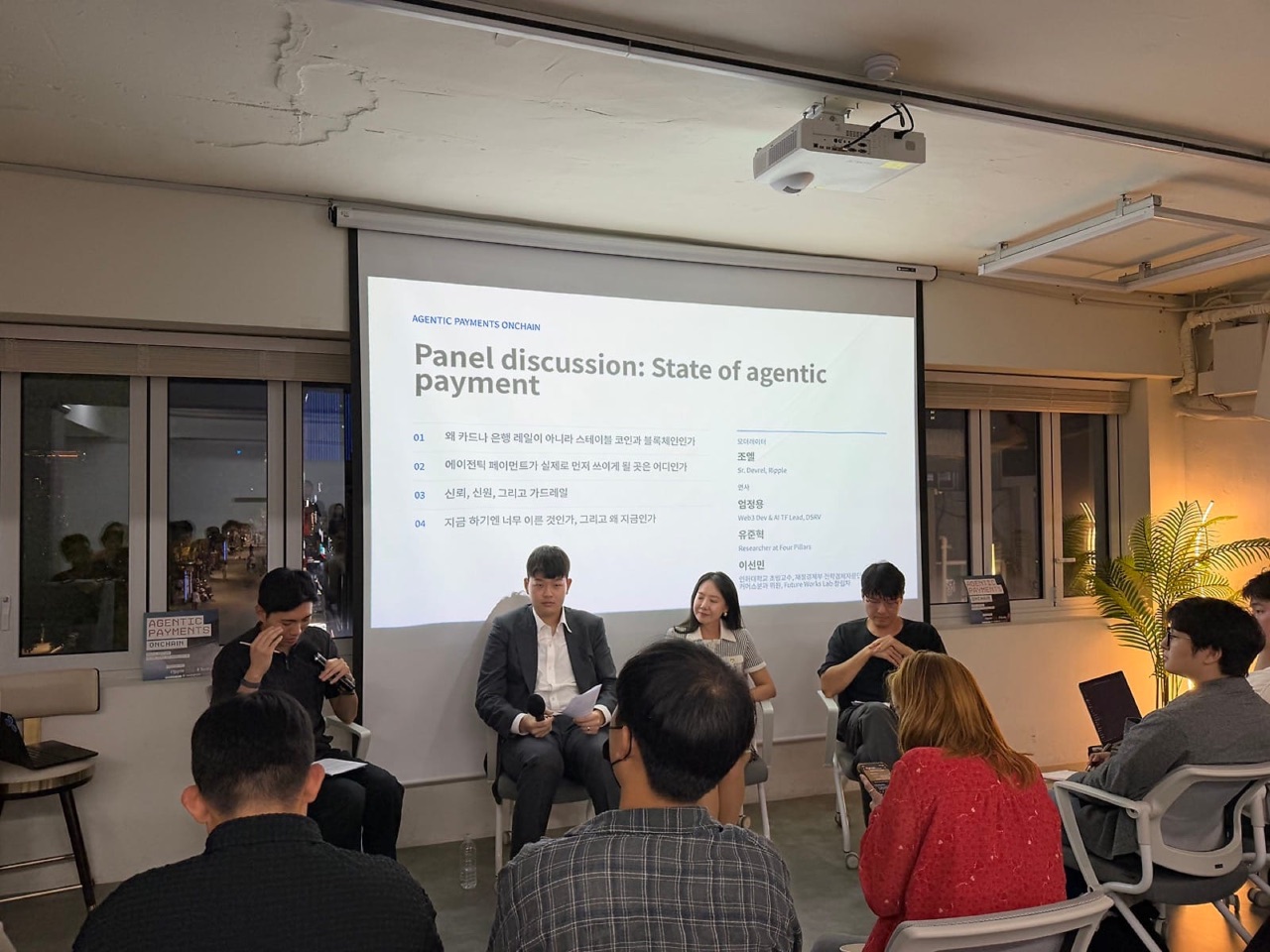
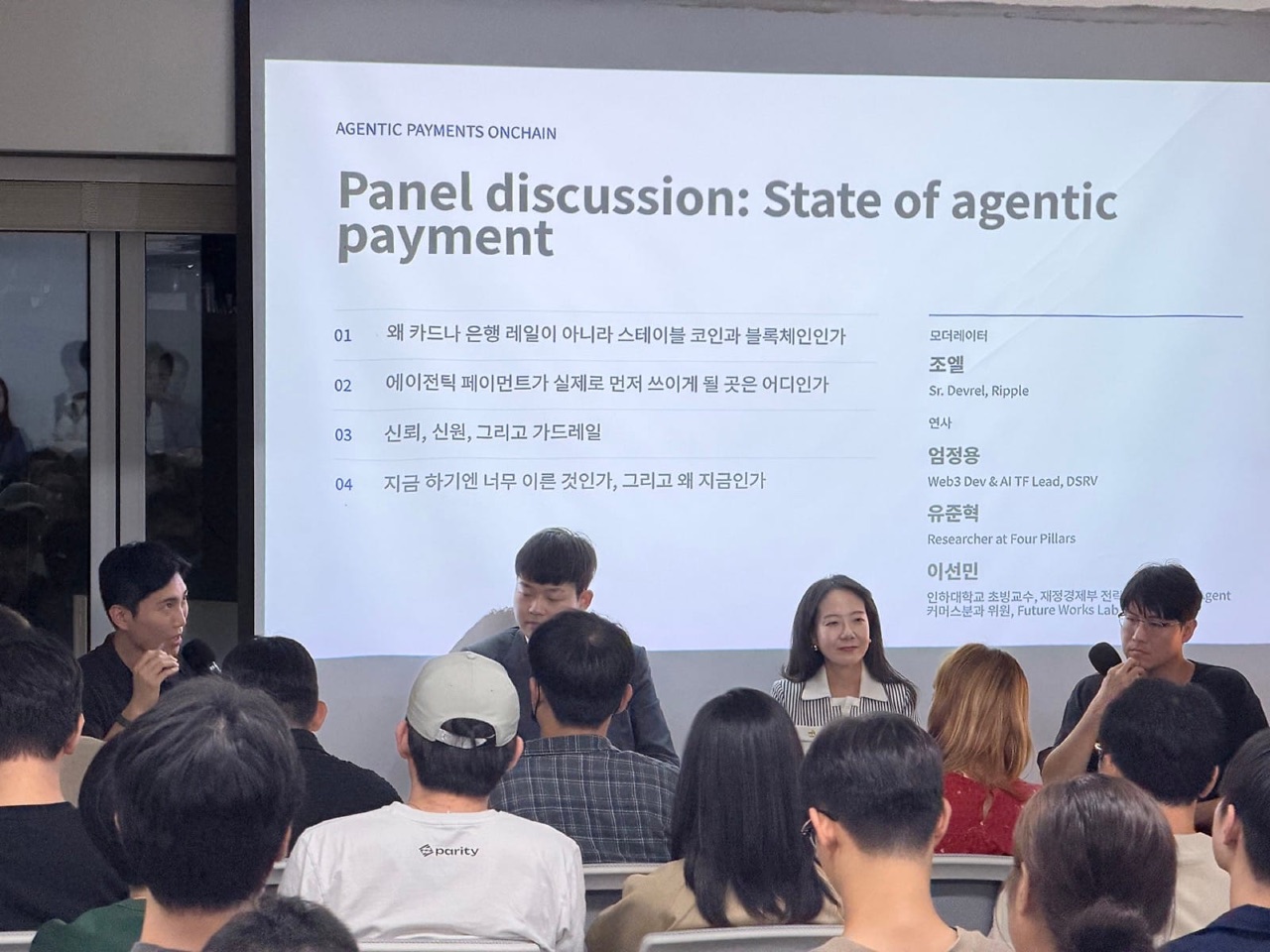
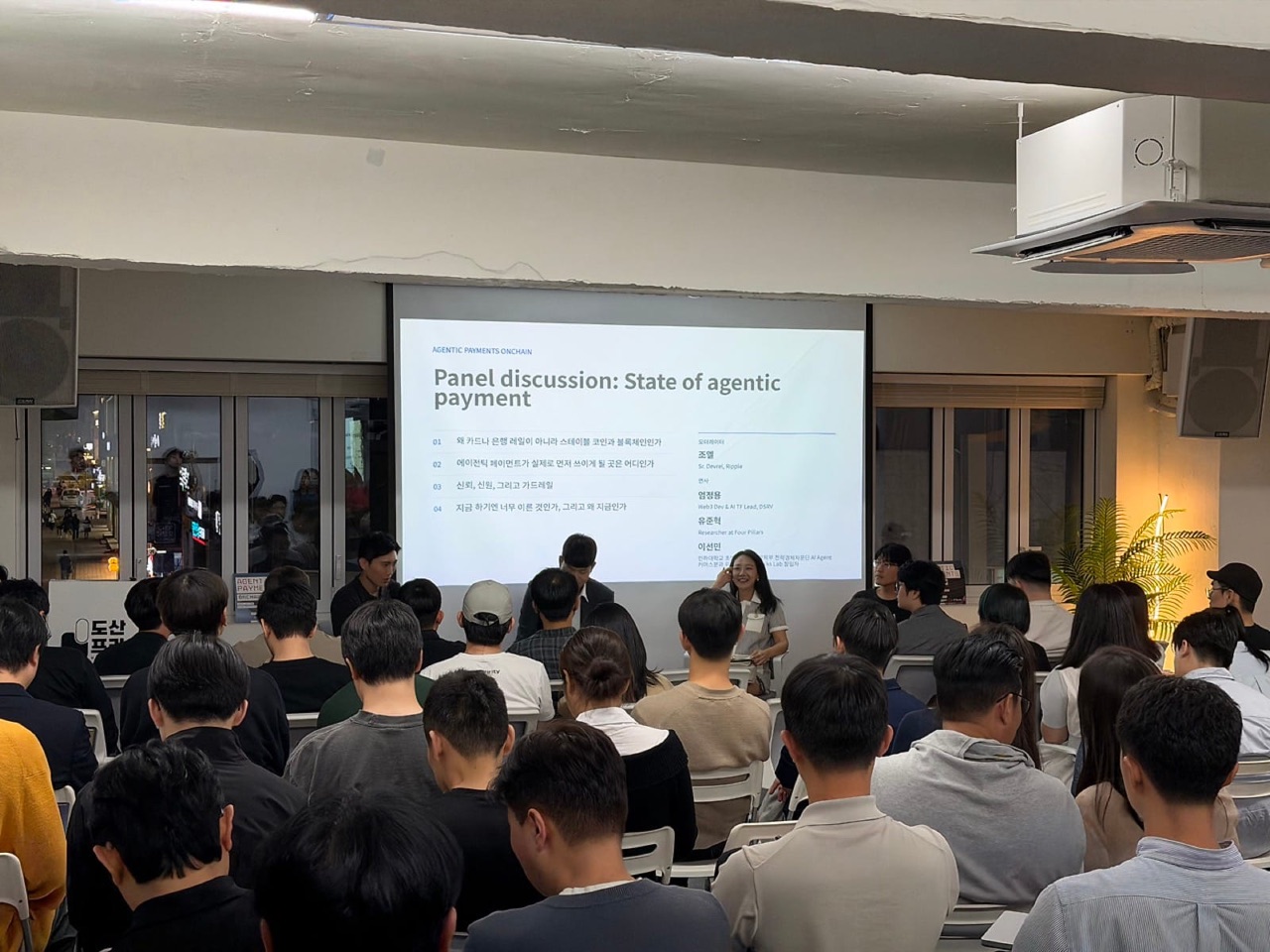
The panel of Junhyuk Yu, Sunmin Lee and Jeongyong Eom opened on the obvious question. Card networks already exist, so why does an agent need a blockchain to pay? Yu said x402 doesn't compete with cards. Coinbase built it, the Linux Foundation has run it since this year, and around 50 organizations have joined, Visa, Mastercard, AWS and Cloudflare among them. What Yu likes most is payment neutrality, an agent holding the right way to pay in whatever situation it lands in. Eom pointed out that cards and bank accounts were designed around people, while on a blockchain one 32-byte private key is a payment method. That makes it the place where an agent can hold one in its own right.
Lee passed on an exchange with students who'd asked why a prepaid balance won't do. Starbucks credit only works at Starbucks, Naver Pay won't buy anything on Amazon, and your agent doesn't only shop in Korea. The Merge Point and TMON-WeMakePrice collapses showed that having someone in the middle can be a risk in itself. Yu doesn't think ordinary shopping fits yet, because blockchain payments can't be reversed and refunds and chargebacks have no good answer. Most of the roughly $55.1 million in x402 volume Yu had checked recently came from APIs, and the top spot went to BlockRun AI, which takes an x402 payment and routes your request to whichever model you want.
Eom brought up Cloudflare's Pay Per Crawl, where a crawler gets a 402 back, pays over x402 and then gets permission to crawl. What mattered to Eom wasn't the money. It was that data and APIs that used to sit behind a block, or behind a contract too complicated to bother with, can now open to agents one transaction at a time. Lee brought it back to Korea. Here people still ask each other what they use, while in the US they ask how many agents you have. Naver has been running agent shopping for three months and nobody knows, because outside agents can't get in. There are no rules yet against prompt injection like a fake Trip.com agent, and nobody knows whose fault it is when a payment goes wrong.
Eom answered the complaint that x402 has no concept of a refund. The parts people consider necessary keep getting added, commerce-level refunds are being researched, and spending caps can already live at several layers, from the delegation limit in Google's AP2 to DSRV's per-transaction and daily caps to limits written into a smart account. On the last topic, when any of this becomes real, Lee went back to 1999. The Digital Signature Act laid the infrastructure first, and then Korea spent twenty years stuck on ActiveX. Nobody adopts a Korea-only standard, so Korea needs a stake in international standards work like x402. In the closing round Eom saw plenty of opportunity in a market where things that never worked are opening up. Yu drew a line: payment volume can grow without blockchains holding a moat inside it. Lee's last word was that a full step ahead gets you killed, so get half a step ahead and grab the bottleneck.
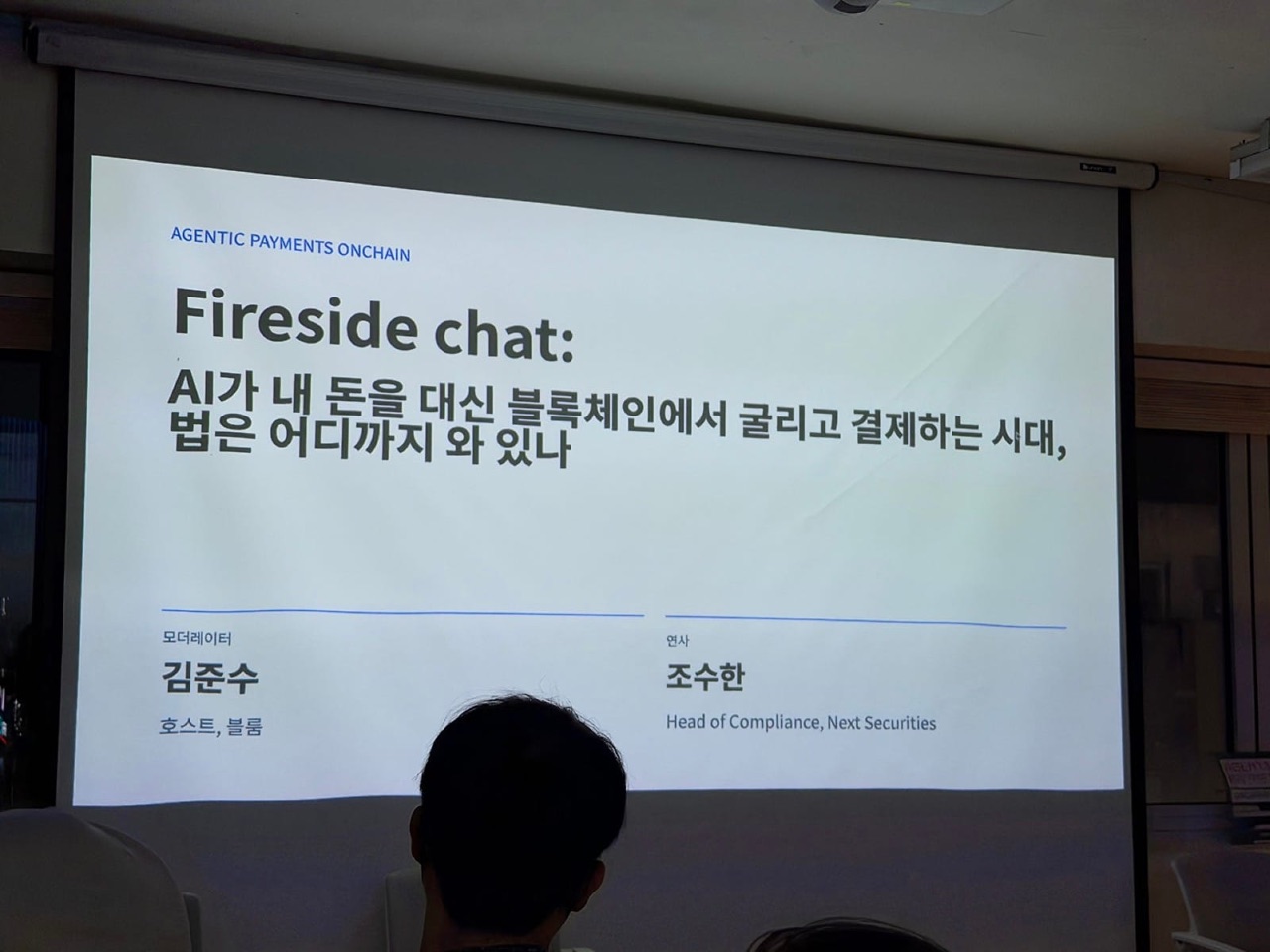
For Bloom's segment, Junsu Kim sat down with Suhan Cho, chief compliance officer at Next Securities. Developers worry about whether something is technically possible, people running businesses worry about whether it's allowed in Korea, and the idea was to put that second question to a lawyer. Cho's first answer was that nothing here is fundamentally banned, and the baseline is that you're responsible for your own actions. UNCITRAL's model law on automated contracting says automated means shouldn't be discriminated against, and Article 7 of Korea's Framework Act on Electronic Documents and Transactions treats what an automated program sends as sent by the person behind it. Even if it happens while you're asleep, your counterparty treats it as your own act.
What's prohibited depends on who built the agent. Assembling your own trading algorithm is fine, but selling it to someone else requires an investment advisory or discretionary management license in Korea, and people selling trading bots on Instagram get regulated as quasi-investment advisors. Kim shared a story of his own. He'd handed a restaurant booking to Codex, and the agent went into Naver TalkTalk and laid out every condition for the owner, asking if that would work, so he apologized and shut it down. Cho said whoever jumps in is presumed to take on the risk. Individuals build agents, so neither the infrastructure operator nor a centralized platform can carry that liability, and even when the other side is at fault you have to pursue them yourself.
Stablecoin payments are stuck in Korea because there's no legal basis yet. Won stablecoin legislation has stalled for two years, and handling a stablecoin means registering as a virtual asset service provider, so even a company the size of Naver is waiting at the starting line. You can build a business on agent payments today, but there's little in place to make victims whole or fix mistakes. Cho's advice was to set first the risk limit you could absorb if things go wrong, and build it into a protocol or an algorithm. t54 answers with guarantees and evidence, protocols with caps and refunds, the law with personal responsibility, and whoever fills the blank first will set how fast agent payments reach everyday shopping.
Gallery




Next event