
Has AGI already arrived? And what comes after?
What was discussed

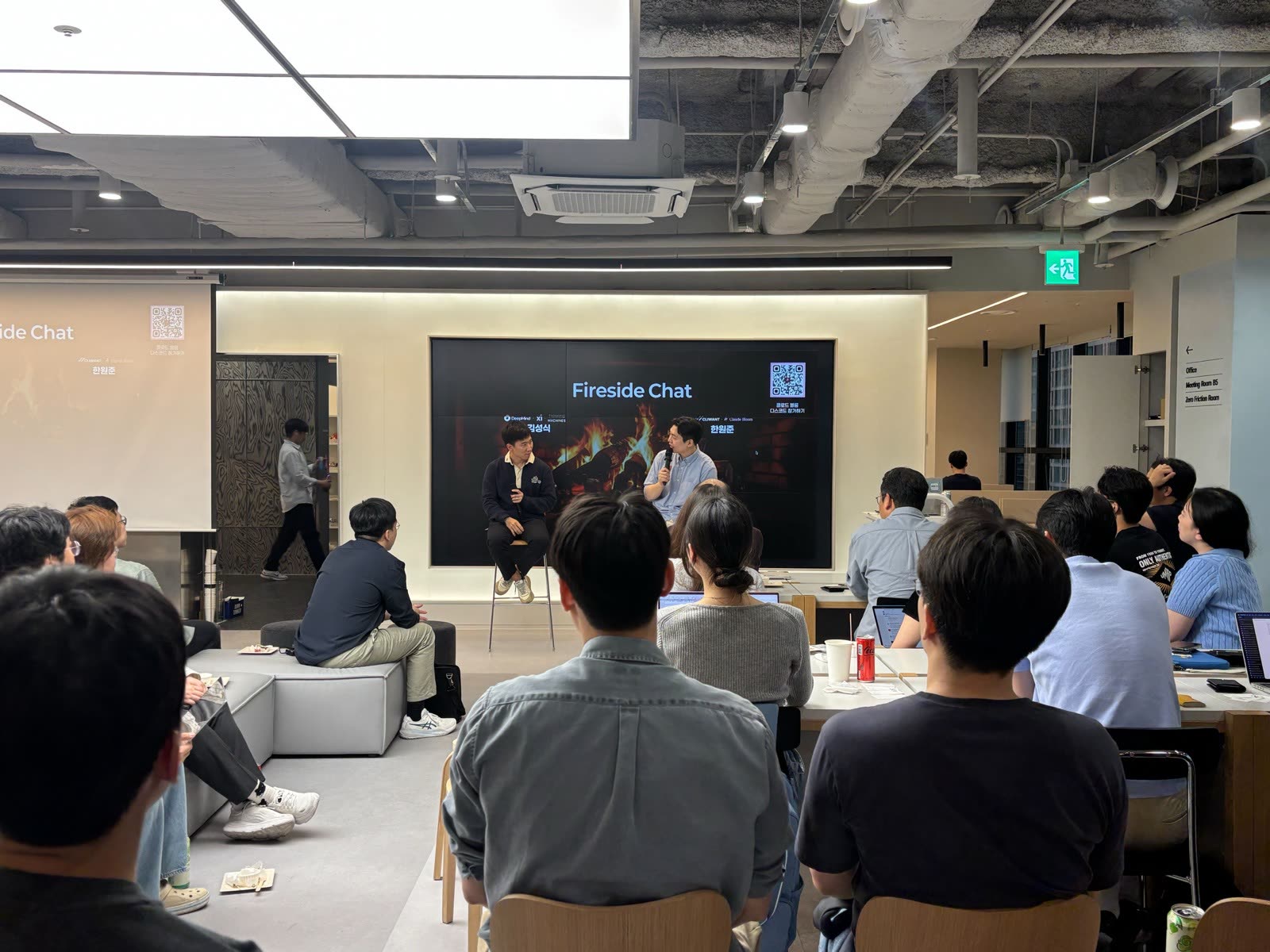
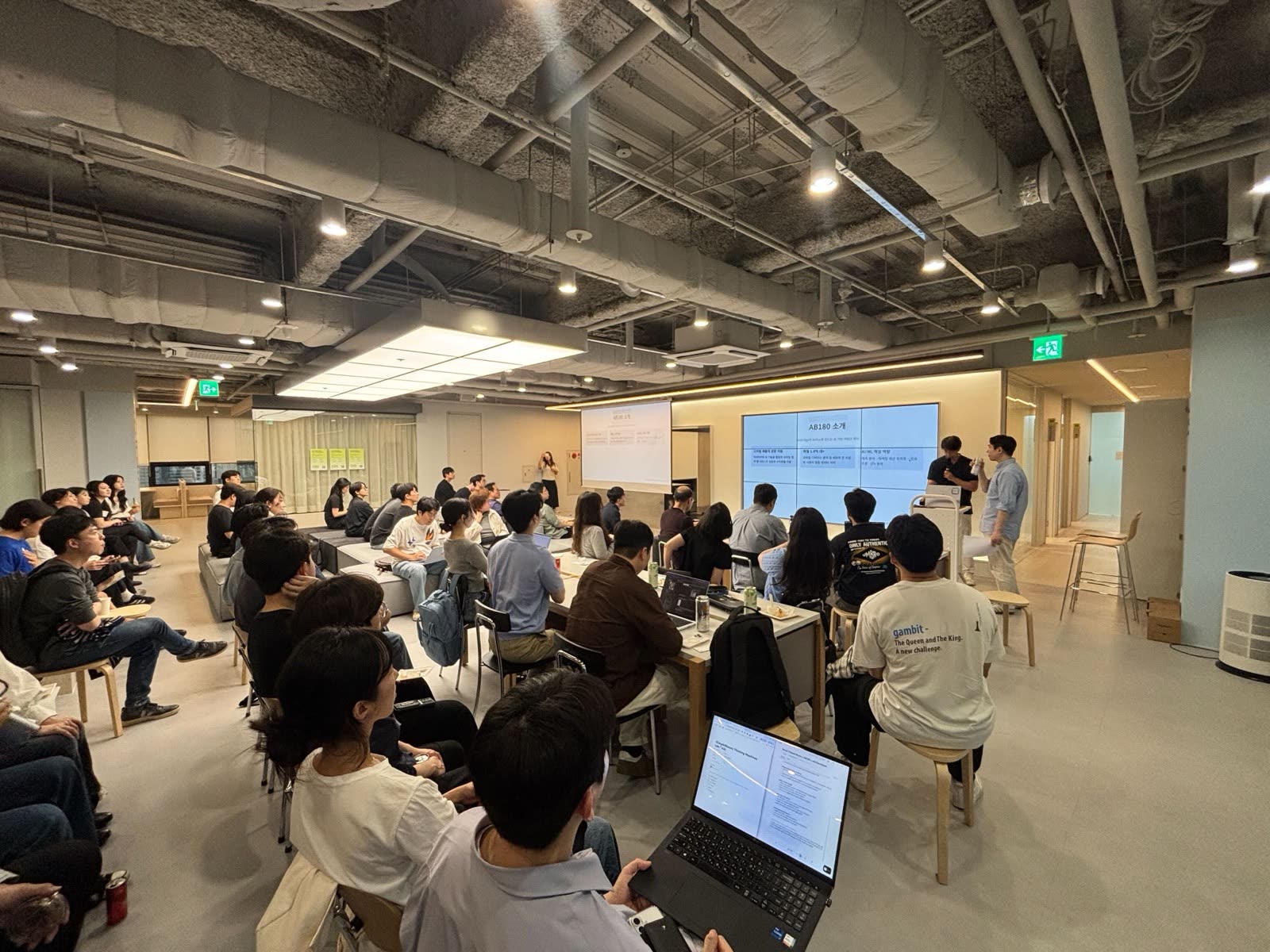
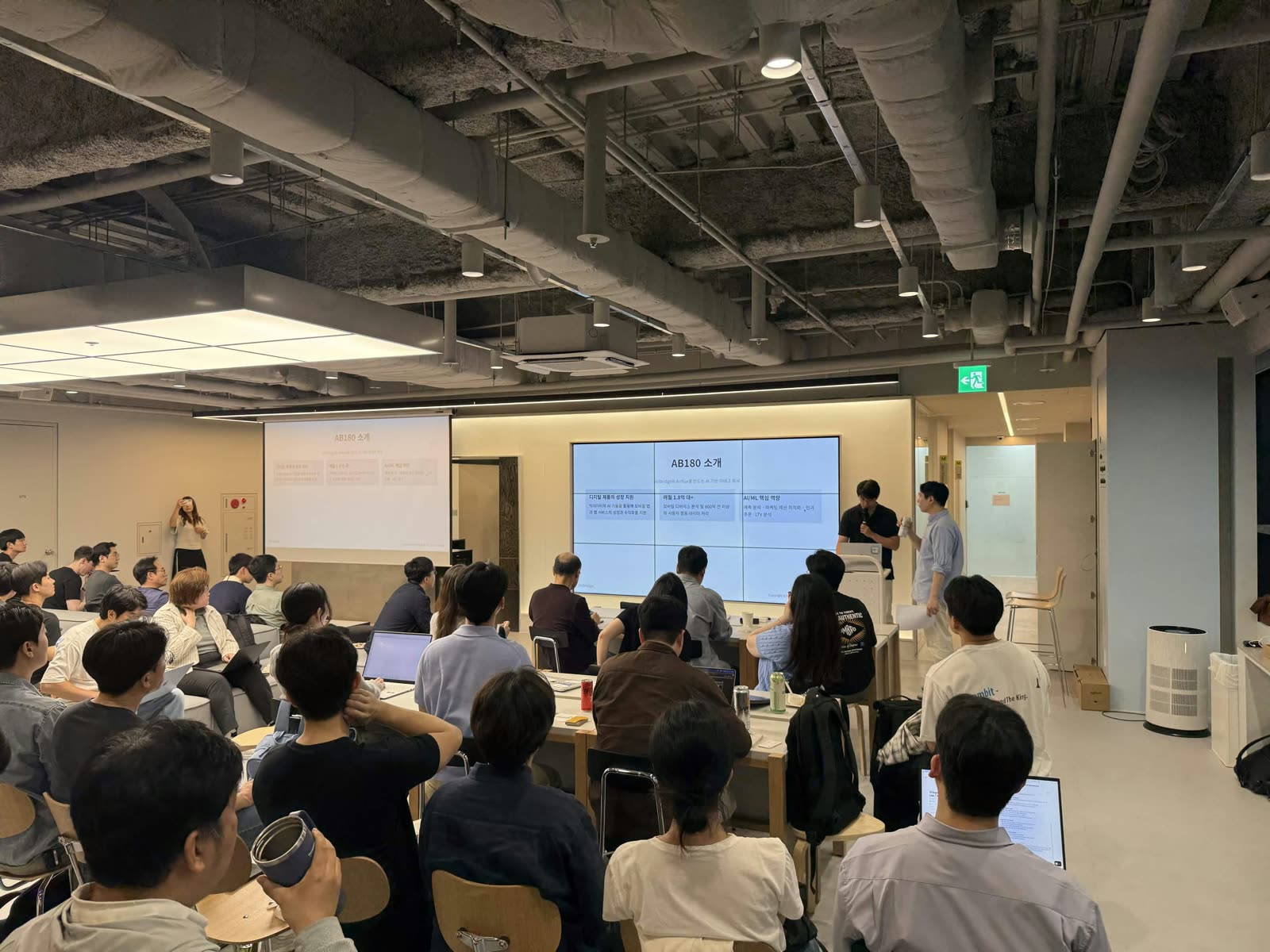
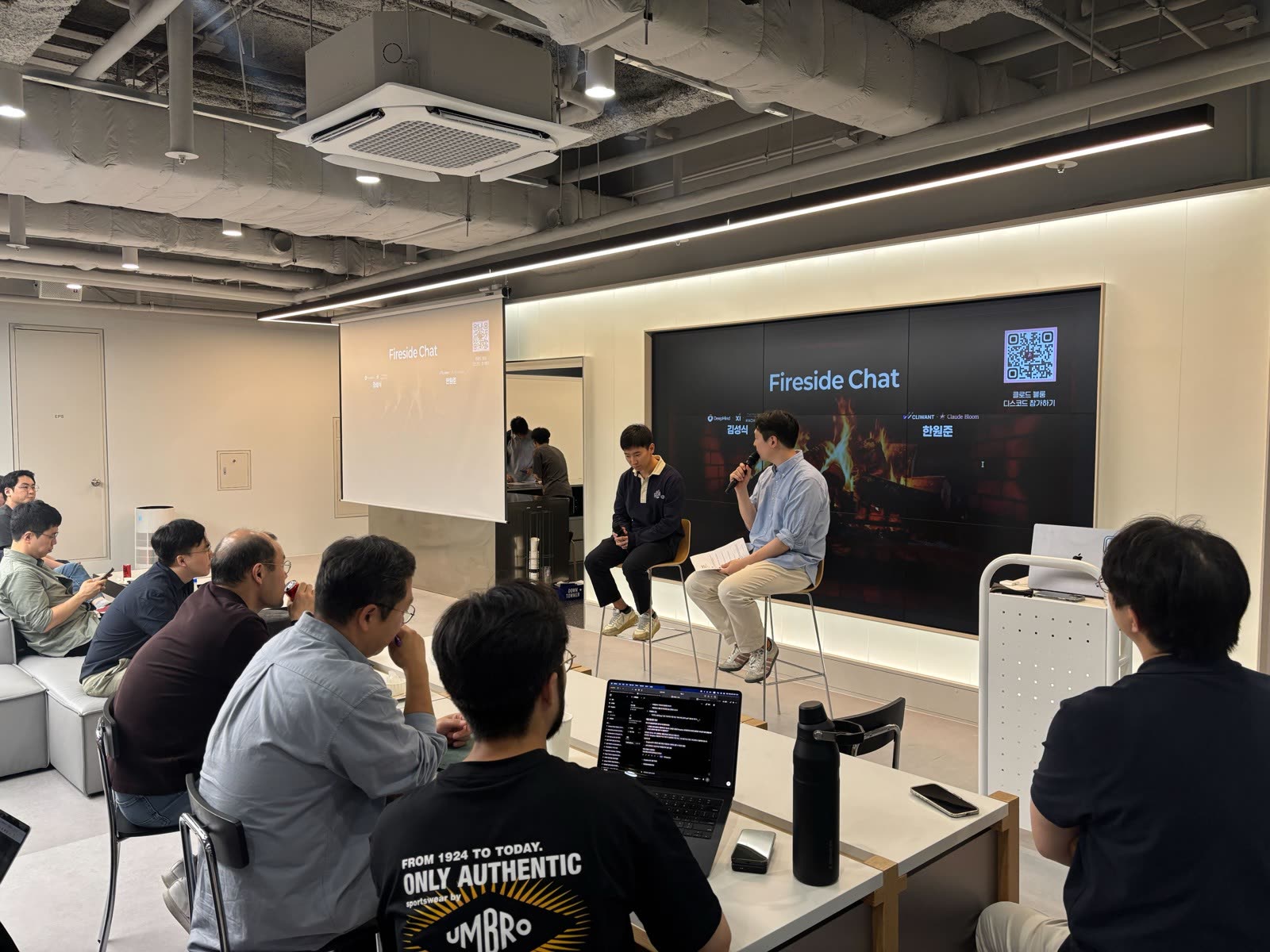
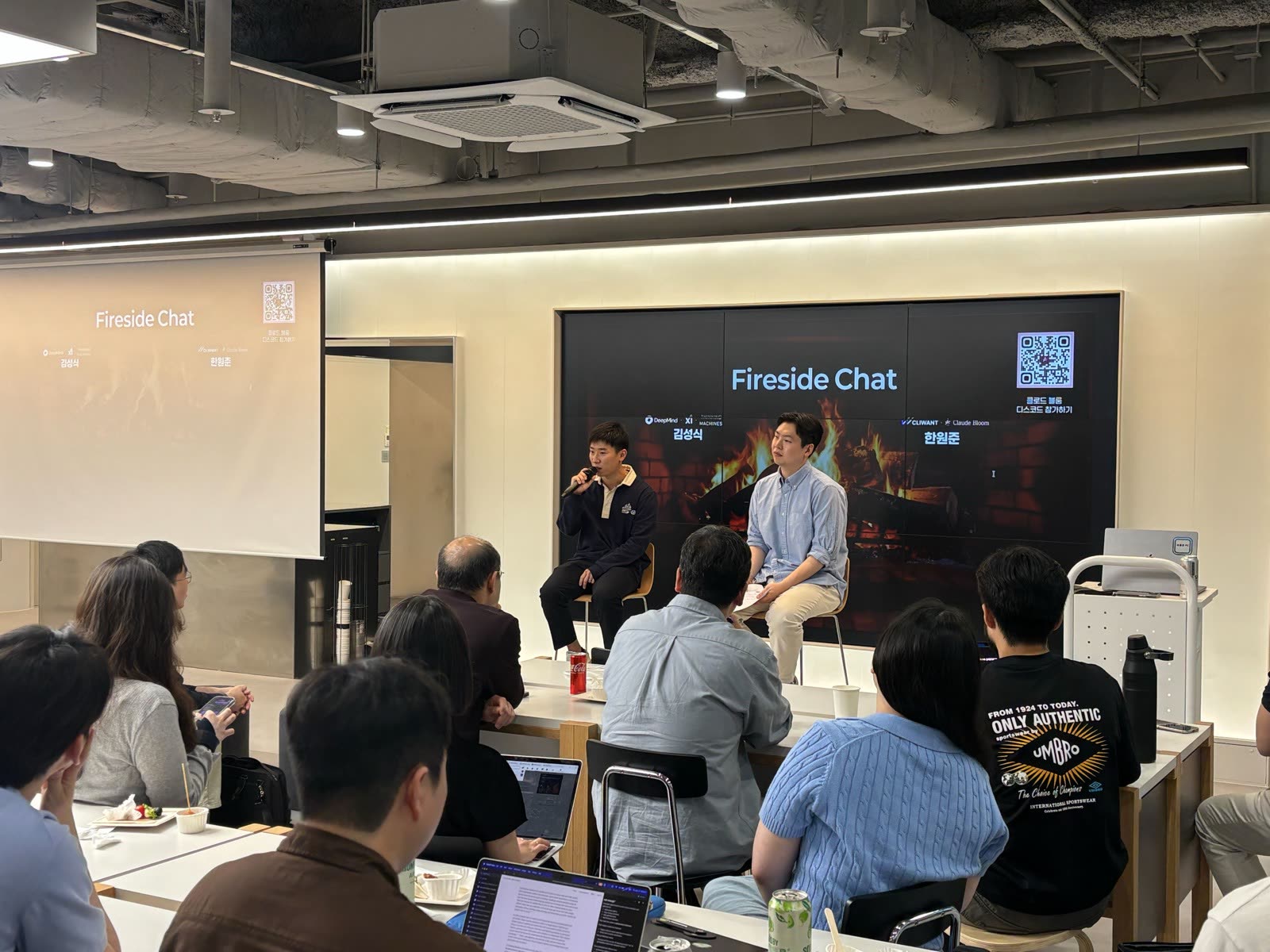
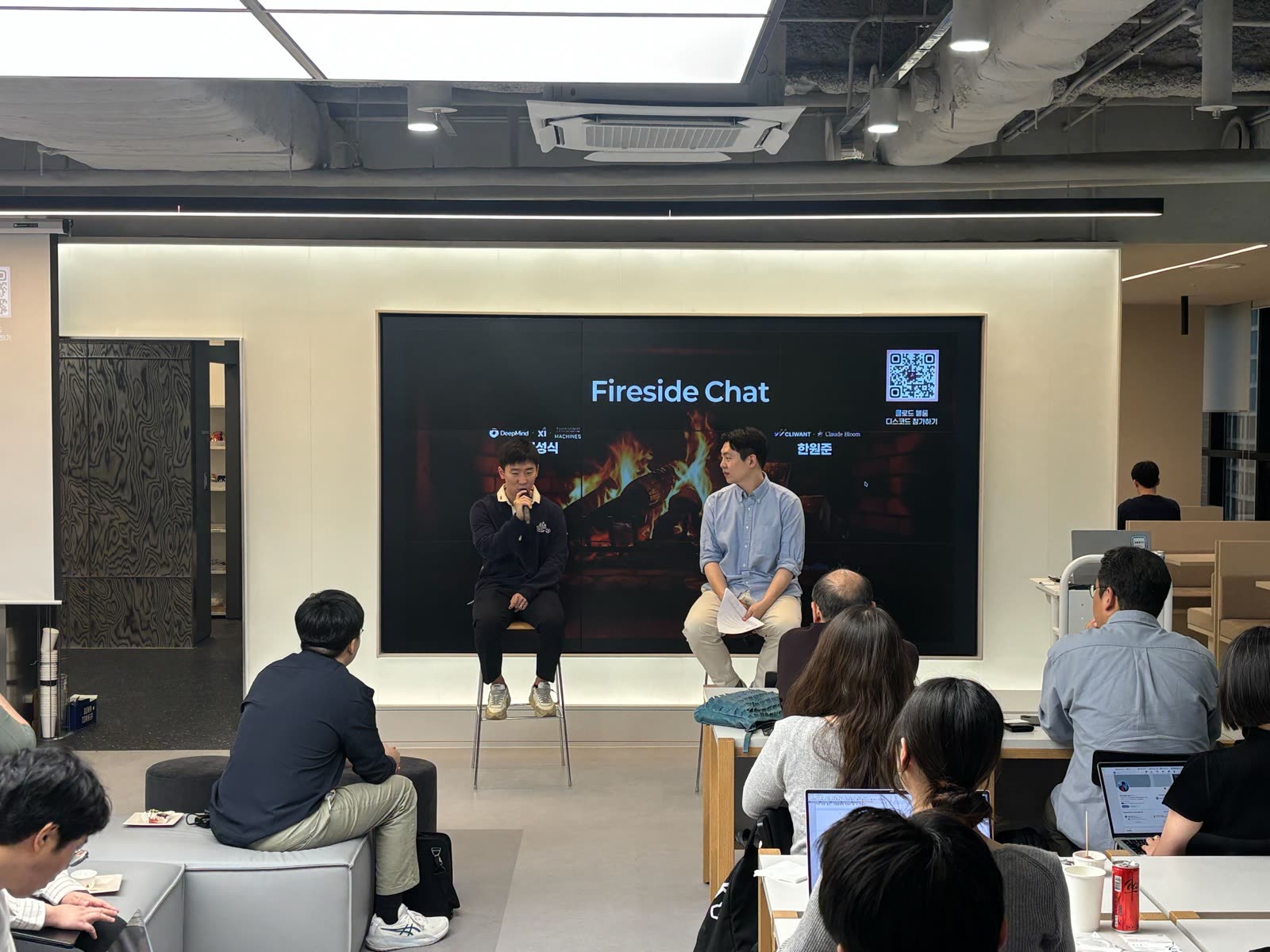
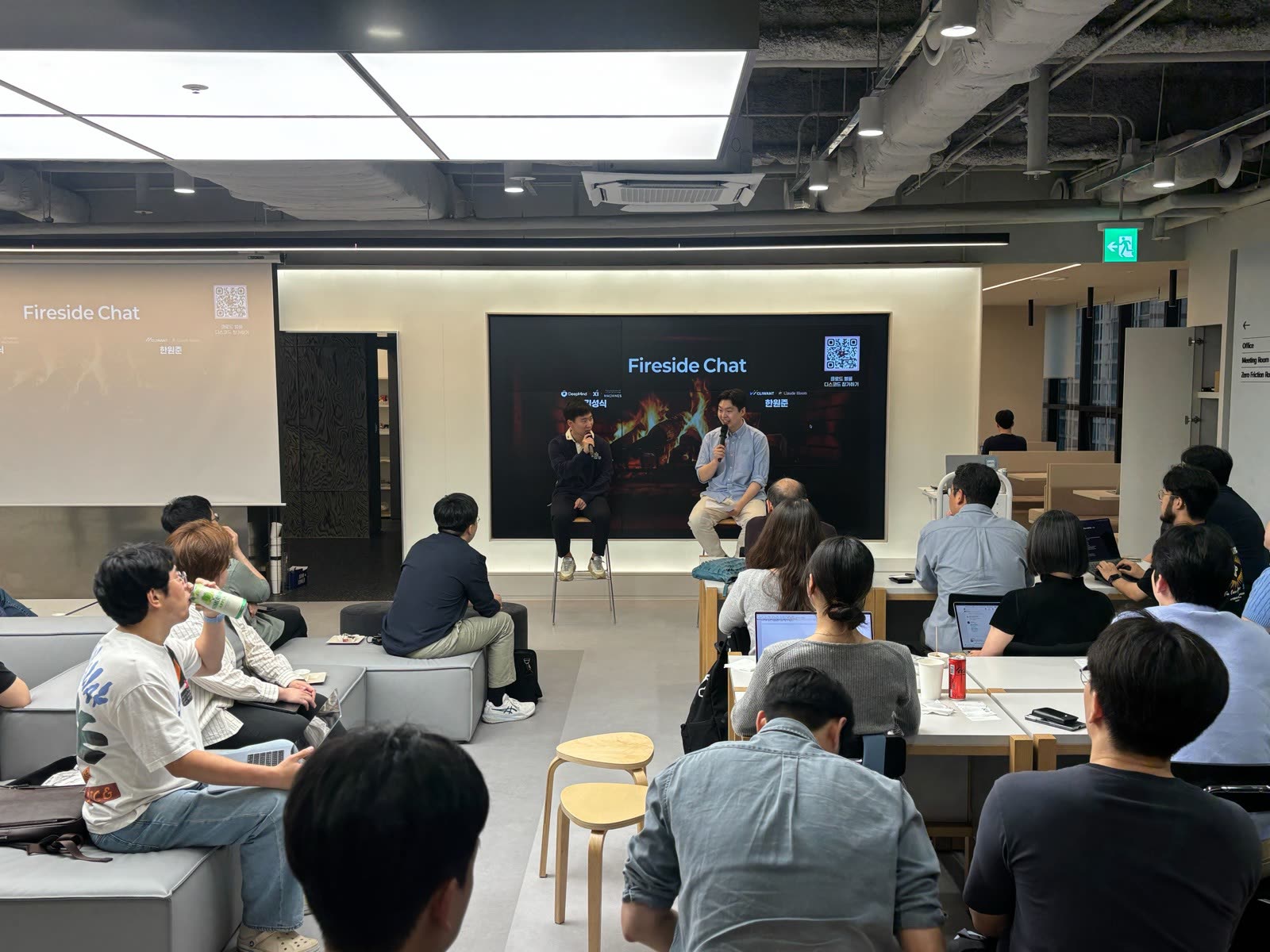
The speaker had an unusual resume. He studied computer science at Northwestern, started his career at Uber, worked on Google DeepMind's AI assistant team and the Bard project, joined xAI as its hundredth member, and is now at Thinking Machines Lab, founded by Mira Murati and John Schulman. In Korea you rarely get to meet someone who builds AI models directly. AB180 CEO Nam Sung-pil opened the evening on AI native organizations, and one number explained the concept at a stroke: a single internal automation system had handled 800 pull requests.
Daily life at Google and at xAI were nothing alike. At Google a light week was 20 hours and he never exceeded 50, and he got three weeks of onboarding. At xAI it was different from day one. He spent 30 minutes setting up his computer, joined his team, and his first assignment was to implement a paper and ship it by that night. Commuting hours did not exist; he would arrive in the morning and leave at 2 or 3 a.m. The tent photos going around Twitter during the Grok 3 launch were real, and he slept at the office three or four times a week.
It was hard, and it felt like pulling all-nighters on a project in a university library, and the intensity actually brought people closer. Elon Musk met every team in person at least once a week. Rather than taking reports from executives, he would point at individual engineers and ask what they were working on, then go at least three levels deep. Why did you do it that way, so what is it, what happens next.
He engaged deeply on the technical substance and put things bluntly. What he disliked most was a direction that did not hold up from first principles. Autonomous driving is the example. Most companies at the time used lidar and radar, and he insisted on camera vision alone, on the logic that humans drive with their eyes. Plenty of people said he was wrong then, and looking at it now, a fair amount of it was right.
The project he worked on at xAI was Macro Hard, and even the name was a joke. Microsoft is a company that runs on almost pure software with no hardware, so if AI could replace a company like that without human involvement, that would be AGI. The name points in the opposite direction. The goal was a digital human emulator handling everything a person does at a computer, from planning through execution, and it started with two people.
As that project suggests, the definition of AGI differs by lab. OpenAI treats it as AI performing at the average level of a domain expert across every occupation. Elon's standard is Macro Hard itself, a company operable by AI alone without human involvement. Demis Hassabis has yet another: give AI the same conditions Einstein had when he discovered special relativity, and if AI makes the same discovery, that is AGI. His own read was that knowledge and logic already exceed most people, while the generalist territory, learning unfamiliar information quickly in a few passes and continual learning across a conversation, still falls short of a person.
He described Thinking Machines Lab's direction as different from other labs. Where most labs build technology that replaces people, TML aims at a relationship where people and AI work together, and the two directions it recently disclosed follow from that. First is multimodality. Using AI today means attaching a screenshot, describing the situation in text, and then asking, which is already closer to email. People see and hear each other and show each other things when needed, and the aim is to connect far richer context to AI that way.
The second, full duplex, comes from the fact that most AI today is turn-based: I speak, it responds. People interrupt while speaking and think about other things while listening, and the plan is to put that into AI. He used Jarvis from Iron Man as the example. Jarvis may be smarter than Tony Stark in many respects, and Tony does not disappear because of it; Iron Man comes out of the interaction between them. Full duplex matters even more for physical AI moving in the real world, because email waits for you and a car on the road does not.
He also noted the growing number of startups working on recursive self-improvement. What impressed him in Korea was the speed of reading and adopting trends. Terms like DX and AX are in wide use in Korea and he has never heard them in the US. The numbers back it up. Korea's AI token usage ranks first or second in the world per capita, which is why Anthropic putting its first overseas office in Korea and OpenAI running a Korean office are not merely symbolic. He said there is no single right answer on whether a domestic foundation model is necessary, but if Korea's token usage is exponentially high, global labs have no choice but to train models to fit Korean data. Using a lot is itself leverage.
He expects every job disappearing to take longer than people think. Look at Claude Code: it beats most developers at particular tasks, and adding more developers still increases productivity. The era of one skill lasting a career is over, which is not the same as people becoming useless. What matters now is the flexibility to work alongside AI and move into other fields.
In a post-AGI world he expects entertainment to grow substantially. What AI replaces fastest are tasks like coding, where you run a test and get an answer, where right and wrong can be adjudicated immediately. Whether a film is a masterpiece or a disaster is hard to write as a spec. That makes the person who can set the criteria, who can define qualitative judgment, more important.
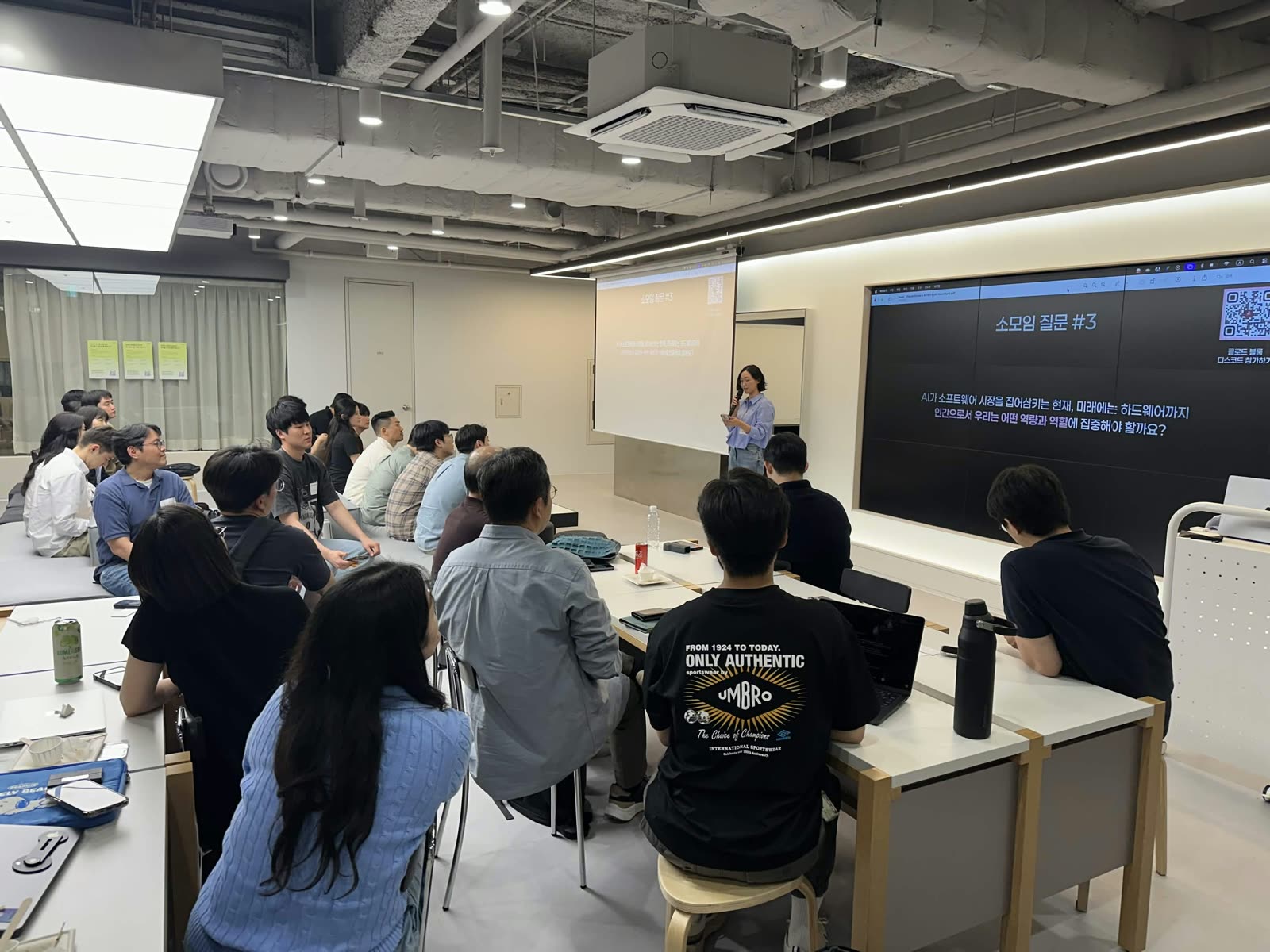
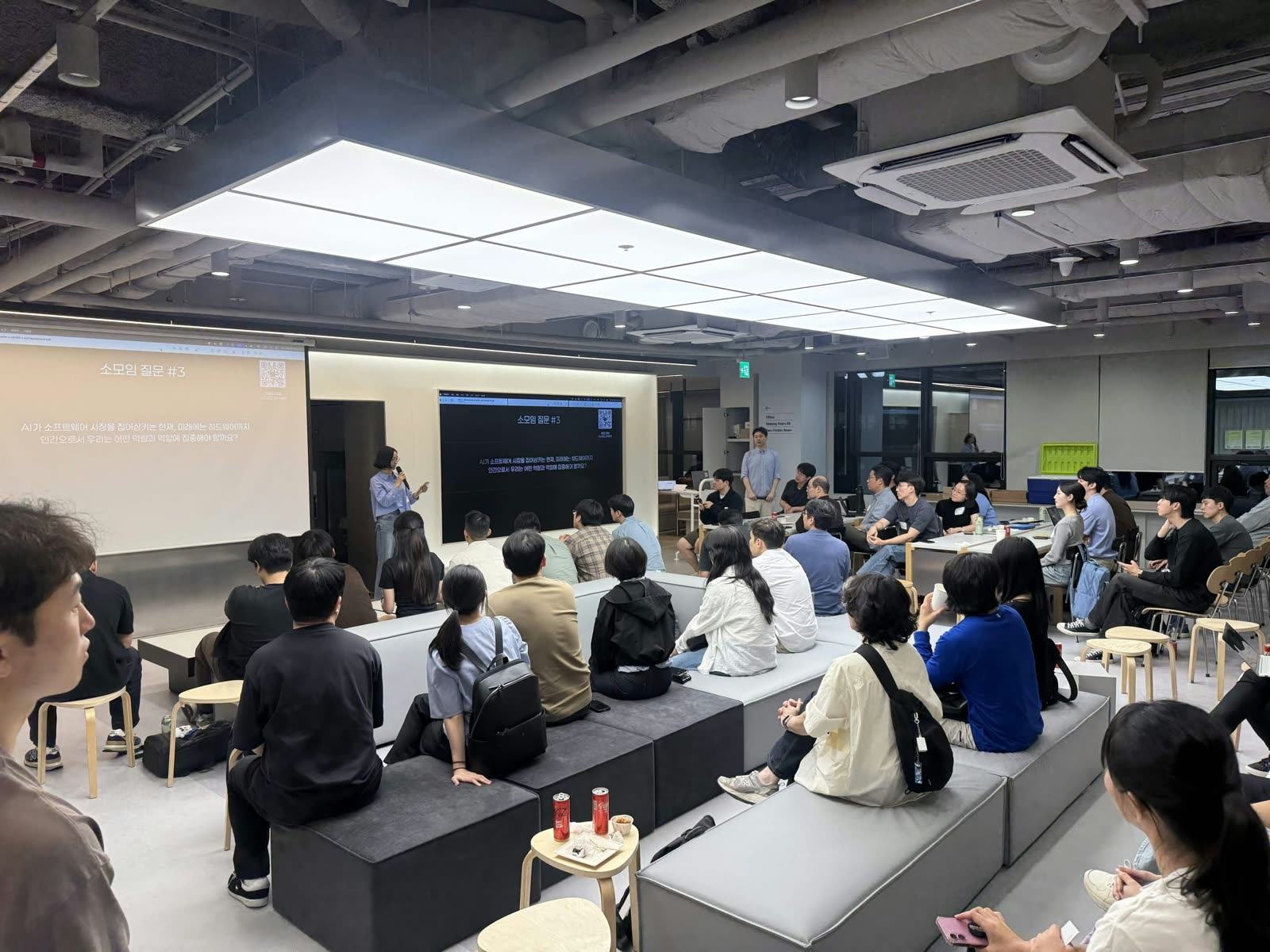
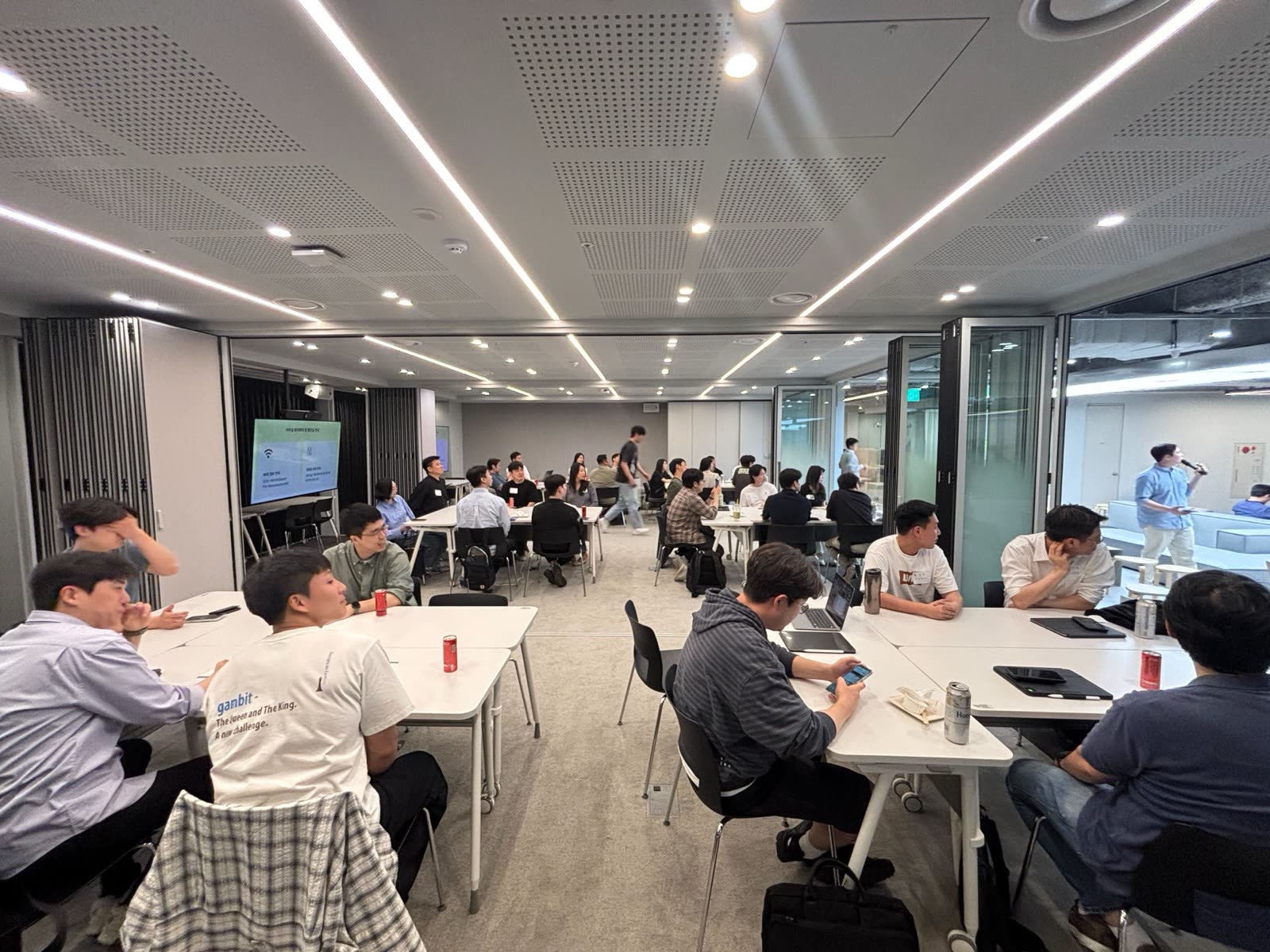
The 40-minute breakout was short and dense. A note-taking app founder said he had assumed Macro Hard's internal objective function was about organizing processes and was surprised the answer was model training. An AI researcher at a game company asked about TML's model architecture and heard that a System 1 layer calls the brain layer, along with the view that several companies will reach AGI by their own routes. Another table took up sovereign AI, arguing that AGI-level AI can be weaponized like a nuclear weapon and so will not be released publicly, which is what makes sovereign AI meaningful as a matter of self-determination. One table used Go as the example: in a domain AI has already passed through, the top players still do well and the prize money is unchanged, so looking at domains AI has swept through offers a glimpse of our own future.
Read the full write-upEvent video
Gallery



Next event